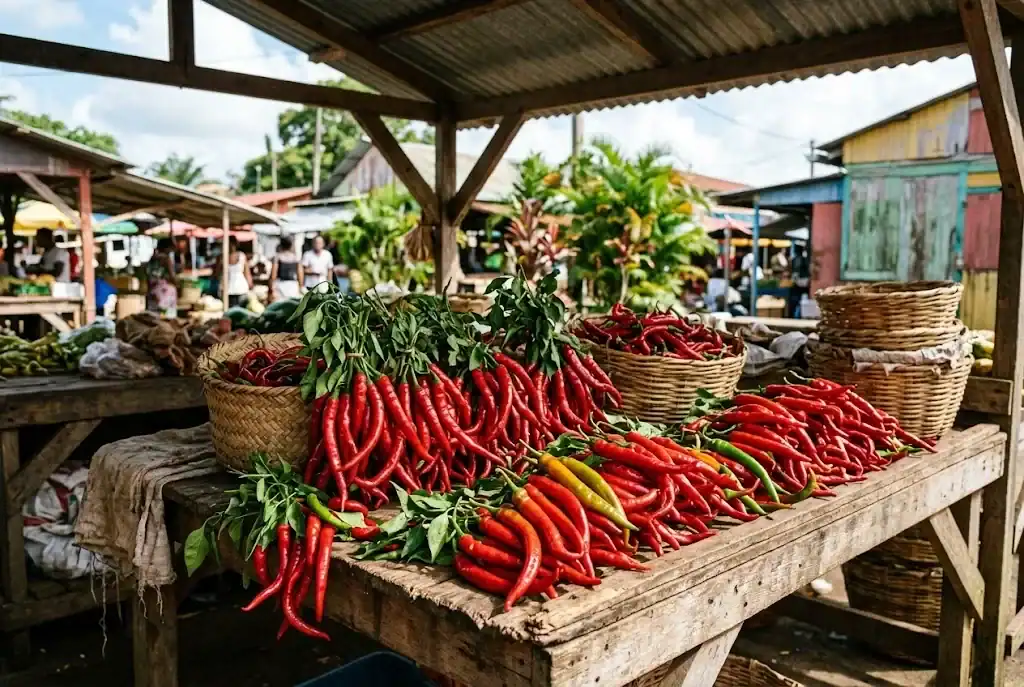
Cayenne peppers are long, thin, fiery red fruits used in hot sauce, ground spice, and crushed red pepper flakes. They belong to Capsicum annuum, the same species as bell peppers and jalapeños, and they ripen from green to glossy red on bushy plants. This profile covers their botanical identity, heat, growing notes, drying, and cooking uses.
Where cayenne peppers come from
The name cayenne is often associated with Cayenne, French Guiana, but its etymology is less tidy than that familiar story suggests. Etymological references trace the English word to a Tupi term for Capsicum, while the connection with the city may be a later association. What is clear is that cayenne belongs to Capsicum annuum, a cultivated pepper species of the Americas whose many forms now appear in kitchens worldwide.
These peppers moved from the Americas into kitchens far beyond their original range, and cayenne became a familiar name for a hot, red cooking pepper. The exact route of the word and the pod is more complicated than a single city-to-spice story, which is why it is better to separate the name’s disputed history from the plant’s well-established culinary use. For this variety profile, the useful distinction is between the fresh pod and the spice made from it. Long, thin cayenne types are valued because their thin walls dry readily, producing bright red cayenne pepper powder or flakes with dependable heat. Fresh pods bring a sharper, fruitier flavor to sauces and dishes, while dried cayenne adds a more concentrated heat to a spice blend, stew, or rub.
Botany and what a cayenne looks like
Cayenne is a member of Capsicum annuum, the most economically important chili species and the parent of bell peppers, jalapeños, poblanos and most of the peppers grown in temperate home gardens. The same species also includes the mildly hot Anaheim and the fruity paprika pepper, both distant cousins of cayenne. The botanical name “annuum” is a misleading fossil from an early classification that mistook the plant for an annual; in warm climates it is a short-lived perennial shrub. To see how cayenne fits among the wider pepper family, our guide to chili pepper varieties lays out the broader picture.
A mature cayenne plant grows 60 to 90 cm tall with a bushy, branching habit and dark green ovate leaves. The flowers are small, white and self-fertile, so a single plant sets fruit on its own. The pods themselves are the variety’s signature: long and slender, usually 10 to 25 cm, often slightly curved or twisted, with a glossy skin that ripens from green through deep green, then bright red. The flesh is thin relative to a jalapeño or poblano, which is why the pods dry quickly and grind easily into powder. The vivid red of a fully ripe pod comes from carotenoid pigments, mainly capsanthin and capsorubin, which the plant builds as the fruit matures; the same pigments are why the powder carries its bright red color after grinding, and they double as provitamin A precursors in the diet. The long red peppers hang down from the branches, giving the plant a heavy, dangling look at peak ripeness. A cayenne pepper plant in full fruit can be a striking sight in a vegetable garden, with dozens of glossy pods catching the late-summer sun.
“Cayenne” is best treated

as a category rather than a single cultivar. The classic cayenne type used for spice production tends to be the long, thin red pod, but seed catalogs list named selections such as ‘Joe’s Long’, ‘Long Thin Cayenne’ and ‘Carolina Cayenne’ that vary slightly in length, days to maturity and heat. For the home cook or gardener, the practical answer is the same across the category.
How hot a cayenne pepper really is
Cayenne ranks around 30,000 to 50,000 Scoville units on the standard scale, which puts it at roughly six to ten times hotter than a jalapeño and clearly below the super-hot class of habaneros, ghost peppers and Carolina Reapers. The heat comes from capsaicin, the same compound family that makes every hot pepper pungent, concentrated in the pale pith and the seeds that cling to it. The fleshy walls of the pod carry some heat, but most of it sits in the placenta, the white membrane that holds the seeds. Cayenne’s capsaicin content is the active ingredient behind both the burn on the tongue and the warming sensation many cooks reach for in winter stews and soups.
For comparison, a Tabasco pepper (the small, fiery Louisiana original) sits in a similar Scoville range, while a serrano usually runs a little milder and a Thai bird’s eye chili usually runs a little hotter. Among common kitchen peppers, cayenne lands squarely in the middle of the spicy range: noticeably hotter than paprika or ancho, noticeably milder than habanero or ghost. That middle position is exactly why the powder shows up in so many spice blends and why a small pinch in a stew or pot of beans adds bold heat without overwhelming the dish.
Heat varies pod to pod, plant to plant and season to season. A cayenne grown under mild stress with less water late in the season can run hotter than a well-watered neighbor, but the change is modest compared with the difference between mild and super-hot varieties. The pepper’s flavor is more than just heat: it carries a bright, slightly sweet, fruity note that gets sharper as the pod ripens fully red, and a faintly smoky edge once dried and powdered.
Growing cayenne peppers from seed to harvest

This is one of the easier hot peppers to grow in a home garden. It tolerates a wider range of conditions than super-hots and produces heavily, often 30 or more ripe pods per plant in a good year. The full cycle runs about 110 to 150 days from sowing to first ripe fruit, depending on climate and selection. The plants are notably easy to grow compared with many other capsicums, which makes them a popular first pepper for new gardeners and one of the most rewarding peppers to start with for anyone new to growing peppers at home.
Here are the growing tips that matter most for a strong harvest. Start with fresh seed from a reputable supplier; old seed loses viability quickly and germination drops sharply after two or three years. Use a light, well-drained seed-starting mix and keep soil temperature steady in the 24 to 29 C range. Once the seedlings are established, give them plenty of light, good air circulation, and enough room to bush out so lower leaves stay dry and disease pressure stays low.
Start cayenne pepper seeds in cell trays about eight weeks before the last expected frost, in a light, sterile seed mix kept at 24 to 29 C. Germination usually takes 7 to 14 days but can stretch to three weeks for older seed. Once the seedlings show their first true leaves, move them into individual pots and grow them under bright light, ideally 14 to 16 hours a day. Harden them off over a week before transplanting, and only set them out when night temperatures stay above about 12 C.
The plants want full sun, well-drained soil with plenty of organic matter, and steady moisture during fruit set. Space them 45 to 60 cm (about 24 inches) apart in the ground or one plant per 30 cm pot. A light, balanced fertilizer at planting and another when flowering begins is usually enough; too much nitrogen makes leafy plants with few pods. They rarely need staking, though a heavily laden branch can lean. If your plants start to sprawl or you want a heavier late-season harvest, pruning the tops and side shoots can redirect energy into pod production.
Common problems are the usual capsicum issues: aphids and whiteflies on the undersides of leaves, blossom drop in cold nights or extreme heat, and the occasional blossom-end rot if watering is uneven. Most of these respond to consistent watering, good airflow and prompt removal of badly affected leaves. Soil pH around 6.0 to 6.8 suits cayenne plants, and a 5 cm mulch layer helps keep soil moisture even through dry spells.
Harvesting and handling hot pods
The pods are ready when they turn fully red and feel slightly soft to a firm squeeze. Snap or snip them off with a short stem attached; pulling can break the brittle branches. Wear gloves if you have sensitive skin, since capsaicin lingers on the fingers and easily transfers to eyes. A mask is helpful if you are processing a large quantity of fresh pods indoors, where the air can sting.
For drying, harvest fully red pods with sound skin. If frost threatens while pods are still green, harvest what is usable and use the ripe red pods first rather than assuming unripe fruit will finish ripening off the plant. Choose clean, unblemished pods for drying, and discard any that show soft spots or mold. This gives the finished dried cayenne peppers the best chance of retaining their bright color and clean flavor.
Drying, storing and preserving cayenne
Thin-fleshed pods make cayenne one of the simplest peppers to preserve. The traditional method is to string the ripe red pods into a ristra, a hanging bundle that air-dries slowly in a warm, well-ventilated room. A modern shortcut is a dehydrator at 50 to 55 C for 6 to 12 hours, or an oven on its lowest setting with the door cracked, until the pods are brittle and rattle when shaken. Properly dried cayenne peppers keep their vibrant red color and store well for a year when kept in airtight jars in a cool dark place. Whether you plan to keep them whole or make the powder at home, the drying step is the same: pods go in fully red, come out cracker-dry, and reward patience with a longer shelf life.
Once fully dry, store whole pods in airtight jars out of direct sunlight; they keep their color and heat for a year or more. For the ground spice, blitz the dried pods in a blender or spice grinder, sift out the seeds if you want a milder result, and store in small jars away from light. Whole pods hold heat longer than the powder, which loses volatile aromatics within a few months. A teaspoon of homemade powder goes further than most cooks expect, so start small and taste as you go.
Fresh cayenne also works in quick pickles

and hot sauces, but use a tested recipe when preserving peppers. Fermentation needs controlled salt concentration, clean equipment, and a reliable method, so it belongs in a dedicated guide rather than a shortcut here. If you are out of cayenne in a recipe and need a stand-in, see our guide to chili pepper substitutes for the closest matches by heat and flavor.
Cooking with cayenne
Ground cayenne is the spice-cabinet form most people meet first. A small pinch adds warmth to soups, stews, chilis, scrambled eggs, hot chocolate and spice rubs for meat without overwhelming the other ingredients. It is also the foundation of most cayenne-based hot sauces, along with vinegar, salt and a little sugar or garlic. Fresh or powdered cayenne works in any of these dishes; the powder disperses faster, while sliced fresh pods give you visible flecks of red and a slightly fruitier note.
Because the pods are dried and ground into a fine powder, a single tin lasts a long time in a busy kitchen. Use it the way you would any other hot chili powder or flakes: a quarter-teaspoon in a pot of chili, a generous pinch over popcorn, or a slow sprinkle into a simmering tomato sauce. For anyone who likes bolder heat, a teaspoon of the homemade powder in a chili or stew adds the warmth without needing fresh pods. The pepper also pairs well with other spices like smoked paprika, cumin, garlic and oregano, and it shows up in countless delicious recipes from enchilada sauce to deviled eggs.
Fresh cayenne pods work well in any dish that calls for a thin, hot red pepper. Slice them into thin rings for stir-fries, curries and pasta sauces; slit them open for stuffed pepper recipes if you can find large enough pods; or thread them onto skewers for grilled shrimp or chicken. Because the flesh is thin, fresh cayenne cooks down quickly and disperses its heat through the sauce faster than a thick-walled pod.
Cayenne pepper flakes, sold dried and crushed, are a different texture from the powder and a useful finishing spice: a quick sprinkle over pizza, roasted vegetables or avocado toast adds both heat and a bit of chew. They are also one of the ingredients in the classic chili flake blend used on everything from pepperoni pizza to aglio e olio. Cayenne pairs particularly well with beans, eggs, cheese, dark chocolate, tomato sauces and lime, and it shows up in spice blends from Cajun and jerk to Mexican mole and Indian curry powder.
Health and safety notes
Capsaicin, the active compound that gives this pepper its heat, has been studied for its potential role in supporting circulation, metabolism and pain relief when used as a topical treatment. The evidence is strongest for topical capsaicin creams in certain nerve-pain conditions, as documented by the National Center for Complementary and Integrative Health; for the dietary form, the picture is more modest, with some research pointing to antioxidant and anti-inflammatory effects, a small boost in metabolic rate, a possible contribution to heart health, and other potential health benefits that depend on dose and individual tolerance, summarized in a review in PubMed Central. The capsaicin in the pod is one of the most studied beneficial plant compounds in the kitchen spice cabinet. As with most culinary spices, the dried powder is a flavorful addition to a varied diet rather than a treatment for any medical condition. People with gastroesophageal reflux, active ulcers or some chronic health conditions may find very hot peppers uncomfortable and should moderate their intake.
For handling, treat fresh and dried cayenne the same as any hot pepper. Wear gloves when chopping large quantities, wash knives and cutting surfaces afterward, and keep peppers away from children and pets. Avoid touching your eyes while handling hot pods. If capsaicin reaches an eye or causes severe or persistent symptoms, seek advice from a poison-control center or clinician.
Frequently asked questions
Is a cayenne pepper hotter than a jalapeño?
Yes, considerably. A ripe cayenne runs around 30,000 to 50,000 Scoville units, while a jalapeño sits closer to 2,500 to 8,000 SHU. A cayenne is roughly six to ten times hotter than a typical jalapeño, which is why recipes usually call for much smaller amounts.
Are cayenne peppers the same as chili peppers?
Cayenne is one specific kind of chili pepper, just as jalapeño, habanero and poblano are. All of them belong to the genus Capsicum, but each variety has its own shape, heat level and flavor, and cooks use them differently.
Can you eat cayenne pepper raw?
Yes. Fresh, ripe cayenne pods can be sliced thinly and added to salads, salsas or sandwiches. The heat is intense, so use them sparingly; the seeds and white pith inside carry most of the capsaicin and can be removed for a milder result.
How long does ground cayenne keep its heat?
Ground cayenne loses pungency faster than whole dried pods. Store it in an airtight container away from light, buy small amounts, and replace it when its aroma and heat fade. Whole dried pods usually hold their quality longer.
By Roxie.
