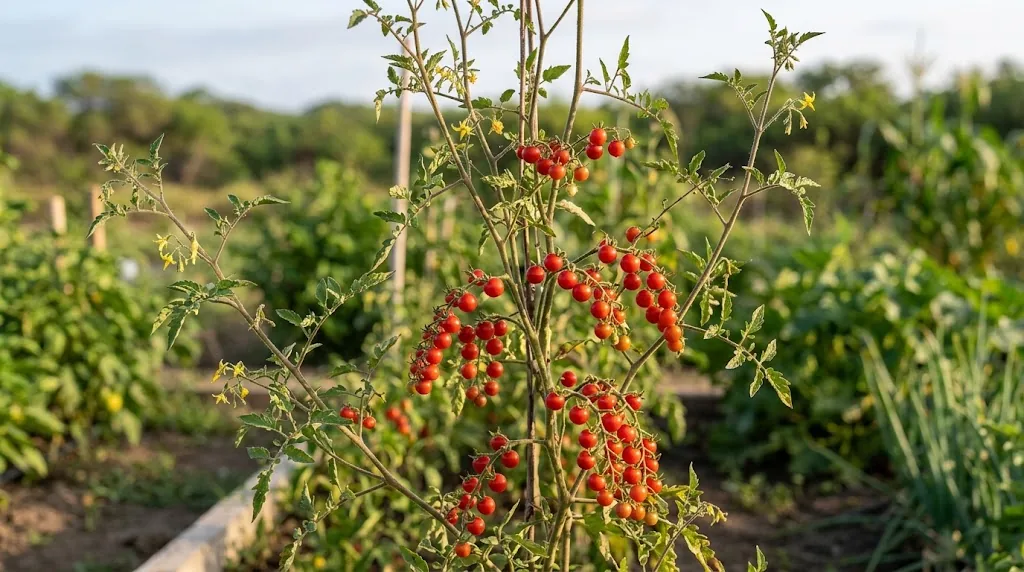
A wild tomato can look like a small, unruly cousin of the familiar cultivated plant, but the group includes a surprising range of relatives. Some bear tiny red berries; others have hairy leaves, green berries, or traits breeders study for future crops. Learn where these relatives grow and why they matter to breeders.
What counts as a wild tomato?
These plants belong to the tomato branch of the genus Solanum. They are native to western South America, where related plants occupy habitats from coastal deserts to cooler, higher elevations. The cultivated tomato, Solanum lycopersicum, is part of this close-knit group, but its wild relatives are not simply neglected cultivars. Each has its own range, appearance, and genetic history.
UC Davis’s Tomato Genetics Resource Center (TGRC) maintains accessions representing 17 wild Solanum species. That collection includes close relatives as well as more distant members of the same broader group. The label covers several related plants, not one single ancestor or standardized type. For a broader guide to growing tomatoes and their care, visit our guide to growing tomato plants.
Wild tomato relatives and where they grow
A few examples show the group’s range:
- Solanum pimpinellifolium, often called the currant tomato, grows naturally along coastal Ecuador and Peru. Its berries are smaller than a typical cherry tomato. Its close relationship to cultivated lines makes it useful in research and breeding.
- Solanum habrochaites ranges from Ecuador to Peru. Its leaves and stems can be notably hairy, and researchers study its genetic variation for responses to insects, pathogens, and environmental stress.
- Solanum peruvianum is another diverse cousin from western South America. Its populations vary, and breeders may need to work around crossing barriers when transferring a trait into cultivated lines.
- Solanum pennellii is associated with dry environments in Peru and has been studied for traits related to water stress.
These are examples, not an exhaustive list. The TGRC’s taxonomic key compares these plants using features such as leaf form, flower structure, and fruit. Geography and appearance can overlap, so one visible feature rarely identifies a specimen with certainty.

What do these relatives look like?
There is no single shape. Some relatives produce tiny, round red berries; others have green or yellow-green berries, different leaves, or conspicuous hairs on stems and foliage. Color and ripening texture vary. Even plants within one group can differ, which is why collections track individual accessions instead of treating a population as uniform.

Many are more variable and spreading than tidy, large-fruited cultivars. That is a broad comparison, not a rule for every counterpart. A label and botanical key are more dependable than judging by berry size alone. If your next question is how botanists classify the fruit itself, see our explanation of whether a tomato is a berry.
How wild relatives contribute to tomato breeding
Breeders look to these relatives for genetic diversity that may be limited in cultivated lines. UC Davis research collections support work on resistance to pathogens and insects, tolerance to drought, heat, cold, and salinity, and horticultural traits. A useful trait does not automatically transfer into a crop. Breeders identify it, cross compatible plants, and select offspring that retain the desired feature without unwanted ones.
One well-documented example comes from UMass Amherst’s research on these lines. The researchers examined South American accessions for growth in Massachusetts and possible resistance to insects and disease. UMass also notes that a trait found in Galápagos tomatoes helped enable fruit to detach without its stem, a feature used in breeding tomatoes for mechanical harvest. These cases explain why researchers study wild relatives, even when their berries do not suit a typical home harvest.
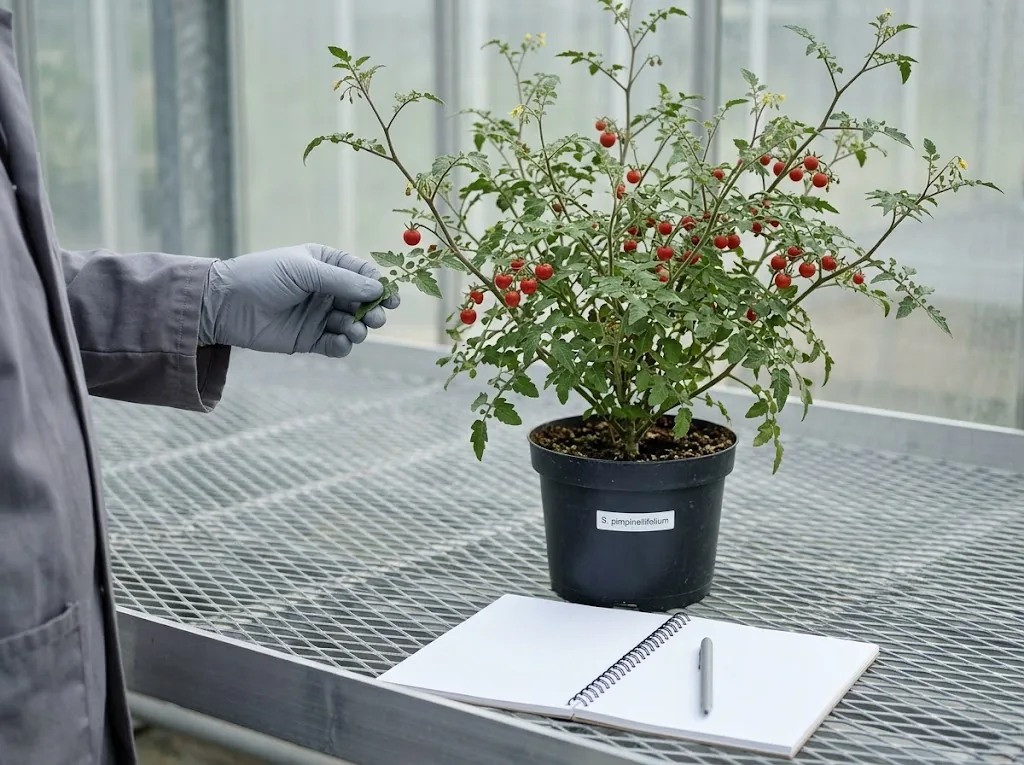
Breeding results depend on the accession and trait under study. A wild cousin is not automatically disease-proof, drought-proof, or better tasting. The value is in variation that can be tested and, where practical, incorporated into new tomato lines.
Can you grow wild tomatoes at home?
A variety of accessions is sold by specialist suppliers or held in research collections, and not every accession is offered to home growers. Check the exact name, source, and growing notes before ordering. Pick one the supplier lists as suitable to cultivate at home. An accession is not the same as a named cultivar selected for uniformity and predictable performance.
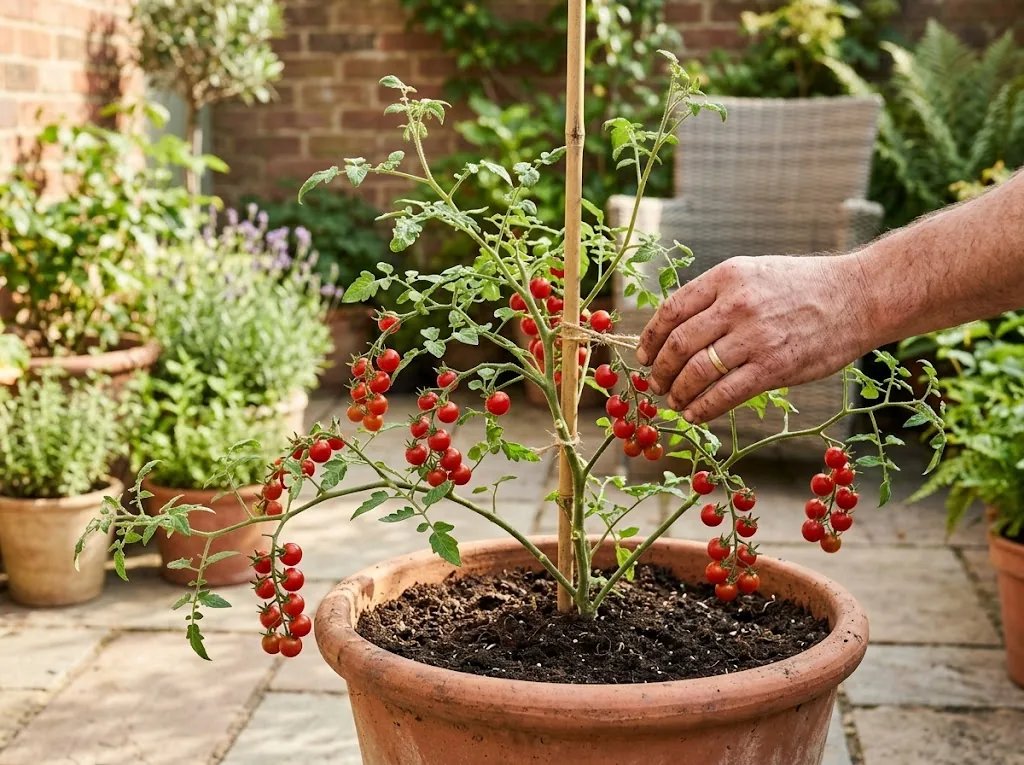
For a home trial, give it a warm, sunny location and enough room for its growth habit. Use a sturdy support if the source recommends one, and follow its sowing and spacing directions. Keep it labeled; young relatives can look alike, and saved seed is not guaranteed to come true to type unless pollination and identity are controlled. If a trial plant sets flowers that then fall off, our guide to tomato flowers falling off covers the usual causes.
Do not taste an unidentified volunteer or assume every unusual berry is safe because it resembles a tomato. Confirm its identity and source first. These plants are not interchangeable with familiar supermarket tomatoes, and a home gardener should follow the supplier’s food-use guidance.
Are wild tomatoes edible?
Edibility depends on verified identity. People eat the tiny berries of some relatives, including currant tomato; UF/IFAS Extension describes picking and eating the small fruit of the Everglades tomato, a currant-type relative. That does not establish that every related tomato or lookalike is food-safe. Never forage an unfamiliar specimen based on a photograph or a common name. If you buy seed specifically for eating, rely on a reputable supplier that clearly identifies its product and gives clear food-use information.
Wild relatives are living genetic resources
These relatives connect the familiar crop to a wider group of plants shaped by South American environments. Their foliage and growth vary, and their genes give researchers material to investigate traits that cultivated lines may lack. For home growers, the practical takeaway is simple: verify the plant’s identity before growing or tasting it, and treat breeding claims as specific to the plant and trait that researchers actually tested.
Sources
- UC Davis Tomato Genetics Resource Center, Wild Species Accessions
- UC Davis Tomato Genetics Resource Center, Taxonomic Key to the Tomato Species
- UMass Amherst, “It’s Been a Long Journey for Wild Tomatoes”
- UF/IFAS Extension Charlotte County, “Tiny but Tough: The Everglades Tomato”
