
Golden-orange cherry tomatoes can bring a long stream of sweet fruit to the garden. This hybrid grows into a long-season plant that keeps flowering, so it needs reliable support and more room than a compact patio plant. Here is the variety’s documented history, what to expect from the plant, and how to grow, harvest, store, and use its fruit.
Origin and history
Sun Sugar is an F1 hybrid rather than an open-pollinated heirloom. Some catalogs call it a yellow cherry tomato, though ripe fruit is orange to golden-orange. A North American vegetable-cultivar list published in 2002 records Sun Sugar (TOK 810811) as a Petoseed hybrid and lists 1999. That establishes an early commercial record, not necessarily the exact launch date. The list describes an early, crack-resistant golden cherry tomato. Today, Seminis, part of Bayer’s vegetable-seed business, lists the cultivar as an orange cherry type with about 62 days to relative maturity. Read the North Carolina State University cultivar list and the current Sun Sugar profile for those details.
To compare it with other named types before buying seed, browse the tomato varieties hub.
Botany and plant facts
The variety is a cultivated tomato, Solanum lycopersicum. Its fruit is round, cherry-sized, and golden orange when ripe. The Cornell Vegetable Varieties for Gardeners record describes fruit around one-half ounce; sizes vary with the plant and growing conditions. The fruits grow in clusters and are small enough to pick and eat straight from the vine.
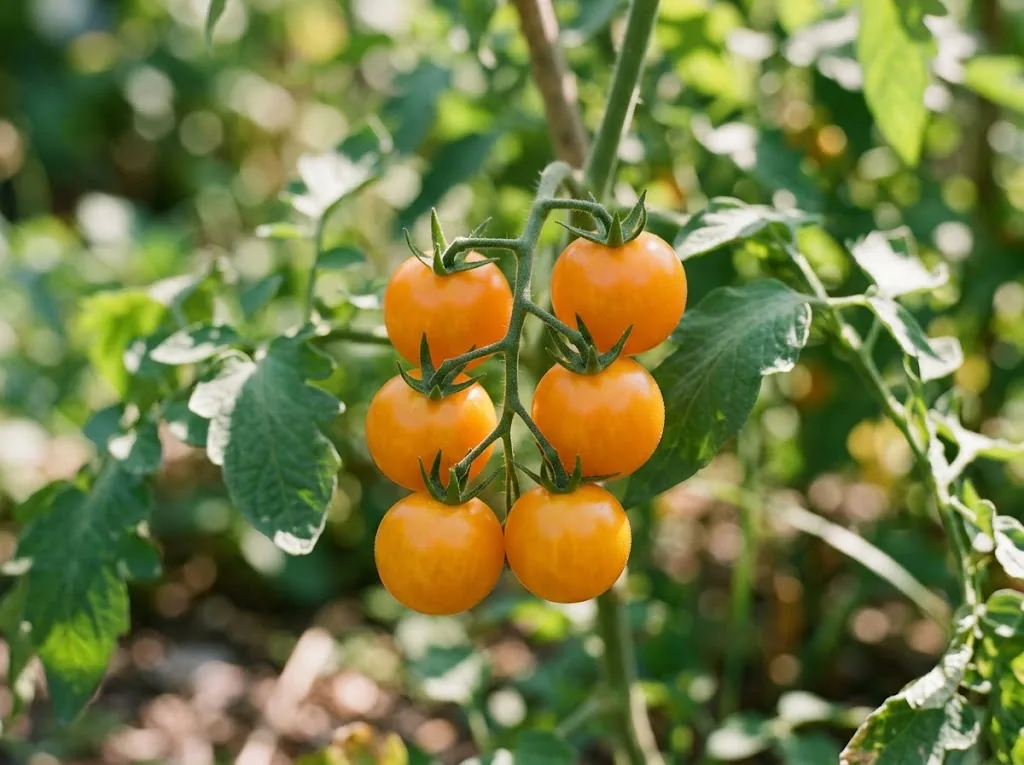
This is a vigorous, indeterminate cherry tomato and F1 hybrid. Its stems continue growing and flowering instead of stopping after one concentrated crop. Some seed catalogs, including Victory Seed’s Sun Sugar listing, report vines up to 7 feet, so plan for tall support and remember that actual height depends on season length and care. Seminis lists about 62 days to relative maturity, without saying whether that is counted from sowing or transplanting, and weather and transplant size affect timing. The current Seminis profile lists resistance to Fusarium wilt and tomato mosaic virus, with codes ToMV:0 and Fol:1 for specific strains. These codes do not mean the plant is immune to every disease.
Sun Gold is another sweet orange cherry type, but flavor preference varies. In two blind-tasting years, Cornell Master Gardener volunteers ranked this variety highest among the tomatoes sampled. That local taste test is interesting, not a universal verdict on the best-tasting tomato. If flavor is your deciding factor, grow both varieties and compare fully ripe fruit from the same garden.
Growing this variety
As a tomato variety, Sun Sugar grows best with full sun, well-drained soil, and a tall cage or trellis set in place while it is young. For seed starting, sow seed indoors about five to six weeks before planting outside. Keep the mix evenly moist while seeds germinate, then transplant after frost danger has passed. Tomatoes need a long, frost-free growing season; bring mature fruit in before the first frost threatens. For general tomato seed-starting and care advice, see University of Minnesota Extension’s growing guide.
Its long, heavy vines keep extending through the growing season. Some growers prefer a sturdy cage; a stake also works if you tie the stem loosely as it lengthens. In a container, use a large pot with drainage and a support that will stay stable under the weight of the plant and its clusters. Keep soil moisture reasonably even while fruit is sizing. The variety has crack resistance bred in, but sudden changes in water availability can still split ripe tomatoes. Mulch can help moderate moisture. Pruning is optional; if you remove suckers, keep enough leaves to shade developing fruit. For a naturally compact plant, see the Micro Tom tomato profile.
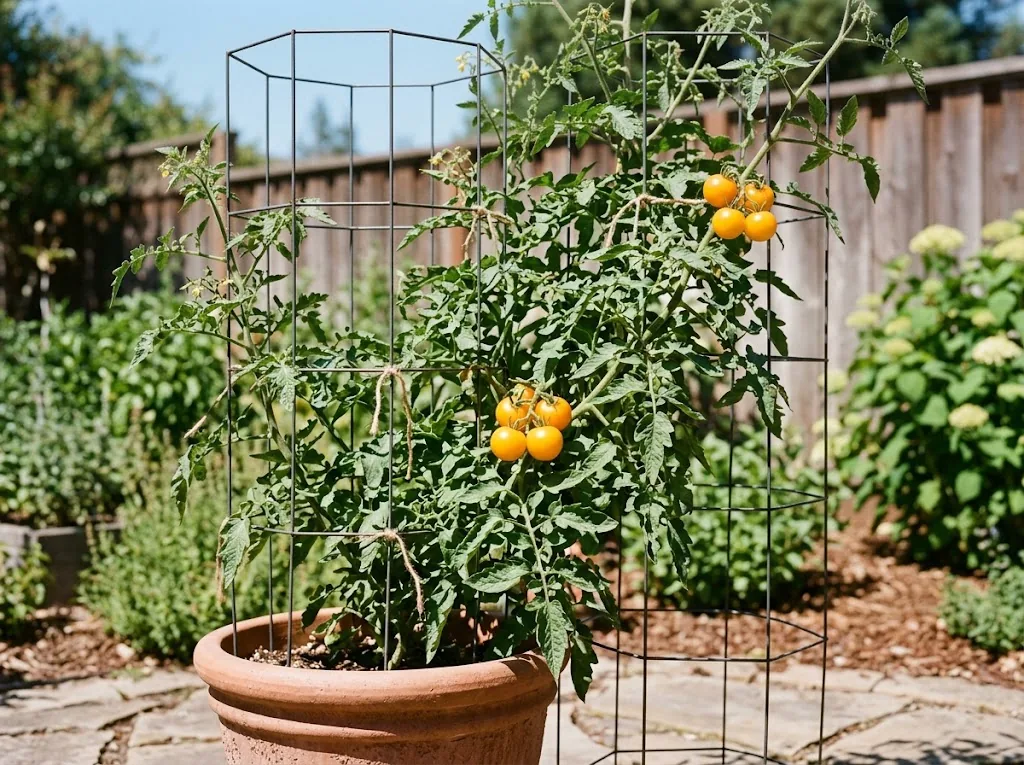
Because Sun Sugar is an F1 hybrid, seed saved from its fruit will not reliably grow into plants identical to the parent. Buy fresh seed when you want the same variety next year.
Harvest and ripeness cues
For harvesting, look for an even golden-orange color and a slight give under gentle pressure. The fruit will not turn red at maturity. Check clusters often once they begin to ripen, especially in hot weather when small tomatoes can soften quickly. Crack resistance helps, but pick promptly after heavy rain and remove fruit that has split.

Storage and preserving
Keep sound, freshly picked tomatoes at room temperature, away from direct sun, and use them while firm. Refrigeration can dull fresh tomato flavor, so chill fully ripe fruit only when you need to slow softening; bring it back toward room temperature before serving. For longer keeping, freezing is practical when you have a small amount at a time. Thawed tomatoes soften, so use them in cooked dishes rather than salads. Follow the National Center for Home Food Preservation freezing directions.
For shelf-stable canning, use a current research-tested recipe and follow its processing directions exactly. Tomatoes require acidification for safe home canning. The National Center for Home Food Preservation specifies bottled lemon juice or citric acid in its tomato guidance; its basic whole, crushed, or juiced tomato directions call for two tablespoons of bottled lemon juice or one-half teaspoon of citric acid per quart. Do not improvise by changing proportions or processing times.
Culinary uses
The sweet flavor and small size make Sun Sugar easy to snack on straight from the plant. Halve the fruit for salads and grain bowls, add it to a quick sauté, or roast a tray until the skins wrinkle and the juices concentrate. Its orange color adds contrast to a bowl of mixed tomatoes. Since these plants can provide fruit over a long season, pick clusters as they mature for fresh eating, then freeze extras for sauces and soups. The tradeoff for a home grower is space and ongoing support in exchange for a steady supply of fruit. If you are comparing cherry types, try a darker-fruited Chocolate Cherry tomato as well.

Frequently asked questions
How tall does the plant grow?
The plant keeps adding height and fruit through the season; some seed catalogs list vines up to 7 feet. Give it tall, sturdy support that can handle a long growing season.
Is this a good tomato to grow?
It is a good tomato for gardeners who want sweet orange cherry fruit and can support a plant that keeps growing through the season. It is less convenient when space is tight or a single concentrated harvest is the priority.
How can you tell when the fruit is ripe?
Wait for an even golden-orange color and a slight give when touched gently. Harvest ripe clusters regularly to keep fruit from softening or splitting on the vine.
