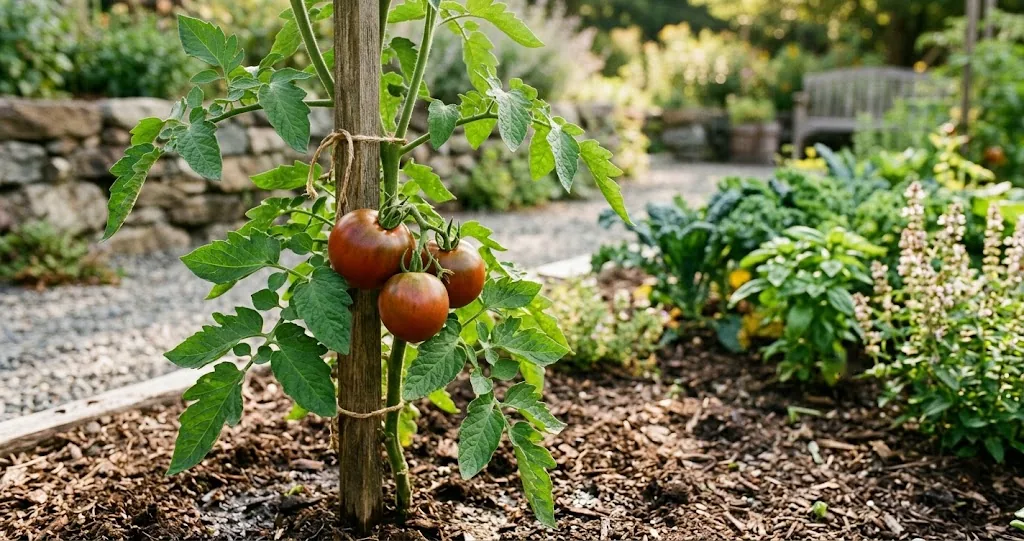
Japanese Black Trifele tomato is a Russian open-pollinated variety known for mahogany fruit and potato-leaf foliage. The indeterminate vines need sturdy support, but they can supply tomatoes for fresh eating and cooking over a long harvest. The tomato varieties guide helps place this unusual cultivar among other garden choices.
Origin and history
The label can mislead: seed sellers describe this heirloom tomato as Russian. Thresh Seed gives its Russian name as Yaponskiy Trufel Chernyi and calls it open-pollinated. The English label is common in catalogs, though spellings vary. The name by itself does not establish a Japanese origin.
When shopping, compare the botanical description rather than relying on the label alone. Look for an indeterminate vine with potato-leaf foliage and dusky, dark-red tomatoes. Those features help distinguish this cultivar from other dark varieties with similar names.
Botany and plant facts
Solanum lycopersicum ‘Japanese Black Trifele’ is open-pollinated and indeterminate. Seed Savers Exchange lists dark red tomatoes at about 4 to 5 ounces and 70 to 80 days from transplant; Thresh Seed gives a broader 4 to 7 ounce size and about 80 days. These are seller estimates, not fixed outcomes: weather, care, and seed line can affect both size and timing.
Thresh describes the fruit as pear-shaped, with rich, deep red skin that is sometimes darker over the stem end. The broad, less-divided leaflets are the potato-leaf type, unlike the more finely cut foliage on many tomato plants.
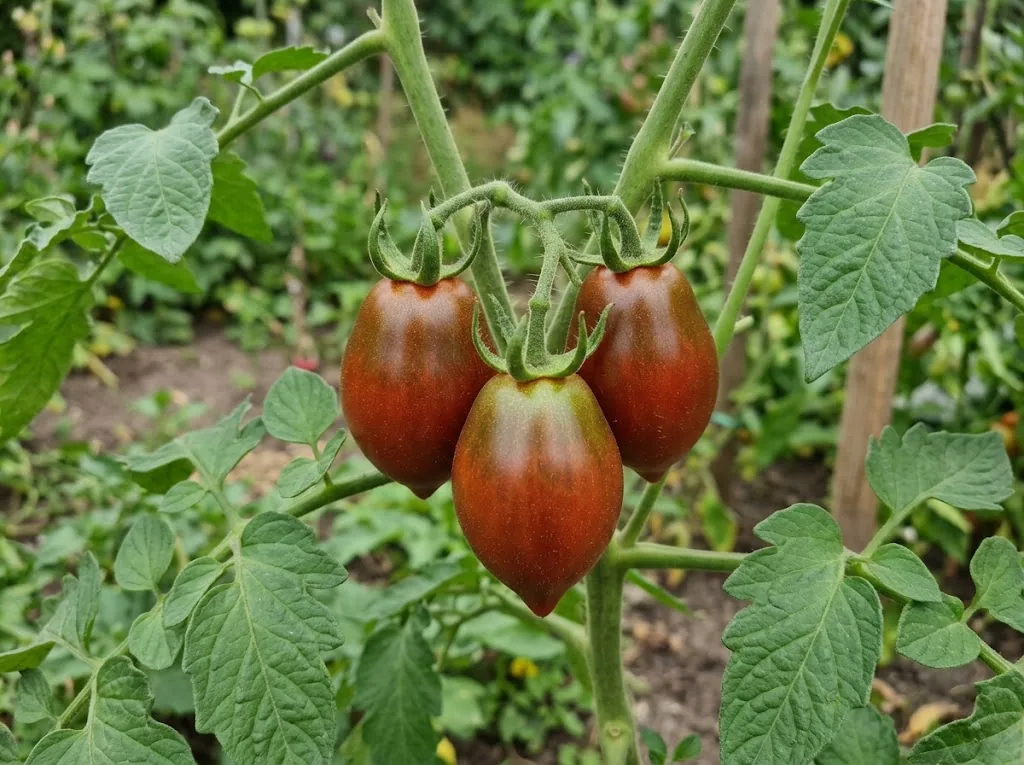
“Black” is a catalog shorthand, not a promise of ink-colored skin: sellers describe these tomatoes as dark red, sometimes with a darker cast over the stem end. Shade can vary among tomatoes on one plant.
Growing this variety
Give it full sun, fertile soil that drains well, and room for a vigorous vine. Set transplants outdoors after frost danger has passed and the ground has warmed. Install a tall cage, stake, or trellis at planting so you do not disturb the roots later. Minnesota Extension recommends placing supports at planting and spacing vining types for their mature size.
Keep moisture even rather than letting the root zone swing from very dry to saturated. Mulch can slow evaporation, and watering near the soil keeps leaves drier. Minnesota Extension links growth cracks to rapid growth during heavy rain and warm weather. Consistent moisture may help, but a seller’s “crack-resistant” description is not a guarantee in every garden.
Tie the main stem loosely as it grows. Pruning is optional: removing a few low or crowded leaves can improve access and airflow, while more foliage can shade produce in hot weather. For another heirloom profile with larger, flatter tomatoes, see the Gold Medal tomato.
Catalogs usually estimate 70 to 80 days from transplant to the first ripe harvest. Use that range for planning, since a cool start, heat stress, or shade can delay ripening. For tomato seeds, Minnesota Extension suggests starting indoors five to six weeks before planting outside. Sow seeds in sterile germination mix and keep it moist; a heating mat can help them germinate. Count back from your local last frost date, then harden seedlings before planting.
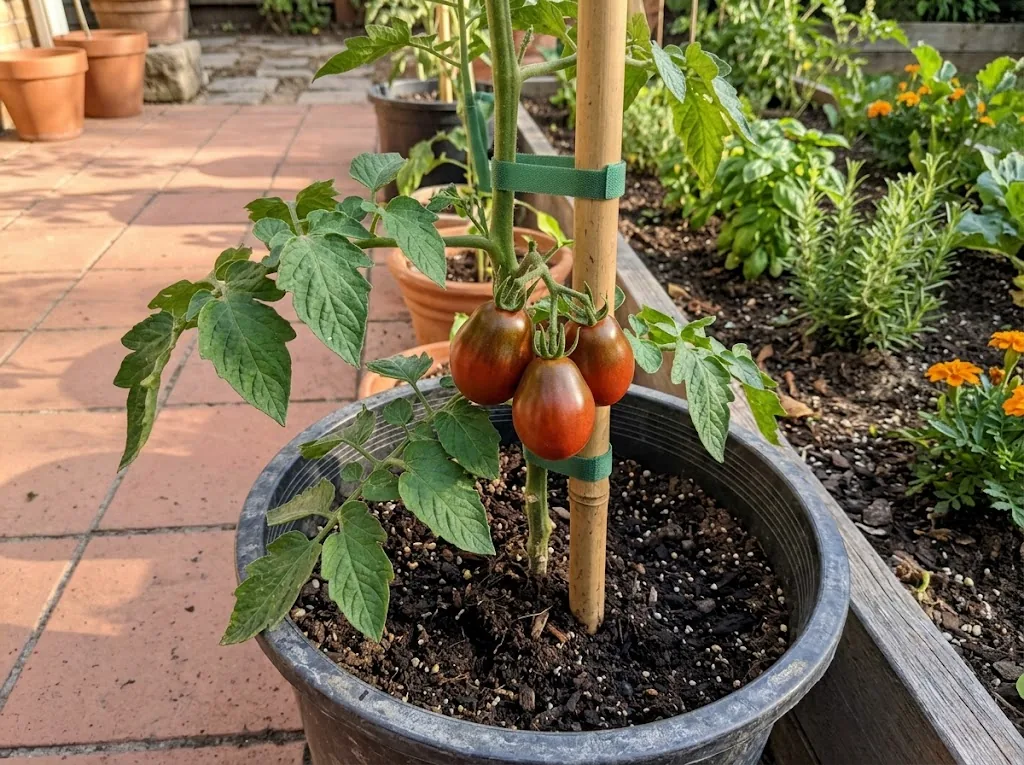
Can it grow in a pot? Possibly, but this vigorous vine is less convenient in a small space than a bush type. If you try container growing, use a pot of at least five gallons, quality potting mix, and a sturdy stake or cage installed at planting. Minnesota Extension notes that container tomatoes need frequent watering and support.
When to harvest
Judge ripeness by color and feel together. Pick when most of the skin has reached its deep, dark red and the tomato gives slightly to gentle pressure. Dark tomatoes are harder to judge by color alone, so inspect the whole tomato and rely on feel as well as shade. Minnesota Extension advises bringing nearly ripe tomatoes indoors when cold weather threatens.
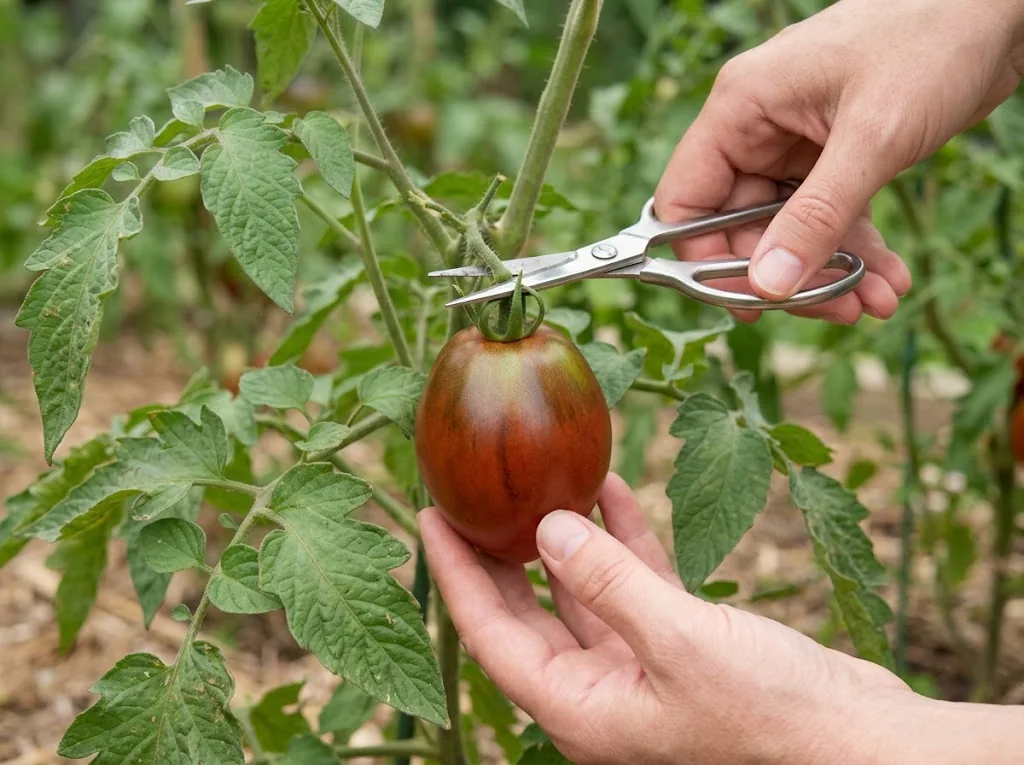
Use clean snips if a cluster resists, and support it with one hand as you pick. Check plants every few days once color develops; remove split or damaged tomatoes before they spoil nearby produce.
Storage and preserving
Keep sound, unripe tomatoes at room temperature in a single layer, spaced apart, and check them regularly. Minnesota Extension notes that light is not needed for ripening indoors. Use ripe ones soon for the best flavor; freeze extra produce for later cooking.
Sellers list it for fresh slices, roasting, sauces, and cooked dishes. Freeze extras for later cooking or follow a tested preservation recipe. For home canning, add the specified bottled lemon juice or citric acid: tomatoes can be too low in acid for safe processing without it. The National Center for Home Food Preservation gives tested procedures and acidification amounts.
Do not improvise a shelf-stable sauce or salsa by changing ingredient proportions. Mixtures with low-acid vegetables need a recipe tested for that exact product. Refrigerate an untested sauce or freeze it.
Uses in the kitchen
Seed Savers Exchange describes the flavor as rich, which is a seller’s description rather than a guarantee. This black tomato stands out for its tapered shape and dark color. Taste a fully ripe tomato on its own before seasoning, then slice it onto toast or add it to a salad, quick pan sauce, or roasting tray. Seed Savers lists it for fresh eating, cooking, or canning, while Thresh sells it as a paste tomato for cooking and canning.
For a tasting plate, compare sweetness, acidity, and texture as cultivars ripen. The Moonglow tomato brings a contrasting golden color. Keep notes on your own harvest: taste can shift with ripeness and growing conditions.
Is it a good tomato to grow?
Choose this cultivar if you want distinctive potato-leaf foliage, dusky tomatoes, and several uses in the kitchen. Plan for a tall support and a season long enough for a 70 to 80 day transplant-to-harvest estimate. Its unusual name and shape make it memorable, while its range of uses gives you options beyond fresh eating.
