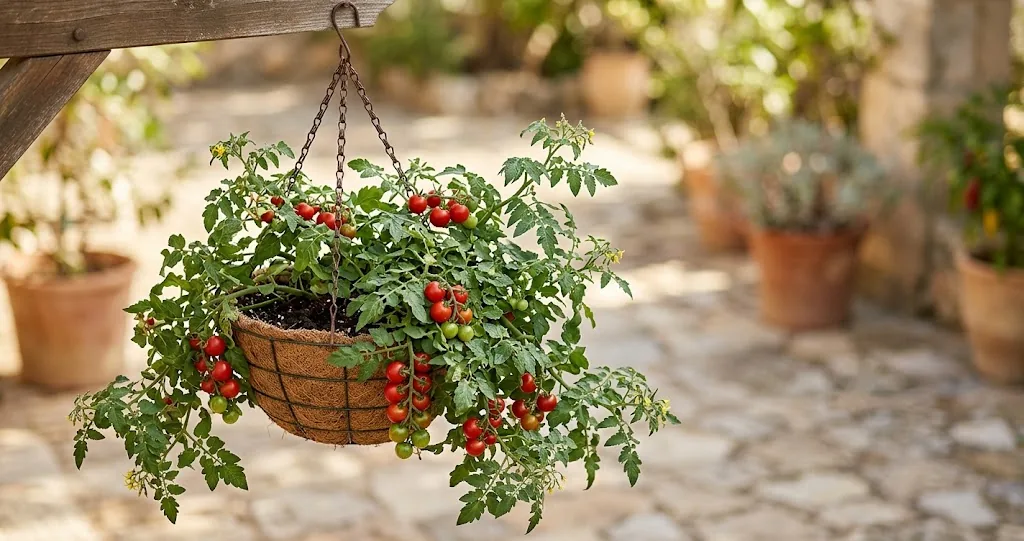
A tumbling tom tomato plant spills over the rim of a hanging basket instead of reaching upward on a tall vine. This compact cherry cultivar comes in red and yellow selections, giving patio and balcony gardeners an edible crop for small space gardens. Grow it in sun, use a roomy basket or planter, and keep the mix evenly moist. Gardeners choose it for its trailing shape as well as its cherry-sized crop.
To explore other named cultivars and types, visit our tomato varieties hub.
Origin and history
This name is used for trailing cherry tomatoes, including red and yellow selections. Floranova’s current catalog lists the red and yellow selections separately. The cultivar profiles reviewed describe their growth and use, but do not identify a breeder or release date, so a dated origin story remains unverified. Check the full packet name, because sellers describe the Red and Yellow selections of this variety differently.
The red selection bears red cherries, while the yellow line ripens to a golden shade. Both are sold for fresh eating. If you would rather grow a full-size red slicer in the ground, see our profile of Red Deuce tomatoes.
Botany and growth facts
This cultivar belongs to the species Solanum lycopersicum. Thompson and Morgan describes the red selection as a compact bush with a naturally trailing habit, and the Royal Horticultural Society lists it as a trailing cherry type. Like other determinate tomatoes, the stems grow outward and hang over the basket instead of climbing like an indeterminate cordon.
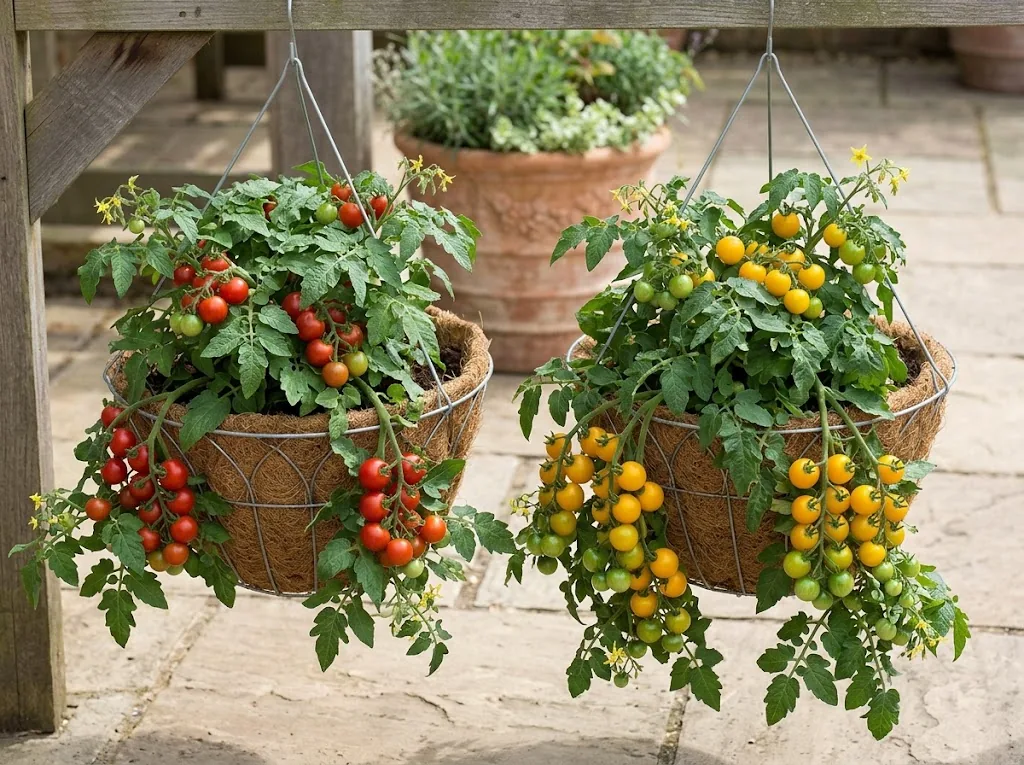
The red line produces small red cherries. Yellow listings describe round, yellow or golden cherries. Harris Seeds lists its yellow tomatoes at about 1 to 2 inches across, while Tomato Growers Supply lists 1 to 2 ounces for its determinate yellow hybrid; these are estimates for those specific lines, not a guarantee for every packet. A catalog height or trailing length can vary too, so plan to let the branches hang rather than expecting a miniature upright bush.
Days to maturity also vary by seller. Floranova lists 63 days, Harris Seeds lists 65, and the seller of the 1 to 2 ounce yellow hybrid above lists 70 days. Companies may count from different starting points, and weather and light change the pace. Treat the figure on your own packet as a planning estimate, not a pick date.
Compare packets of tomato seeds by fruit color, maturity estimate, and whether the line is open-pollinated or an F1 hybrid before deciding whether to save any. Sellers do not label every yellow line the same way: Harris Seeds’ linked listing identifies its seed as F1, while Reimer Seeds describes its listing as open-pollinated. Seeds saved from an F1 hybrid may not develop into plants true to that selection; the University of Illinois Extension explains this difference for saved seed. Disease-resistance codes are likewise tied to the exact line, so rely on the packet rather than the shared name.
Growing in baskets and containers
Choose a hanging basket, window box, or wide planter with drainage holes. Harris Seeds recommends a 12 to 15 inch basket for one plant, which gives the trailing stems room to spill. The exact size depends on weather and how often you can water. A larger volume of potting soil can buffer moisture changes, while a smaller basket may need daily attention in hot weather. Iowa State University Extension recommends at least a 2-gallon pot for small-fruited plants and notes that larger containers generally perform better. Use fresh potting mix that holds moisture but drains freely.
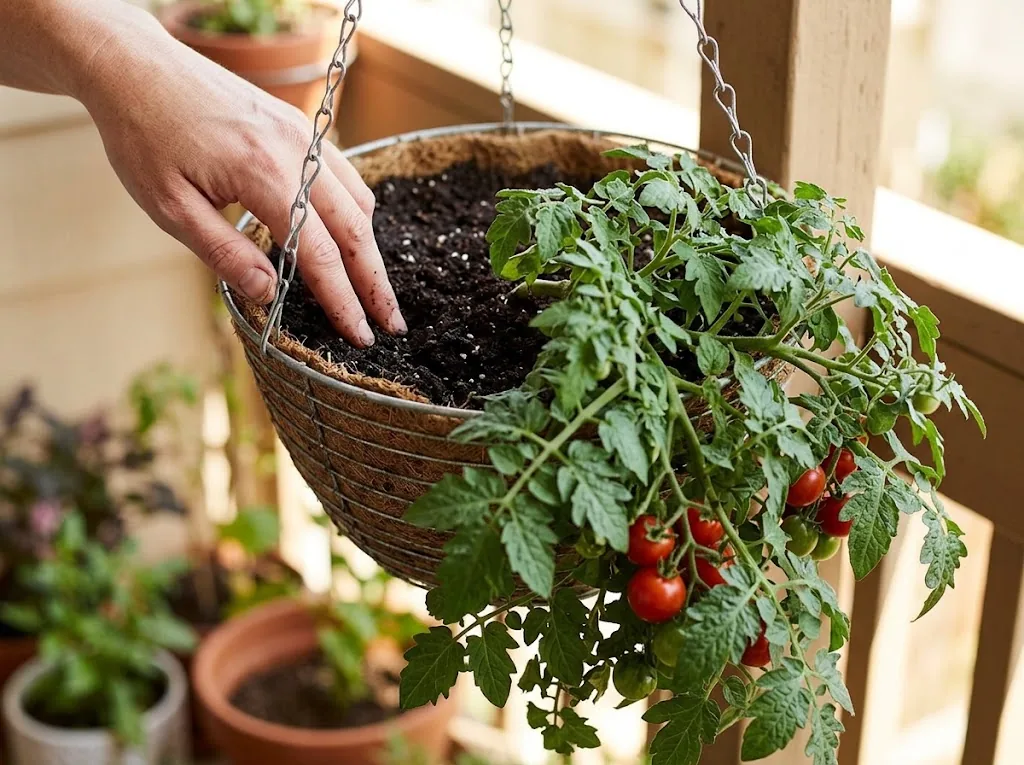
A deck, patio, or balcony can work if the planter gets at least six hours of direct sun, as Iowa State Extension advises. Start seeds indoors or buy a transplant, then move it outside after your local last-frost danger has passed. Harden a seedling gradually before leaving it outdoors. The Royal Horticultural Society also lists a heated greenhouse as a seed-starting option for the yellow line (RHS growing notes). Thompson and Morgan says the red line needs no side-shooting or training, so let its stems hang naturally rather than pruning them into an upright shape. A tomato cage is usually unnecessary for this trailing habit.
Pots dry faster than garden beds, especially in sun and wind. Check the mix daily in hot weather and water consistently when the top begins to dry, keeping moisture even without leaving roots waterlogged. Swings in moisture as blossoms set and cherries enlarge can contribute to cracking or blossom-end rot. University of Illinois Extension explains the link between moisture changes and these problems. Feed according to the potting mix and fertilizer label; the Thompson and Morgan profile linked above recommends regular tomato feed after the first flower truss forms for its red line.
Common problems and resistance
Inspect foliage and stems for pests, spots, or wilting. Tomato hornworms can blend into foliage and quickly strip it, so check the plant at least twice a week in summer and remove caterpillars you find. The University of Minnesota Extension recommends regular checks because the caterpillars can be hard to spot. Remove badly damaged foliage with clean pruners. No cultivar is immune to problems, so do not assume a plant is resistant unless its own packet lists the relevant code. A code for one line does not apply by itself to every packet. The RHS also notes possible susceptibility in the Yellow line to glasshouse whitefly, tomato moth, blossom-end rot, magnesium deficiency, and grey mould under glass (RHS growing notes). Those are listed risks for that line, not a guarantee for every packet.
Do Tumbling Tom tomatoes need pruning?
Usually not. The compact plant has a naturally trailing shape, so its stems are meant to cascade rather than be trained upright. Remove only damaged growth; regular pinching of side shoots is unnecessary for the red line.
Harvest Tumbling Tom tomatoes by color
When are Tumbling Tom Yellow and Red ripe?
When weather allows, let the cherries develop their mature color on the plant. Pick the red selection when it is evenly red; choose the yellow line by its ripe yellow shade instead of waiting for red. Ripe fruit should give slightly to a gentle touch. Iowa State Extension describes these color and softness cues in its container guide linked above. Pick gently so you do not pull down the trailing stems.
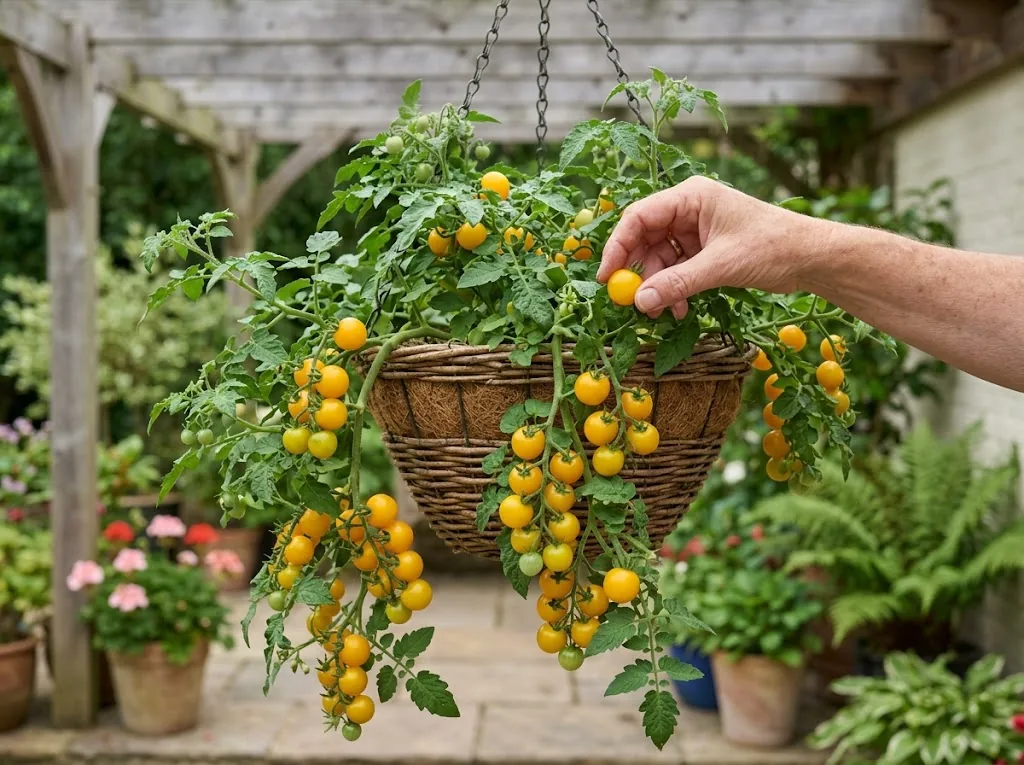
Use color and feel rather than the days-to-maturity number alone, since warm or cool conditions can shift the season. For another named plant to compare before next season, see our profile of Bush Champion tomatoes.
Storage and preserving
Eat ripe cherries soon after picking for the best fresh texture. Keep them at room temperature and out of direct sun for short-term use. Refrigeration can extend storage, but extended chilling may dull fresh flavor, as Oregon State Extension explains in its tomato harvest and storage guidance. Mature green fruit can finish ripening indoors at room temperature; University of Minnesota Extension recommends checking it as it colors.
For a small harvest, freeze the whole cherries or cook them into a sauce and freeze that. Oregon State Extension notes that tomatoes can be frozen or dehydrated. For pantry storage, follow a tested canning recipe and its acidification directions. Acidity varies, so the University of Minnesota Extension relays the USDA recommendation to add acid to all home-canned tomatoes and tomato products.
Cooking and serving the cherries
The bite-size crop is easy to snack on, toss into a salad, or halve over toast and pasta. Red and yellow cherries also brighten roasted vegetables. Floranova lists fresh snacking and salads as uses, and Thompson and Morgan describes the red selection as sweet and juicy. Their small size makes them handy for quick meals, though the plant is grown for cherry fruit rather than dense paste.
For most home gardeners, the appeal is the mix of edible produce and an ornamental trailing habit. The yellow version adds a bright contrast among green leaves, while both selections cascade over the basket edge. Give the hanging stems room, keep the pot from drying out, and pick each color when it reaches its own ripe shade.
