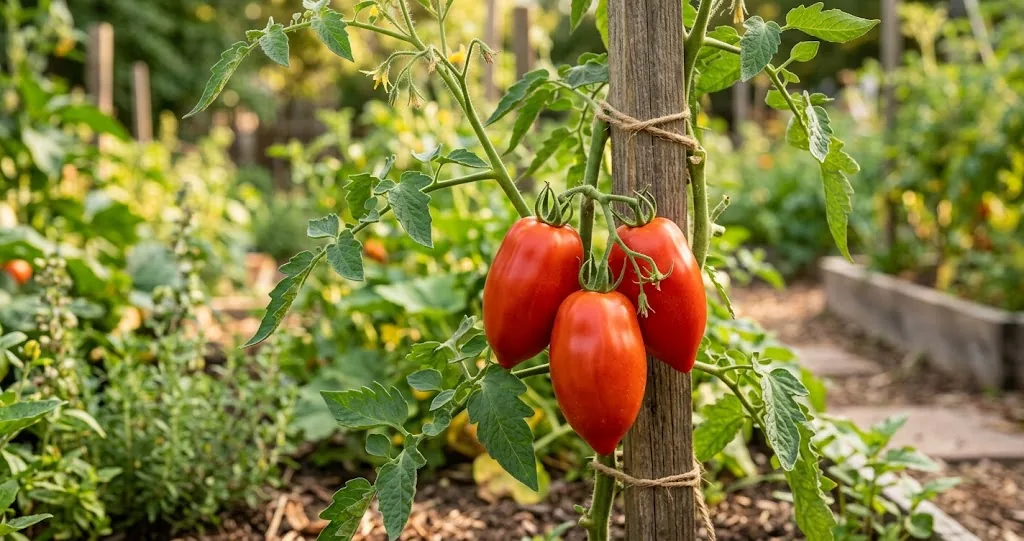
The Amish Paste tomato suits gardeners who want one harvest for both fresh meals and a pot of cooked tomatoes. Its large, red fruit has firm, meaty flesh, while the vines keep producing over a long season instead of ripening one concentrated crop.
This traditional, open-pollinated type usually bears fruit around 8 ounces, with larger strains reaching 12 ounces. Expect an oxheart or elongated plum shape and roughly 75 to 85 days from transplanting to the first ripe fruit. Seed strain and growing conditions affect both size and timing.
For a broader look at the choices, visit our guide to tomato varieties.
Origin and history
Amish origins are associated with growers in Wisconsin, but the exact story is not settled. Cornell’s vegetable variety database reports an Amish community there. Tatiana’s TOMATOBase says it was first introduced in the 1987 Seed Savers Exchange yearbook by Thane Earle of Whitewater, and that Tom Hauch acquired seed from Amish farmers near Lancaster, Pennsylvania, who said it came from Wisconsin growers. These records trace how the variety spread, not its precise age. Treat claims that it dates to the late 1800s as unconfirmed history.
Cornell classifies it as open pollinated, not an F1 hybrid. Gardeners can save heirloom seeds from healthy, ripe fruit and expect reasonable continuity, though pollen from another variety may change the next generation. The University of Minnesota Extension seed-saving guide explains the process: ferment tomato seed briefly to remove the gel, rinse it, and dry it fully. Open pollinated describes how it reproduces; it does not mean the seed is organically certified.
Are the seeds heirloom and open-pollinated?
Yes. It is a traditional heirloom tomato that breeds true when isolated from other varieties. Label saved seed and keep it separate if preserving its traits matters to you.
Botany and plant facts
This tomato is Solanum lycopersicum, a red-fruited variety. Its growth habit is indeterminate: the vines continue growing and setting fruit through the season until cold weather or disease ends growth. Install a sturdy cage, trellis, or stake when planting, before the stems become heavy.
Fruit is usually about 8 oz, with larger strains reaching 12 ounces, depending on the seed source. It has firm, bright red flesh and relatively few seeds. Some are long and plum-shaped; others have a heart-like outline. Seed sources list about 75 to 85 days to maturity after transplanting, or about 80 days in a typical growing season. Cornell Cooperative Extension gives a 74 to 85 day range, while University of Delaware Extension lists 85 days.

How do the fruits and harvests compare?
Compact paste types such as Roma are often described as ripening more of their crop at once, which helps when you want one large batch for preserving. This variety generally produces larger fruit over a longer growing season, so pickings arrive gradually. Seed catalogs vary by strain, so check the habit and maturity details on the packet.
Growing Amish Paste tomatoes
Sowing and germination
Sow seeds indoors about six to eight weeks before your area’s last expected frost, or buy sturdy transplants. Plant outdoors only after frost danger passes and soil temperature has warmed. Choose full sun, at least six hours daily, and fertile, well-drained soil with compost or other organic matter. University of Delaware Extension recommends full sun and fertile soil for processing tomatoes.
Seeds germinate best in warm conditions. Keep the starting mix lightly moist, not waterlogged, and give each seedling bright light as soon as it emerges so it grows stocky rather than stretched. Harden young plants off gradually over one to two weeks before setting them outside, giving them more time outdoors each day.
Give Amish Paste vines room and add support early. A tomato plant with large fruit grows tall and heavy, so a short cage may not hold it. Tie stems loosely as they extend. Prune crowded lower leaves or a sucker only when airflow or access needs improvement; heavy pruning removes potential fruiting stems.

Will it grow in a container, and how tall will it get?
You can grow it in a container if you have a large pot, steady watering, and tall, strong support. Illinois Extension advises a container at least 20 inches across for tomatoes and notes that vining types may outgrow small spaces. Use fresh potting mix, one plant per pot, and check moisture often because pots dry faster than garden beds. Plan for a tall vine that will outgrow a short cage. A compact bush variety is easier when patio space is tight.
Water deeply at the soil line, especially while fruit is sizing. Clean mulch evens out soil moisture and limits soil splashing onto leaves. Avoid frequent shallow watering and excess nitrogen, which encourages leaf growth at the expense of fruit. A balanced fertilizer at planting supports early growth; follow the label instead of adding extra by guesswork. Keep foliage dry when possible, remove diseased material, and rotate tomatoes to another bed when practical.
No dependable disease-resistance codes are consistently listed for this variety, so plan as if it has no special resistance. Watch for early blight, Septoria leaf spot, blossom end rot, and wet-weather disease. Good spacing and airflow help reduce leaf disease pressure; steady watering reduces moisture swings linked to this problem. Check stems and leaves while watering, remove fallen spotted material, and look under leaves for hornworms. Identify spreading symptoms before choosing a treatment.
For another heirloom profile, see how the Rutgers tomato differs in growth and fruiting habit.
Harvest
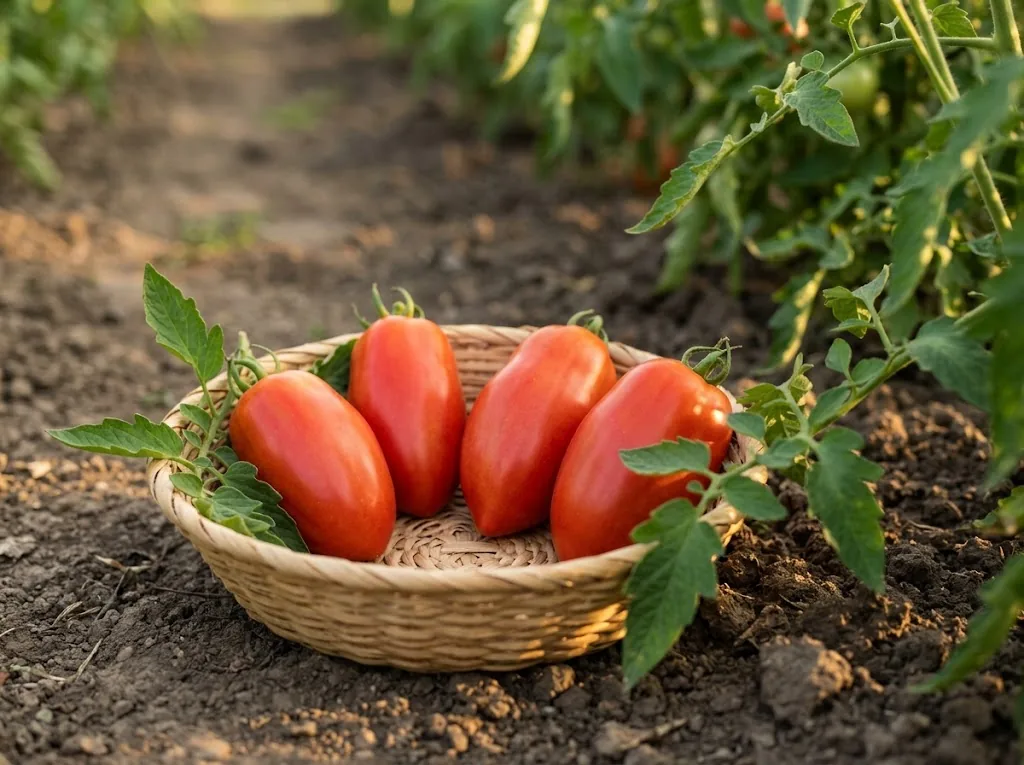
Use the maturity window for Amish Paste tomatoes as a guide, not a deadline. Weather, sunlight, soil warmth, and transplant size affect when the first fruit colors. Pick tomatoes when they have turned fully red and yield slightly to gentle pressure. Use clean pruners if stems resist pulling, and handle ripe fruit carefully to avoid bruising.
Because the vines continue growing, ripe fruit arrives over an extended stretch. Pick regularly to keep fruit moving into the kitchen. Mature tomatoes that are still partly green late in the season can finish ripening in a warm spot away from direct sun. If frost is forecast, harvest mature green fruit, keep it in a single layer, and check it every few days.
Storage and preserving
Use ripe fruit soon for the best texture. Store uncut tomatoes at room temperature out of direct sunlight, and avoid stacking them where they may split or bruise. Illinois Extension advises against refrigerating ripe tomatoes and says to keep them at room temperature for two to three days.
Processing tomatoes are convenient for preserving, but the variety name does not make home canning automatically safe. Follow a current, research-tested recipe and its directions. The National Center for Home Food Preservation says to acidify tomatoes when canning, including when using a pressure canner. Do not skip the acid or improvise a processing time.
Uses
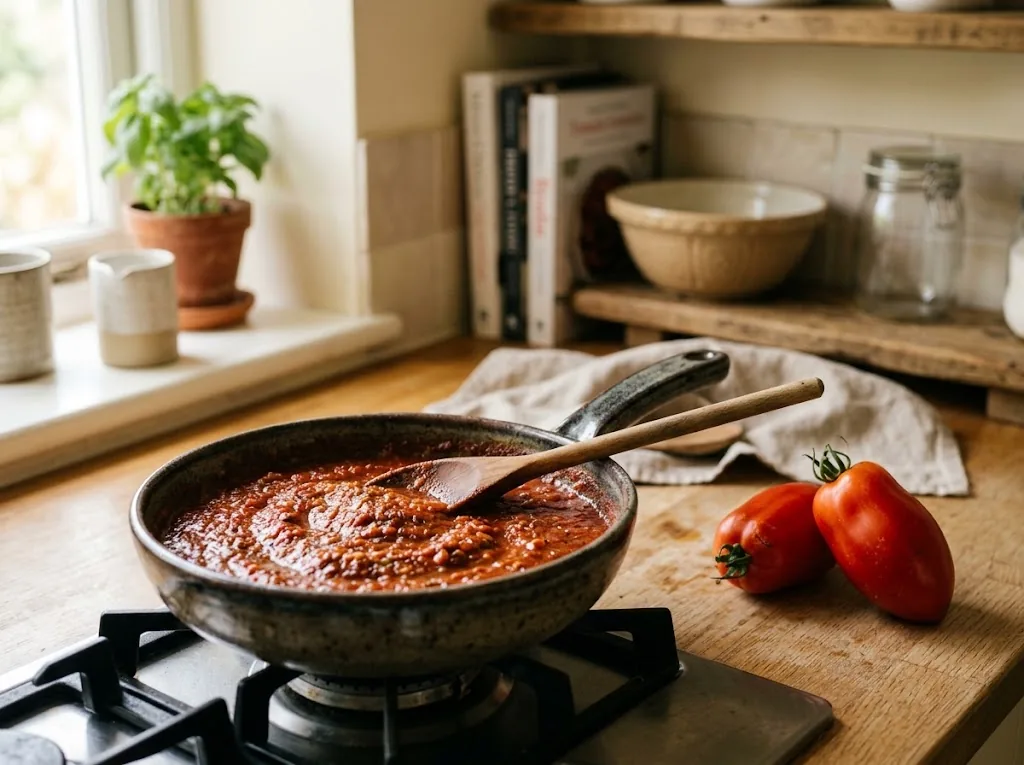
One harvest serves several kitchen jobs. Cook the fruit into sauce, roast halves until their edges caramelize, or simmer chopped tomatoes into soup or cooked salsa. For fresh use, slice a large fruit and season it simply with salt, olive oil, and herbs; it is juicy enough for sandwiches and salads. The substantial flesh holds together well, while the flavor stays sweet and tomato-forward.
Amish Paste is a practical choice if you want a versatile variety and do not mind staking a continuing vine. Choose a compact bush type if you need a shorter plant or a concentrated harvest for one preserving session. If you want a pale-fruited tomato to slice or cook alongside it, our profile of the Great White tomato covers a very different type.
The flavor is generally described as sweet and rich, with a juicy interior rather than the dry texture some cooks expect from a processing tomato. Larger fruit saves prep time when a recipe calls for peeled tomatoes, but its extra juice may mean a longer simmer to thicken. Mixing it with a brighter-tasting variety adds another layer to cooked dishes.
What are these tomatoes best for?
For thicker tomato sauces, simmer the fruit gently and strain seeds or skins if you prefer a smoother result; a food mill or strainer works well, and for a rustic dish you can simply crush the fruit as it softens. Fresh eating works too, though these tomatoes are juicier than compact processing types.
Sources
- Cornell Cooperative Extension, vegetable variety entry
- University of Delaware Cooperative Extension, growing guide
- Tatiana’s TOMATOBase, Amish Paste
- University of Illinois Extension, container growing advice
- University of Illinois Extension, growing, harvest, and storage guidance
- University of Illinois Extension, starting seeds
- University of Minnesota Extension, saving vegetable seeds
- National Center for Home Food Preservation, tomato preservation guidance
