
This tomato earns its place in a garden when you want a large red slicer without waiting until late summer for the first ripe fruit. The F1 hybrid produces globe-shaped fruit on a vining plant, with harvest often starting about 73 days after transplanting. Here is what to expect from the variety, how to support its long season, and how to use the crop.
Origin and history
The Big Beef F1 tomato is a modern hybrid variety recognized as the 1994 All-America Selections edible vegetable winner. All-America Selections reports that the variety was developed for large, flavorful fruit and a broad set of disease resistances. Its award description gives an expected first harvest around 73 days after transplanting into warm garden soil. Those details make Big Beef a useful choice for gardeners who want classic beefsteak size with earlier maturity than many large-fruited varieties.
The name can be confused with Burpee’s Big Boy, but they are different varieties. Burpee says it introduced Big Boy in 1949. Big Beef received its AAS award in 1994, and its product information identifies it as an F1 hybrid. The names sound alike, but Big Boy and Big Beef should not be treated as interchangeable seed names. Check the packet before planting if you are looking for one in particular.
If you want to compare a different large-fruited tomato, see our German Johnson tomato profile.
Botany and plant facts
This is a cultivated tomato, Solanum lycopersicum, sold as an F1 hybrid. The plant is indeterminate, so the main stems keep growing and setting fruit as long as conditions allow. Plan for a tall, sprawling vine rather than a compact bush, and put a sturdy stake, trellis, or large cage in place while planting. A single universal height is not useful here: plant growth changes with season length, support, pruning, and growing conditions.
The fruit is a red, globe-shaped beefsteak tomato, commonly listed at about 8 to 12 ounces. Its relatively broad, flattened shoulders and firm, juicy flesh make it easy to slice across for sandwiches. Seed companies describe its flavor as full or old-fashioned, though sweetness and acidity vary with ripeness, weather, and growing conditions.
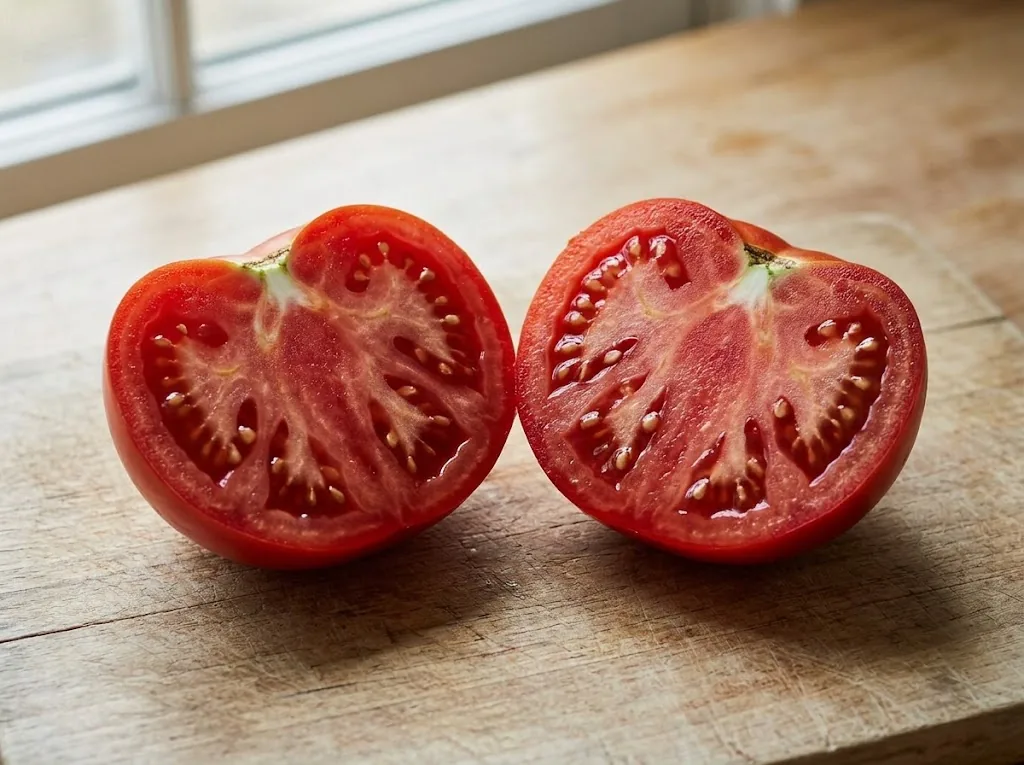
The variety is known for several disease-resistance traits, but the exact list differs by supplier. All-America Selections lists resistance to Verticillium, Fusarium races 1 and 2, Stemphylium, tobacco mosaic virus, nematodes, and Alternaria stem canker. Seminis lists additional resistance codes, including some at intermediate rather than high resistance. Resistance lowers risk from named pathogens; it does not make a plant immune to every disease or replace rotation, sanitation, and good watering practices. Compare the resistance codes on the seed packet you buy, since supplier descriptions and seed lines can vary.
Growing Big Beef tomatoes
Give this vining tomato a sunny position and enough room for a large plant. Start seeds indoors about five to six weeks before outdoor planting if you are raising transplants yourself. Move them outdoors only after frost danger has passed and the soil has warmed. Install its support at planting time so you do not damage established roots later. A tall stake with soft ties, a strong trellis, or a roomy tomato cage can keep heavy fruit off the ground and make picking easier. Leave enough space for air to move through the plant.

Keep moisture steady while the fruit grows. Water deeply at the soil surface when the root zone begins to dry, and use mulch to slow moisture loss. If you use fertilizer, follow a soil test and the product label instead of adding a high-nitrogen feed by habit. Too much nitrogen can favor leafy growth over a balanced crop. Avoid frequent shallow sprinkles and wet foliage when practical. Large tomatoes can crack after a dry spell followed by heavy rain or watering, so even soil moisture is more helpful than a rigid calendar. If fruit develops a dark, sunken patch at the blossom end, check for uneven moisture and other causes before adding fertilizer or calcium products.
Pruning is optional. If you prune, you can train the plant to one or two main stems if you want a more open plant that is easier to tie and inspect, but pruning removes leaf area and can reduce the number of fruiting branches. Gardeners with a sturdy cage can leave more side shoots in place, while a single-stem trellis system needs regular tying and selective pruning. If you prefer a fuller vine, tie it to a strong support and remove only leaves that touch the soil or are clearly diseased. Do not strip the plant bare. Follow the seed supplier’s advice for spacing and resistance details, because the commercial seed line is the authority for that particular packet.
Do not assume disease resistance means disease-proof. Rotate tomatoes and other nightshades away from the same bed when possible, remove unhealthy plant debris, and check leaves and stems regularly for a pest or disease problem. Resistance helps with the listed diseases only, including Fusarium wilt where the label lists it. For example, an Alternaria stem canker resistance label does not promise protection from every leaf spot or blight. Water at the base, and identify a problem before choosing a treatment.
If you want a wider overview of beefsteak and other types, explore our tomato varieties guide. Big Beef belongs to a particular hybrid variety; “beefsteak” describes a broad fruit type that includes many varieties with different habits and harvest windows.
When and how to harvest
Check the seed packet for its stated days to maturity. Seed listings commonly give about 70 to 73 days, but sources may count from sowing or transplanting, so those figures are not directly interchangeable. All-America Selections specifies about 73 days from transplanting into warm soil. Weather, transplant age, and local growing conditions shift the calendar.
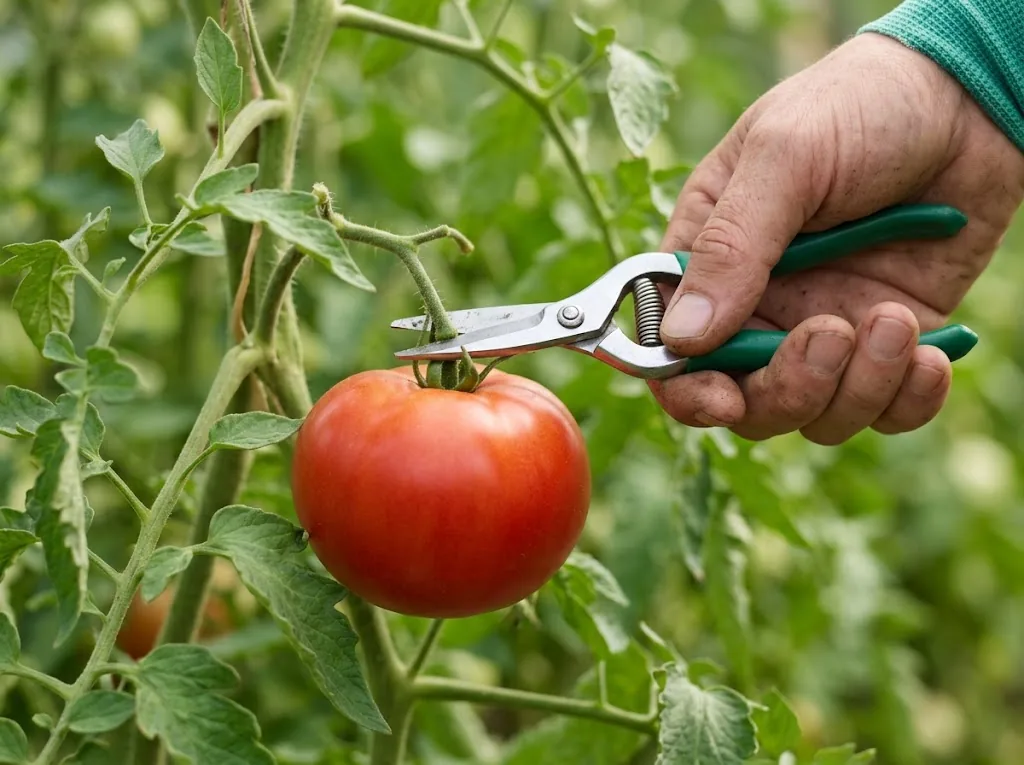
Harvest when the fruit has developed its mature red color and yields slightly to gentle pressure. Cut or lift it carefully; a large beefsteak can split or bruise if it drops. Pick ripe tomatoes promptly, especially before a heavy rain. If frost threatens and you have mature green or partly colored fruit, bring it indoors to ripen at room temperature.
Storage and preserving
Use ripe Big Beef tomatoes soon for the best texture. Keep them at room temperature until ripe, and avoid chilling uncut tomatoes unless you need to slow further softening. Cut fruit belongs in the refrigerator in a covered container and should be used promptly. For a glut, freeze whole or chopped tomatoes for cooked dishes, or make sauce and soup for the freezer. Frozen tomatoes soften as they thaw, so they work better in cooked recipes than fresh slices.
Big Beef is a fresh-market slicer, but sound ripe fruit can also be cooked into sauce or soup. A large tomato makes thick slices, while this variety also supplies plenty of juice for a cooked sauce. If you home-can tomatoes, follow a current tested recipe and its processing instructions exactly. Tomatoes vary in acidity, so add the specified bottled lemon juice or citric acid to each jar. Do not improvise a shelf-stable recipe or assume that a tomato variety is acidic enough on its own. Utah State University Extension provides tested tomato-preservation methods and acid amounts.
How to use Big Beef tomatoes
Slice a fully ripe Big Beef tomato for burgers, sandwiches, toast, or a simple salad. Its broad slices cover bread well, and the juicy flesh suits chopped tomato salads and fresh salsa. Remove excess seeds or juice when you want a less-wet sandwich. For a cooked meal, use the fruit in a quick pan sauce, roasted tomato dish, or soup with basil, oregano, or thyme.
Big Beef is an F1 hybrid rather than an heirloom variety. If you are comparing it with another seed line, check the label: Big Beef and Big Beef Plus are separate seed offerings. Each variety has its own seed description and maturity information, so use the packet for the line you actually plant.
Gardeners choosing among golden beefsteaks can compare Gold Medal tomatoes.
Sources: All-America Selections, Big Beef F1; Seminis/Bayer, Big Beef; Johnny’s Selected Seeds, Big Beef F1; University of Minnesota Extension, Growing tomatoes in home gardens; Utah State University Extension, How to preserve tomatoes; Burpee, Company history.
