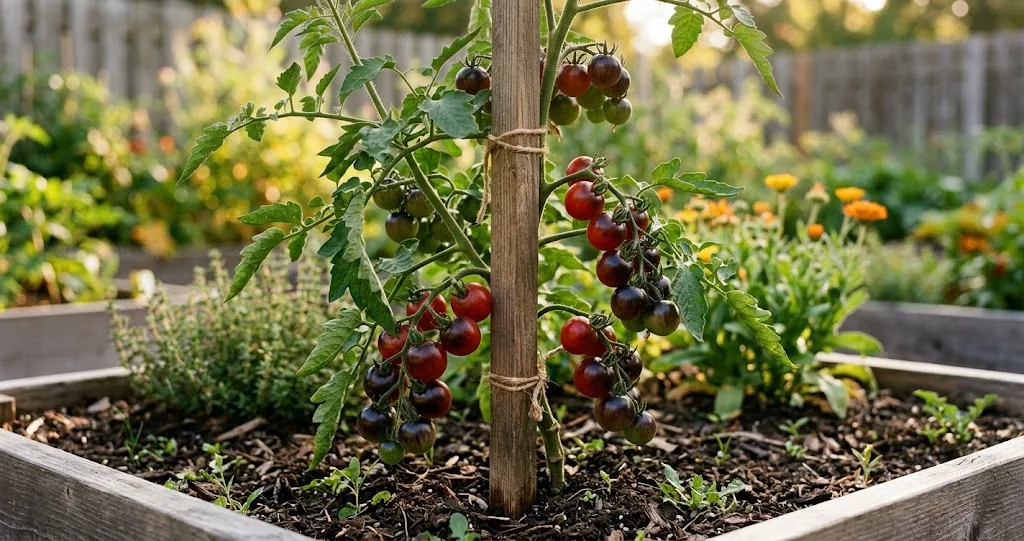
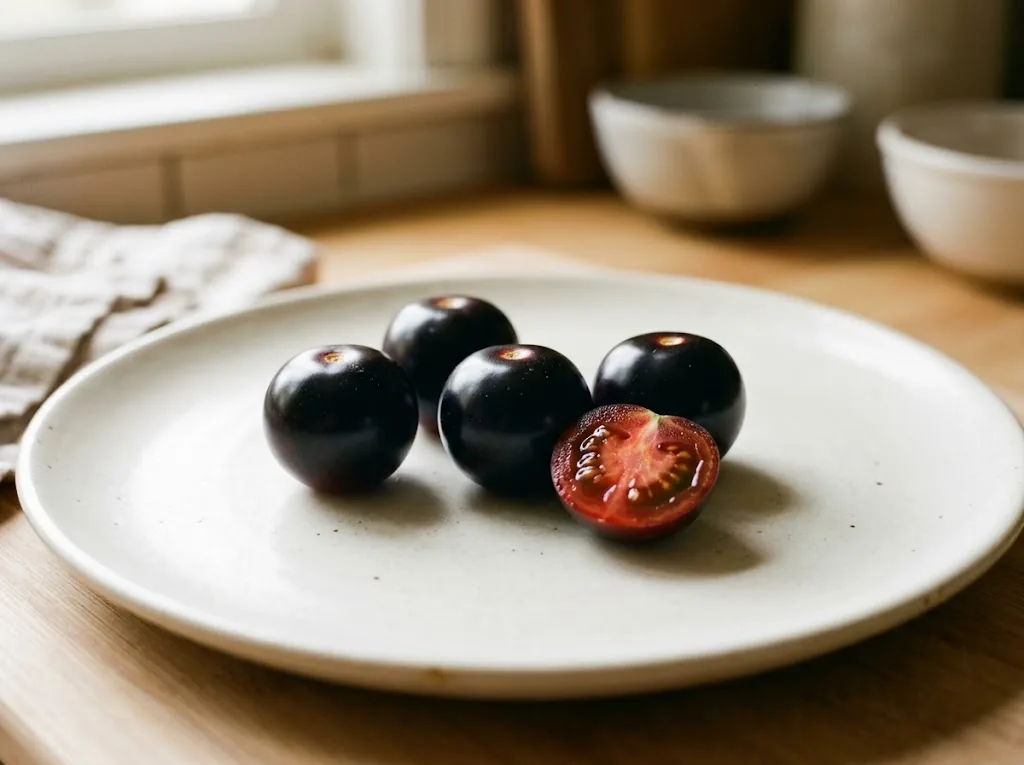
Midnight Snack tomato is a small-fruited cultivar with a two-tone finish: the fruit ripens to red, while skin exposed to sunlight develops a glossy black-purple overlay. That dark overlay is the most striking trait, but the plant is still a vigorous tomato that needs room and support. Here is what sets the variety apart, how to grow it, spot ready fruit, and use the harvest.
For a wider look at how named cultivars fit into the garden, explore the tomato varieties guide.
Origin and history
This F1 was bred by PanAmerican Seed and won the 2017 All-America Selections (AAS) National Edible-Vegetable award. The judges recognized it as a new purple-fruited type with an earlier harvest than the comparison varieties and a flavor they considered an improvement on earlier purple tomatoes. The award organization describes it as a fresh-eating variety, good in salads or straight from the plant. Its award profile names PanAmerican Seed as breeder and records the win; the breeder’s current product listing provides the growing and fruit details below.
The F1 label means it is a first-generation hybrid. Seed saved from its fruit may grow, but the next generation will not reliably repeat the same characteristics. Buy fresh seed when you want plants true to the named variety, as University of Maryland Extension explains for hybrid cultivars.
Botany and plant facts
The plant is Solanum lycopersicum, a small-fruited cherry tomato type with an indeterminate growth habit. It keeps growing and setting fruit through the season when conditions suit it, rather than finishing in one compact flush. The award profile lists fruit at about half an ounce and 1.5 inches; PanAmerican Seed describes it as round and medium-sized. The breeder gives 65 to 70 days to maturity from transplant, a useful estimate rather than a fixed harvest date.
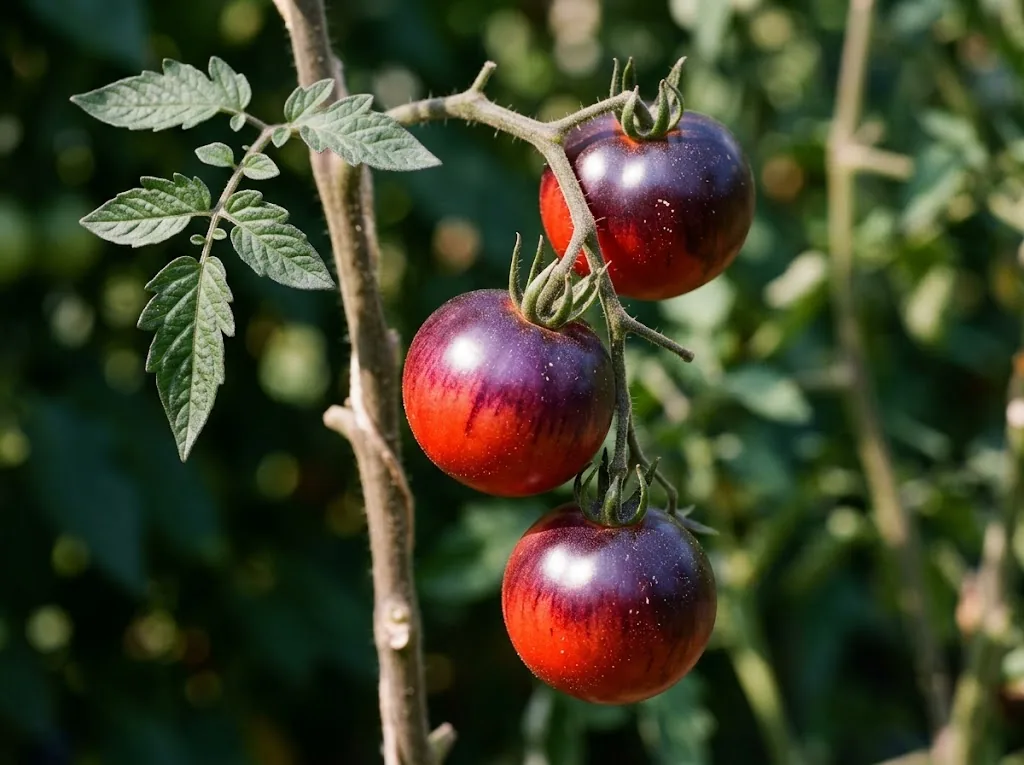
Fruit color is the variety’s signature, but the dark shoulder is not the same thing as ripeness. Anthocyanin pigment accumulates where sunlight reaches the skin, so shaded fruit can show less of the dark overlay. The inside and the base color ripen to red. A nearly black fruit may still be unripe if it has not developed its red undertone.
If you are choosing between dark-fruited types, the Indigo Rose tomato profile covers a different variety with its own growth and fruit traits.
Growing Midnight Snack tomatoes
Give this indeterminate plant full sun and a sturdy cage, trellis, or stake before it gets large. PanAmerican Seed lists a mature height of 60 to 72 inches and spread of 36 to 48 inches, with 18 to 36 inches between plants. Its product guidance favors in-ground planting with support. A large container can work if it has drainage and enough volume for a tall, productive plant, but expect to water more often than you would in garden soil.
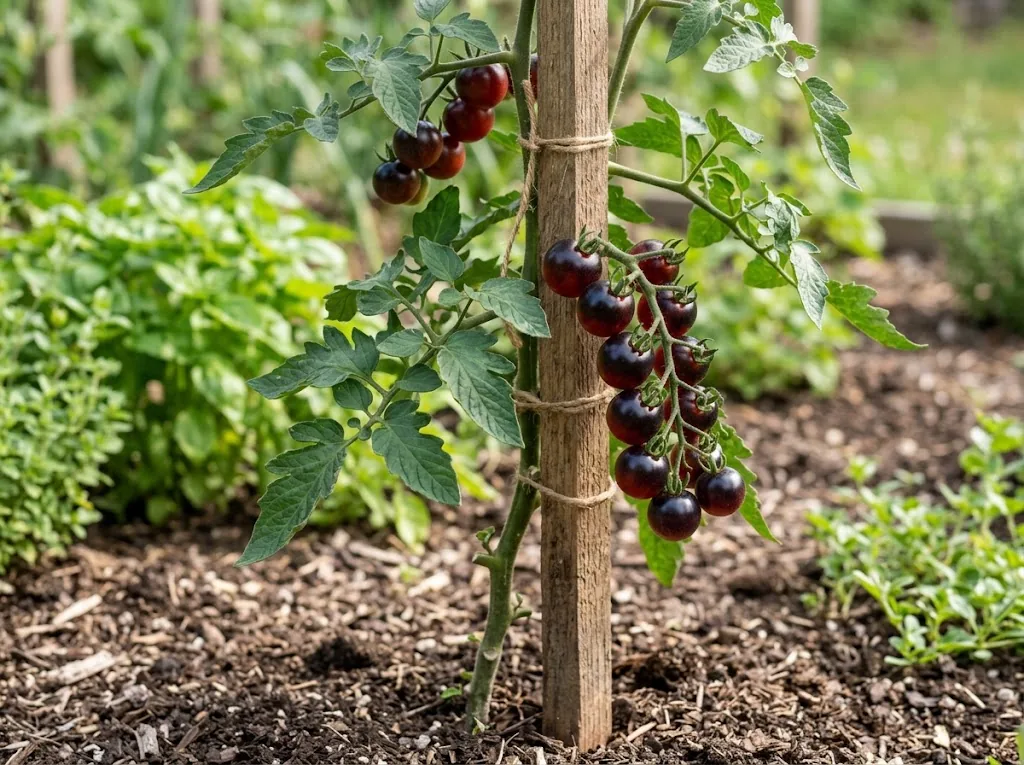
For seed starting, sow indoors five to six weeks before the planned transplant date. Harden each young seedling off gradually, then move it outdoors after frost danger has passed and the soil has warmed. Use fertile, well-drained soil, water deeply enough to moisten the root zone, and keep moisture reasonably even as fruit develops. Mulch helps slow evaporation and limits soil splash. Avoid crowding the foliage: open spacing and good airflow make it easier to inspect the plant and keep leaves dry. These are standard home-garden practices; University of Minnesota Extension’s tomato guide covers planting, care, harvest, and storage in more detail.
The dark overlay develops where sunlight reaches the fruit, so a heavy canopy may leave some cherries redder. Keep enough healthy foliage to protect the plant, and guide stems so light reaches the clusters without stripping leaves. No special pruning schedule is required for the color: focus on secure support, consistent care, and picking regularly once fruit ripens.
Harvest and ripeness
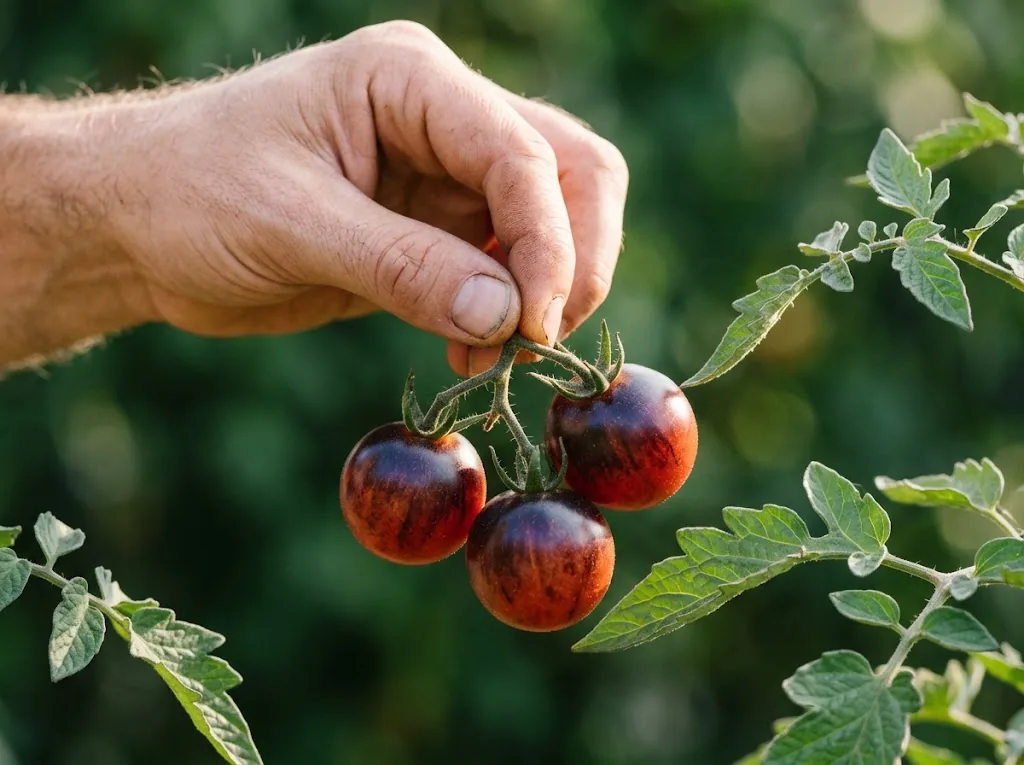
Use color and development to judge the fruit. Look for a red base or undertone beneath the dark overlay, then check that it has reached a usable size and mostly colored. The purple color can appear while a cherry is still developing, so it is not a reliable ripeness signal on its own. If it remains hard and mostly green beneath the skin, leave it on the plant and check again later. PanAmerican Seed lists the harvest color as red with a purple-black blush, so the red undertone helps distinguish ripe fruit from an early dark overlay.
Pick ready fruit by pinching the stem just above it or cutting the truss with clean snips. The plant keeps producing over time, so frequent picking helps you catch each cluster at its best and reduces the chance of split or overripe fruit being lost. Taste can vary with weather and growing conditions; the breeder describes a balanced, traditional flavor, but no single flavor note is guaranteed in every garden.
Storage and preserving
Handle the fruit gently and remove any cracked or damaged ones before storage. Keep sound fruit at room temperature and out of direct sun if you plan to eat it soon; a short spell in the refrigerator can slow softening if needed. The UC Master Food Preserver Program’s tomato guide explains both room-temperature storage and short-term refrigeration. If the harvest is larger than your kitchen can use, freeze whole washed fruit, then transfer it to a freezer-safe container; thawed fruit is best for sauces and cooked dishes.
For shelf-stable canning, use a current tested recipe from the National Center for Home Food Preservation and follow its acidification and processing directions exactly. Tomato acidity varies, so do not assume a small-fruited variety is safe to can without added acid or adjust a recipe to taste. The National Center for Home Food Preservation’s tomato acidification directions explain the required approach.
Ways to use the harvest
The variety is bred for fresh eating. Toss whole or halved fruit into a green salad, spoon it over toast with soft cheese, or serve it with a little salt as a garden snack. The red flesh and dark skin make a vivid topping for grain bowls, pasta salads, and picnic plates. For a warm dish, roast the fruit with olive oil and garlic until the skins wrinkle, then fold it through pasta or spread it on crusty bread.
For a very different tomato, a yellow variety, see the Yellow Brandywine tomatoes profile.
This cultivar earns its space when you want a productive plant with memorable coloring and a steady supply for fresh meals. Give its vine sun, support, and room to keep growing, then wait for the red undertone before picking. The dark skin is part of its character; the red base is the better cue that fruit is ready to eat.
