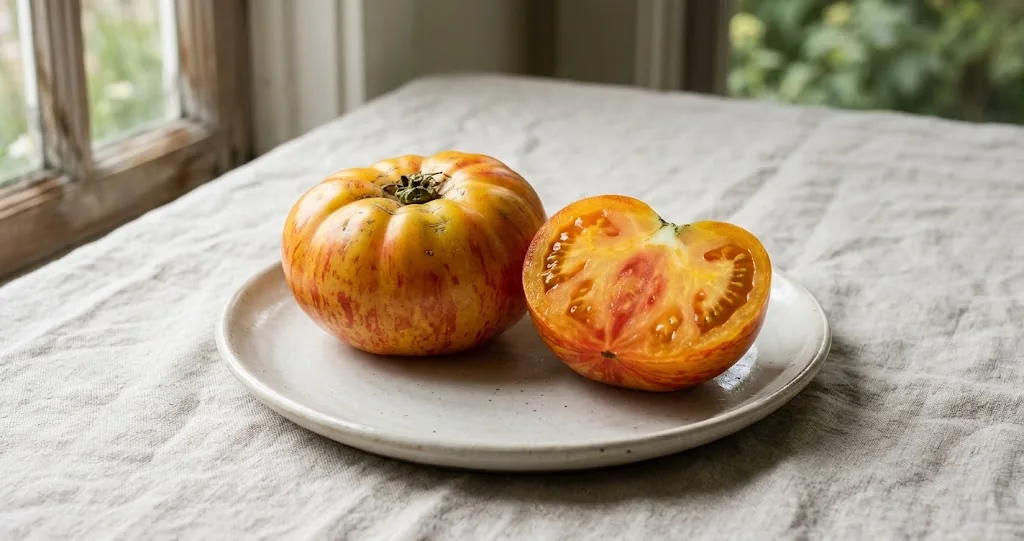
The striped German tomato can look like a sunset: golden flesh streaked with red, inside a broad, softly ribbed tomato. This open-pollinated tomato is grown for large beefsteaks with a sweet, fruity flavor. Sellers agree on the striking color, but catalog details and the older history of this variety are less consistent.
If you are comparing unusual colors and shapes for a home garden, browse the tomato varieties hub for more profiles.
Origin and history
Seed catalogs commonly call this an heirloom, but their origin notes are limited. One seller identifies it as an heirloom from Hampshire County, West Virginia, while many listings provide no place of origin. Those descriptions do not establish the cultivar’s full ancestry, and the German label does not prove that it originated in Germany. Reimer Seeds lists the West Virginia origin.
Names such as “German,” “Old German,” and “German Striped” appear inconsistently in seed catalogs. Before ordering, check a seller’s photo and notes, especially if you want to maintain a particular strain. Similar names do not guarantee that packets contain the same seed line.
Botany and plant facts
Striped German is an open-pollinated, indeterminate beefsteak cultivar of Solanum lycopersicum, a warm-season crop usually grown as a summer annual. The plant keeps growing and setting tomatoes through the season, so allow room for a tall vine and install a sturdy stake, trellis, or large cage. One seed seller lists its height at 4 to 6 feet; support and growing conditions affect its final size. It is not an F1 hybrid. Seed saved from a healthy, true-to-type plant can usually be grown again, though flowers may cross-pollinate with nearby tomato plants.
Expect broad, flattened fruit with shoulders that range from smooth to ribbed. This bicolor tomato has skin shaded yellow and red, usually with a golden-to-orange base and red stripes or blush. Its marbled interior shows red through golden tissue, and its fruity flavor and smooth texture suit fresh slices. Johnny’s describes flat, medium-to-large tomatoes; Reimer lists fruit from 1 to 2.5 pounds. Treat catalog weights as estimates because seed lines and growing conditions vary.
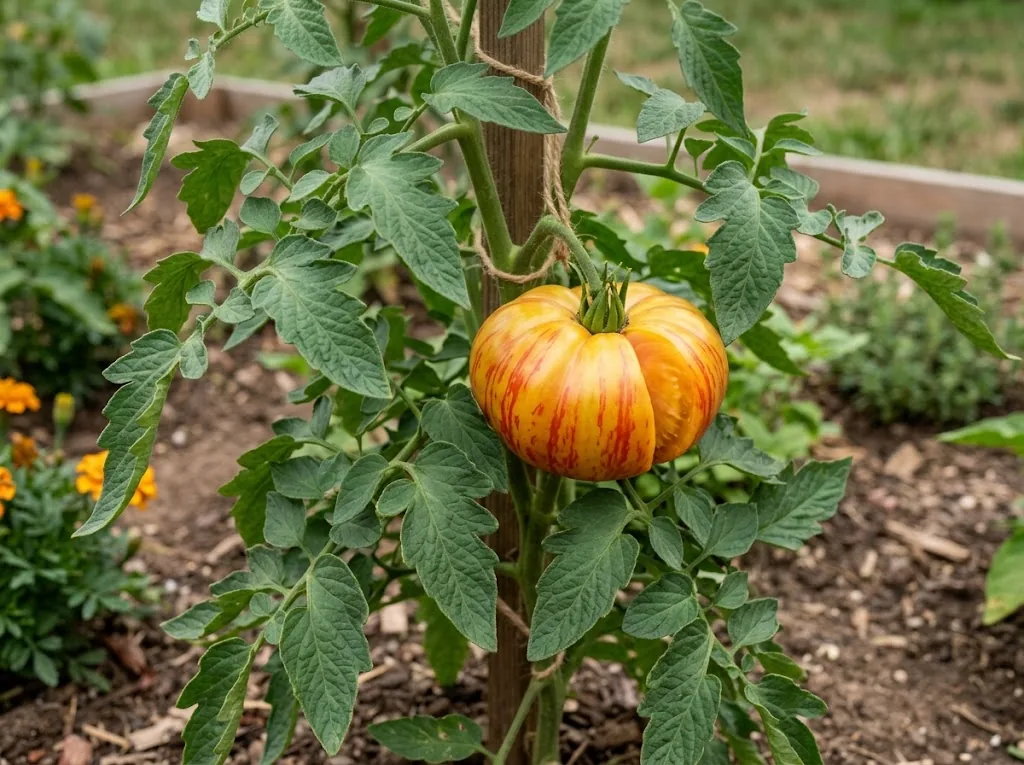
Johnny’s lists 78 days to maturity from transplanting. Check the packet because seed suppliers can count from sowing or transplanting. The seed seller pages consulted do not state a named disease-resistance code for this selection, so do not assume it resists a particular disease.
How to grow this tomato
Start tomato seed indoors about six to eight weeks before your area’s expected last frost, following the packet’s sowing depth and temperature guidance. Harden seedlings off gradually. In a cooler zone or short growing season, this head start gives young plants time to establish before summer ends. Move transplants outdoors after frost danger passes and the soil has warmed, choosing a sunny spot with fertile, well-drained soil and enough space for a tall, spreading plant.
Set the support at planting time so you will not damage established roots later. Tie the main stem loosely as it grows, and check ties as the stem thickens. Pruning is optional. If you prune or remove suckers, keep enough leaves to shade the tomatoes and protect stems from sunscald.
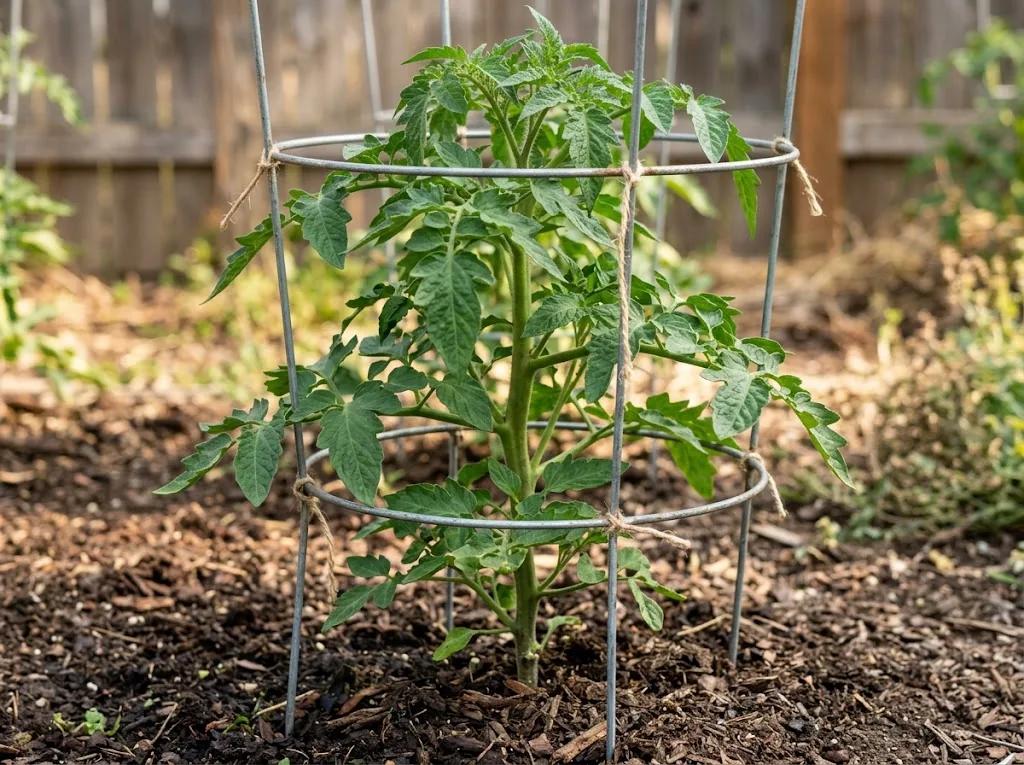
Keep soil moisture steady, particularly as tomatoes swell. Mulch can slow drying and reduce weeds. Large beefsteaks may split after sharp changes in water availability; uneven moisture can also contribute to blossom-end rot. Water the soil consistently, and avoid excess nitrogen fertilizer, which can encourage leafy growth at the expense of production. Illinois Extension explains how consistent watering and staking help prevent common tomato problems. Inspect plants regularly for leaf spots and pests such as hornworms, and remove badly damaged leaves.
For contrast, the Stupice tomato profile covers a smaller, earlier option for gardeners with a shorter season.
When to harvest
Do not wait for these tomatoes to turn solid red. Look for a golden-orange ground color with clear red streaks, then check for a slight give when you press gently. The shoulders may stay greenish or shaded, and exact patterns vary by seed line. Use your supplier’s ripe-tomato photo as a guide. Twist carefully or snip the stem so a heavy cluster does not tear from the plant.
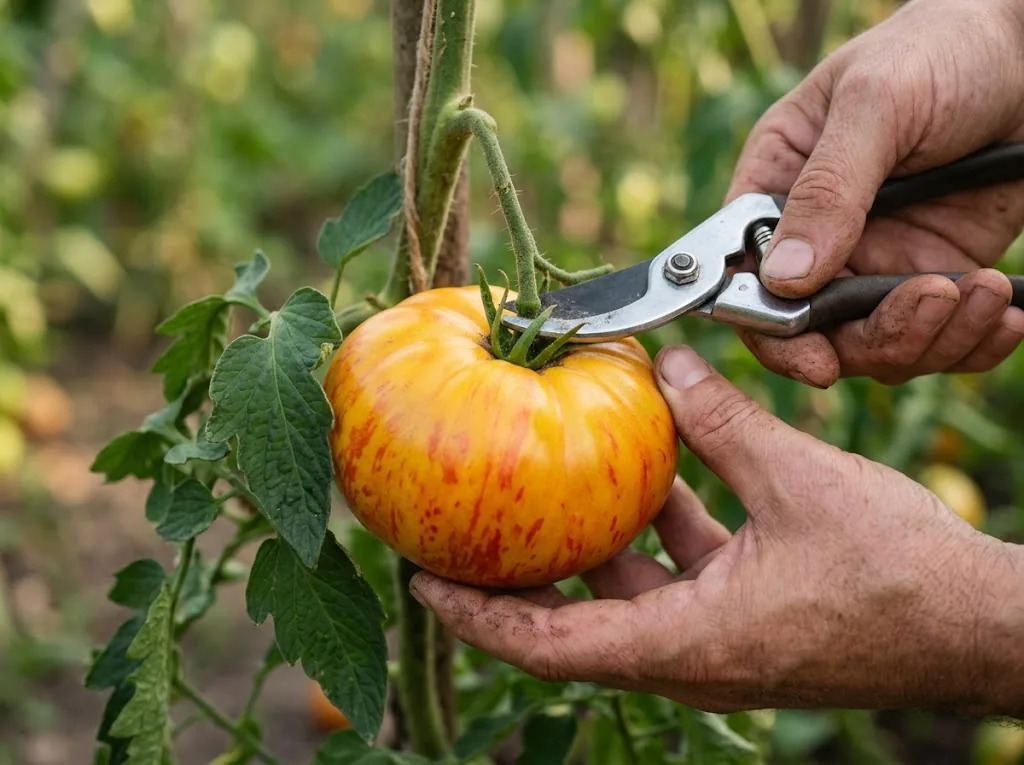
If frost threatens while mature tomatoes are still firm, pick them before the cold reaches the plant. Let sound specimens ripen indoors at room temperature, away from direct sun, and check them each day. Use cracked or bruised ones soon.
Storage and preserving
Keep ripe, uncut tomatoes at a cool room temperature, about 55 to 65°F, for best quality, as University of Delaware Cooperative Extension recommends. Avoid refrigerating whole ripe tomatoes; cover cut pieces, refrigerate them, and use them within a few days.
Freeze whole or chopped tomatoes in labeled containers if you have more than you can use. For shelf-stable jars, follow a tested home-canning recipe exactly. Tomatoes must be acidified for safe home canning, including when using a pressure canner. The National Center for Home Food Preservation explains the required acidification and points to tested procedures; do not improvise acid amounts or processing times.
Ways to use the harvest
Show off the golden-and-red pattern in thick sandwich slices, toast, or a simple salad. The sweet, fruity taste also suits a tomato tart, roasted wedges, or a quick pan sauce. Because the flesh is juicy, salt slices shortly before serving if you want bread or pastry to stay crisp. Save even, unblemished tomatoes for fresh eating and cook softer ripe ones into sauce.
Gardeners weighing a large heirloom against a disease-resistant hybrid can compare the Bella Rosa tomato profile before choosing a second plant.
Is this heirloom worth growing?
Choose this heirloom if you have space for a supported plant and want large, marbled tomatoes for slicing and cooking. Give it full sun, steady moisture, and a strong cage or trellis. Treat the exact origin, maturity date, size, and disease resistance as details to verify with your seed supplier, not guarantees shared by every packet.
