A jar of anise can sit quietly in the pantry for months, then make the difference between a flat-tasting bake and one with a bright, sweet licorice note. The best way to store anise is simple: keep the whole seeds in a tightly sealed container, away from heat, light, and moisture. That preserves the aroma far better than refrigeration or a loose packet in the cupboard.
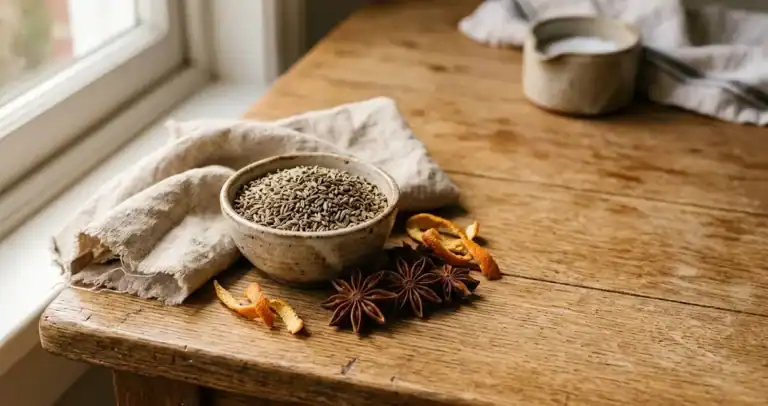
This guide is about culinary anise seed, Pimpinella anisum. It is not the same plant as star anise, the star-shaped fruit of Illicium verum, although both are spices with a similar licorice-like flavor and need much the same storage care.
Keep anise seed in an airtight, opaque container
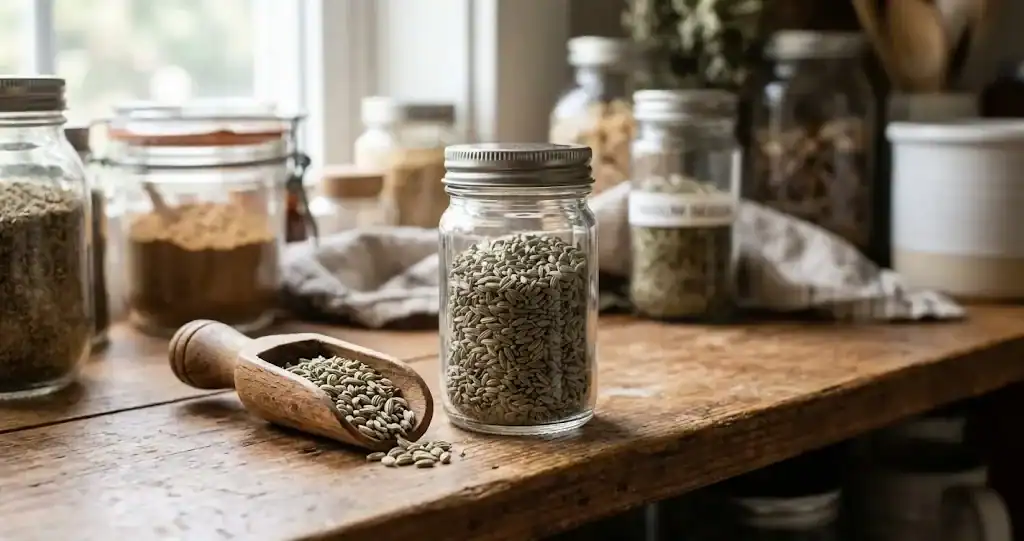
Move anise seed from a thin bag or a poorly closing spice jar into a clean, completely dry airtight jar. A small glass jar with a snug lid works well. A metal tin or ceramic vessel works too, especially if it is opaque. The goal is to limit fresh air, humidity, and direct sunlight, all of which gradually weaken a spice’s volatile oils.
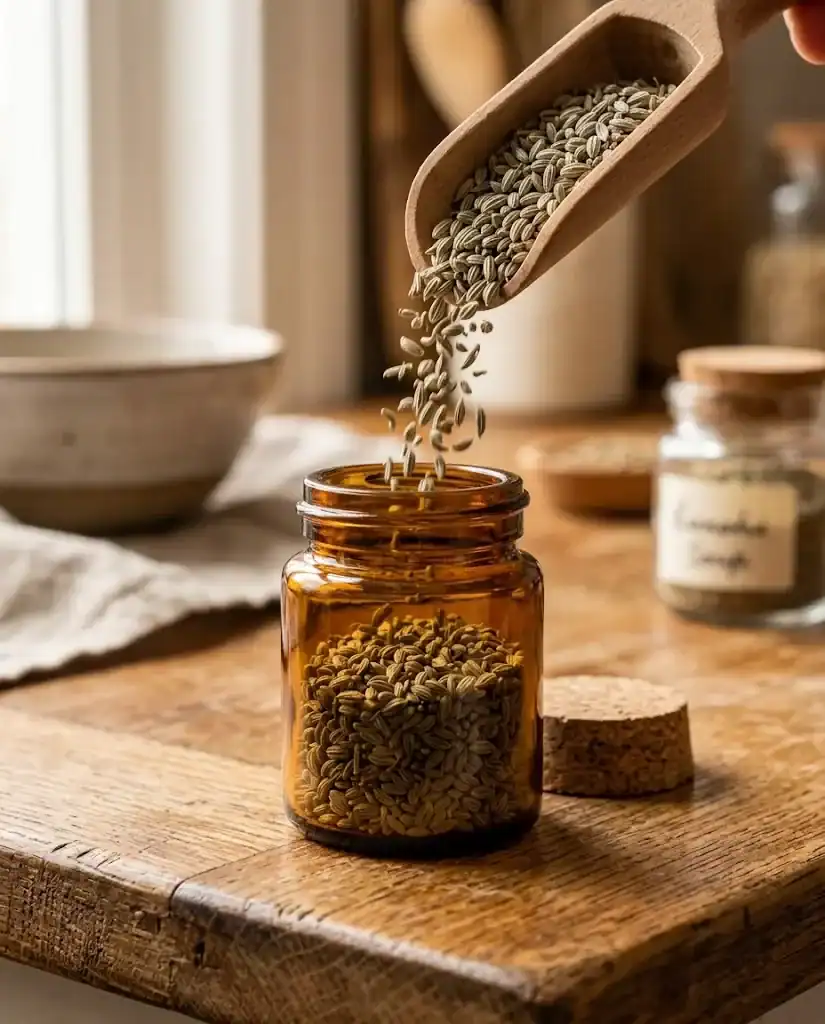
Choose the smallest jar that comfortably holds the quantity you have. A half-empty, oversized jar leaves more air around the seeds every time you open it. Label the lid with the purchase date so you can judge freshness later without guessing.
Pick a cool, dark, dry place
A cupboard or pantry away from the stove, dishwasher, kettle, and sunny window is the right home for anise. Those places may seem convenient, but repeated warmth and steam can dull the aroma and invite moisture into it. A stable room-temperature shelf is better than a rack over the range.
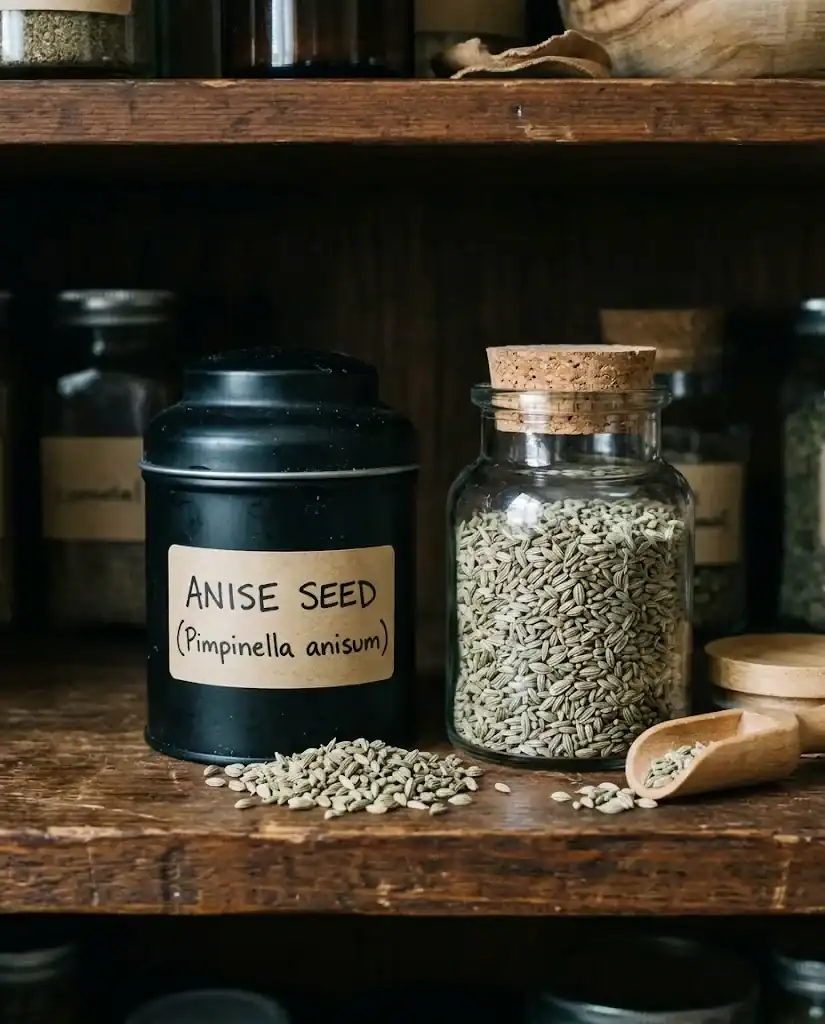
Do not keep anise in the refrigerator or freezer for everyday use. Condensation can form when a cold jar is opened in a warm kitchen, and that moisture is the problem you are trying to avoid. If you live in a very humid climate, use a well-sealed tin in the driest indoor cupboard available and avoid leaving the lid off while cooking.
Keep whole anise longer than ground anise
Whole seeds hold their distinctive flavor longer because less surface area is exposed to air. Buy whole anise when you can, then grind only the amount needed for a recipe with a spice grinder or mortar and pestle. Ground anise is still worth storing carefully, but it loses character more quickly than whole seeds.
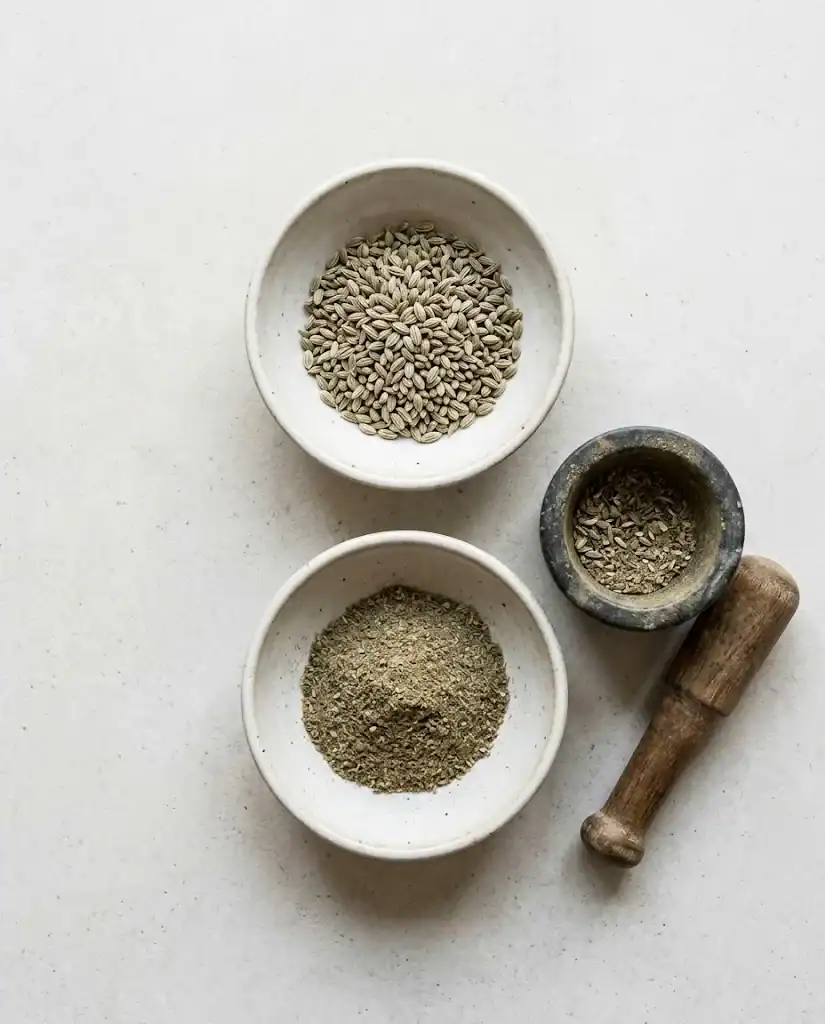
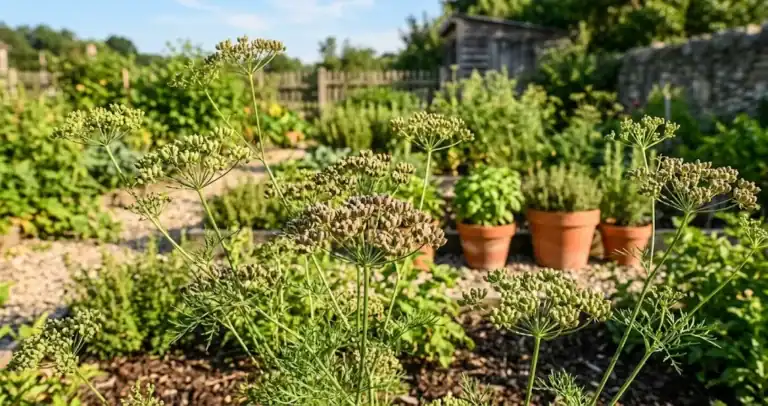
If you have recently dried your own seeds, make sure they are thoroughly dry before sealing them. For a useful guide to timing the harvest, see how to harvest anise seeds. Seeds sealed while damp can clump, develop mold, or lose their clean aroma.
How long does anise stay fresh?
Properly stored whole anise is usually at its best for roughly two to four years, while ground anise is best used within about one to two years. These are potency windows, not automatic safety deadlines. Spices often remain safe to use after their peak, but an old jar may no longer provide the aroma and seasoning strength a dish needs.
Package dates can help you track age, but your senses are more useful than the calendar. Give a few seeds a gentle crush between your fingers. Fresh anise should smell sweet, warm, and noticeably aromatic. If the scent is faint, dusty, or unpleasant, replace it rather than adding extra spoonfuls to compensate.
Signs anise should be replaced
Discard anise if you see fuzzy growth, insects, webbing, unexplained moisture, or a musty odor. Those are storage failures, not signs of normal aging. Seeds that look clean but have little scent are not necessarily spoiled, yet they will bring little to cookies, breads, tea, or savory dishes.
Check the jar after long storage and after periods of high humidity. A moisture-free spoon matters too. Even a small amount of water from a utensil can introduce moisture into the jar.
Keep anise and star anise clearly labeled
Anise seed and star anise are often grouped together because both are used as spices, but they are botanically different and have different shapes, strengths, and recipe roles. Keep each in its own labeled jar or tin so you can use the right one with confidence. Whole star anise also benefits from a tightly sealed tin in a cool, dark place, but do not substitute it one-for-one for anise seed without checking the recipe.
If you are using your anise in food, a separate guide on ways to cook with anise can help you put those seeds to good use in the kitchen.
Can you store anise in the fridge?
A pantry is usually safer than a fridge for spices that need to stay moisture-free. Refrigeration does not extend the practical shelf life enough to offset the risk of condensation. Keep anise at room temperature in a well-sealed jar, and return the lid immediately after measuring.
What about star anise?
Store star anise whole rather than ground when possible. The woody pods retain their strong aroma longer than ground star anise. Use a moisture-free spoon, keep it sealed, and protect it from sunlight. Whole star anise is common in soups, braises, tea, and five-spice powder, while anise seed often appears in baking and other culinary uses.
Quick storage checklist
- Keep whole anise seed in a clean, sealed jar.
- Keep it in a cool, dark cupboard.
- Avoid steam, direct sunlight, and repeated temperature swings.
- Grind only what you need for the dish at hand.
- Replace seeds that smell musty, show mold, or have lost nearly all aroma.
Good storage is mostly about protecting the flavor you paid for. Start with a tight lid, keep the jar away from heat and humidity, and buy whole seeds in quantities you can use while they still smell lively.
For broader harvesting guidance across many culinary herbs, read how to harvest herbs without setting the plant back.