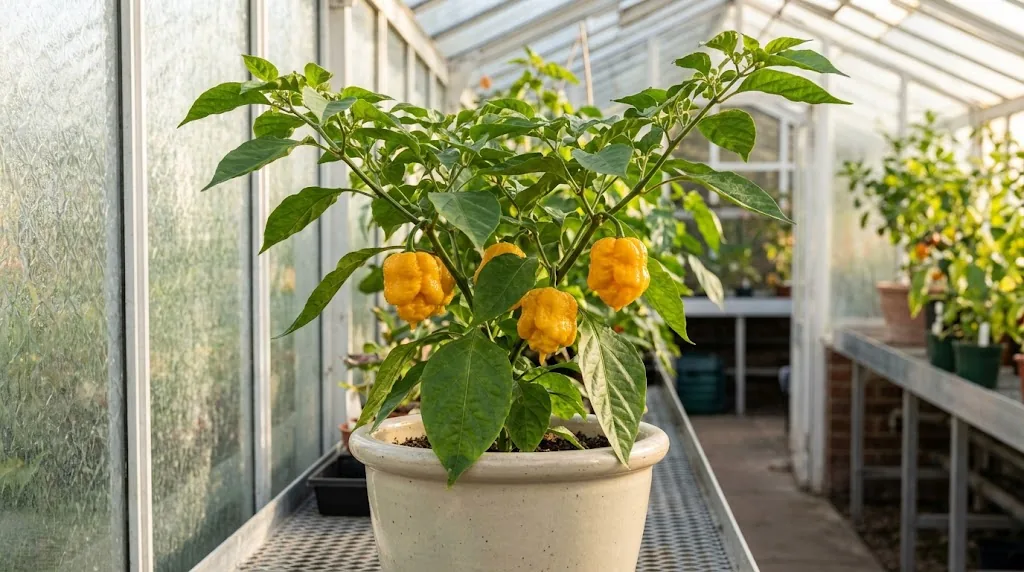
A 7 Pot Yellow pepper can look sunny and almost sweet, but its heat belongs to the superhot end of the scale. This Caribbean selection of Capsicum chinense brings intense heat with a citrus-like aroma, so a small piece can season a whole dish. Baker Creek’s seed listing identifies it as C. chinense and describes it as a Trinidadian pepper with more than 1 million units on the Scoville scale. Treat that as a seed-catalog estimate rather than a lab result for every plant, use gloves when handling the fruit, and grow it where a long warm season gives it time to mature.
For a wider comparison of pepper shapes, heat levels, and uses, browse this guide to types of chili peppers.
Where this pepper comes from
Seed sellers describe Seven Pot Yellow as a Trinidadian pepper. It belongs to the very hot C. chinense group associated with Trinidad and Tobago. It is also sold as Yellow Seven Pot. Since labels vary, buy from a supplier that identifies its seed line clearly and keeps packets labeled.
Some seed catalogs call it an heirloom, but the available descriptions do not establish a named breeder or one universal origin story for every seed line. It is safer to describe it as a Trinidadian selection than to repeat a precise discovery date or claim that all seed sources have the same parentage.
Names in this pepper group can be confusing. A bright pod is not automatically a Primo selection, a Trinidad Moruga Scorpion, or another superhot. If you want a different C. chinense with its own profile, compare it with Naga Viper peppers, rather than assuming similar heat or appearance means the same type.
Appearance, species, and heat
Sold as Capsicum chinense, the pepper shares a species with habaneros and Scotch bonnets, as Iowa State University Extension explains in its hot-pepper overview. Its fruit reaches a rich gold tone at maturity. Seed listings show compact, irregularly lobed or wrinkled pods, but exact shape and size can vary among seed lines. Check a seller’s photographs and description when selecting seed.

Expect very high heat, but do not treat one figure as a guarantee. Baker Creek describes this type as over 1 million, and Tyler Farms lists 1 million to 1.2 million Scoville heat units (SHU). These are seller estimates, not a lab result for every seed line. Taste only a tiny amount, and keep it away from anyone who is not prepared for superhot heat.
Seed sellers describe its flavor as fruity with a slight citrus note. That description is subjective and can differ by plant and by the food around it. Use the pepper sparingly in a hot condiment, stew, marinade, or seasoning blend, and add a little at a time so the heat does not overwhelm the dish.
How to grow 7 Pot Yellow peppers
This is a long-season, frost-sensitive pepper. Baker Creek lists 100 to 120 days to maturity, but seed catalogs do not always count from the same starting point. Your local season, temperature, and seed line affect the wait. In a short-season climate, start indoors early and plan to grow it in a container that can be moved under cover when nights turn cold.
Start seeds indoors
Sow seeds about 8 to 12 weeks before your usual last frost. Use a clean seed-starting mix and keep it evenly moist, not waterlogged. Peppers germinate best with warmth; a heat mat can help maintain a warm mix, around 80 to 85°F, while you wait. Baker Creek lists 7 to 10 days to sprout, though seeds may take longer. Once seedlings appear, give them bright overhead light so stems stay sturdy. University of Minnesota Extension’s pepper guide recommends starting peppers indoors about eight weeks before outdoor planting and keeping seed flats warm during emergence.

Move seedlings to larger containers when they have true leaves and enough roots to hold the mix together. Harden them off gradually before planting outside. Set them outdoors only after frost danger has passed and nights are reliably warm. A sunny, sheltered site with fertile, well-drained soil gives the plant a better start. Use a roomy container with drainage holes and fresh potting mix rather than dense garden soil.
Support steady growth and fruiting
Keep the root zone consistently moist, then let excess water drain away. Avoid repeated swings between very dry and soggy soil. A layer of mulch can slow moisture loss after the soil has warmed. Use a soil test or follow the fertilizer label when feeding the plant.
Utah State University Extension notes that cool nights and very hot days can interfere with pepper fruit set. Give the plant room for airflow and check the leaves regularly for pests. Stake or cage a tall, fruit-heavy plant before branches bend. If the season is ending, move a container to a bright protected place before cold weather damages it.
Harvest and handle the fruit safely
Pick fruit when it has reached its mature golden color and feels firm. Use clean snips to cut the stem rather than pulling hard on the branch. Wear nitrile or other disposable gloves while harvesting or cutting superhot peppers, and avoid touching your eyes or face. Work in a well-ventilated area when chopping or cooking them; pepper oils and vapors can irritate skin, eyes, and airways. Utah State University Extension recommends harvesting fruit when fully colored and still firm.
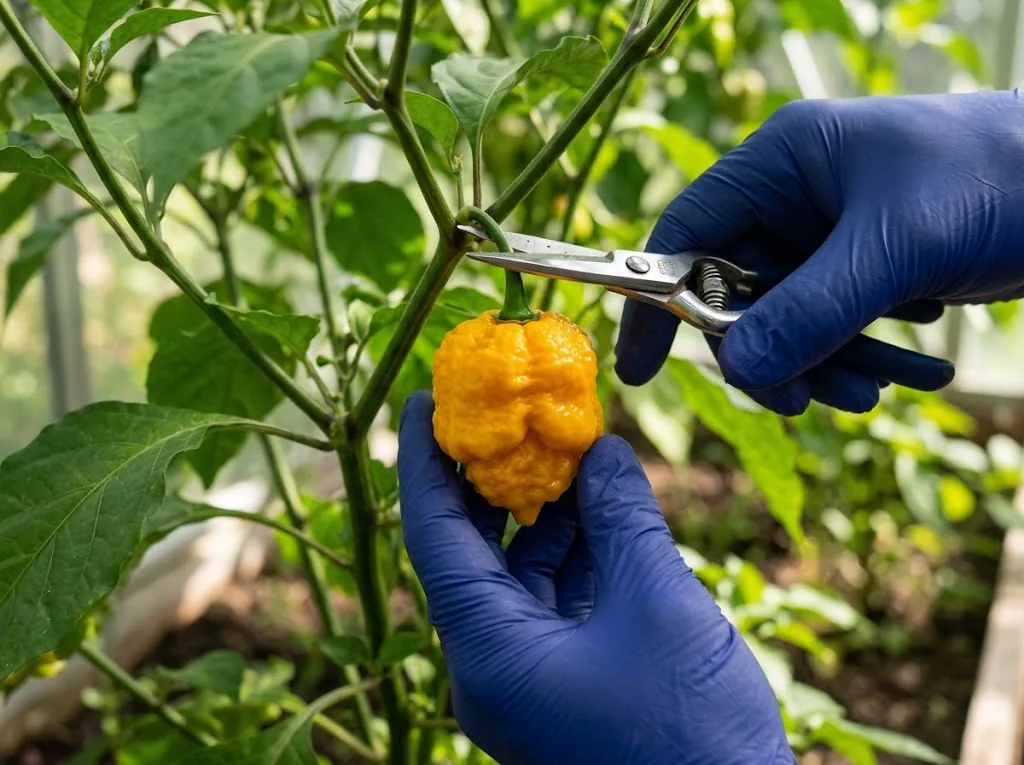
If pepper juice gets into an eye, rinse with plenty of clean, warm water for 15 minutes. For skin exposure, flush the area with warm water and avoid spreading the oil. Call Poison Control or use its online tool for exposure advice; seek emergency help for trouble breathing or chest discomfort. These precautions follow Poison Control’s capsaicin guidance.
Store, dry, or freeze a harvest
Keep freshly picked fruit cool and use it while it is firm. For longer storage, freeze whole pods or cut pieces in a sealed freezer bag. Utah State University Extension’s chile-preservation guide says properly packaged frozen chiles held at 0°F or below can keep for about a year. The same guide says fresh chiles can be refrigerated for up to 2 to 3 weeks, though quality depends on the storage conditions. Label the freezer bag clearly so nobody mistakes a superhot pepper for a mild one.
You can also dry peppers until they are fully brittle, then store them in an airtight container away from moisture. Utah State University Extension recommends washing and slicing the pods before drying them in a dehydrator, then drying until brittle. Grind dried pods only in a well-ventilated area, and clean equipment carefully.

Do not improvise shelf-stable pepper condiments, infused oil, or pickles. Peppers are low-acid vegetables, so use a tested canning recipe and keep its ingredient proportions unchanged. The National Center for Home Food Preservation explains why pepper canning recipes need to be tested. Fresh chiles can be frozen without adding oil or water.
Ways to use 7 Pot Yellow in the kitchen
Because the heat is so concentrated, treat one pepper as an ingredient to measure, not a snack to eat whole. Start with a thin slice or a small amount of minced pepper in a larger batch of sauce, soup, or stew. Most capsaicinoids are produced in glands on the pale placenta inside the pod; seeds are not the source of heat, though they can pick up capsaicinoids through contact. New Mexico State University explains this distinction. If you want jalapeno-style flavor with no heat at all, a variety such as Nadapeno is sold as heatless.
- Blend a small piece into a cooked yellow pepper sauce, then taste before adding more.
- Infuse a small amount into a bean stew, then remove the pepper if it reaches your preferred heat.
- Dry ripe pods and crumble a little into a spice blend for soups or roasted vegetables.
- Freeze extra whole pods so you can grate or slice off only what a recipe needs.
Wash knives, boards, and utensils with hot soapy water after handling. Keep prepared food clearly labeled, and do not serve it as mild just because the pod is gold.
Frequently asked questions
How hot is a 7 Pot Yellow pepper?
It is a superhot pepper. Baker Creek’s catalog describes it as topping 1 million Scoville units. Treat this as a seller estimate, not a laboratory measurement for every seed line.
Is this the same as a Primo pepper?
Not necessarily. Seed names are used inconsistently, and the name Primo often identifies a particular line or selection. Check the supplier’s description and buy from a seller that keeps varieties distinct.
Can this pepper grow in a container?
Yes. Use a roomy container with drainage, warm the plant before moving it outdoors, and give it full sun. Container growing is especially useful when you need to shelter a long-season pepper from cold nights.
When is the fruit ready to pick?
Wait for it to reach its mature color and stay firm. Use snips to harvest it, and wear gloves because the pepper is extremely hot.
