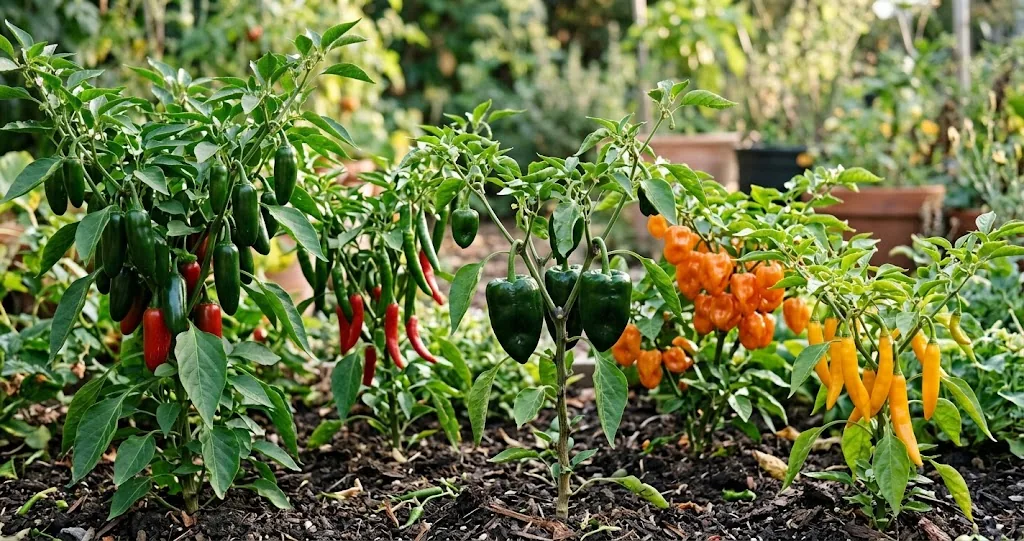
From the crisp sweetness of a bell pepper to the searing intensity of a superhot pod, the world of chilies offers remarkable diversity in flavor, aroma, and pungency. Every type of chili brings a distinct balance of heat and flavor to global cuisine. Whether you want to prepare a fresh table salsa, simmer a slow sauce, or select productive varieties for a home garden, this comprehensive pepper guide organizes the primary types of chili peppers by species, Scoville rating, and culinary role.
Botanically, all true chili peppers belong to the genus Capsicum, a branch of the nightshade family Solanaceae native to the Americas. Where a pepper comes from botanically shapes its growth habit and climate tolerance. While wild species still grow across tropical forests, nearly all cultivated varieties of chili peppers grown and eaten today trace back to five primary domesticated species.

Understanding the Five Domesticated Capsicum Species
Before sorting pepper types strictly by culinary heat level, looking at botanical species explains why certain chilies share distinct plant architecture, flower markings, and flavor compounds.
1. Annuum species: This is the most widespread and economically important group in global chili cultivation. It includes sweet bell peppers, jalapeños, poblanos, serranos, cayennes, and European cultivars like the Italian frying pepper and Spanish padrón peppers. Most varieties in this group produce solitary white blossoms and fruit that ranges from zero heat to moderately hot.
2. Chinense species: Despite the misleading historic name, this group originated in the lowland Amazon basin of South America rather than Asia. Cultivars in this group are celebrated for their tropical, fruity aroma and intense heat. This group features habaneros, Caribbean peppers like Scotch bonnets, and legendary superhots such as the ghost pepper, Trinidad Moruga Scorpion, and Carolina Reaper.
3. Baccatum species: Cultivated extensively across Peru and Bolivia, baccatum peppers are easily recognized by yellow, tan, or greenish spots on their white corollas. The best known cultivar is the Peruvian ají amarillo, alongside Brazilian pepper selections like the starfish and bishop’s crown, prized for crisp texture, berry-like acidity, and moderate heat.
4. Frutescens species: Characterized by greenish-white blossoms and upright fruit clusters, this group includes the tabasco pepper, which forms the foundation of famous Louisiana pepper sauce, along with fiery bird’s eye chilies across Africa and Southeast Asia.
5. Pubescens species: Known as rocoto or manzano chilies, this Andean group thrives in cool, cloud-forest conditions where other peppers struggle. The plants have hairy leaves, striking purple blossoms, and thick, juicy fruit walls holding unique dark purple or black seeds.
Chili Pepper Heat Levels, the Scoville Scale, and What Makes Chili Hot
A chili pepper gets its pungency from capsaicinoids, primarily capsaicin and dihydrocapsaicin. Capsaicin activates the TRPV1 receptor on sensory nerves, which produces the familiar burning sensation.
Heat is measured in Scoville Heat Units (SHU). Conceived by Wilbur Scoville in 1912 as an organoleptic taste dilution test, modern heat testing uses High-Performance Liquid Chromatography (HPLC) for an objective analysis of capsaicinoid concentration. Genetics and growing conditions can affect the final heat of a cultivar, so a pepper’s SHU range is more useful than a single number.
Capsaicin is concentrated primarily in the pale inner placental tissue, often called the ribs, rather than made in the seeds. A study of habanero fruit tissue found capsaicin synthesis in the placenta. Seeds can carry capsaicin from contact with that tissue, so removing ribs can reduce heat but cannot guarantee a mild result.
Mild Chili Pepper Types and Sweet Varieties from Bell to Mild Chilies
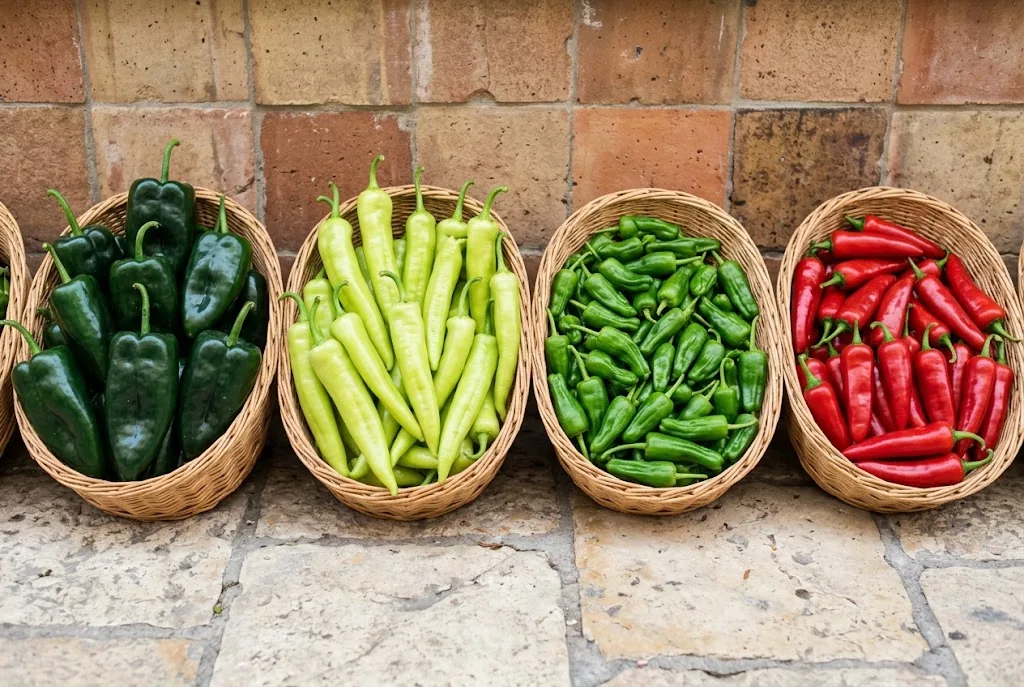
Mild chili varieties range from 0 to 2,500 SHU. These peppers provide crisp sweetness, aromatic depth, and vegetal richness without aggressive burn, making them ideal for everyday family meals and diverse types of recipes.
Bell Pepper (0 SHU): The standard sweet pepper lacks capsaicin entirely due to a natural recessive gene. Available as green or red pepper, as well as yellow and orange, sweet bells provide refreshing crunch and juicy bulk for salads, fajitas, and stir-fries.
Padrón and Shishito Peppers (50 to 2,000 SHU): Padrón peppers from Galicia, Spain, and Japanese shishito peppers are classic thin-skinned frying peppers blistered whole in olive oil. These peppers are commonly served as tapas. Most pods offer delicate sweetness, but heat can vary noticeably from pod to pod.
Anaheim and Poblano Peppers (500 to 2,000 SHU): Anaheim chilies, also called New Mexico red chile or California chiles, are long, mild pods prized for roasting and canning. The dark green Mexican pepper known as the poblano provides earthy, rich flavor when used fresh for chiles rellenos, and develops sweet, raisin-toned complexity when dried into ancho chile.
Medium Chili Pepper Types from Jalapeño and Serrano to Chile de Árbol
Medium to hot varieties deliver between 2,500 and 50,000 SHU. This heat tier forms the backbone of Latin American, Asian, and Mediterranean cooking, offering lively warmth that elevates marinades, braises, and fresh table salsas.
Jalapeño and Fresno (2,500 to 8,000 SHU): The classic green or red jalapeño pepper is the most common chili found in North American grocery produce aisles. Learning how to harvest and cook jalapeño peppers provides cooks with dependable acidity and crisp bite for salsas, pickled snacks, and stuffed appetizers. Red Fresno chilies share similar heat but offer slightly thinner walls and sweeter fruitiness.
Serrano and Chile de Árbol (10,000 to 30,000 SHU): Serranos are narrower and noticeably hotter than fresh green chilies, delivering clean, bright bite to pico de gallo and guacamole. Slender de árbol peppers pack intense, pointed heat and are widely used fresh or toasted for rustic Mexican chili table sauces and spicy cooking oils.
Cayenne (30,000 to 50,000 SHU): The long, bright red cayenne pepper is cultivated worldwide. While occasionally sliced fresh, the harvested pods are most commonly dried and ground into commercial red chili powder or crushed red pepper flakes, providing immediate, neutral pungency to spice rubs and savory sauces.

Extremely Hot Chili Peppers, Habaneros, and Superhot Pods
Peppers measuring above 50,000 SHU require cautious handling. High capsaicin concentrations can cause painful skin and eye irritation, so cooks should always wear protective nitrile gloves when slicing fresh pods.
Bird’s Eye Chilies (50,000 to 100,000 SHU): Small fiery chilis like Thai bird’s eye, pequin peppers, and African bird’s eye chilies deliver sharp, lingering pungency. They are hot enough to provide instant bite in Southeast Asian curries, sambals, and spicy marinades.
Habanero and Scotch Bonnet (100,000 to 350,000 SHU): Habaneros and Scotch bonnet pods blend tropical fruitiness and apricot notes with intense heat, valued for their aromatic complexity rather than their heat alone. They are prized for jerk seasonings, fruit salsas, and craft hot sauce blends.
Ghost Pepper, Scorpion, and Carolina Reaper (800,000 to 2,000,000+ SHU): Superhot varieties show how widely heat can vary even within this extreme tier. Ghost pepper begins around 800,000 SHU, while some scorpion and Carolina Reaper samples can exceed 1.5 million SHU. The hottest chili peppers in the world include Pepper X, which Guinness World Records certified on October 16, 2023 as the record holder at an average 2,693,000 SHU. In the kitchen, use superhot peppers sparingly and wear nitrile gloves when cutting fresh pods to avoid skin and eye irritation.
Fresh Chili and Dried Chile: How Dehydration Transforms Flavor
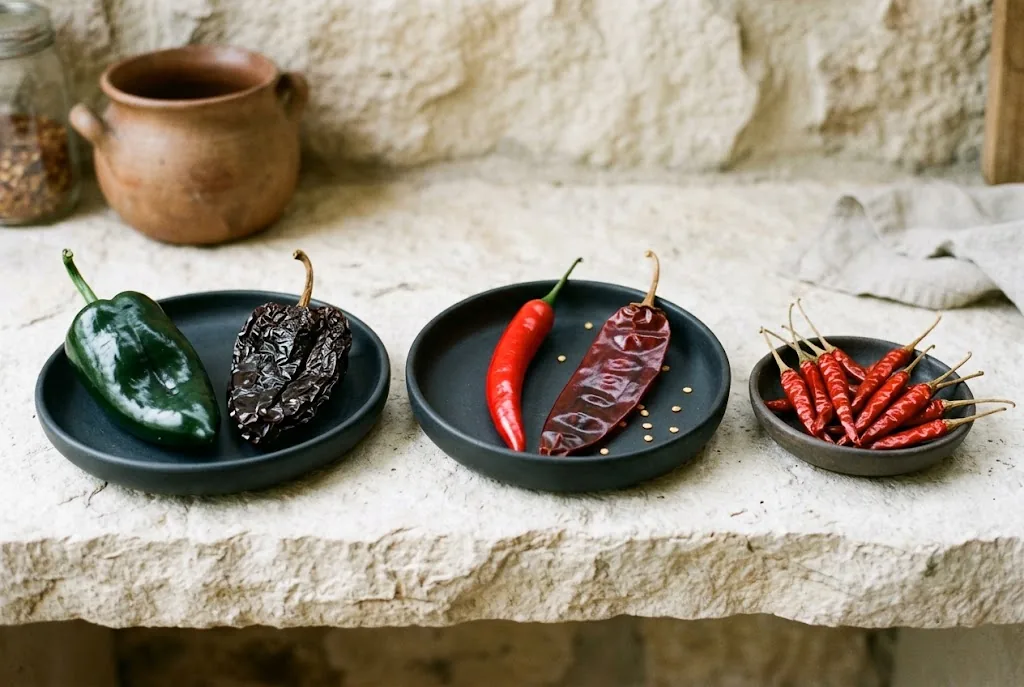
In Mexican culinary heritage, fresh and dried versions of the same cultivar carry distinct names because dehydration concentrates natural sugars and develops rich, savory aromas:
Poblano to Ancho: Fresh dark green poblanos taste grassy and crisp. When fully ripened to red and dried, they become wrinkled dried chiles, often with notes of dried fruit, tobacco, and chocolate.
Chilaca to Pasilla: Long green chilaca peppers darken into wrinkly, near-black pasilla chiles when dried, adding licorice and raisin notes to traditional mole sauces.
Mirasol to Guajillo: Fresh mirasol peppers become smooth, translucent red guajillo pods when dried, imparting mild heat and tangy, berry-toned brightness to stews and enchilada sauces.
Jalapeño to Chipotle: Ripe red jalapeños smoke-cured over hardwood fires become chipotles, contributing rich smokiness and balanced warmth to adobo marinades and braises.

Choosing Pepper Varieties for Cooking, Salsas, and Hot Sauce
Selecting the best pod depends on how you plan to use various peppers in daily cooking. Reviewing this comprehensive pepper list and exploring a detailed list of chili pepper varieties in the produce pepper section helps you anticipate how different peppers taste when raw, roasted, or simmered:
For fresh salsas, choose crisp, juicy pods like serrano, Fresno, or green chilies. For rich simmered sauces, combine rehydrated dried chiles like guajillo and pasilla to build multidimensional depth. For crispy condiments like chili crisp or infused dipping oils, toasted dried flakes combined with garlic and sesame deliver savory crunch.
If you enjoy gardening, matching plant habits to your space makes growing peppers straightforward and rewarding. As chili peppers grow best in warm, well-draining soil with full sun, exploring the best chili peppers for beginners to grow offers practical advice on hardy, productive cultivars like serranos, cayennes, and sweet bell peppers that thrive in patio containers or sunny garden beds.
Frequently Asked Questions About Types of Chili Peppers
What is the difference between chili, chile, and pepper?
The term ‘pepper’ originated when early European explorers mistakenly compared spicy American pods to dried Asian black pepper (Piper nigrum). ‘Chile’ is the traditional Spanish spelling derived from the classical Nahuatl word ch?lli, standard in Mexico and the American Southwest. ‘Chili’ is the common American English spelling used for the botanical pods, spice blends, and the classic stew.
Are chili seeds the hottest part of the pod?
No. Capsaicin is synthesized and stored primarily in the pale placenta tissue along the inner ribs. Seeds absorb surface oils from contact with the placenta, but discarding the inner white ribs eliminates the vast majority of the heat.
Why do some mild peppers occasionally taste very spicy?
Environmental factors like high summer temperatures, intense sun exposure, or temporary drought stress prompt pepper plants to produce higher concentrations of capsaicinoids. Because of this natural response, individual pods on varieties like Padrón or Shishito can vary noticeably in pungency.
How can I reduce the heat if a dish turns out too spicy?
Water does not dissolve capsaicin well. A creamy ingredient, a little acid, or a touch of sweetness can help rebalance a finished dish, although none removes the capsaicin already present.
