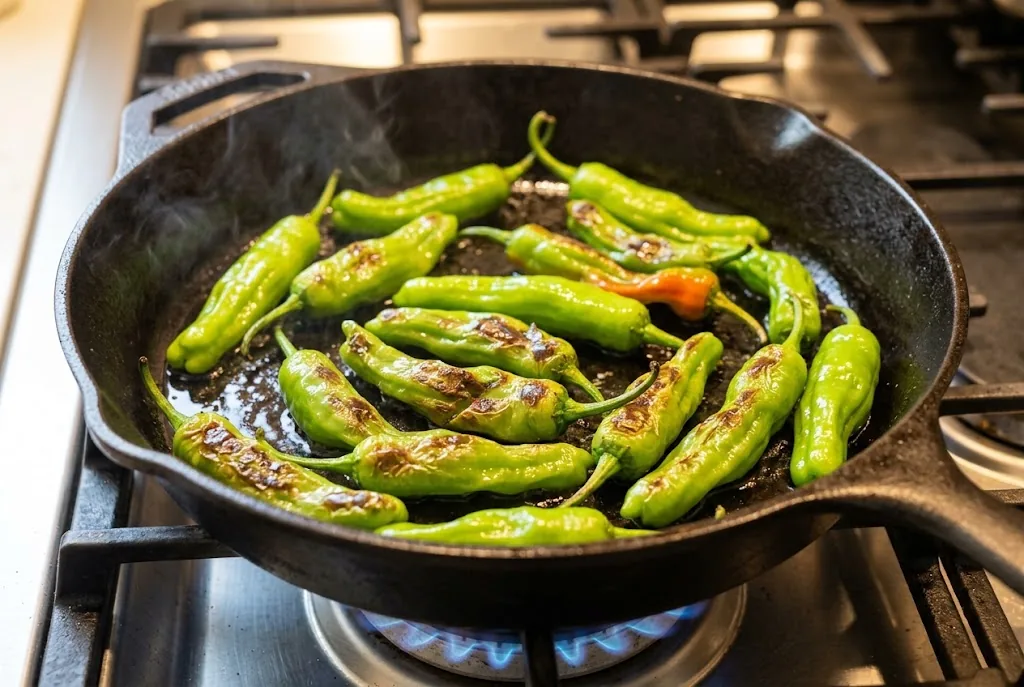
These small, wrinkled green pods show up in Japanese izakaya menus and modern tapas lists, seared whole in a hot pan, salted, and eaten by the handful. Most fruits are mild and grassy, but roughly one in ten carries a surprise punch. That blend of low heat, fast cook, and built-in gamble is what turned a regional Japanese variety into a farmer’s-market favorite across the United States and Europe.
This guide covers what they are, where they come from, how hot they actually run, and how to grow, harvest, store, and cook them. It is one of many variety profiles in our complete guide to types of chili peppers.
What are shishito peppers?
The name (???, “lion’s head”) describes a slender, thin-walled Capsicum annuum pod traditionally grown in Japan. It refers to the blunt, puckered tip of the pod, which some people think looks like the head of a lion.
You will see this variety referred to in seed catalogs and Japanese markets as:
- Shishito: the standard English spelling and the one used by U.S. seed retailers.
- Shishit?garashi: less common, more specifically the immature green stage.
- Shishi t?garashi: the full Japanese reading, usually transliterated as the standard name.
The pods belong to the same species as bell peppers, jalapeños, and paprika peppers, which is why cross-breeding is common. U.S. seed companies sell it as an open-pollinated Japanese heirloom, so you can save seed from your own plants. If you see the peppers sold as shishitos at a market stall, that is the same fruit under a casual plural.
Origin and history
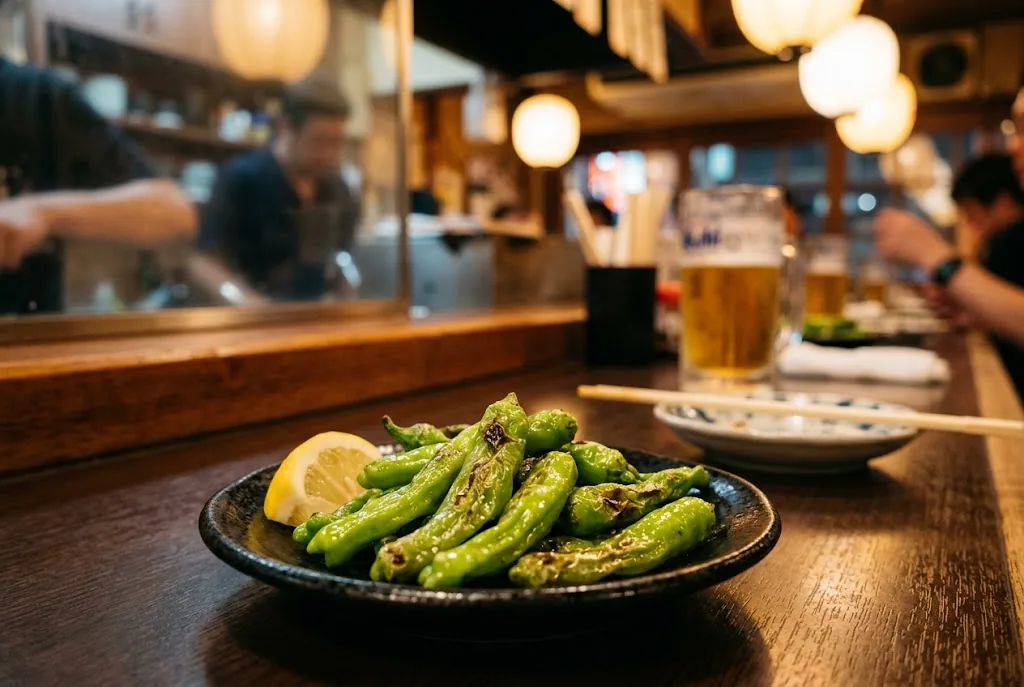
This variety developed in Japan as a thin-walled, mild, quick-cooking frying pepper rather than a drying or sauce pepper. The pods moved through Japanese izakaya (pub food) culture in the twentieth century, where the standard preparation is to blister them whole in a hot pan and serve with salt and a squeeze of lemon.
Like most chilies, its ancestors came from the Americas. Peppers reached Japan through trade in the sixteenth century, and some writers suggest Spanish frying peppers such as Padrón are distant relatives, though that link is not firmly documented. Outside Japan, the variety spread first through Japanese restaurants and later through heirloom seed catalogs. Today they are a standard farmers-market and CSA box offering across most of North America from late July through October.
Botany and morphology
The variety is Capsicum annuum, the species that also contains bell peppers, jalapeños, poblanos, and cayenne. The pods are:
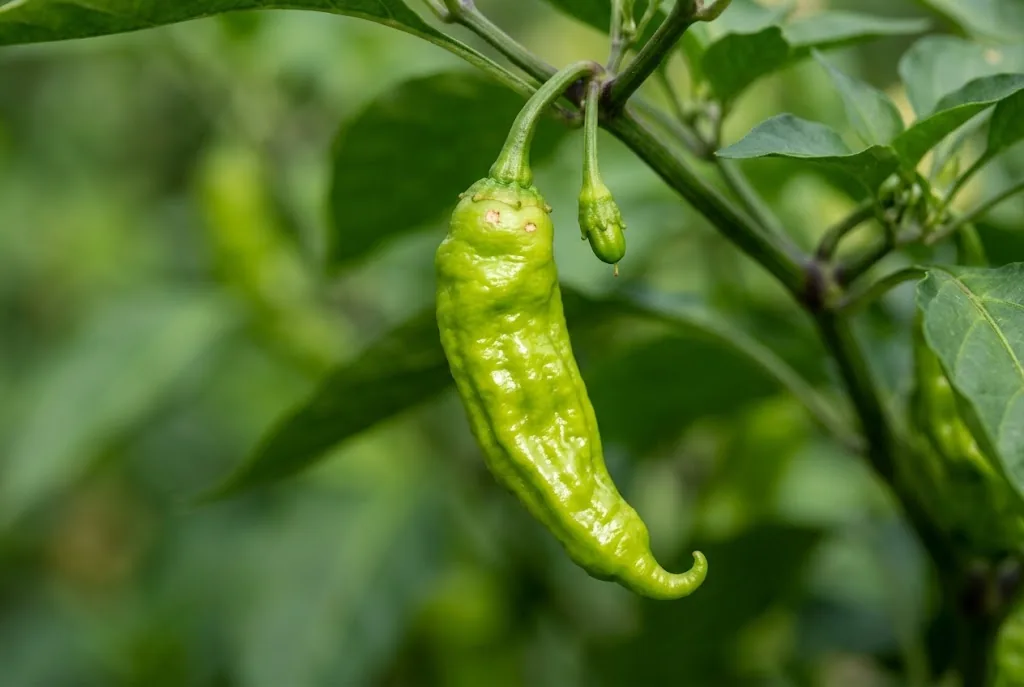
- Shape: long, slender, slightly tapered, often with a hooked tip. The wrinkled, thin-skinned skin is the most distinctive feature.
- Length: typically 5 to 10 cm (about 2 to 4 inches) at picking size.
- Width: about 1.5 cm (about 1/2 inch) at the shoulder.
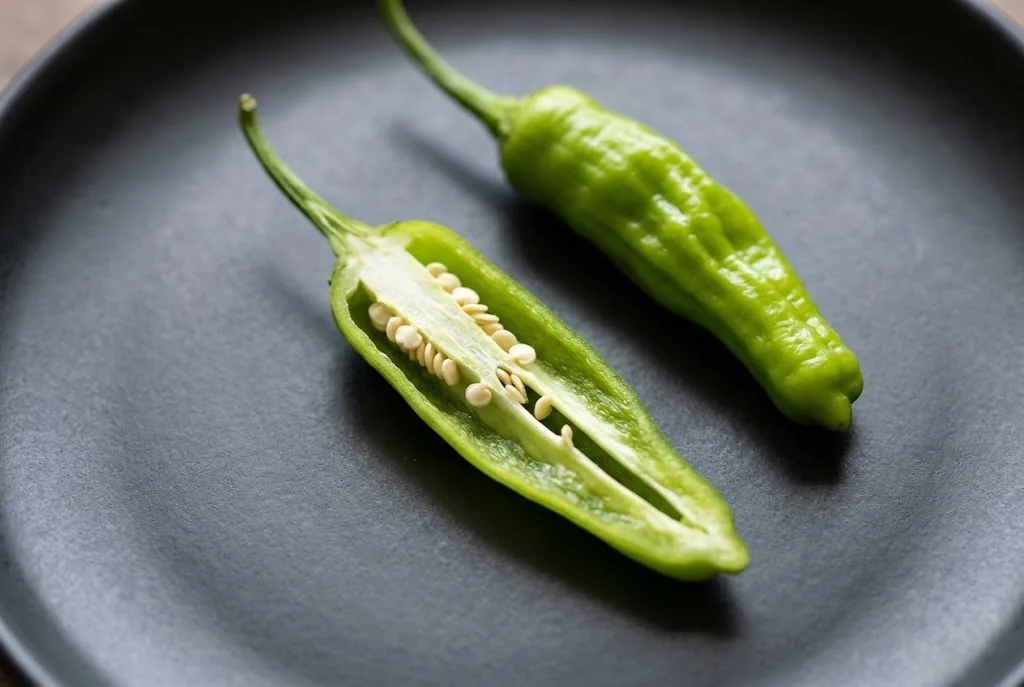
- Wall thickness: thin-walled and thin-skinned compared to a jalapeño, which is why they blister so fast.
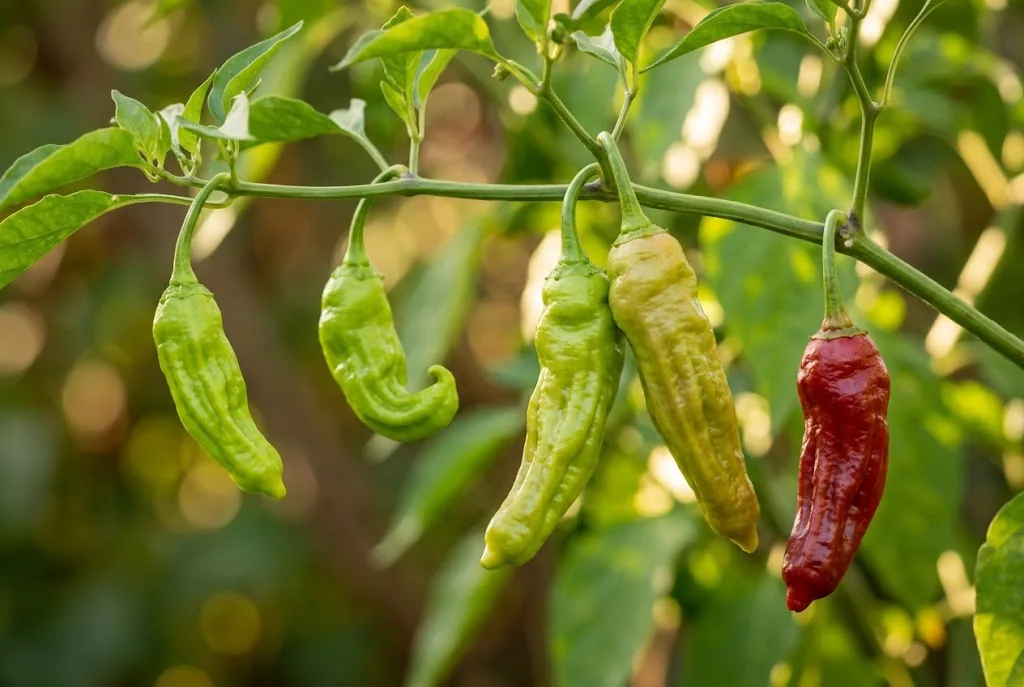
- Color: bright lime green at the cooking stage, deepening toward red as they ripen past full size.
- Skin: wrinkled or crinkled, especially as pods mature; the wrinkles deepen in dry weather.
Plants grow 50 to 80 cm tall (20 to 32 inches) in a single season and benefit from staking once pods set heavily. Flowers are white, single, and appear at leaf nodes. Like other Capsicum annuum varieties, flowers are self-pollinating, though bees visit freely.
The pods should not be confused with Padrón peppers (also Capsicum annuum), which look similar but are broader at the shoulder and ripen more slowly. Banana peppers are also Capsicum annuum but are smooth-skinned, much longer, and turn yellow before red.
Heat and flavor
The peppers land at roughly 50 to 200 Scoville Heat Units on average, per PepperScale’s heat profile, far below a jalapeño’s 2,500 to 8,000 SHU. Most individual pods are essentially as mild as a sweet pepper, with a green, slightly sweet, faintly grassy flavor similar to an under-ripe bell pepper with a touch of smoke when seared.
The “one in ten” rule is real, though some growers put it closer to one in twenty. Eating a plate of them is a small game of roulette: the odd pepper carries enough capsaicin to register as a sharp jolt. Several factors drive this:
- Plant stress: strong sun and hot, dry summers are linked with more spicy pods, as the Shishito entry on Wikipedia summarizes.
- Pod position: pods that mature at the end of a branch, after the plant has set heavily, are more likely to be hot.
- Genetic lottery: the variety is not a single hybrid line, and individual plants vary in how capsaicin-heavy their hottest pods get.
Cooking technique shapes flavor more than genetics. A medium-high pan with a little oil for 6 to 10 minutes produces tender pods with a few blistered spots and bright flavor. Crank the heat higher and the same pods take on a deeper smoke note and a slight crunch that suits beer and simple rice. A long, slow cook turns them mushy, which is rarely the goal.
Growing the pods
Plants behave like most Capsicum annuum varieties: long season, warm soil, full sun, steady water. They are forgiving on soil type but need heat units to set fruit well, so northern growers should start indoors.
Starting seeds
Sow seeds indoors 8 to 10 weeks before the last expected frost. Use a heat mat set to 27°C (80°F); germination takes 7 to 14 days at that temperature and can stretch past 3 weeks in a cool room. Move seedlings to a south-facing window or a 14-hour grow light once true leaves appear, and pot up into 10 cm (4 inch) pots as soon as roots fill the cells. Pot-bound transplants sulk and set pods late. For a deeper walkthrough of timing, see our guide to when to start chili seeds indoors.
Soil and site
Plants want the same conditions as bell peppers: well-drained soil with a pH between 6.0 and 6.8, full sun, and steady moisture. A 5 cm (2 inch) mulch layer keeps roots cool and slows evaporation in dry summers. If your soil is heavy clay, plant into a raised bed or a 30 cm (12 inch) container; the pods tolerate pots well and work on a patio or balcony.
Transplanting and care
Harden off seedlings over a week once night temperatures stay above 10°C (50°F), then transplant at the same depth they were in their pots. Space plants 45 to 60 cm (18 to 24 inches) apart. Stake or cage plants once pods start to weigh branches down, usually 6 to 8 weeks after transplant.
Water deeply once or twice a week rather than sprinkling daily; let the top 5 cm (2 inches) of soil dry between waterings. A weekly feeding with a balanced liquid fertilizer (5-5-5 or similar) until flowering, then a switch to a lower-nitrogen blend (3-6-6 or similar) once pods set, gives the best fruit set without leafy overgrowth.
Days to harvest
Baker Creek Heirloom Seeds lists about 50 days from transplant for green pods and about 80 days for red ones. Plan on the green harvest starting in midsummer in most gardens. Pick the peppers while they are bright green, 5 to 10 cm long, and the skin is just starting to wrinkle. Pods left on the plant past full size ripen red and lose the thin-walled texture that makes seared pods worth cooking.
Common growing problems
- Flowers dropping without setting pods: night temperatures below 13°C (55°F) or daytime highs above 32°C (90°F) cause blossom drop. Mulch, water consistently, and use shade cloth during heat waves.
- Pale leaves and slow growth: usually nitrogen or magnesium deficiency. Side-dress with compost and a foliar feed of liquid kelp.
- Aphids on leaf undersides: a sharp spray of water or insecticidal soap knocks them back; lady beetles usually arrive within a week.
- Sunscald on pods: light tan patches on shoulders exposed to direct sun. Light shade during the hottest part of the day prevents it.
Harvest and handling
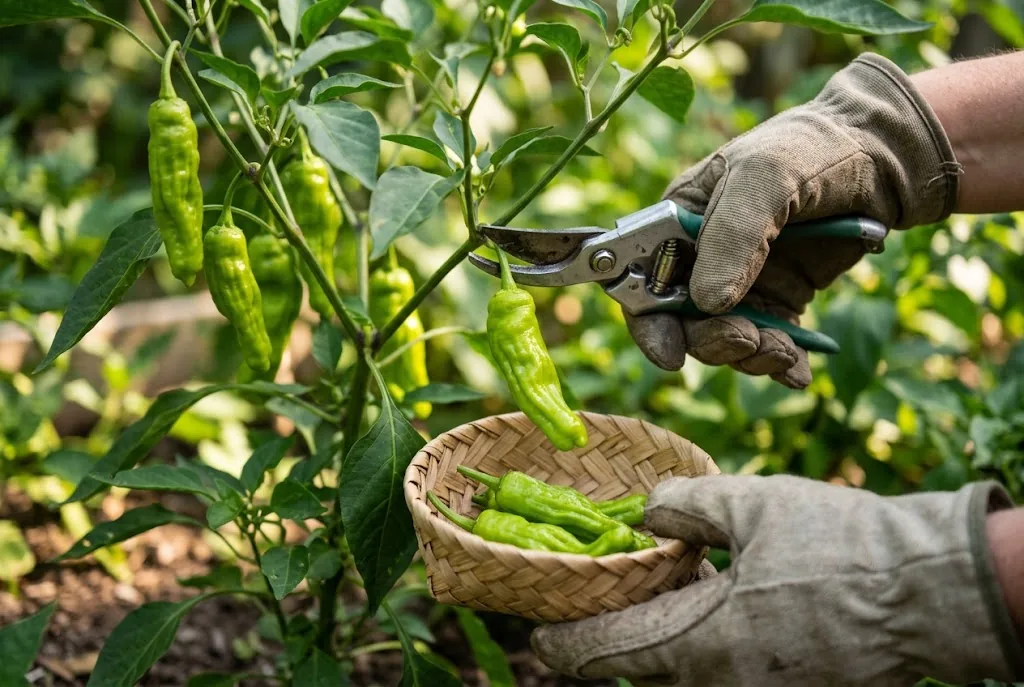
Pick pods by snipping the stem with clean pruners rather than pulling them off; the thin stem can tear the branch. Harvest every 4 to 5 days once plants start producing heavily, because letting ripe fruits stay on the plant slows further fruit set.
Bring a harvest basket or a wide bowl into the garden and cut stems directly into it. The thin pods bruise quickly if dropped onto a hard surface, so go gently when transferring to the kitchen.
Wear gloves if you are sensitive to capsaicin, though this variety’s heat level makes gloves less critical than for hotter peppers. Wash hands thoroughly after handling, and keep pods away from cutting boards used for other foods until you are done with prep. Raw pods are edible but taste grassy and slightly bitter; a quick sear brings out their sweetness.
Storing and preserving
Fresh pods keep in the refrigerator for 7 to 10 days in a paper bag or a loosely closed container. Avoid sealed plastic bags, which trap moisture and turn fruits soft within days.
For longer storage:
- Blister and freeze: sear pods in a dry pan until browned, cool, then freeze in a single layer on a sheet tray before transferring to a freezer bag. Keeps 4 to 6 months; reheat straight from frozen in a hot pan for 3 to 4 minutes.
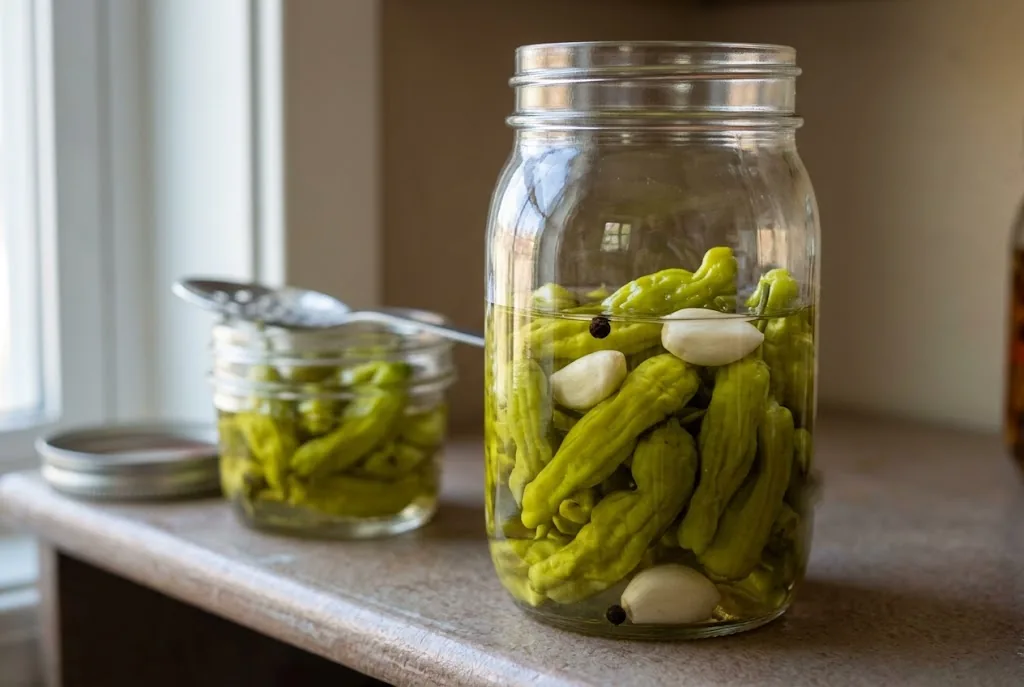
- Pickle: pack fresh green pods into a brine of equal parts rice vinegar and water with 1 tablespoon sugar and 1 teaspoon salt per cup. Refrigerate 2 weeks before eating; keeps 3 months cold.
- Dry: thread pods on a string and hang in a warm, dry, well-ventilated spot for 2 to 3 weeks. Fully dried pods are brittle and work well as a flake or ground powder, though the flavor is milder than fresh.
Culinary uses and recipes
The classic preparation is pan-blistered. Heat 1 tablespoon neutral oil in a wide skillet over medium-high heat, add 200 to 250 g (about 8 oz) of whole pods in a single layer, and let them cook undisturbed for 2 to 3 minutes. Turn the pan and repeat once or twice until the pods are tender with brown char spots, about 6 to 10 minutes total. Transfer to a plate, finish with flaky salt and a squeeze of lemon, and serve hot. This simple starter is the reason most people fall in love with the variety. A bowl of blistered shishito peppers disappears faster than almost any other dish on the table.
Pan method, step by step
- Rinse the pods and dry them completely. Water left on the skin makes hot oil splatter.
- Heat a large skillet, ideally cast iron, over medium-high heat until a drop of water skitters across it.
- Add 1 tablespoon of neutral oil, then add the peppers in a single layer. Do not overcrowd the pan; cook in two batches if needed so each pod touches the metal.
- Let them sizzle without stirring for 2 to 3 minutes, until they are blistered in spots on the underside.
- Turn them and cook 3 to 5 minutes more, until soft and slumped.
- Slide them onto a warm serving dish, salt, and add a squeeze of fresh lemon.
No skillet handy? Spread the pods on a sheet pan and broil 8 to 10 cm below the element for 4 to 6 minutes, turning once. Served with a garlic aioli or a soy and lime dip, they make an easy appetizer and a natural finger food, since each pepper is held by its own stem.
Beyond the basic blister
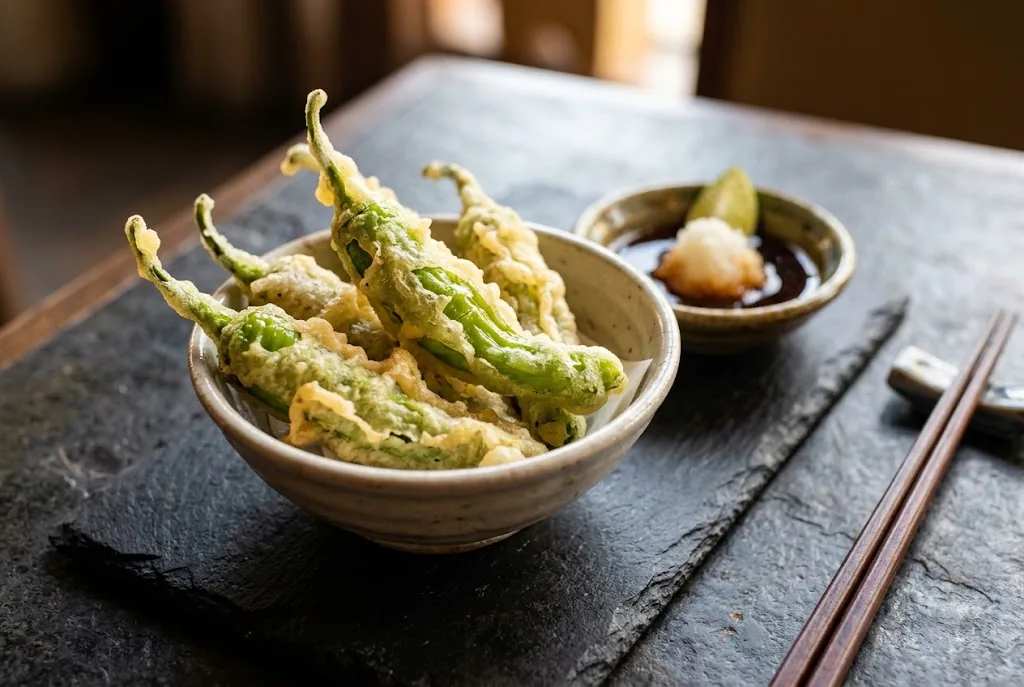
- Tempura: dip whole pods in a light tempura batter and fry at 190°C (375°F) for 2 to 3 minutes. The thin wall crisps faster than a bell pepper would.
- Stuffed pods: slit a pocket in each fruit and stuff with a teaspoon of fresh cheese, herbs, or a miso-sesame mix. Grill or pan-sear until filling softens.
- Shishito salsa: sear pods, then chop with ripe tomato, red onion, cilantro, lime juice, and salt. The result is a bright, slightly smoky green salsa.
- Rice bowls or tacos: sliced seared pods work as a topping for donburi, grain bowls, or fish tacos, especially with a drizzle of sesame oil or a sprinkle of toasted sesame.
- Infused oil: warm 250 ml of neutral oil with 100 g of seared pods over low heat for 20 minutes, then strain. Use within 2 weeks for dressings or drizzling.
- Roasted snack: toss whole pods with a teaspoon of oil and a pinch of salt, then roast at 220°C (425°F) for 10 to 12 minutes until the skins puff and lightly brown. Serve as a warm snack with a cold drink.
Pairings that work
Pods play well with ingredients that can take a smoke note without overpowering the variety’s grassiness. Reach for lemon, sesame, soy, miso, garlic, ginger, scallion, basil, cilantro, fish sauce, smoked salt, or fresh cheese. Skip heavy cream sauces, which mute the seared flavor. Across East Asia, a mild frying pepper like this often turns up grilled on skewers alongside chicken. For drinks, a cold lager or a dry sparkling wine handles the pods’ bitterness better than a sweet wine.
For an izakaya-style plate, garnish the charred pods with a few thin curls of lemon zest and a pinch of flaky salt just before serving. The bright green color and the citrus make a bowl of these pods feel like a finished tapa, not a side dish.
Substitutes
When this variety is unavailable, the closest substitutes in order are:
- Padrón peppers: slightly thicker-walled, with a similar heat lottery. The blistering technique is identical, and pods picked under 4 cm give the closest texture match. Our Padrón peppers guide walks through that variety in detail.
- Italian long hot peppers (green stage): thinner walls than the pods above but a comparable grassy flavor.
- Mild green chilies like Anaheim: thicker walls and longer cook time; slice thin if using in a quick sear.
For other mild options worth growing on their own, see our guide to mild chili peppers with big flavor.
Frequently asked questions
Are shishito peppers hot?
Most register under 200 Scoville Heat Units, which most people read as mild. Roughly one pod in ten to twenty is noticeably hotter, though still far milder than a jalapeño. The gamble is part of why people eat them as a group.
Can you eat shishito peppers raw?
Yes, but the raw flavor is grassy and a touch bitter. A quick blister in a hot pan brings out sweetness and a smoky note that most people prefer. Raw pods work in salads if you slice thinly and toss with an acidic dressing.
How do you cook shishito peppers?
The standard cook is 6 to 10 minutes in a wide skillet over medium-high heat with a thin coat of oil, tossing once or twice so each side picks up some sear. Finish with flaky salt and a squeeze of lemon juice. They also work tempura-fried, grilled on skewers, or roasted whole in a 220°C (425°F) oven for 10 to 12 minutes.
Why is one of my pods so hot?
Hot pods are usually the result of plant stress (drought, heat, poor soil) or the position of the pod on the plant. Pods that mature late in the season, after the plant has set heavily, are more likely to be hot. There is no way to predict the hot one without tasting, which is the point of the dish.
Do shishito peppers need to be refrigerated?
Fresh pods keep 7 to 10 days refrigerated in a paper bag or a vented container. They are sensitive to chill damage below 7°C (45°F), so do not store in a very cold part of the fridge. For longer storage, blister and freeze, pickle, or dry.
Sources
- PepperScale: Shishito pepper heat, flavor and size
- Baker Creek Heirloom Seeds: Shishito pepper days to maturity
- Wikipedia: Shishito name, heat variation and growing conditions
- Chile Pepper Institute, New Mexico State University: Capsicum species and heat measurement
