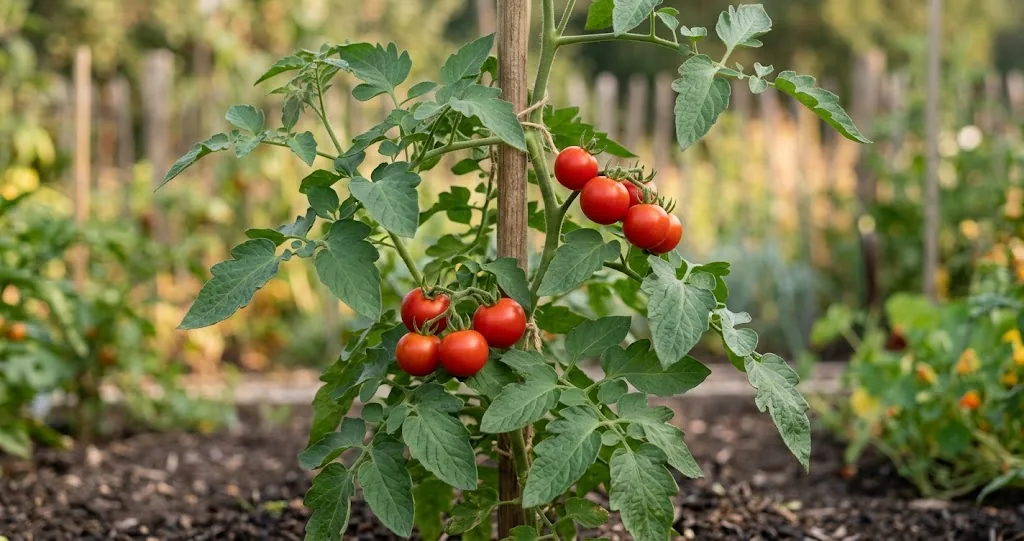
Stupice is the tomato many short-season gardeners watch for while larger slicers are still green. This Czech heirloom sets small red fruit early and can keep producing through the season. Seed sources put it at roughly 50 to 65 days from transplant, depending on the seller and its counting method, so use the estimate on your own seed packet as a guide rather than a deadline.
This profile covers the plant’s history, growth habit, harvest, and kitchen uses, including what gardeners should know about seed saving and the expected harvest window. For a wider comparison, see our guide to tomato varieties.
Origin and history
Stupice is a Czech variety that entered American seed collections through the Abundant Life Seed Foundation. Victory Seed Company reproduces a letter dated 1976 from Czech grower Milan Sodomka offering seeds to the foundation. Uprising Seeds says it was bred in the mid-1950s at an agricultural station in the community of Stupice, just east of Prague. These accounts give a useful outline of its route into US gardens, though they do not settle every detail of when or where it was first selected.
Today it is widely sold as an open-pollinated heirloom. That means gardeners can save seed; the University of Minnesota Extension explains that saved seed from open-pollinated tomatoes usually produces plants similar to the parent, while cross-pollination can change the next generation. Choose a healthy, true-to-type fruit and label the dried seed with the variety and year. Its reputation rests on being early and productive in cooler or shorter-season gardens, not on a claim that it is frost tolerant.
Botany and plant facts
The botanical name is Solanum lycopersicum. Adaptive Seeds, Uprising Seeds, and Victory Seed Company all list the plant as indeterminate: stems keep growing and flowers and fruit appear along their length instead of ripening in one concentrated flush. The foliage has the irregular, broad outline called potato-leaf. This is simply a tomato leaf form, not a sign of a special care requirement.
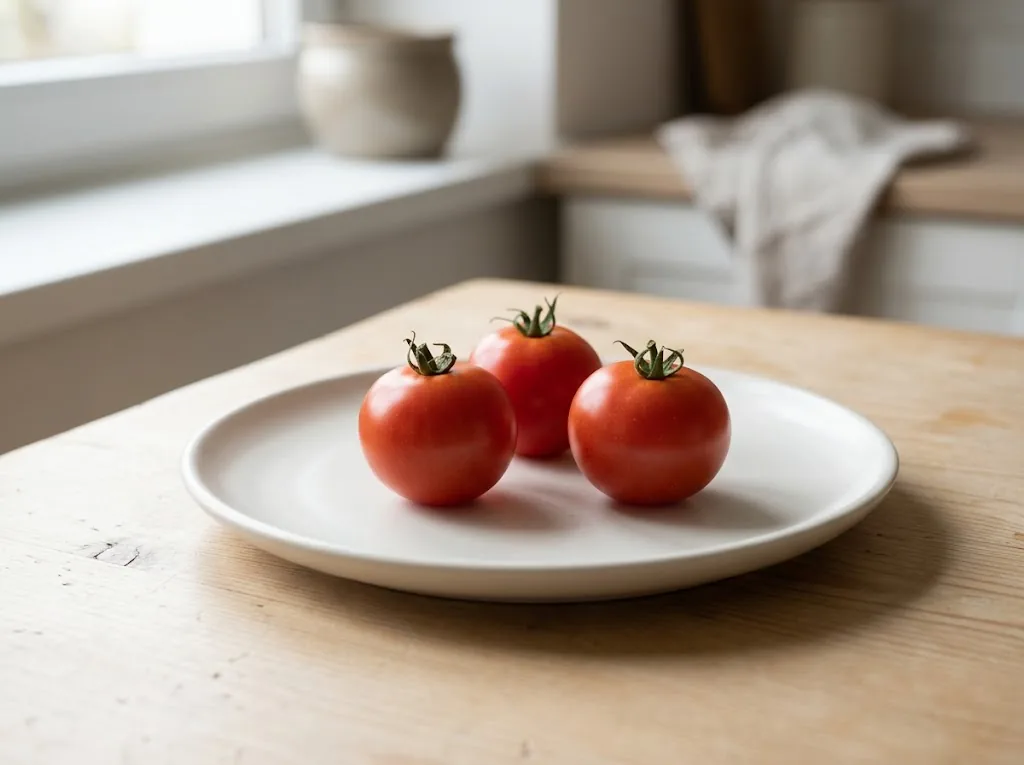
Expect round to slightly flattened red fruit, usually around 2 inches across. Catalog descriptions put individual tomatoes at about 2 ounces, although size changes with conditions and seed strain. Uprising Seeds lists 2 to 3 inch fruit, Victory Seed Company gives about 2.5 by 2 inches, and Adaptive Seeds describes 2 inch, 2 ounce tomatoes with potato-leaf foliage. Flavor is often described by sellers as full, aromatic, or balanced between sweet and tart, but taste varies with ripeness, weather, and growing conditions.
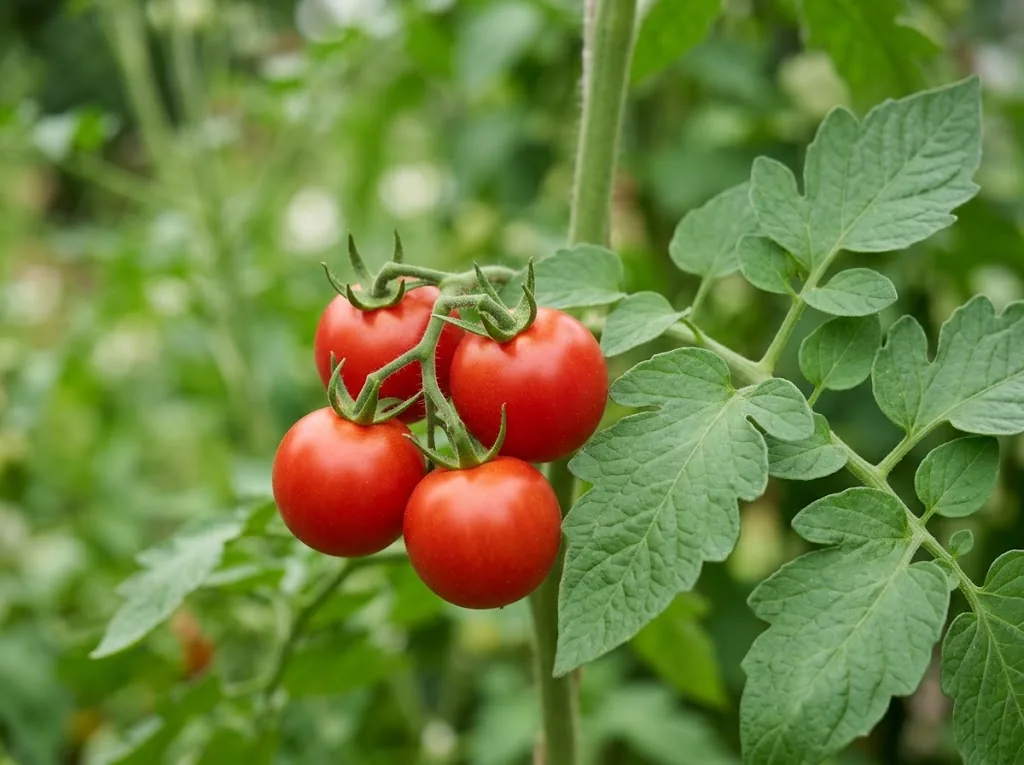
Days to maturity estimates cluster around 50 to 65 days from transplant. Weather and the way a seed seller counts maturity days can shift the first harvest. Adaptive Seeds lists about 55 days, while Uprising Seeds gives 60 to 65 days and Victory Seed Company lists 50 days. These are estimates, not guarantees: a young seedling, cool nights, or slow early growth can push the first harvest later.
Growing Stupice tomatoes
For seed starting, the University of Minnesota Extension recommends that gardeners sow seeds indoors five to six weeks before planting outside. For an indoor start, the guide specifies seeds one-fourth inch deep in flats with sterile, soilless germination mix and a flat temperature of 75 to 85 degrees Fahrenheit until seedlings emerge. After emergence, keep seedlings under bright overhead light. Follow your own seed packet and local frost date, then harden seedlings gradually before planting them outside. Tomatoes need full sun and should be moved outdoors only after frost danger has passed and soil has warmed. Set a cage or stake at planting time. Although some sellers call this plant compact, its indeterminate stems continue extending and benefit from steady support.
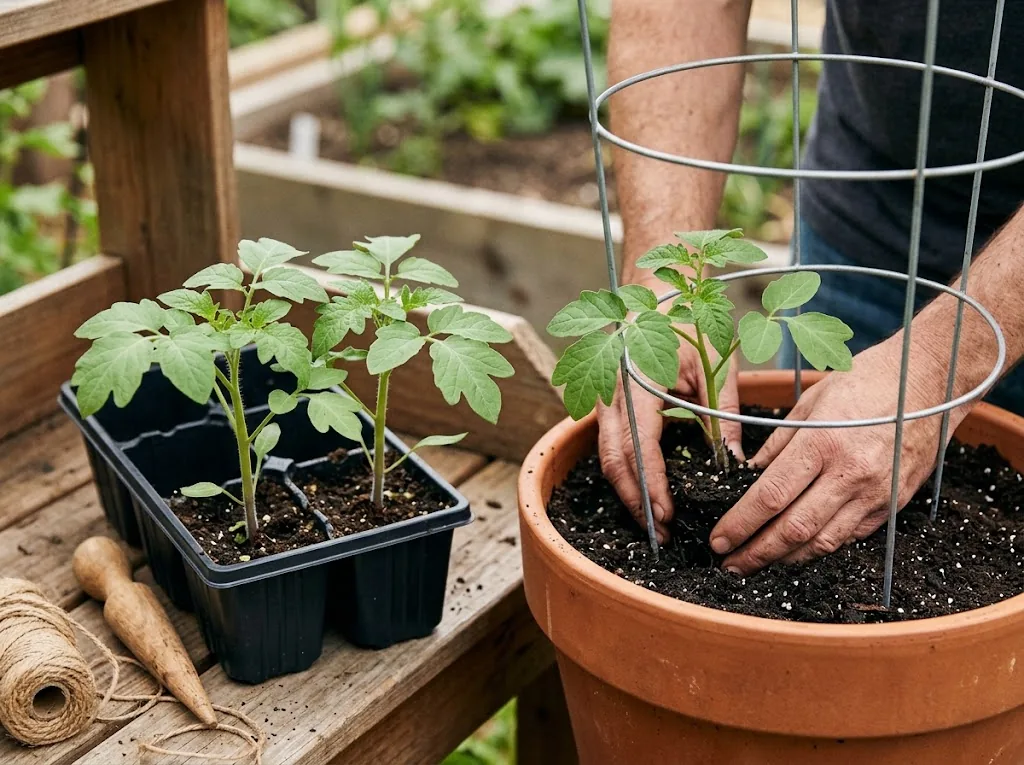
Give each plant a sunny spot with well-drained soil. A large container can work if it has drainage holes and enough room for roots; a smaller pot dries quickly and needs closer attention. Water at the soil line and aim for consistent moisture rather than a repeated cycle of drought and soaking. Mulch helps reduce moisture swings. In a bed, leave enough space for air to move through the foliage and avoid planting tomatoes in the same spot year after year when disease has been a problem.
Do not expect a named disease resistance unless your seed packet lists a specific code. The Stupice listings checked for this profile did not agree on any resistance code. Watch for leaf spots, wilting, or damaged fruit and respond to the problem you identify. Support also helps keep foliage and fruit off the soil. Pruning is optional: a caged plant can grow with minimal trimming, while a staked plant may be trained to a few stems. Avoid removing so much leaf cover that fruit is left exposed to sunscald.
Stupice is often chosen for cool or short seasons because it may produce early, but it remains a frost-sensitive tomato. Protect transplants from cold snaps and do not assume its early reputation makes it cold-proof. If you are comparing another red garden variety, our profile of Marglobe tomato covers a different plant and fruit profile.
Harvest and ripeness cues
Pick fruit when it has developed an even red color and feels firm with a little give. In hot weather, high temperatures can slow full color development on fruit exposed to direct sun. Illinois Extension recommends picking tomatoes once color begins to develop during hot spells, then letting them finish indoors at about 70 to 75 degrees Fahrenheit. Check plants every day or two so ripe fruit does not soften or split on the vine.
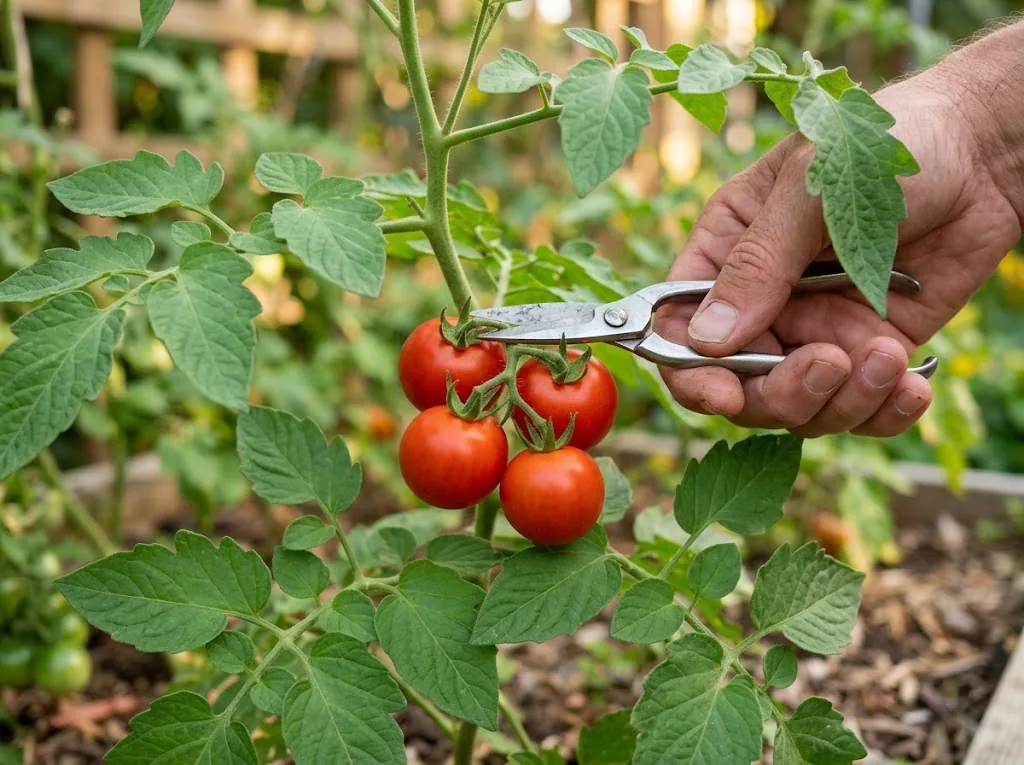
The plant may continue setting new clusters while weather remains favorable. Look beneath foliage as well as along the outside of the cage, since ripening fruit can hide under leaves. If frost is forecast, harvest tomatoes that have started changing color and let them finish indoors. Fully green fruit may not ripen as evenly or taste as developed.
Storage and preserving
For best texture, keep whole ripe tomatoes at room temperature and out of direct sun, then use them promptly. Illinois Extension advises against refrigerating fresh ripe tomatoes because cold storage can reduce eating quality. Refrigerate cut tomatoes in a covered container and use them soon.
The small fruit works well fresh, but a surplus can be cooked into sauce or frozen for later meals. Freezing softens the texture, so thawed tomatoes are better for cooked dishes than for salads. If you want shelf-stable canned tomatoes, use a current, tested recipe and follow its processing instructions exactly. The National Center for Home Food Preservation says whole, crushed, and juiced tomatoes need added acid for safe canning. Its guidance specifies 2 tablespoons bottled lemon juice or 1/2 teaspoon citric acid per quart, with half those amounts for a pint. Do not omit acid or substitute an untested recipe.
Kitchen uses
At roughly 2 inches wide, these tomatoes are easy to halve for salads, tuck into sandwiches, or eat as a snack. They also suit a quick pan sauce, salsa, or sheet-pan roast. Try slicing them on toast with a little salt, folding them into a grain bowl, or simmering a basketful with onion and herbs.
For another heirloom with a different shape and texture, compare the garden and cooking notes in our Marmande tomato profile. With Stupice, plan for an upright vine, steady watering, and repeated picking; its strength is bringing an early red harvest to the table.
