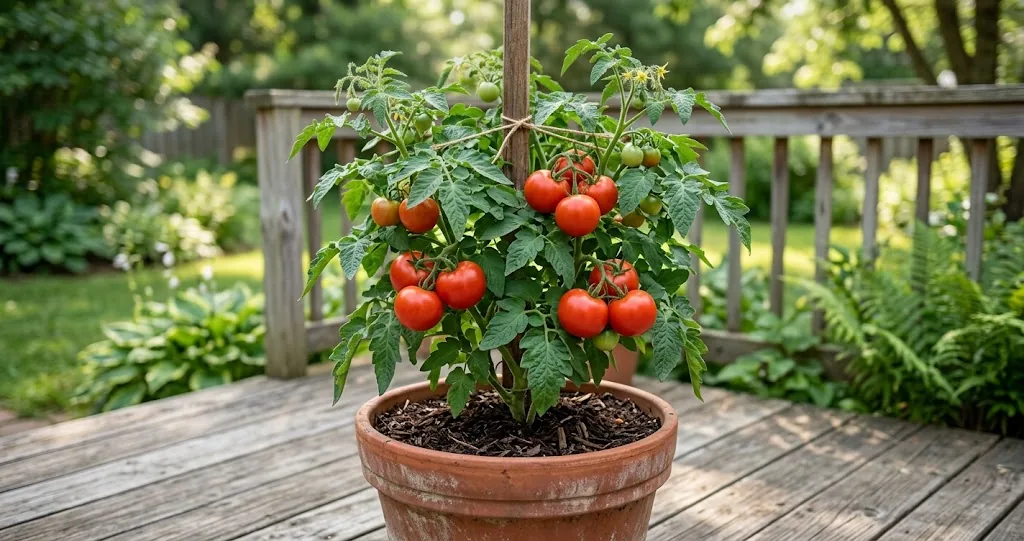
Want a full-size slicer without giving a sprawling vine the whole bed? Better Bush is a compact, determinate hybrid bred for a smaller footprint. It sets round red slicers about the size of a baseball, making it a practical choice for a sunny raised bed or a roomy patio container. It is one named cultivar within the wider range of garden varieties.
Origin and history
The Better Bush tomato is listed as a hybrid garden variety, but its breeder and release year remain unclear in the sources reviewed. Rutgers Cooperative Extension records its origin as undetermined. A Texas Master Gardener handbook identifies the hybrid and describes its compact habit, but does not give a breeding history. Better Boy is a separate hybrid, not the same cultivar with a taller growth habit.
“Bush tomato” can mean something else in Australian food writing: native desert plants such as Solanum centrale, also called desert raisin. This is a cultivated red garden variety and has no connection to that native food or its Indigenous history.
Plant facts
Botanically, the plant belongs to Solanum lycopersicum. The cultivar is a hybrid and determinate: its terminal growing point ends in flowers and fruit, so it produces a set crop that ripens over a shorter window instead of vining and flowering all season. University of Minnesota Extension describes this bush-type growth habit. Rutgers classifies it as determinate, though a Cornell variety record conflicts and calls it indeterminate.
Published descriptions do not agree on the plant’s height. The Texas handbook gives 3 to 4 feet; Rutgers lists 2 feet. Both list red fruit of about 8 oz, and the Texas handbook gives about 68 days. A Seeds ‘n Such listing gives 74 days, roughly 4-inch tomatoes, and spacing of 24 to 36 inches apart. Treat catalog figures as estimates: weather, transplant size, and growing conditions shift harvest dates.
Resistance listings vary too. The Texas handbook records V, F, and N; Rutgers records VF. The codes mean resistance to Verticillium wilt (V), Fusarium wilt (F), and nematodes (N), according to Rutgers’ guide to reading labels. Sources disagree about the codes, and resistance is not immunity, so check a current packet before choosing a planting site.
Growing Better Bush tomatoes

Choose a sunny spot with fertile, well-drained soil. Plant outside after frost danger has passed and the ground has warmed, following University of Minnesota Extension’s transplanting guidance. A large pot or a raised bed can work if it drains freely and holds enough mix to keep moisture steady. When buying Better Bush hybrid tomato seeds, follow the spacing and resistance details printed on the packet, since sources give different mature heights. This cultivar suits growers who want a mid-sized red slicer in a small space; gardeners who want to save seed should choose an open-pollinated type instead.
Water the young tomato plant at soil level and keep moisture even. Wet weather after a dry spell can crack tomatoes, while uneven water availability contributes to blossom-end rot. Mulch helps slow evaporation. Cornell Cooperative Extension advises steady watering, while Utah State University Extension recommends uniform soil moisture during hot weather.
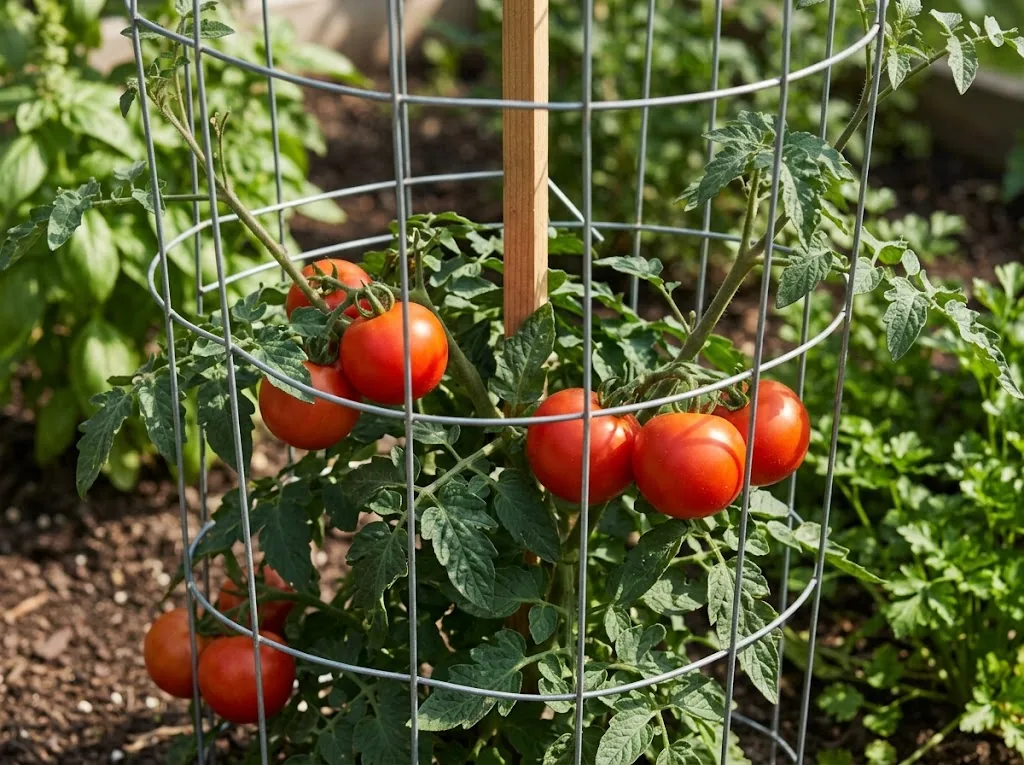
Despite its compact habit, support the plant before tomatoes weigh down the branches. A sturdy cage or stake keeps stems and ripe tomatoes off the soil. University of Minnesota Extension notes that conical metal cages work for compact bush types but cannot always contain sprawling plants. Because sources disagree on this cultivar’s growth habit, pick a sturdy cage over a light conical one. Prune sparingly: remove damaged or soil-touching lower leaves, but keep enough healthy foliage to shade the crop from sunscald. Common problems include cracking in wet weather, blossom-end rot when water supply swings, sunscald after heavy pruning, and leaf spots such as early blight. University of Minnesota Extension lists early blight and Septoria leaf spot among common diseases. A disease-resistant hybrid can still suffer from pests, disease, heat, or watering stress, so diagnose symptoms before reaching for a treatment.
Harvesting the crop before first frost
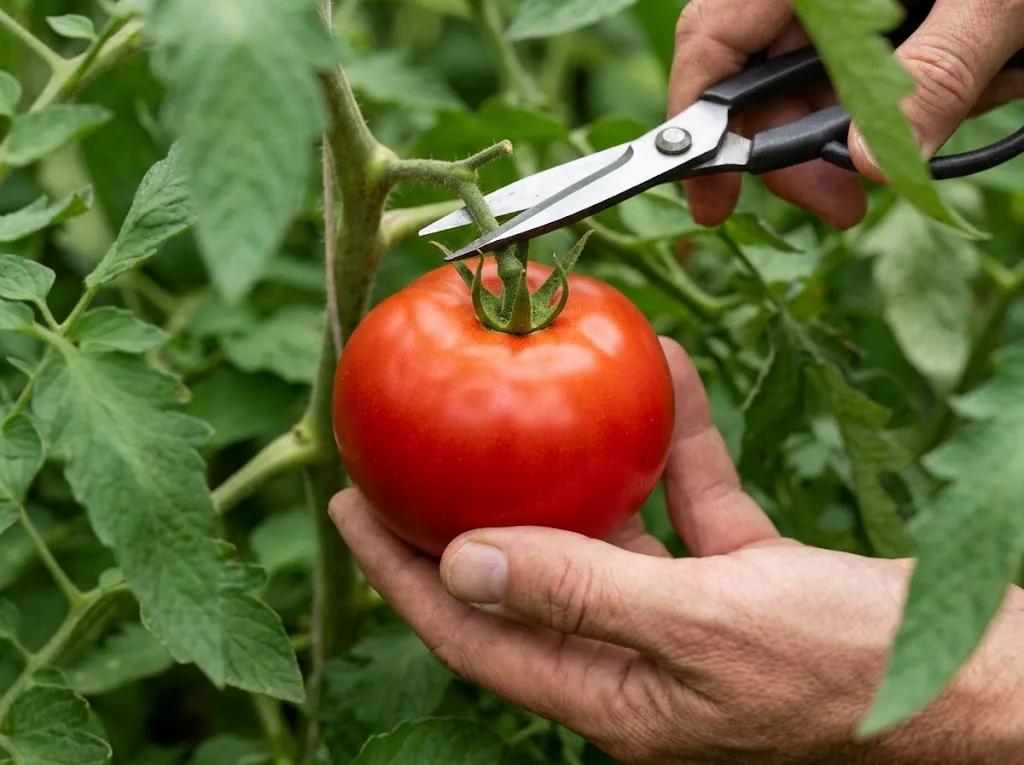
Use “68 days” as a rough guide from transplanting, then look at color and feel. Pick when the skin has turned fully red and the tomato feels firm with a little give. Twist gently or use clean snips if the stem holds fast. Gather ripe tomatoes regularly so they do not soften or split on the vine.
If frost is forecast before the end of the growing season, bring in tomatoes that have started to color and let them finish indoors. Fully green fruit may stay bland. Utah State University Extension recommends harvesting when the crop is fully colored but still firm. For another variety with a different color and growth habit, see Black Sea Man.
Storage and preserving
Use ripe tomatoes soon after picking for the best texture. Let any that need more color ripen at room temperature in a single layer, away from direct sun, and check them daily. Ripe tomatoes can be kept at room temperature or refrigerated for several days, but refrigeration can reduce flavor and cause a mealy texture, as Clemson Extension notes. Let chilled tomatoes warm up before serving.
Freeze them whole or chopped for sauces, soups, and stews, or cook them into sauce and freeze meal-size portions. Drying is another option. For shelf-stable canning, use a current tested recipe and follow its acidification directions exactly. Acidity varies, so improvising the process is unsafe. Penn State Extension outlines safe ways to preserve a tomato harvest.
Because it is a hybrid, seed saved from its tomatoes will not reliably grow plants like the parent. University of Maryland Extension explains that hybrid offspring can show a range of traits; choose open-pollinated seed if saving seed true to type matters.
Uses for the harvest
A 2013 North Dakota State University trial at five sites found that Bush Early Girl II usually ripened earlier, while Better Bush had sturdier vines and larger, more attractive tomatoes. That single season suggests a useful trade-off, not a universal winner. The round, meaty red slicers suit sandwiches, toast, salads, and quick sauces. The compact habit gives a small garden a full-size eating tomato without the tall trellis often needed for plants that keep extending. Texas A&M’s handbook describes it as meaty and a useful patio or small-garden choice, although taste still depends on ripeness and growing conditions.

If you want to compare another named slicer, continue to Paul Robeson tomatoes. Choose a cultivar by the space available, the flavor and color you enjoy, and whether you want a compact, early harvest or a longer season.
