
A Sweet Million tomato is a red cherry variety for gardeners who want a long run of small fruits from one vigorous plant. This Sweet Million cherry tomato is an F1 hybrid that bears uniform, round fruit in clusters. If you are choosing a variety, browse the tomato varieties hub for other types and growing habits.
Origin and history
The public record gives a few firm details and leaves the release story open. Sakata lists it as a well-established home-garden variety and sells it as a hybrid. A Canadian seed catalog identifies it as a hybrid that originated in the United States, but neither source provides a release year or explains its parentage. The available sources support calling it an established hybrid, not attaching an exact launch date or a detailed origin story.
Sakata and seed catalogs describe heavy clusters and high yields, but that language is not a promise of a million fruits. Actual production depends on the growing season, pollination, plant health, and care.
Botany and plant facts
Kew recognizes Solanum lycopersicum as the accepted species name for tomato; Sweet Million is a cultivar in that species. It is an F1 hybrid with an indeterminate, vigorous plant, so its main stem keeps growing and can set flowers and fruit through the season. Its large trusses carry small, round cherry tomatoes with firm flesh and red skin when ripe. Sakata lists an average weight of 10 to 15 grams, roughly one-third to one-half ounce, and describes the variety as productive. Support the branches before the clusters become heavy.
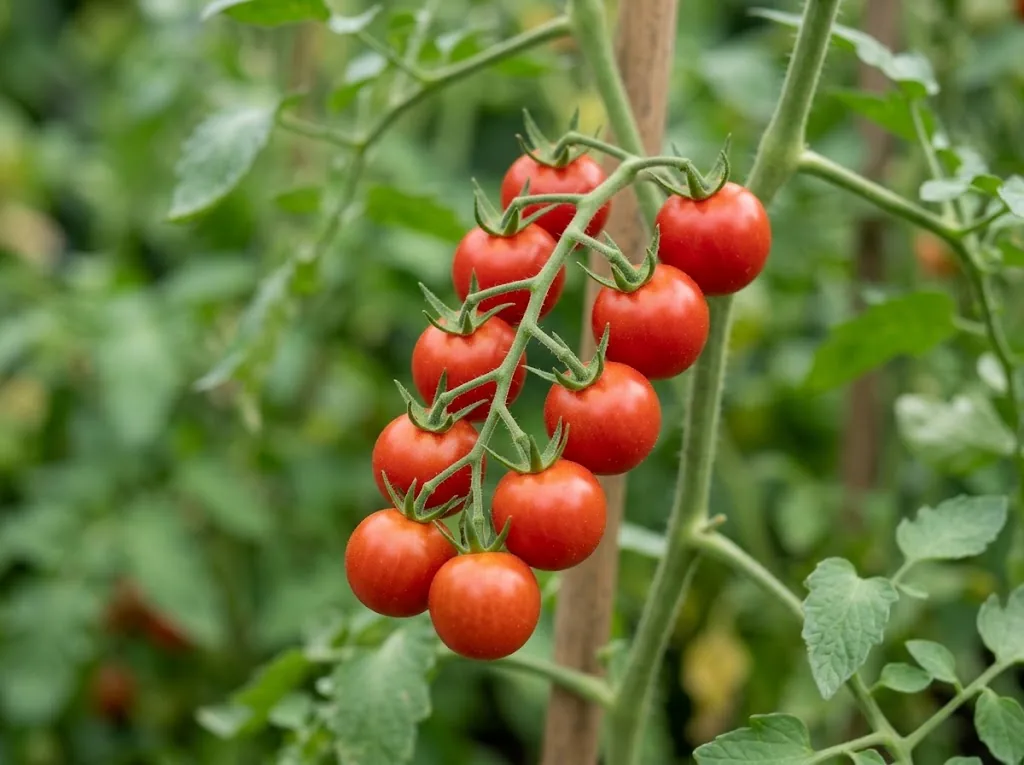
Plan for about 60 to 65 days from transplanting to the first ripe fruit. Sakata lists 60 to 62 days from transplant, while its variety description rounds this to about 65 days. Weather, transplant size, and growing conditions can shift the calendar.
Sakata lists high resistance to Fusarium wilt race 1 and tomato mosaic virus strains 0 and 1. Resistance means the plant can limit those named diseases under ordinary pressure; it does not make the crop immune or protect it from every tomato disease. The variety is also described as having good resistance to fruit cracking, though uneven water and heavy rain can still split fruit.
Growing this variety
Give the tomato plant full sun, warm soil, and a well-drained bed enriched with mature compost. Sow tomato seeds indoors about five to six weeks before you expect to transplant, or buy a healthy seedling. Some seed instructions suggest starting six to eight weeks ahead; choose timing that gives young plants room to grow without keeping them there too long. Move plants outdoors after spring frost danger has passed and the soil has warmed. Leave about two to three feet between plants so air can move through the foliage. A home gardener with limited ground space can use a sturdy support to train the plant upward.
Set a tall, sturdy stake, cage, or trellis at planting time. Indeterminate plants keep extending, and a short cone-shaped cage may not contain the branches or clusters. Tie the main stem loosely as it grows. Prune only enough to keep the plant manageable and improve airflow; removing too many leaves can expose fruit to sunscald. Gardeners who need a more compact, determinate plant can compare its habit with Better Bush tomatoes.
Keep moisture steady. Water deeply at the base instead of wetting leaves, and use mulch to reduce evaporation and soil splash. A sudden shift from dry soil to heavy watering can contribute to cracking and blossom-end rot. Sakata describes the fruit as crack resistant, not crack proof. Check leaves and stems regularly for spots, curling, or unusual yellowing. Resistance to the listed diseases does not prevent other problems such as early blight, pests, or nutrient and watering disorders.

Feed according to your soil test or a balanced tomato fertilizer label. Avoid adding extra nitrogen once the plant is growing well: excess can encourage leafy growth at the expense of flowers and fruit set. In a container or greenhouse, choose a large pot with drainage and be ready to water more often than an in-ground plant. A few yellow leaves near the base do not identify a disease by themselves; look for the pattern and spread of symptoms before acting.
Harvest Sweet Million tomatoes
Pick the cherry tomatoes when they are evenly red and give slightly under gentle pressure. Check the clusters often once fruit begins to color, since a warm spell can bring several to ripeness at once. Use garden snips if the stems resist a gentle lift, and handle the small fruit carefully to avoid bruising.
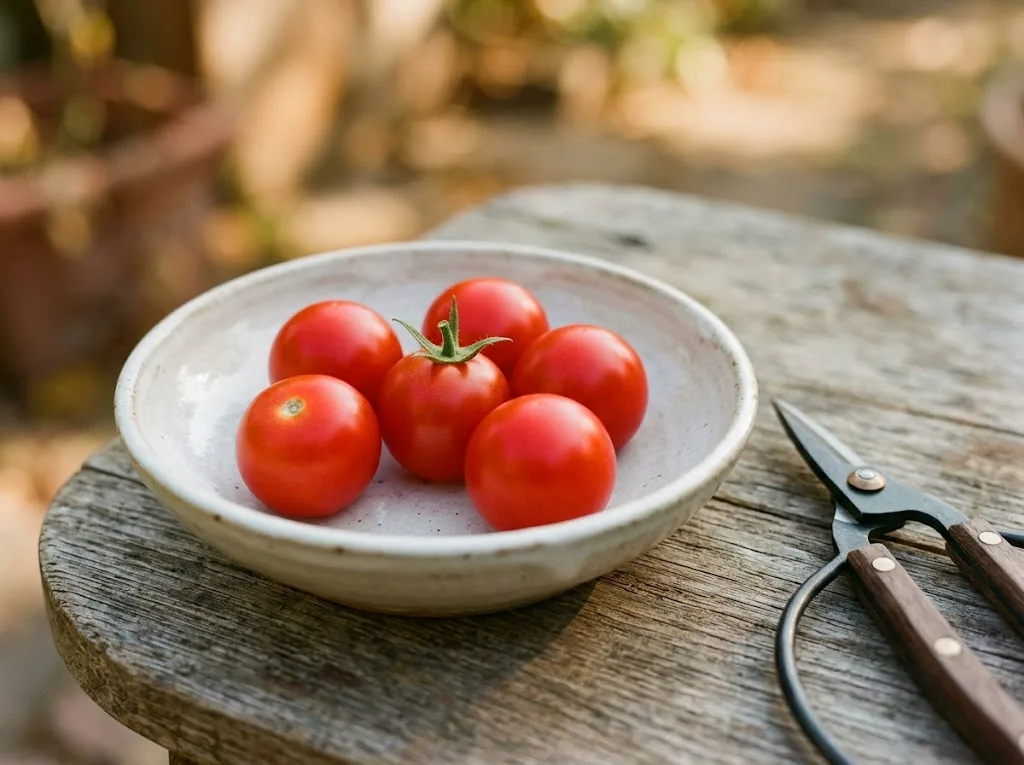
At the end of the season, mature green fruit can be picked and ripened indoors, but fully green, underdeveloped tomatoes may not develop good flavor. Keep those that have begun to change color at room temperature and check them every day or two. Mature green means full size with a pale or whitish area starting to show, not a small, hard fruit that has not finished growing.
Storage and preserving
Keep freshly picked, fully ripe fruit at room temperature and out of direct sun, then use it within a few days for the best flavor. Avoid prolonged refrigeration because chilling can dull fresh tomato flavor and texture. If the harvest runs ahead of your meals, freeze whole clean fruit in a freezer container. The thawed texture is soft, so use frozen fruit in cooked dishes, sauces, or soup.
You can also dry sliced cherry tomatoes or cook them into sauce and freeze it. For shelf-stable canning, follow a current tested tomato recipe exactly. The National Center for Home Food Preservation says to add bottled lemon juice or citric acid to whole, crushed, or juiced tomatoes, even when using a pressure canner. Do not improvise processing times or skip the acid.
Uses for Sweet Million cherry tomatoes
The small size makes Sweet Million easy to eat whole as a snack, toss into a salad, or roast on a sheet pan until the skins wrinkle. Add the cooked tomatoes to pasta, grain bowls, toast, or a quick pan sauce. Their sweet, balanced cherry-tomato flavor also works with basil, parsley, oregano, and thyme.

If you want a larger tomato for slicing and sandwiches, see the separate profile of Moneymaker tomatoes. Sweet Million fits a different job: frequent handfuls from a productive vine, with extra fruit to roast, freeze, or share.
Sources and further reading
- Sakata Home Grown: Sweet Million
- OSC Seeds: Sweet Million variety listing
- Kew Science: accepted tomato species name
- University of Minnesota Extension: Growing tomatoes in home gardens
- University of Minnesota Extension: Trellises and cages
- Nebraska Extension: How to store tomatoes
- University of Illinois Extension: Tomato growing and storage
- National Center for Home Food Preservation: Canning tomatoes
- Oregon State University Extension: Preserving tomatoes
