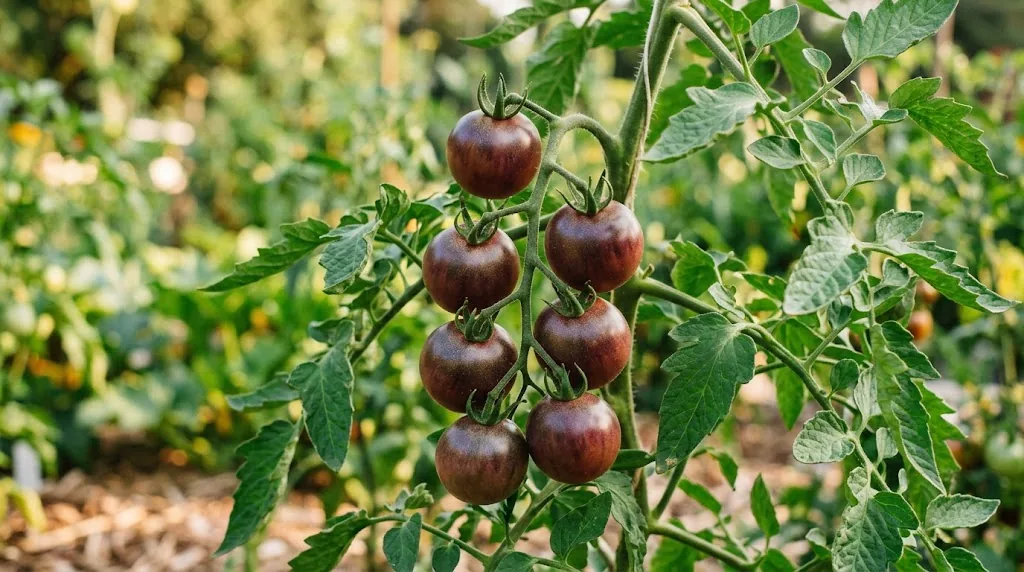
Black Cherry tomatoes bring dusky purple-brown fruit and a deep, sweet flavor to the garden. The plants keep growing and setting fruit through the season, so this variety suits gardeners who can provide tall support and room to harvest. Here is what to expect from its history, growth, ripeness, storage, and kitchen uses.
Origin and history
Black Cherry is a modern variety, not an ancient cultivar with a long documented history. Victory Seed Company says it came from a natural occurrence and was introduced in 2003 by the late Vincent Sapp, and Johnny’s Selected Seeds says he bred it in Florida. Victory says its first seed sample came from a grower in Middle Tennessee. The exact parentage has not been documented in the sources available for this profile.
If you are comparing dark, striped, and golden varieties, the tomato varieties hub gives you a broader route through the choices.
Botany and plant facts
Black Cherry is a small-fruited tomato in the species Solanum lycopersicum. The round fruit is about an inch across and ripens to dusky reddish-purple or purple-brown, rather than a true black. It is one of the dark-fruited black tomatoes, with a color that may look more brown or purple in different light. Seed sellers describe a rich, sweet, sometimes fruity taste. Flavor varies with growing conditions and ripeness, so treat those descriptions as a guide rather than a guarantee.

This is an indeterminate variety, meaning it continues to grow, flower, and set fruit until frost or other stress ends the season. Unlike determinate vines, which set much of their crop over a shorter window, it can keep bearing fruit as long as the plant remains healthy. Cornell’s variety database lists about 65 to 75 days to maturity without saying where the count starts, Victory Seed Company lists 65 days, and Johnny’s Selected Seeds counts about 64 days from transplant. Weather, planting date, and care all affect the calendar.
Seed sources disagree about whether Black Cherry is open-pollinated or hybrid. Victory Seed Company and Johnny’s Selected Seeds list it as open-pollinated, while Cornell’s variety database labels it hybrid. If saving seed matters, check the packet from the supplier you buy from and follow that supplier’s guidance. Open-pollinated seed can generally reproduce the variety, but tomatoes may cross with nearby varieties. Separate varieties or cover flower clusters if keeping seed true to type is important.
Growing the Black Cherry plant
Sow seeds indoors in a clean seed starting mix about six to eight weeks before the last frost date in your area. Keep the soil evenly moist while seeds germinate, then give each seedling strong light to prevent weak, leggy growth. Harden plants gradually before planting outside. Tomatoes are warm-season crops, so wait until danger of frost has passed and the soil has warmed. Do not direct sow seeds in a short season unless your local frost-free window is long enough for the crop to mature.
Choose a site in full sun with at least six hours of direct light; eight or more is preferable where practical. Use fertile, well-drained soil and leave enough space for air circulation, for leaves to dry, and for you to reach the fruit. Set a tall cage or trellis soon after transplanting, before the roots spread. Support the vine with loose ties, then check them weekly and loosen any that begin to pinch. If you start with a small support, the vigorous growth can quickly outgrow it.
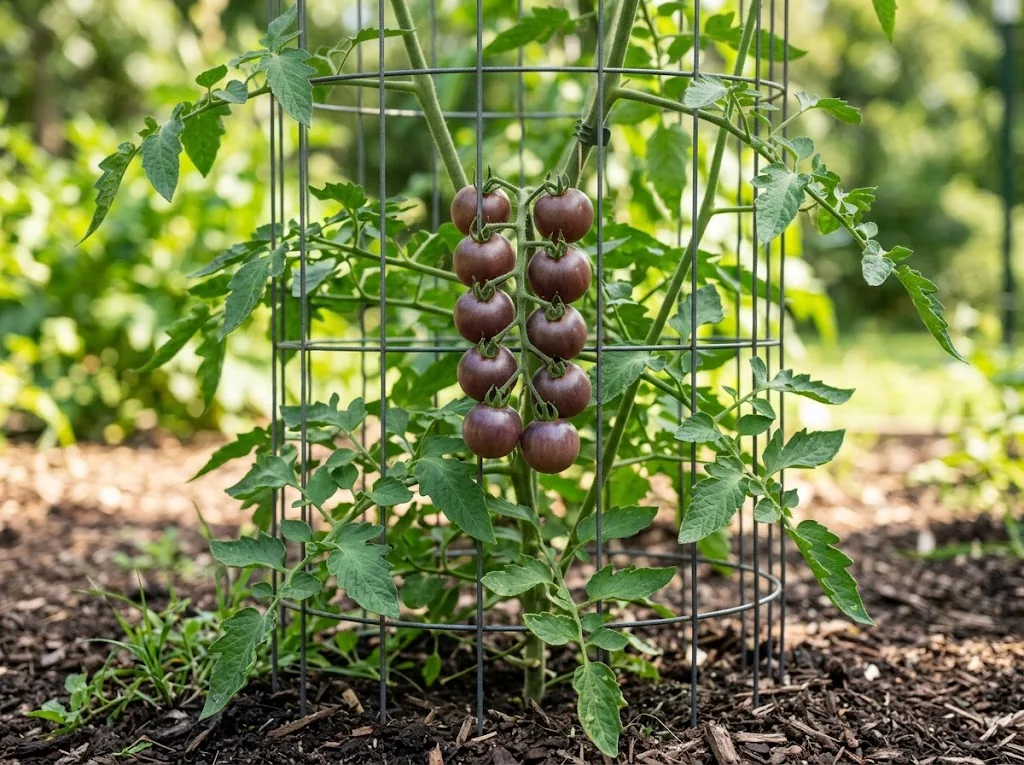
You can grow one plant in a large pot with drainage, but the container needs a stable trellis and frequent checks for dry soil in hot weather. A raised bed or in-ground spot usually makes it easier to manage a full-size plant. Avoid feeding heavily with nitrogen: excess leafy growth can crowd the plant and delay fruit. Follow the fertilizer label or a soil test instead of applying a fixed dose.
Water near the soil and aim to keep moisture fairly even. Dry soil followed by heavy rain or watering can contribute to growth cracks. Mulch helps slow moisture swings. If foliage develops spots or the plant loses vigor, identify the problem before treating it; early blight, Septoria leaf spot, insects, and environmental stress need different responses. Do not assume this variety is resistant unless the seed packet names a specific resistance.
For another long-season tomato with a different color and fruit profile, see Pineapple tomatoes.
When to harvest Black Cherry tomatoes
Judge ripeness by the mature color and feel, not by a red-tomato color chart. A ripe Black Cherry tomato is fully colored in its dusky purple-brown range and gives slightly when handled. Check a few fruits closely during your first growing season because the change can be subtle. Snip a cluster or pick gently rather than tugging hard on the plant.

The maturity estimate is a planning guide, not a promised harvest date. Late planting, cool weather, and a short growing season can push the first ripe fruit later. During wet weather, check fruit regularly and pick when it reaches full color; a sudden increase in water can make some fruit crack.
If you enjoy comparing the flavor and appearance of different types, Carolina Gold tomatoes offer a contrasting golden fruit.
How to store and preserve the harvest
Keep ripe tomatoes at room temperature and use them while they are firm and fresh. Store them out of direct sun and handle them gently because split or bruised fruit spoils faster. A mature but firm tomato can finish ripening indoors; keep it in a single layer and check it daily.
Wash fruit under running water just before preparing it. To preserve a glut, halve and roast the fruit, then freeze the cooked tomatoes or sauce in meal-sized containers. You can also dry them for a chewy, concentrated addition to pasta and salads. For shelf-stable canning, use a tested recipe from a food-preservation authority and follow its acidification and processing instructions exactly; do not improvise a canning method from a fresh recipe.
Uses for Black Cherry tomatoes
Eat the fruit whole as a snack or halve it for salads, grain bowls, and pasta. The purple-brown color stands out beside red and yellow tomatoes, while the sweet, rich taste pairs well with basil, parsley, dill, chives, and thyme. Roast clusters with olive oil and herbs until the skins wrinkle, or toss them with warm pasta and basil pesto. The small, juicy fruit also works well dried or cooked into a quick sauce, but it is not a substitute for thick, meaty slicing types.

Black Cherry tomato questions
How tall does the plant get? There is no single dependable height. Seed sources describe a vigorous, large plant, and its reach depends on climate, support, and pruning. Choose a tall support and leave room for it to spread.
Can you save seeds? Some suppliers identify their seed as open-pollinated, but other references disagree about the classification. Check the seed packet and prevent cross-pollination if you want the next generation to resemble the parent.
Is Black Cherry an heirloom tomato? Some sellers use the heirloom label, but the variety was introduced in 2003 and sources disagree on its hybrid status. It is more useful to identify the specific seed source than rely on a broad label. Use the supplier’s classification if you plan to save seed.
Give the plant strong support, keep soil moisture steady, and learn its dark ripe color early in the season. Those simple habits make the harvest easier to manage and help you enjoy the variety at its best.
