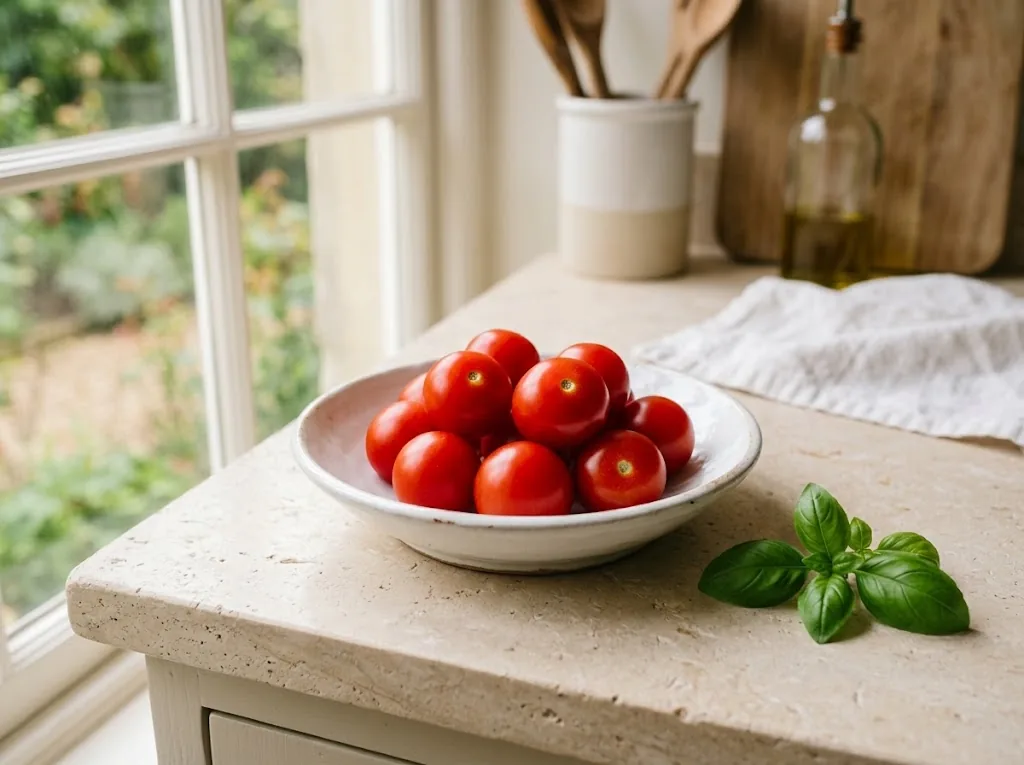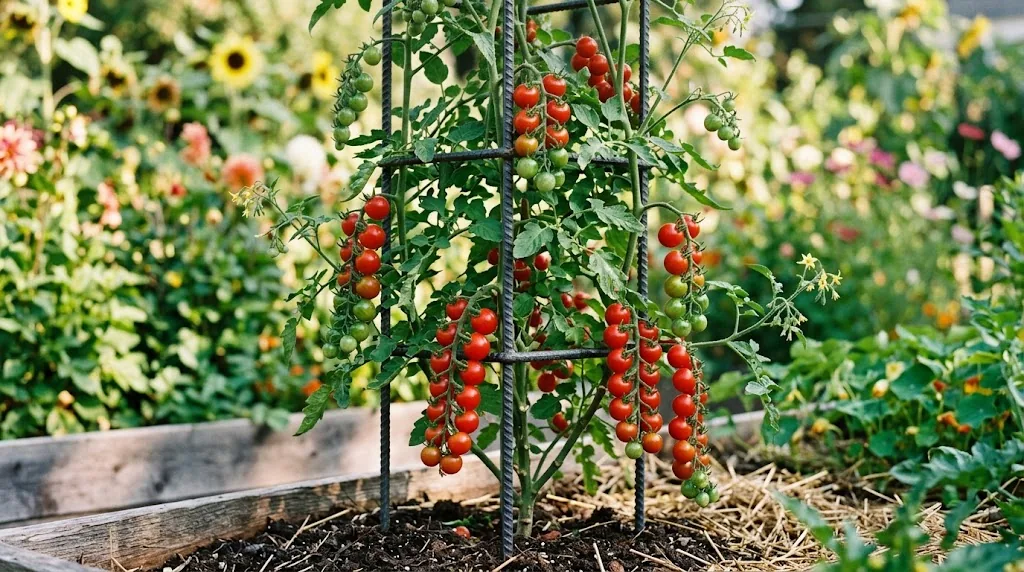
A Sweet 100 tomato plant can turn a sturdy support into a curtain of red cherry tomatoes, with new clusters ripening over a long stretch of summer. It is a good fit if you want bite-sized fruit for grazing and salads, and have room to manage a vigorous vine. The name is also used loosely in seed listings, so check the packet. The original is related to Super Sweet 100, a later hybrid, but sellers do not always use the two names consistently.
For a broader overview of tomato varieties, including how fruit types differ, see the variety guide.
Origin and history
The original entered the American seed trade in 1978, introduced by Northrup-King Seed Company in Minnesota. Its reputation grew from sweet, small fruit and heavy production. In 1982, the company introduced SuperSweet 100, a follow-on hybrid selected for resistance to verticillium wilt, fusarium wilt, and nematodes. Today, some sellers use both names interchangeably, while others distinguish the original cultivar from the improved hybrid. Compare the exact name and disease resistance information on the packet; do not assume a claim for one seed line applies to every similarly named tomato. If a packet identifies the seeds as an F1 hybrid, saved seed may not reproduce the same fruit and plant traits. Oregon State Extension explains how hybrid seed differs from seed that breeds true. Gardener’s Path summarizes the two introductions and their relationship.
A folk story says “100” referred to a trial row and a comment about the tomato’s sweetness, but the story is not well documented. The useful takeaway is simpler: the number is a name, not a promised count for each cluster or plant.
Botany and plant facts
This cherry tomato belongs to the species Solanum lycopersicum. Cornell’s variety database describes cherry-red fruit about 1 inch across and lists 60 days to maturity. Seed sources commonly classify the closely related SuperSweet 100 as an F1 hybrid and an indeterminate vine. These details can vary between strains sold under similar names, so use the name and specifications on your own seed packet as the final guide. Cornell’s variety record and Johnny’s SuperSweet 100 listing show those respective descriptions.
An indeterminate vine keeps extending its stems and setting flowers through the season, rather than stopping at a compact final height. Plan for a plant that may reach 6 feet or taller, and give it a strong stake, tall cage, or trellis before it gets heavy. Oregon State Extension’s tomato guide notes that such vines can reach 7 to 8 feet. The small round fruits grow in branching trusses and ripen progressively, so one plant can offer repeated pickings instead of one concentrated harvest. If you are choosing another cherry tomato, Black Cherry tomatoes offer a contrasting dark-fruited profile.
Growing this tomato
Start seeds indoors according to your local frost calendar, then transplant after frost danger has passed and nights have warmed. Set the plant in full sun and well-drained soil enriched with finished compost. Choose a warm site with at least six hours of direct light, and consider a raised bed if your garden soil drains poorly. Give the roots room and install support at planting; a vigorous vine can outgrow a short cone cage. Tie the main stem loosely as it grows. A stake or trellis makes it easier to keep foliage and fruit off the soil and reach the clusters at harvest.
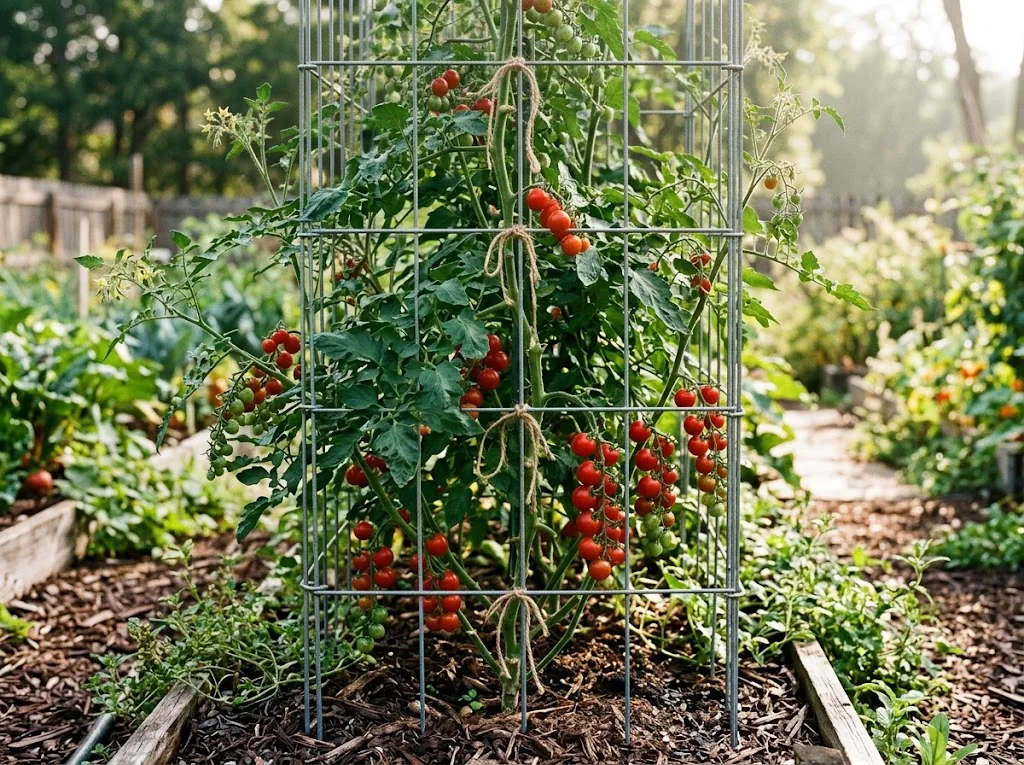
Water deeply enough to moisten the root zone, then let the surface begin to dry before watering again. Aim for steady moisture. A long dry spell followed by heavy rain or watering can make ripe fruit split, and Cornell gardeners also report splitting after rain. Mulch helps buffer soil moisture and suppress weeds. Water near the soil instead of repeatedly wetting leaves, and leave enough space for air to move through the foliage.
Pruning is optional. If you want one or two main stems for a narrow trellis, pinch small suckers below the first flowering truss and keep tying the chosen stems. If you have space for a fuller plant, let more side shoots grow and build a support that can handle the extra weight. Topping stops the main stem from extending, so save it for a plant that has reached its support or for the end of the season. Oregon State Extension recommends removing the growing tip about a month before the first expected frost to slow new growth and help existing fruit ripen. Watch for common tomato pests and leaf spots, but diagnose the problem before treating it. Resistance listed for a named hybrid does not protect every seed lot sold under a similar name or prevent all tomato diseases.
For a container, choose a large, stable pot with drainage and a support sized for a vining tomato. Container plants dry faster than in-ground plants, so check soil moisture regularly in warm weather. Any tomato can grow in a pot, though Oregon State Extension notes that smaller determinate cultivars are usually easier to manage in containers. This variety suits a gardener ready to train a vigorous vine. For another cherry tomato option, compare the growing habit with Gardeners’ Delight.
Harvesting ripe cherry tomatoes
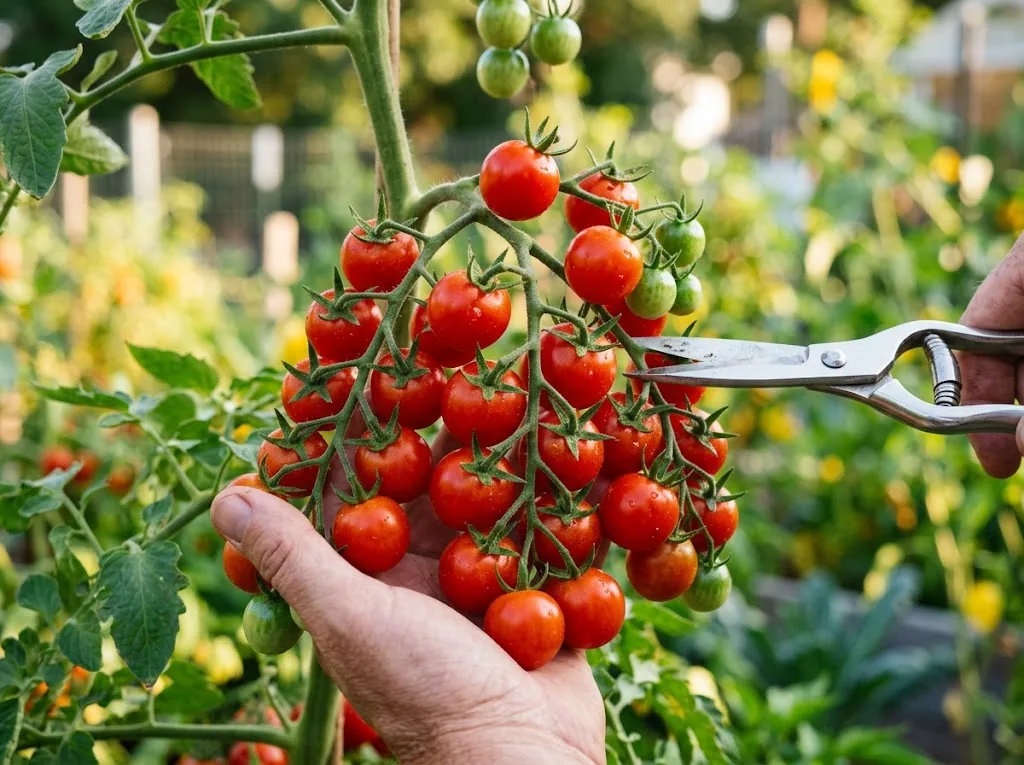
Pick the cherry tomatoes when they have turned fully red and yield slightly to a gentle touch. Check the fruit every day or two as ripening speeds up in warm weather. Hold the cluster in one hand and snip or twist ripe fruit free without pulling down on the vine. If rain is forecast and fruit is already coloring, pick the ripe ones to reduce the chance of splitting. Remove cracked fruit promptly and use it soon if it is otherwise sound.
The 60-day figure is a guide, not a deadline. Seed sellers may count from transplanting or from sowing, and local temperatures change the calendar. Cornell lists 60 days for this cultivar, and Johnny’s lists about 60 days for the related hybrid without stating where the count starts. Use the seed packet’s counting method when planning your first harvest.
Storage and preserving
Keep ripe cherry tomatoes at room temperature out of direct sun and eat them while they are firm and fragrant. Refrigeration can soften texture and mute flavor, so chill them only if they are very ripe and you need to delay using them. Store unripe fruit at room temperature in a single layer and check it often as it colors. Freeze whole fruit on a tray, then transfer it to a freezer bag for sauces and soups, where softened texture will not matter.
Small tomatoes are handy for drying, roasting, quick sauces, and freezing. For shelf-stable home canning, use a tested recipe and add the specified bottled lemon juice or citric acid to every jar of tomatoes; natural acidity varies. Do not improvise a water-bath canning recipe or treat small fruit as safer to can whole. University of Minnesota Extension explains why all home-canned tomato products need added acid.
Ways to use the fruit
Sweet 100 cherry tomatoes are easy to eat fresh by the handful, toss into salads, or halve over grain bowls. Roast a tray with olive oil, garlic, and basil until the skins blister, then spoon the juices over toast or pasta. Their size also suits quick sautés and skewers. For a simple snack, pair the sweet fruit with salty cheese or olives. The best reason to grow this variety is the steady supply: harvest a few trusses at a time and use them while they still taste freshly picked.