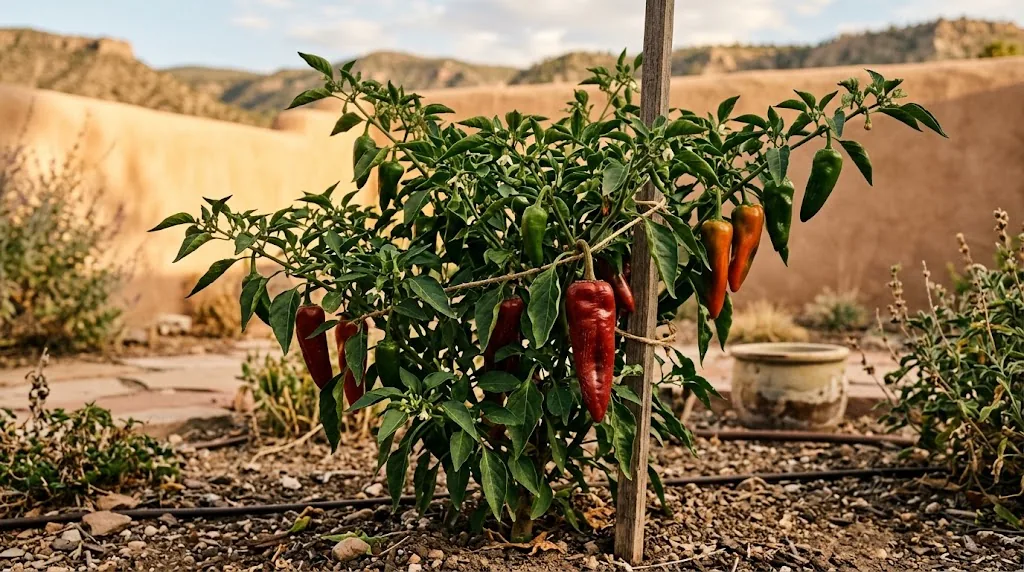
A Chimayó pepper (also written Chimayo) carries a place name and a living cultivation tradition. It is a New Mexico chili pepper landrace, a locally maintained population rather than one perfectly uniform cultivar or variety. That means fruit size, shape, taste, and heat can vary by family line and source. Grow it for green fruit or let it ripen red for drying.
What is a Chimayo pepper?
New Mexico State University describes northern local chiles as genetically distinct from commercial cultivars grown in southern New Mexico. Their plants tend to grow in a more open, vine-like way, and their fruit is often smaller, thinner-walled, and earlier to ripen. These are broad regional patterns, not a guarantee for every Chimayó packet. A family farm or household may maintain a landrace chile line of its own. Some sellers call these heirloom peppers; ask where their particular line was collected and maintained. A name on a packet does not by itself prove that the seed was saved in the village, so a gardener should ask the seller to explain its provenance. The species is Capsicum annuum, a familiar garden pepper species.
For a wider look at this crop and its relatives, see our guide to types of chili peppers.
Chimayo vs. Hatch
These names describe different things. Hatch chile labels products from a growing region and can include several cultivars; Chimayó refers to a variable northern landrace kept in family-maintained lines. NMSU describes northern landraces as thinner-walled and earlier to ripen than standard commercial cultivars. Its growing guide describes ripe red chile harvested at a partly dehydrated stage, then finished as whole pods or flakes. Ask sellers which line they have and where it was grown.
Origin and history
The village of Chimayo sits in the upper Rio Grande region in the north of the state, on the High Road between Santa Fe and Taos in the Sangre de Cristo Mountains. NMSU documents chile cultivation in the state for more than 400 years and identifies Chimayó as a well-known northern line. The same publication dates the standardized commercial New Mexico No. 9 cultivar to 1913, a useful contrast with northern local lines. NMSU also describes landrace chiles as part of northern communities’ cultural identity. For generations, farmers saved seed from plants that ripened before frost and adapted to local conditions. The exact story of each line is different, so “centuries-old tradition” is more accurate than assigning it a precise origin date.
Where to find seed and fruit
NMSU notes that some families maintain private local lines, while specialty companies sell others commercially. Gardeners often call generationally saved stocks heirloom seeds; keep each line labeled rather than mixing them. A current Truelove Seeds listing identifies its own growing source, David Vigil and Loreal Monroe in Esparto, California, and lists its own maturity estimate; treat those details as specific to that stock. The listing also says the pepper is on the Slow Food Ark of Taste, a catalog of endangered heritage foods, and that its growers are keeping up their family’s New Mexico and Colorado farming heritage. If you want local fruit, ask a Chimayo chile shop or farmer whether it was grown in the area or whether only the seed line came from the village.
Landraces are variable by nature. If you want to preserve a line, label its source and keep seed from healthy, fully mature fruit separate from other Capsicum annuum plants. Cross-pollination can change the next crop’s traits.
What do Chimayo peppers taste like, and how hot are they?
Truelove Seeds lists 4,000 to 6,000 Scoville heat units (SHU) for its stock and describes the fruit as having a sweet flavor and slight heat, adding that its sweet-hot flavor intensifies when dried. Its listing identifies that stock as Capsicum chinense, while NMSU describes Chimayó as a Capsicum annuum landrace. Treat the heat figure as seller-specific, not a fixed reading for every local line. NMSU’s general chile guidance gives no Chimayó-specific SHU value. Its general chile scale calls 3,000 to 25,000 SHU moderately pungent, so the seller’s 4,000 to 6,000 figure falls within that broad band for its own stock. A local market describes its heritage stock as complex, sweet and smoky, and says family lines range from mild to extra hot. Treat that as one seller’s profile, not a promise for every line. For context, Iowa State University Extension lists jalapeños at about 2,500 to 10,000 SHU, so the seller’s range overlaps with a typical jalapeño. Taste a small piece first, because one plant can run hotter than another.
Can you grow Chimayo peppers at home?
Start pepper seed indoors about eight weeks before outdoor planting. Utah State University Extension gives peppers an average germination time of 9 to 14 days at an optimum soil temperature of 65 to 85°F. Keep the mix warm and evenly moist, and provide bright light once seedlings emerge.
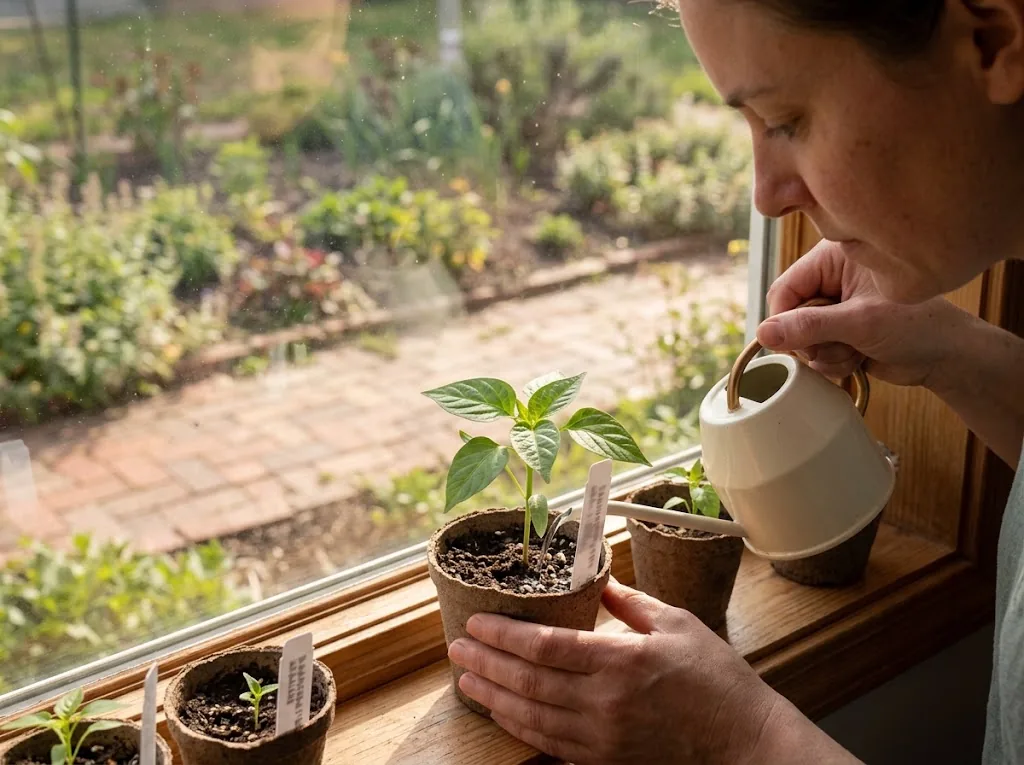
- Harden seedlings off gradually before moving them into direct sunlight. Transplant after frost danger has passed and nights stay above 50°F, the threshold recommended by University of Minnesota Extension.
- Give plants full sun, fertile soil that drains well, and enough room for their branches to spread. Follow the spacing on your packet because local lines differ.
- The region has an arid climate, but that does not make garden plants drought-proof. Water deeply and keep soil moisture steady instead of repeatedly letting the root zone dry out, then flooding it.
- In a short season, use sturdy transplants and check the supplier’s maturity estimate. There is no dependable days-to-harvest number for every Chimayó line. One current supplier describes its own stock as compact and productive, yielding dozens of fruits; it lists 70 to 80 days to maturity and fruit length of 3 to 4 inches. The listing does not specify the timing baseline, so treat those as that seller’s figures, not a promise for every line.
Pick a mature green Chimayo pod or leave it on the plant until it turns red. Clip the stem with clean snips rather than pulling the branch. Wear gloves when handling hot peppers, and wash hands before touching your eyes or face. For a chile from a different tradition, Sichuan cooking in China, see Er Jing Tiao peppers.

Drying, storing, and cooking with Chimayo chile powder
How to dry and store Chimayo chile
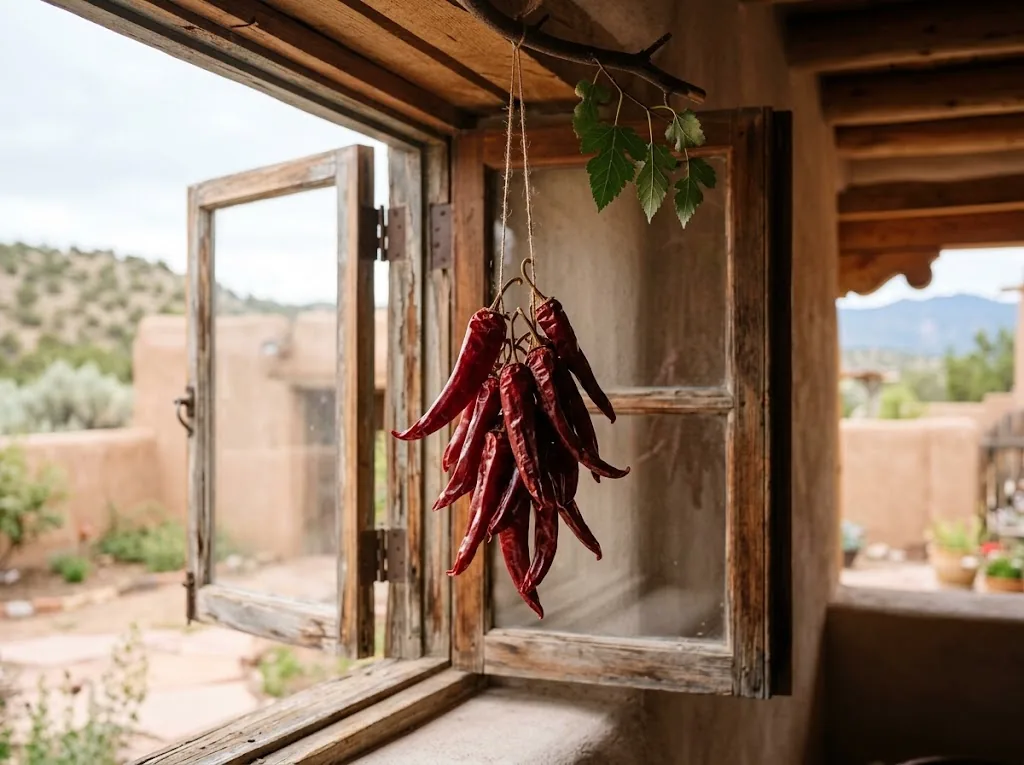
Red fruit can be dried in a well-ventilated place or prepared in a dehydrator until brittle. NMSU describes fully colored New Mexico chiles as dried and ground for use as a spice. If you prefer a single-ingredient product, check the label for any added seasonings. Store whole dried peppers or ground chile airtight and away from moisture, heat, and light. Label the container with its source and date. Do not improvise shelf-stable canning instructions for chile sauce. Use a tested preservation recipe and follow its processing directions.
Cooking with Chimayo chile in New Mexico cuisine
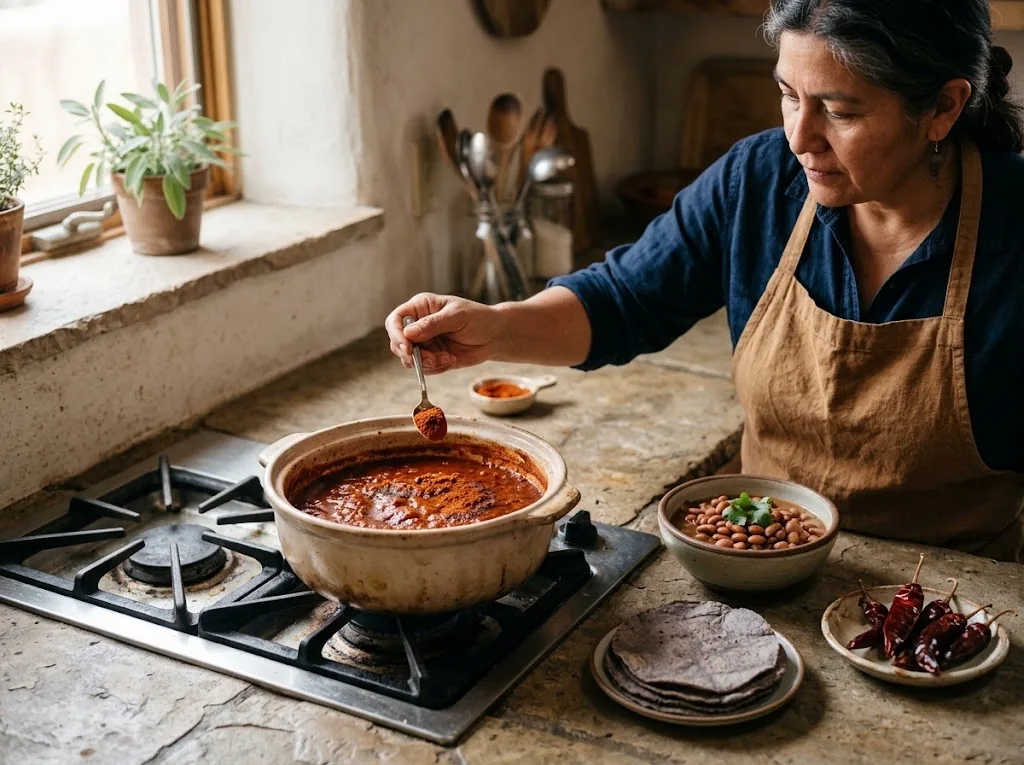
Crush a few dried pods into flakes, or grind them in small batches as a spice for Southwestern cooking; the powder can season beans, soups, stews, eggs, sauces or blue corn enchiladas. Add it gradually and taste as it warms because heat varies between family lines. To make sauce, char ripe fruit, soak it, then blend; remove the ribs and seeds for a gentler taste. For a green harvest, NMSU describes how to roast and peel fresh pods before serving, canning or freezing them.
What is a good substitute for Chimayó?
If a recipe calls for Chimayó chile and you cannot find it, no substitute reproduces the history or exact flavor of a particular line. A mild New Mexico red chile from a grower who identifies its source is a practical alternative. For a fresh pepper recipe, choose a mature red pepper with similar heat and adjust the amount to taste. Serve it with beans or corn, or crush the dry chile into flakes for a finishing spice. For a chile tied to a different place, Oaxaca in southern Mexico, see our profile of Chilhuacle Negro peppers.
Sources and growing references
- NMSU Extension Circular 679, The Landrace Chiles of Northern New Mexico
- NMSU Extension, Growing Chiles in New Mexico
- NMSU Climate Center, The Wonders of New Mexico Chile
- Truelove Seeds, Chimayo Pepper listing
- NMSU Chile Pepper Institute, Then and Now
- New Mexico Tourism, High Road to Taos
- Utah State University Extension, Grow Your Own Transplants at Home
- University of Minnesota Extension, Growing Peppers
- Utah State University Extension, How to Preserve Chiles
- Casa Chimayó Mercado
