
Ask a botanist and a cook, and you can get two different answers to the same question. A tomato is botanically a fruit, but in the kitchen it is usually treated as a vegetable. Both descriptions make sense because they use different rules.
In botany, the word names a structure that develops from a flower. In cooking, fruit and vegetable often describe how a food is used and served. The famous 1893 Supreme Court case about tomatoes settled a narrow tariff question, not the botanical one.
The short answer
A tomato is a fruit by botanical definition because it forms from a flower’s ovary and contains seeds. It is also a vegetable in everyday culinary use because people commonly serve it in savory dishes and as part of a main meal. Neither label cancels the other.
So the quickest accurate answer to “is a tomato a fruit or a vegetable?” is: under the plant-based definition, fruit; in ordinary cooking, vegetable. The word you choose depends on whether you mean a plant structure or a food category.
For a broader look at varieties and growing topics, continue to the guide to tomato plants.
Why botanists classify tomatoes as fruit
A flower’s ovary contains ovules. As the ovary matures, it becomes a fruit and the ovules develop into seeds. Iowa State University Extension uses this botanical definition to explain why tomatoes, cucumbers, peppers, and squash count as fruits, even though cooks often group them with vegetables. A seedless tomato is still fruit because it develops from a flower’s ovary, even when it does not contain mature seeds.

This definition is about how the plant makes the structure, not about sweetness, color, or when a gardener harvests it. A green tomato picked before it ripens is still the fruit of the flower. Likewise, a red tomato does not stop being fruit when it is simmered into soup or chopped into a salad.
The garden tomato’s accepted scientific name is Solanum lycopersicum. Its soft, seed-bearing structure develops from a flower, so it fits the botanical definition. The plant’s fruit does not need to taste sweet to qualify.
A tomato is also a berry in the narrower botanical sense: the fruit is fleshy, develops from a flower’s ovary, and contains seeds. That extra label describes a type of fruit; it does not change the answer to the fruit-versus-vegetable question. UC Davis explains the tomato’s fruit structure, while the separate berry classification is outside this page’s focus.
Botany also sorts fruits into more specific structural groups, but that is a separate question from whether a tomato is a fruit. If you are curious about tomato relatives outside the garden, continue with this look at wild tomatoes.
Why tomatoes are vegetables in cooking
Cooking uses a practical food vocabulary. In common usage, fruits are often sweet foods eaten on their own or as dessert, while vegetables are foods served with the main meal. This is a convention rather than a botanical test, and it leaves room for overlap.
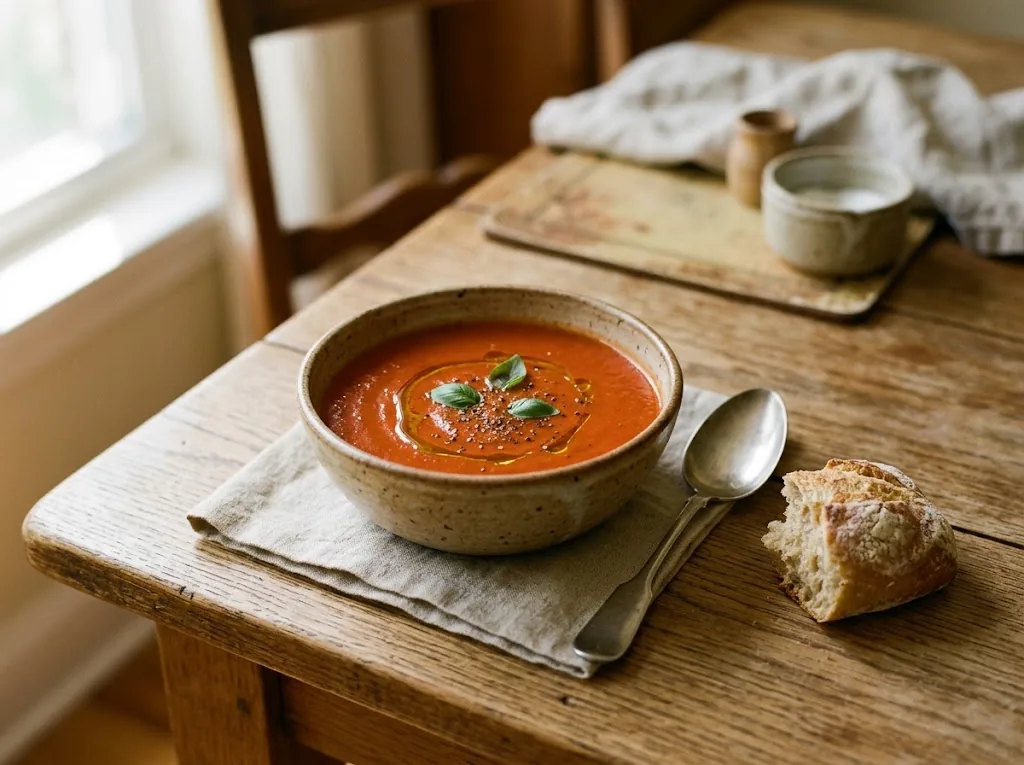
Tomatoes fit naturally into soups, sauces, salads, sandwiches, and cooked side dishes. Their role in those meals is why menus, recipes, and grocery departments usually treat them as vegetables. The label describes how people use the food, not which part of the plant produced it. Iowa State Extension describes the same common-usage distinction: foods eaten with the main meal are often called vegetables, even when they are fruits by plant structure.
Other foods cross the same boundary. Cucumber, pepper, squash, and eggplant are botanical fruits that commonly appear in main dishes. Broccoli is a flower and carrots are roots, yet both are vegetables in the kitchen. “Vegetable” is a broad food category, not one plant structure that can be matched against “fruit.” A University of Missouri Extension botany guide also identifies squash and eggplants as fruits because they develop from an ovary.
That is why a plate can include foods with different plant parts under the same menu heading. Tomato soup, roasted squash, and a carrot side dish may all appear as vegetables in a meal, although the tomato and squash are fruits and the carrot is a root. Lettuce leaves and the asparagus stem are other edible parts served as vegetables. The cook is grouping them by role in the cuisine, not by how each plant formed them.
What the 1893 Supreme Court case decided
In Nix v. Hedden, tomato importers challenged customs duties charged on tomatoes under the Tariff Act of 1883. The Supreme Court decided the case on May 10, 1893. It held that tomatoes counted as vegetables, not fruit, for the meaning of that tariff law.
The opinion recognized that tomatoes are fruits of a vine, but it applied the tariff’s ordinary food meaning. Because people typically served them with the main part of a meal, the Court treated them as vegetables under that law. The decision settled that import-duty question, not every future meaning of fruit and vegetable. Read the full published opinion in Nix v. Hedden in the United States Reports.

Does the answer change how you grow or eat tomatoes?
No. Calling a tomato a fruit does not change how you plant, harvest, or cook it. The distinction simply helps you understand why the same tomato can be classified one way in a botany lesson and another way in a recipe.
If you are choosing a plant for a small garden, growth habit is a more useful question than fruit-versus-vegetable terminology. Indeterminate tomatoes continue to grow rather than stopping at a fixed height, and their fruit often ripens over an extended season, as Illinois Extension explains. Their tomatoes remain botanical fruits regardless of the plant’s growth habit.
For a gardener, the fruit label is a description, not a growing instruction. Choose varieties and care methods for your space and intended harvest, then use the tomato in whichever dishes suit it.
So, is a tomato a fruit or a vegetable?
Both answers can be correct. For plant structure, a tomato is a fruit. For a recipe or menu, calling it a vegetable is ordinary usage. The 1893 ruling followed that everyday use for a specific tariff law, not as a universal ruling about tomatoes.
