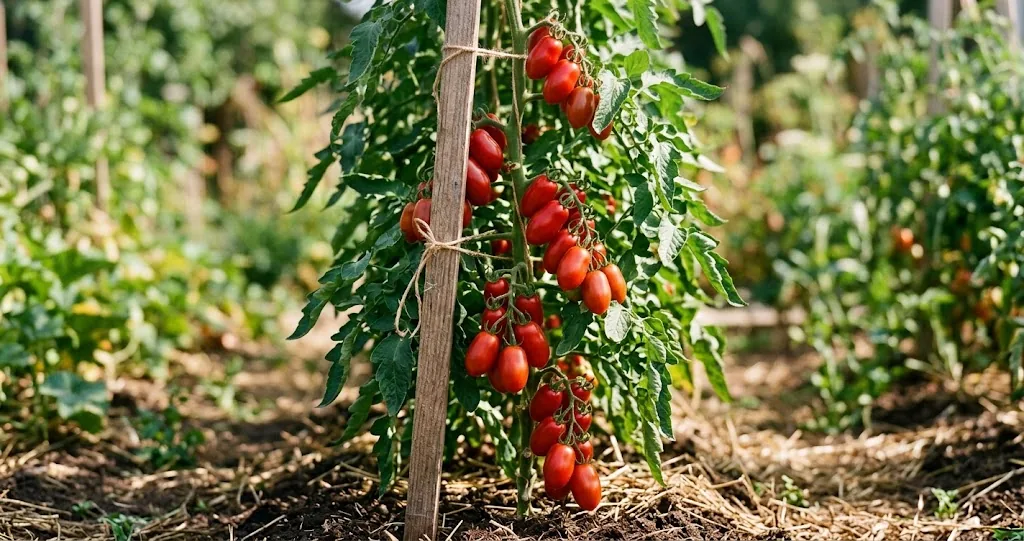
Some grape tomatoes split before you can bring them inside. The Juliet tomato is known for resisting cracks, and its long clusters make harvesting straightforward. Here is what sets this variety apart, how to manage its vigorous vines, and the best ways to use the harvest.
Origin and history
The documented story begins with a 1999 All-America Selections award. Iowa State University Extension listed this variety among that year’s vegetable winners and described red, elongated, roughly one-ounce fruit borne in grape-like clusters. AAS classifies it as an indeterminate saladette with elongated cherry-shaped form, grown in clusters. The award record is useful context, but it does not establish a breeder or country of origin, so those details are best left unstated. Iowa State Extension’s 1999 award report and AAS tomato classifications document its history. For an overview of other profiles, visit the tomato varieties hub.
Botany and plant facts
This F1 hybrid is a cultivar of Solanum lycopersicum. It is indeterminate, so its stems keep growing and setting flowers through the season rather than finishing in one concentrated flush. The tomatoes are glossy red and oblong, between an elongated cherry and a small plum in shape. Size descriptions vary: Iowa State gives about 1 ounce, while Fedco Seeds lists 1 to 2 ounces. Treat those as typical catalog figures, not a promise for every growing season. Johnny’s variety listing calls it one of the most disease-resistant in its trials, and Fedco lists it as tolerant of early and late blight. Resistance can reduce damage, but it does not make a plant immune.
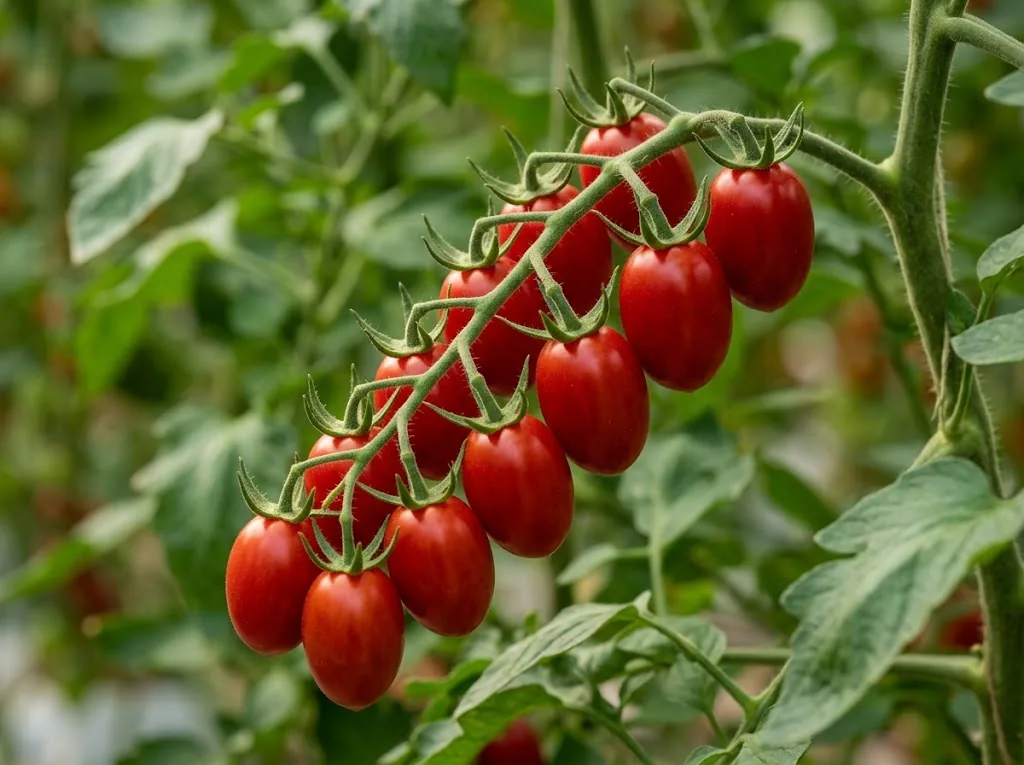
Johnny’s and Fedco both list about 60 days to maturity, and Fedco counts from transplanting. Other sources may count from sowing, so compare maturity figures only when their starting point is clear. Weather, transplant age, and garden conditions also affect the first ripe cluster.
Growing Juliet tomatoes
Plan for a tall, productive plant. Give each transplant full sun, warm soil, and enough room for air to move around its leaves. Set a sturdy cage, stake, or trellis in place while the plant is young; the indeterminate stems need support as clusters form. Johnny’s recommends staking or trellising tall indeterminate tomatoes. Oregon State University’s tomato guide explains support and light needs for home gardens. For a comparison with another named variety, see our guide to Mr. Stripey tomatoes.
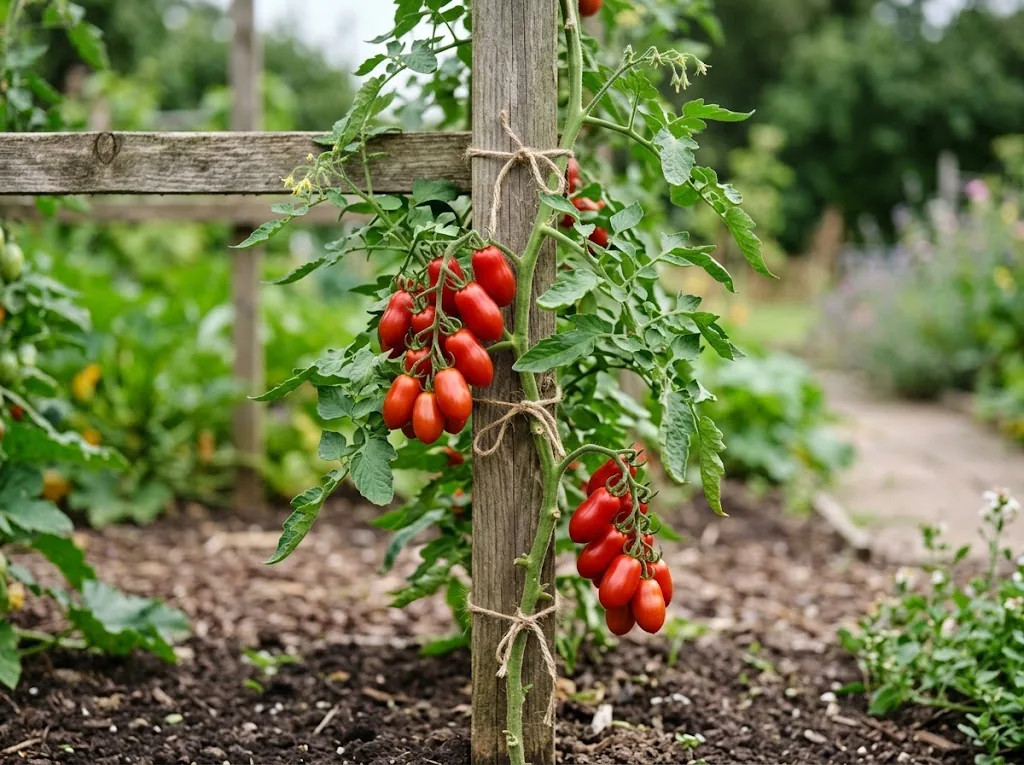
Keep soil moisture even while flowers set and the crop enlarges. Water at soil level, and avoid overhead sprinkling late in the day; Oregon State notes that wet foliage at that time may favor disease. A light mulch can slow moisture loss and limit soil splash onto lower leaves. The listed tolerance to early and late blight is not complete protection; inspect foliage regularly and remove badly affected leaves.
Pruning is a choice, not a requirement. If the vine becomes hard to manage, remove a few lower shoots and leaves that touch the soil, while keeping enough healthy foliage to shade the crop. Avoid stripping the plant or cutting it back like a bush type. Because it is F1, seed saved from its tomatoes may produce plants with different traits next year. Oregon State University Extension explains why saved F1 seed does not come true to type. Buy fresh seed or a labeled transplant when you want the same traits.
Harvesting and ripeness cues
Pick when the cluster is fully red, the mature color described for this variety. Iowa State notes that it resists cracking better than many and can remain on the plant, though ripe clusters should still be checked regularly, especially after heavy rain. Iowa State’s description of the 1999 winner gives the harvest details.
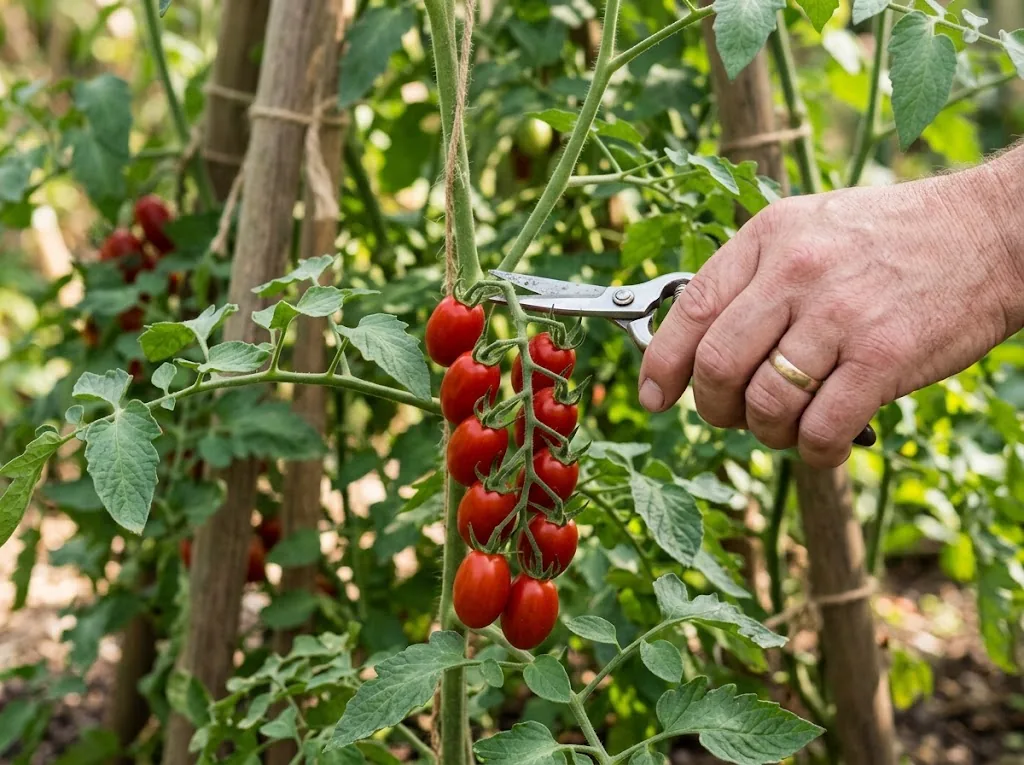
Use clean snips or lift each tomato gently from its stem. Handle the harvest in a shallow container so the weight of a full picking does not bruise the lower layer. In areas where frost threatens, take remaining ripe clusters indoors before the cold damages them.
Storage and preserving
Keep ripe tomatoes on the counter if you expect to eat them within a few days. All-America Selections’ harvest guidance recommends room-temperature storage for several days. If you have more than you can use while fresh, roast or cook them for a meal, freeze them, or follow a tested canning recipe.
The firm, small tomatoes suit stewing and sauce, and Fedco Seeds lists drying as another option. Oregon State Extension notes that tomatoes can also be frozen. For home canning, use a current tested USDA or National Center for Home Food Preservation recipe exactly as written. Tomatoes require added acid for safe canning, even when pressure canned; the National Center for Home Food Preservation specifies measured amounts of bottled lemon juice or citric acid for each jar size. Do not improvise the proportions or treat a refrigerator sauce as shelf-stable.
Ways to use the harvest
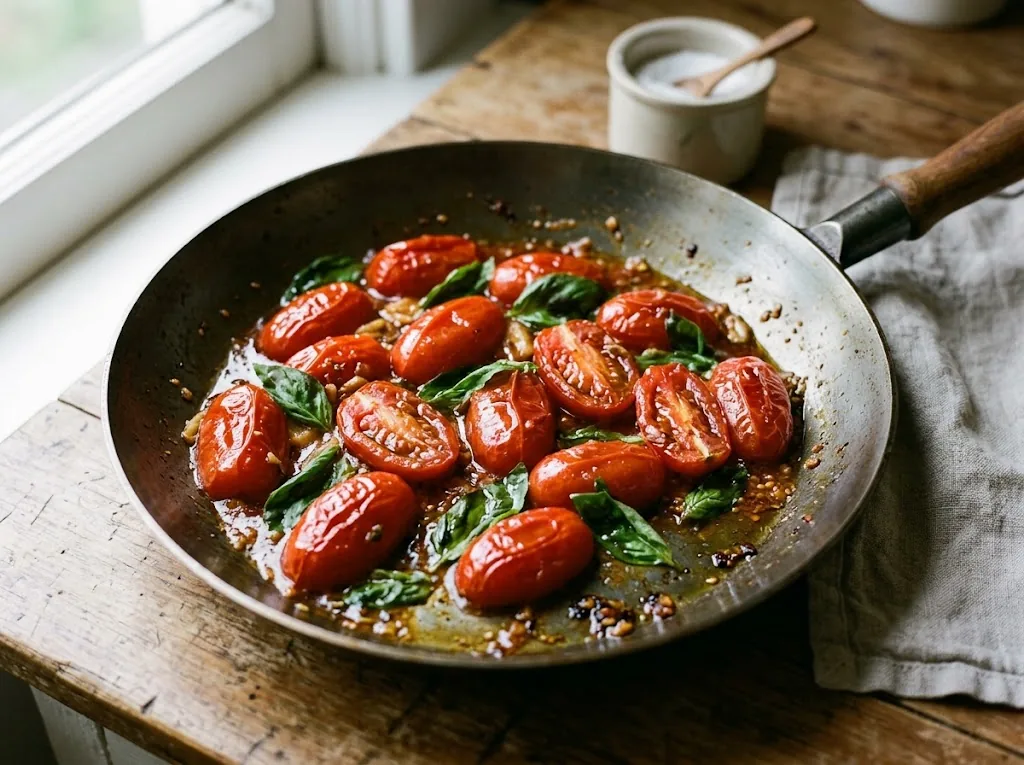
Use the tomatoes whole in a side salad, cut lengthwise for sandwiches, or roast them with olive oil, garlic, and herbs until the skins wrinkle. Their firm texture also suits a quick skillet sauce: halve a handful, cook until softened, then toss with pasta and basil. Johnny’s lists fresh eating, salsa, and fresh sauce among the uses. For a larger slicer with a different role, our profile of Homestead tomatoes covers that variety’s growing and kitchen uses.
Juliet is a practical pick for gardeners who want elongated red fruit on a long-producing vine. Give it support, harvest at full color, and choose fresh use, cooking, freezing, or a tested preserving method according to how much the plant produces.
