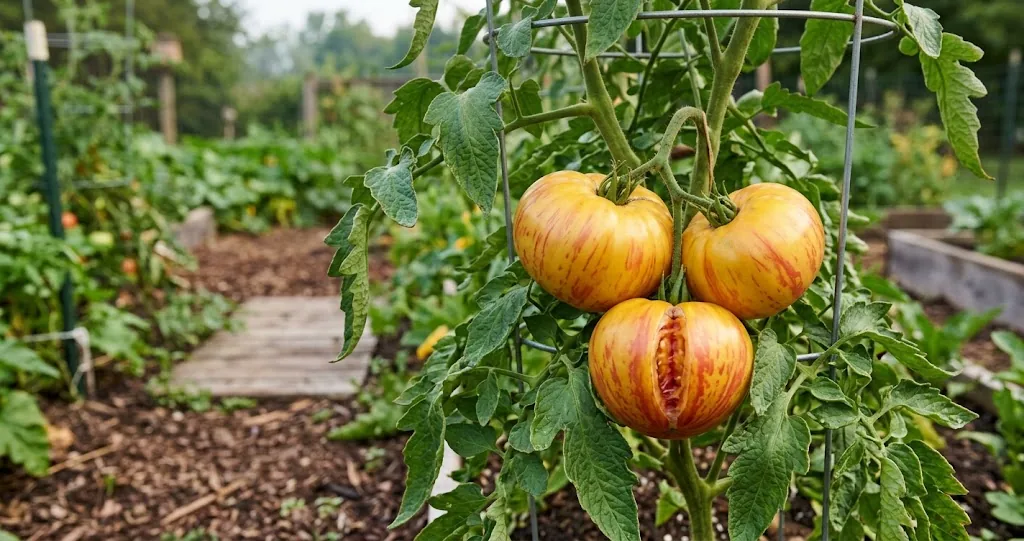
Mr. Stripey is an open-pollinated, indeterminate heirloom tomato, a large slicing tomato with distinctive, bi-colored golden beefsteaks marked by pink-red stripes. Grow it if you want colorful sandwich slices and can give a vigorous vine tall, sturdy support. Some catalogs use this name for different striped tomatoes, so check that a packet describes the large American type rather than the smaller English Tigerella.
For a wider look at related types, visit the tomato varieties hub.
Origin and history
The history of the large American Mr. Stripey is reported rather than fully documented. Victory Seed Company says it was reportedly discovered in Georgia and commercially introduced in the 1990s by Wayne Hilton. The name had also been used for an English tomato associated with Tigerella, which explains why older seed lists can blur two distinct selections. Check the seller’s description before buying.
As an open-pollinated tomato, it generally comes true from saved seed when its flowers have not crossed with another variety, so keep it apart from other types if you plan to save it.
Botany and plant facts
A tomato plant belongs to Solanum lycopersicum, the cultivated species. It is indeterminate, so its stems continue to grow and set flower clusters through the season until cold or disease slows them. Plan for a tall, sprawling vine rather than a compact patio plant. Install a strong stake or tall cage at planting so you do not damage roots later.
The beefsteak is typically flattened and golden yellow with reddish-pink vertical stripes and marbling inside. Cornell’s Vegetable Varieties for Gardeners reports fruit up to about 2 pounds and roughly 80 days to maturity. Victory Seed Company lists a wider 14-ounce to 3-pound range and the same approximate maturity. These are reported ranges, not a guarantee: weather, soil, care, and line all affect size and timing.
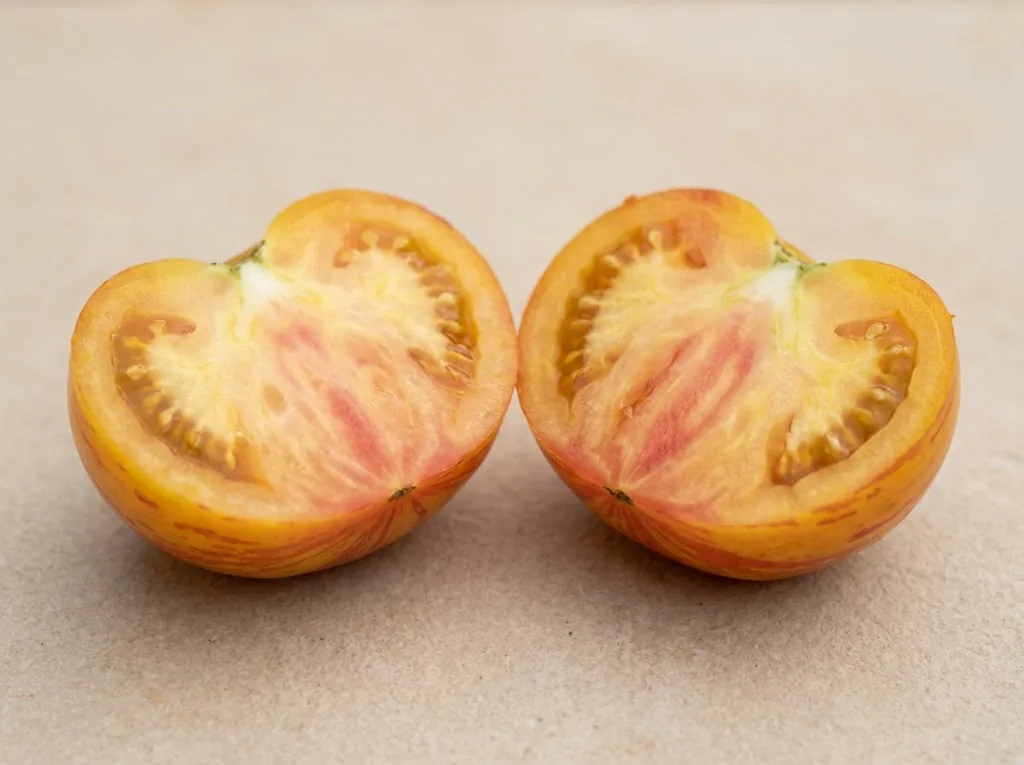
Growers commonly describe the ripe flesh as mild, sweet, and relatively low in acidity, a low-acid flavor profile. That is a flavor preference, not a promise that every harvest will taste the same. Sun, water, temperature, and ripeness all shape flavor. If you prefer a sharper bite, grow another slicer nearby and compare fully colored tomatoes.
Growing this variety
Choose a garden site in full sun with well-drained soil and enough room to reach the vine for tying and harvest. Start Mr. Stripey tomato seeds indoors in clean seed-starting mix about 6 to 8 weeks before your local last frost, or buy a healthy transplant. Move it outdoors after frost danger has passed and the soil has warmed. Harden off indoor-grown plants gradually to reduce sun and wind stress and help each healthy plant adjust. For local timing and spacing, use your extension service’s advice alongside the seller guidance.
Use a tall stake or cage, and tie the main stem loosely as it grows. Leave space around the foliage for airflow and picking access. A compact determinate dwarf such as Tiny Tim is easier to fit in a pot or small bed; seed sellers describe it as a compact container plant. This sprawling cultivar needs vertical room and regular attention to its support.
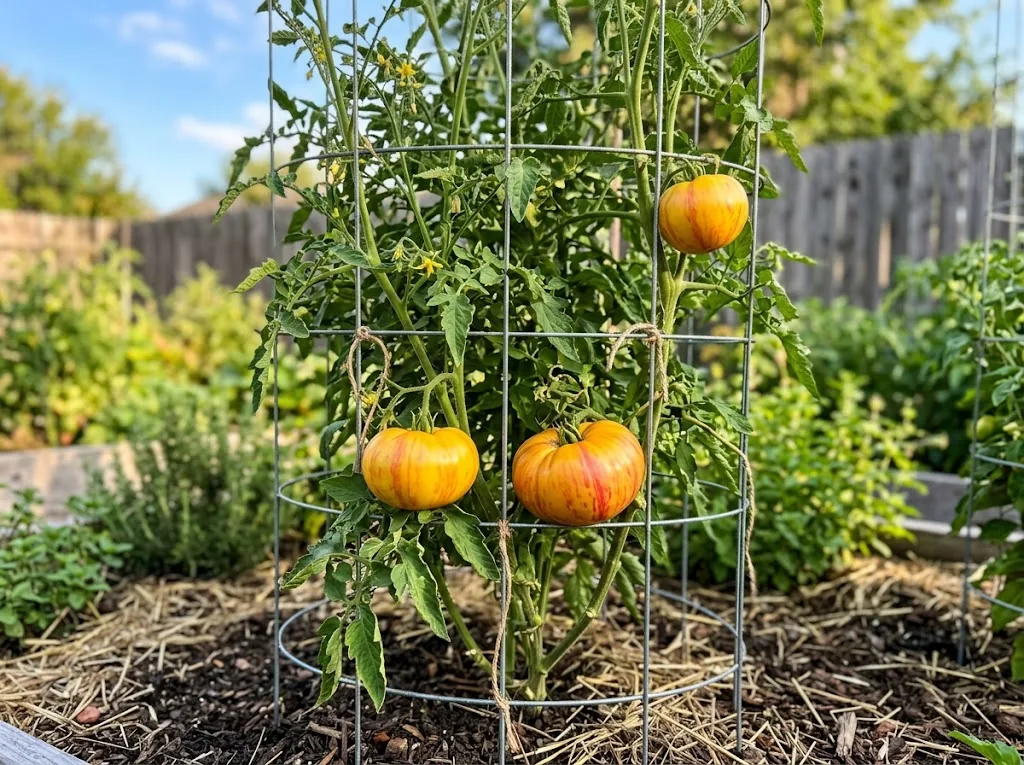
Water at the soil line when the upper soil begins to dry, aiming to keep the soil evenly moist rather than swinging between very dry and soaked. Mulch after the soil warms to slow moisture loss and reduce soil splash. Even watering helps reduce blossom-end rot, the dark, sunken patch that can form on a developing tomato. Do not add calcium products or eggshells as a routine cure; use a soil test to identify a shortage first. Avoid wetting foliage late in the day, and remove diseased leaves and plant debris.
Use a soil test and the fertilizer label to guide feeding. Too much nitrogen can favor leafy growth over flowers and the crop, while generic bloom fertilizer is not a reliable fix for a poor crop. Inspect each leaf and the stems for spots, wilting, or pests, then identify a problem before choosing treatment. Hornworms chew foliage and can strip a branch, so check stems and the undersides of leaves when you see fresh damage. Cornell’s late blight trials listed its resistance as unknown, although it suppressed late blight in one season, so do not count on it to protect against every disease. Rotate away from nightshade-family crops when practical.
When to harvest the striped beefsteaks
Pick when color has developed over the shoulders and the skin gives slightly to gentle pressure. The golden ground color and red-pink markings become clear as it ripens, although the pattern varies. Use clean snips if heavy fruit does not detach easily, and handle it gently to avoid bruising.
During very hot weather, ripe tomatoes soften quickly. Harvest with a short piece of stem attached if it comes away easily, but do not pull or twist hard enough to break a branch. Check the vine often and harvest once color is well underway if a heat wave or storm is coming. Fruit that has begun to change color can finish ripening indoors at room temperature. Remove split or damaged tomatoes promptly and use sound ones first.
Storage and preserving
Keep sound ripe tomatoes at room temperature, out of direct sun, and use within a few days for best quality. If fruit needs more time to ripen, leave it on the counter and check it daily. Refrigeration can dull flavor and make the texture mealy; chill an extra-ripe one only when slowing further softening matters more than texture. Do not wash until ready to use.
Large, meaty slices suit sandwiches, burgers, and toast. Dice smaller pieces for salad or fresh salsa, or freeze surplus for cooked dishes. For home canning, follow a tested recipe exactly, such as the USDA-backed directions curated by the National Center for Home Food Preservation. The National Center for Home Food Preservation says tomatoes need added acid for safe home canning, including when pressure canning. Never improvise a shelf-stable recipe based on a tomato’s taste.
How to use the tomatoes
Show off a ripe slice on a sandwich, beside fresh mozzarella, or layered with herbs on toast. Basil, parsley, and black pepper complement its sweetness. Serve the slice as a snack with crusty bread, or add it to a meal. If you want to compare another large slicer, our Moskvich profile covers a distinct cultivar with its own maturity and growing traits.
For quick herb-topped toast, rub toasted bread with a cut garlic clove, add a ripe slice, and finish with chopped basil, olive oil, and black pepper. Or roast wedges with olive oil and oregano until softened, then spoon them over pasta or beans. Save bruised but sound produce for cooking and discard anything moldy or decaying.

Frequently asked questions
When should I start planting?
Start seed indoors about 6 to 8 weeks before your area’s last frost. Set plants outside after frost danger passes and the soil warms, hardening them off first.
Does this striped beefsteak taste good?
There is no objective winner for taste. Many growers like the sweet flavor, but ripeness and growing conditions affect each harvest. Compare it with another slicer from your own garden.
Is Mr. Stripey determinate or indeterminate?
It is an indeterminate vine. Give it tall, sturdy support and expect continued growth through the season.
How large does the beefsteak get?
Cornell reports specimens up to about 2 pounds. Some seed listings give a wider range, and size depends on conditions and the line.
Is it the same as Tigerella?
No. The large American beefsteak is distinct from the smaller English Tigerella, although older listings sometimes mix the names.
Sources
- Cornell University, Vegetable Varieties for Gardeners
- Cornell Cooperative Extension, resistant tomato varieties
- Victory Seed Company, variety profile
- University of Illinois Extension, home growing and storage
- Incredible Seeds, Tiny Tim dwarf description
- Cornell University, evaluation of late blight resistant tomato varieties
- National Center for Home Food Preservation, canning tomatoes
