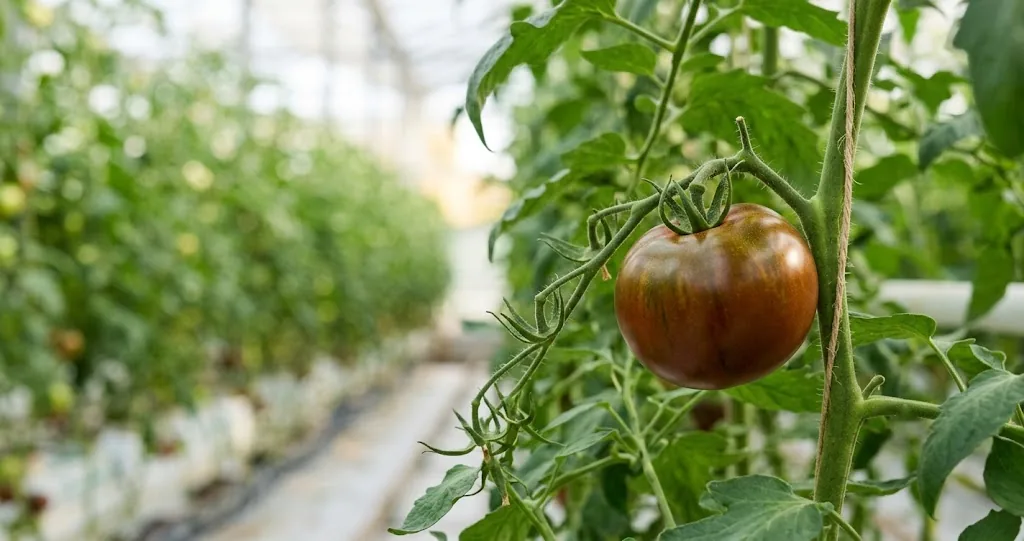
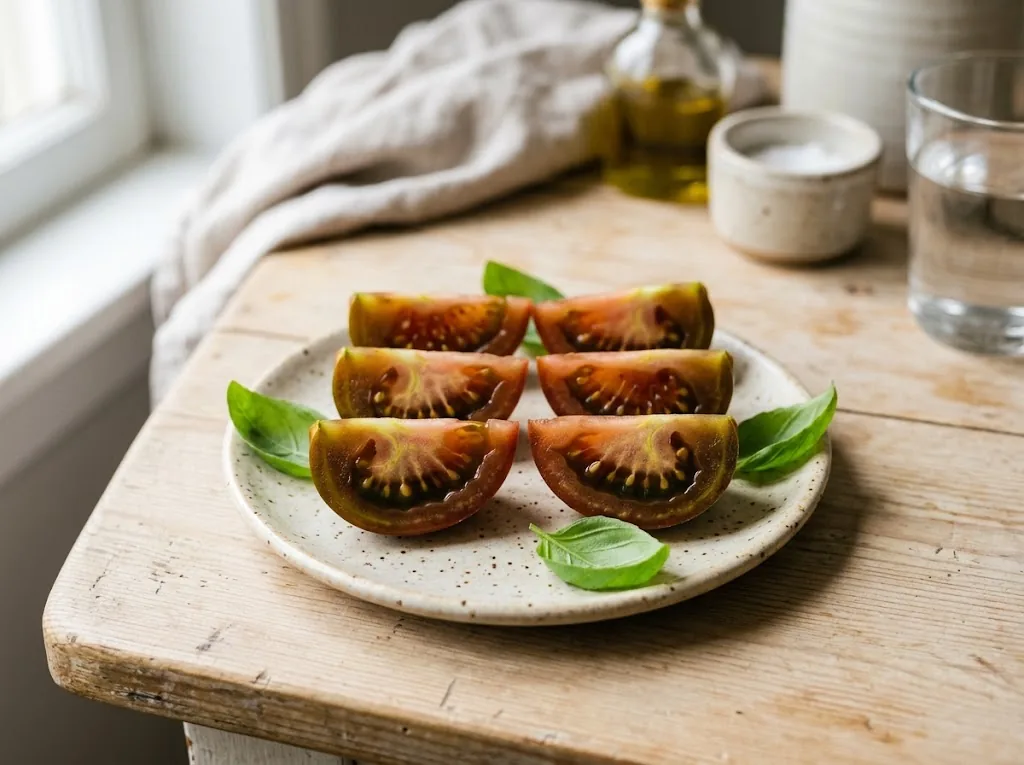
A kumato tomato is a branded, dark-fruited tomato whose ripe skin can range from golden green to deep brown. That unusual shade is part of its normal ripening pattern, not a sign that the fruit is unripe. The brand describes a juicy, firm texture and a sweet, intense flavor with a light tang. Here is what is known about its history, the limits of home growing, and the best ways to use and store the fruit.
Because the name covers protected commercial hybrids, it helps to separate the supermarket brand from the broader group of dark-fruited tomatoes. For the wider tomato collection, browse our tomato hub.
Origin and history
The official brand story places Kumato’s beginnings in Adra, a coastal town in Almería, Spain. In the 1970s, Luis Ortega noticed unusual tomatoes growing at the edges of family fields, where they received less water. The company says their shade and sweeter, more pronounced flavor inspired him to develop a distinctive tomato. This is the brand’s account of its origin, rather than an independently documented history of a single heirloom line.
Syngenta says later breeding work produced improved hybrid lines, and the Kumato name launched commercially in 2002, as described on the company’s brand history page. The trademark now covers fruit from the protected hybrid lines SX387 and/or OLMECA, as stated on the Kumato rights page. That means the supermarket name identifies a controlled commercial product, not an open-pollinated line that gardeners can reliably reproduce. If you are comparing fruit types for the garden, our Kellogg’s Breakfast tomato profile covers a separate, named cultivar.
Botany and fruit traits
The fruit belongs to Solanum lycopersicum, the cultivated tomato species. The Kumato tomato variety is sold as one brand, but its rights page names the protected hybrid lines SX387 and/or OLMECA. The brand’s public materials do not specify whether each line is determinate or indeterminate, list days to maturity, or publish disease-resistance codes, so those figures should not be guessed from another dark tomato.
- Fruit size: The brand’s size and weight FAQ describes typical fruit as about 80 to 120 grams and 5 to 6 centimeters across.
- Shape and texture: The standard fruit is medium sized, juicy, and firm. Firm flesh holds its shape well when sliced.
- Skin color: The skin changes from green toward golden green and dark brown as the fruit ripens on the vine.
- Breeding type: The brand identifies protected hybrid lines. It does not publish garden seed specifications or a public seed catalog for those lines.
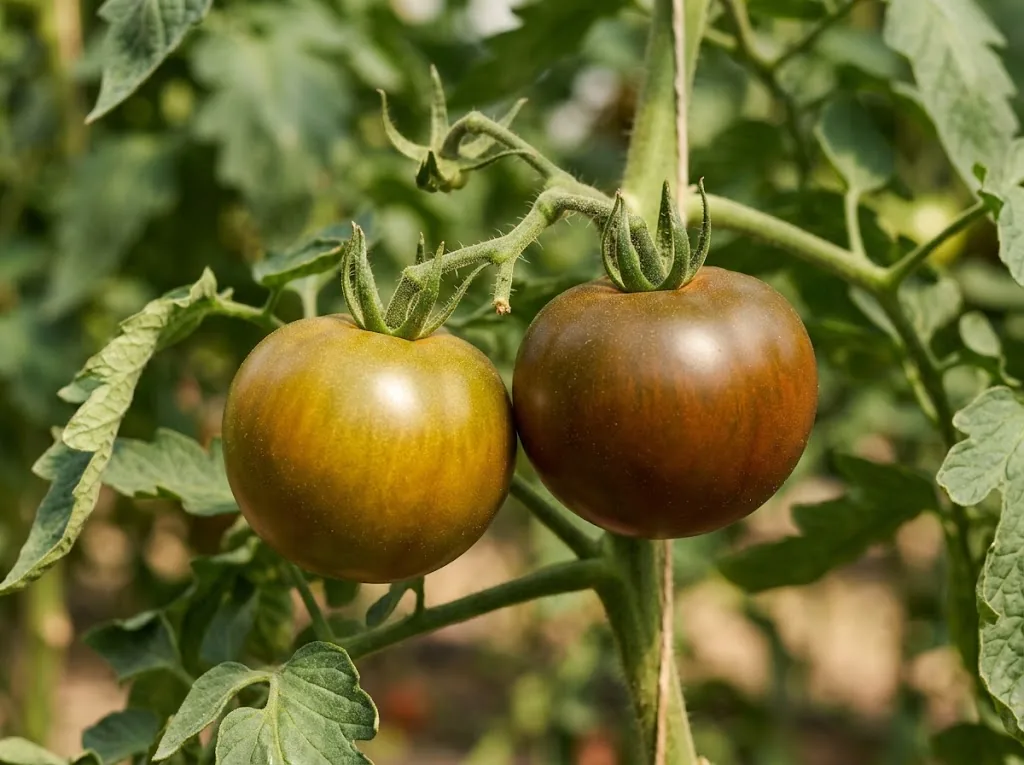
The company’s quality guide describes high fructose levels and a flavor it calls intense and sweet. That is a brand description, not a guarantee that every fruit will taste identical; harvest maturity and growing conditions affect flavor in any tomato.
Growing this cultivar
Its commercial growers are selected by Syngenta, and the brand says its protected hybrids are produced under controlled protocols. Its public growing information focuses on commercial greenhouse production, rather than a home-gardening guide. It does not give gardeners a verified plant habit, days-to-maturity figure, or disease-resistance profile.
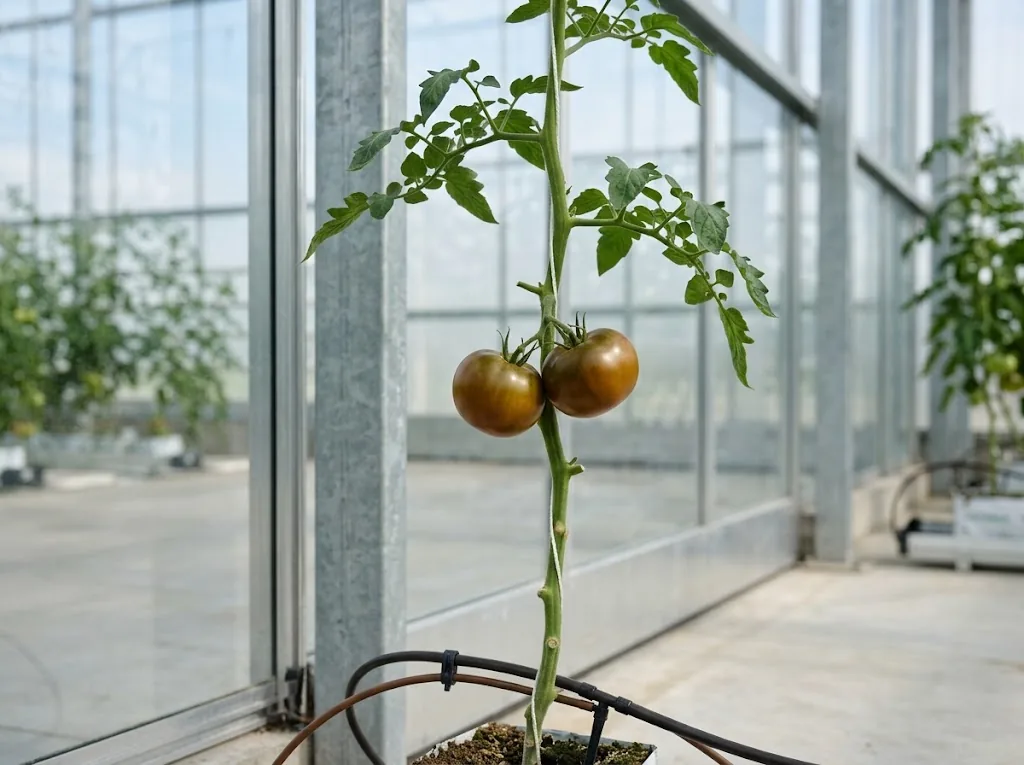
Starting plants from grocery-store fruit is not a dependable way to obtain the protected branded line. The fruit comes from hybrids, and the company does not offer a home-garden specification on the pages reviewed here. A packet sold by another company may describe a similar dark-fruited tomato, but check the seller’s own cultivar name and growing details rather than assuming it is Kumato.
If you are growing a different tomato with similar fruit, follow its packet for spacing and expected maturity. General tomato guidance from University of Minnesota Extension recommends a sunny site, steady soil moisture, and support such as a cage or stake for vining types. Those are broad tomato practices, not verified Kumato-specific requirements. Check leaves and fruit regularly; cracking, blossom-end rot, and leaf diseases can arise from changing conditions or pathogens, and a correct diagnosis matters before choosing a remedy.
Harvest and ripeness
Commercial Kumato fruit is harvested when ready to eat, according to the brand. Its outer shade naturally moves from green to brown, while the company says ripening takes place on the vine. Look for the characteristic mature shade and a firm fruit that gives slightly to gentle pressure. A tomato that remains hard and strongly green may need more time, but do not wait for a red hue that this branded type is not meant to develop.
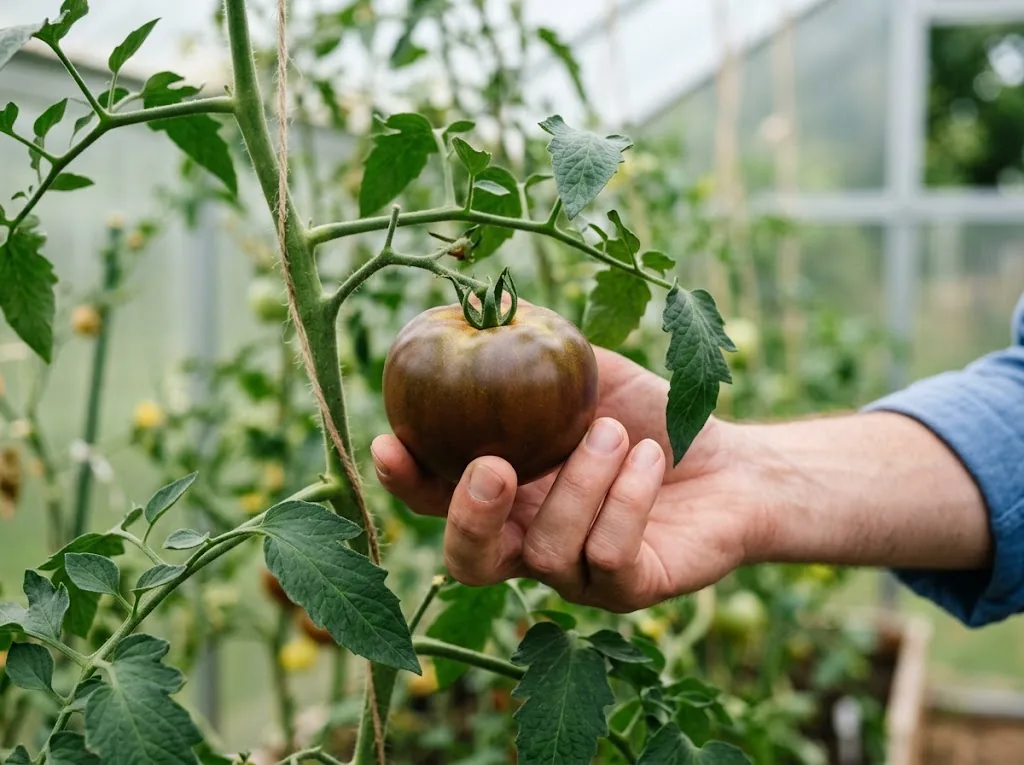
For a home-grown lookalike, rely on the seller’s maturity notes and observe that cultivar directly. General harvest advice cannot provide a reliable calendar for an unnamed or unverified tomato. If frost threatens, UC Davis postharvest guidance explains that mature fruit can ripen after harvest, while truly immature green tomatoes may not develop good eating taste.
Storage and preserving
The brand’s storage guidance says uncut fruit can keep for up to two weeks at room temperature. Treat that as its stated upper limit, not a guarantee for fruit that was bruised, warm, or already soft when purchased. Store whole fruit out of direct sun and check it often. If your kitchen is very warm, refrigeration can slow spoilage; the brand recommends bringing chilled fruit out about an hour before serving. Refrigerate cut pieces in a covered container.
Use ripe fruit fresh, or freeze cooked sauce for later. If you want shelf-stable canned tomatoes, use a tested recipe and follow its processing directions. The National Center for Home Food Preservation says whole, crushed, or juiced tomatoes need the specified bottled lemon juice, citric acid, or vinegar added, even when pressure canning. Do not adapt a canning recipe by changing ingredients or quantities.
Uses for Kumato tomatoes
The firm flesh makes the fruit easy to slice for salads, toast, and sandwiches. Its sweet-tart taste also works in a simple salad with olive oil, herbs, and a little salt, or in cooked sauces where its darker hue can add a rich tone. The official brand recommends salads and other tomato-based recipes; choose preparations that let the fruit’s taste stand out instead of burying it under strong seasoning.
Want a smaller fruit for snacking or a different garden comparison? See our Rapunzel tomato profile. It covers another named tomato with a distinct fruit size and use.
Common questions
Why are Kumato tomatoes green or brown?
The hue is normal for the branded type. The company describes a ripening shift from green to golden green or dark brown, so a ripe fruit does not need to turn red.
Can you grow Kumato tomatoes from grocery-store seeds?
A sprouted seed may grow, but it is not a reliable way to reproduce the protected branded hybrid. The official brand identifies SX387 and/or OLMECA as its protected lines and restricts commercial use of the Kumato name to authorized parties. For predictable home growing, buy plants sold under a clear garden cultivar name and use the seller’s instructions.
