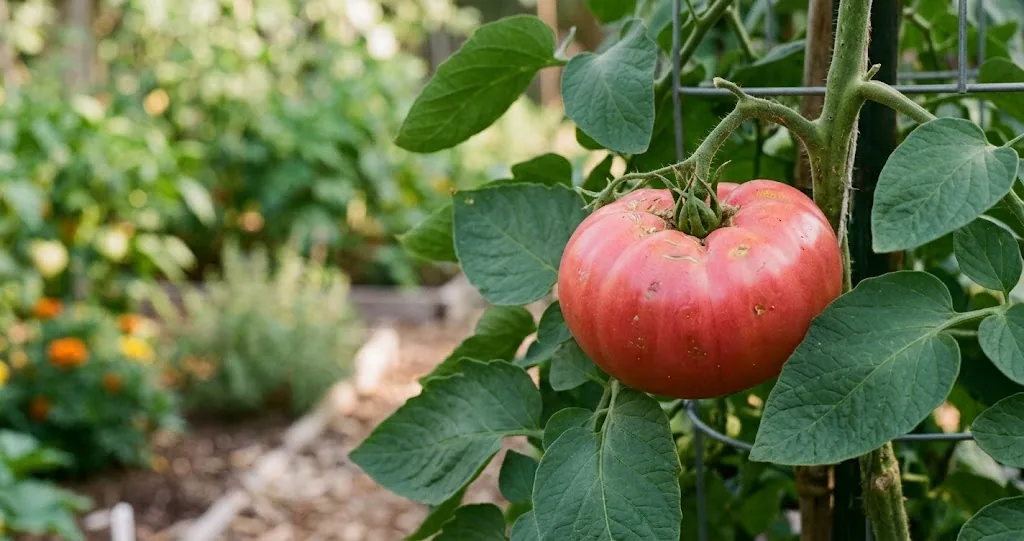
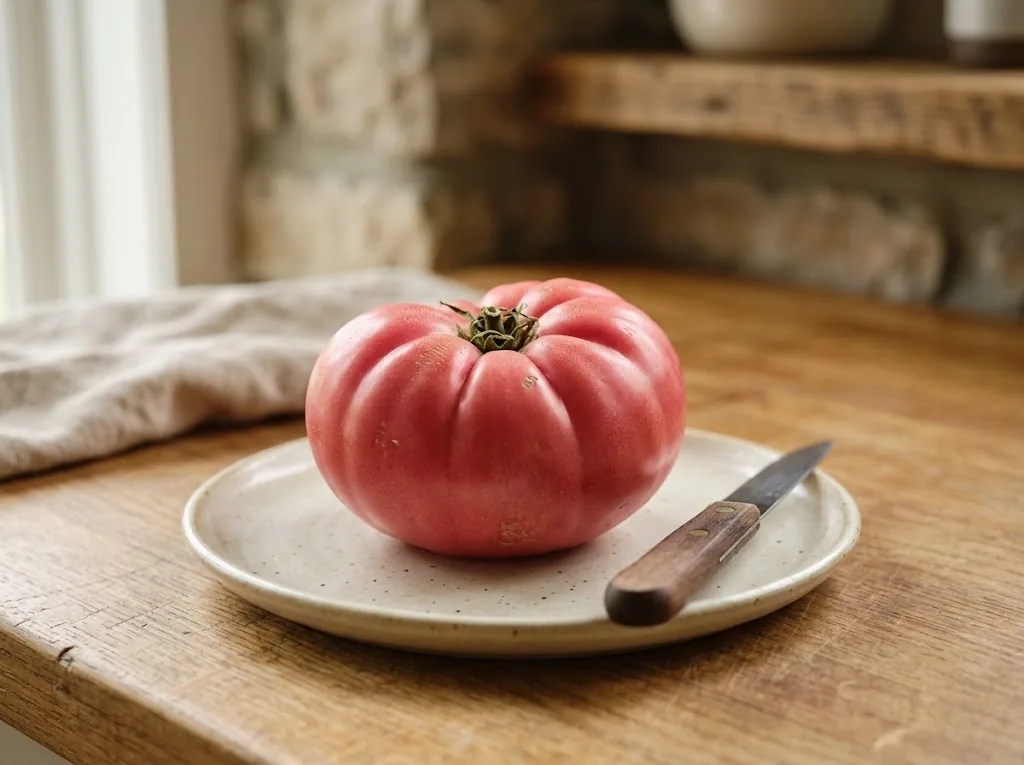
A single Pink Brandywine slice can cover a burger bun, but its large, soft fruit asks for careful handling and a long, warm growing season. If you have room for a supported vine and want a classic pink tomato for slicing, this heirloom is worth a place in the garden.
Origin and history
Pink Brandywine belongs to a family of old, open-pollinated tomatoes whose history is not completely settled. The University of Arkansas Division of Agriculture reports that Burpee said it first offered Brandywine in its 1886 catalog. The same account says the variety resurfaced in 1982, when seed from an Ohio family was given to Seed Savers Exchange. Doris Sudduth Hill, the family’s source, traced that seed line back at least 80 years. Since then, several Brandywine strains have appeared in seed catalogs.
Those records suggest a long history in home gardens, but they do not establish one certain origin for every strain. The Arkansas Extension history of the Brandywine tomato explains why its early story remains unsettled.
For a broader look at the many kinds of heirloom and modern fruit, visit our guide to tomato varieties.
Botany and plant facts
This heirloom tomato, Solanum lycopersicum, grows as an indeterminate vine with potato-leafed foliage and large, pink, slightly lobed beefsteak fruit. The Alliance of Native Seedkeepers lists fruit of about one to one and a half pounds for this selection. The University of Arkansas describes the original Brandywine as reaching about a pound, so size varies with the strain and growing conditions.
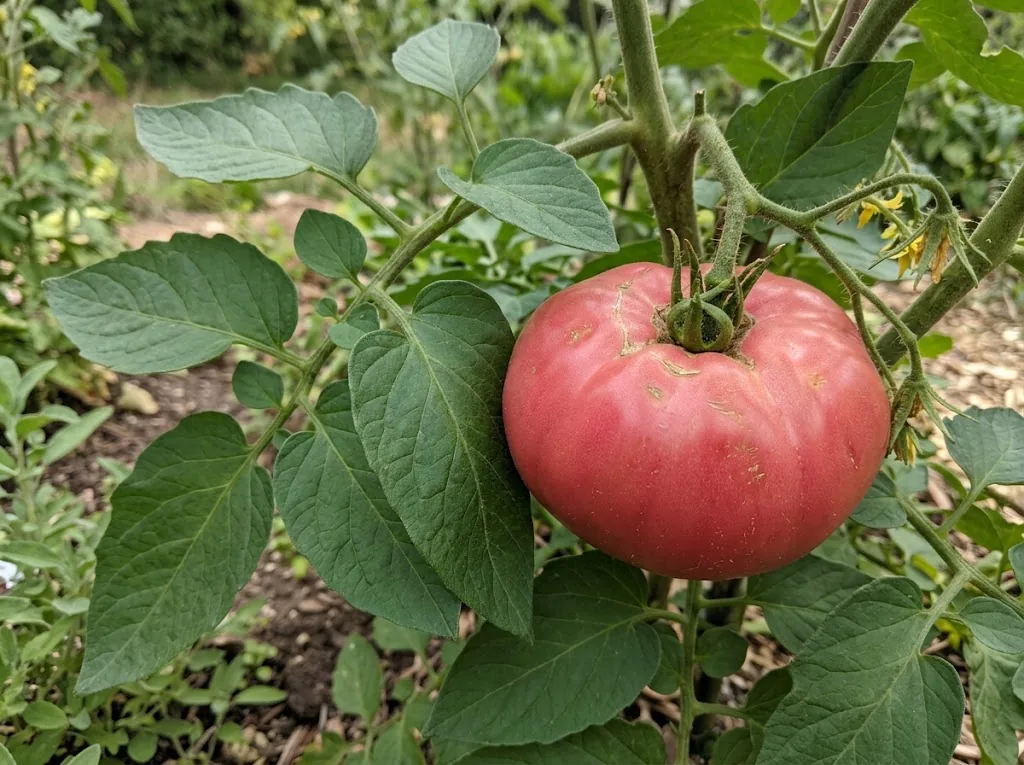
Days to maturity also depend on the seed line and how the seller counts. The same seedkeeper listing gives 80 to 89 days from transplanting. Arkansas Extension says the original Brandywine may take 90 to 100 days to produce its first fruit. These estimates show why a seed packet’s date is only a planning guide. Choose tomato seeds from a supplier that identifies the strain and explains whether its days-to-maturity count begins when you transplant it outside. Give the long-season plant enough time to flower and produce fruit before your growing season ends.
Arkansas Extension describes Brandywine’s flavor as strongly tomato-like, though taste is subjective and varies with ripeness and growing conditions. The meaty texture and large size make it a satisfying slicing tomato. If you want to compare another richly colored slicer, read our profile of the Kumato tomato.
Growing this variety
Give this long-season vine a sunny spot with room for a sturdy cage or tall stake. Indeterminate tomatoes keep extending their stems and setting fruit when weather allows. North Carolina State Extension recommends supporting these vines with a stake or trellis; install the support when you plant so you do not drive it through established roots later. The University of Minnesota says vining plants may reach three to five feet or more, and need support as they grow.
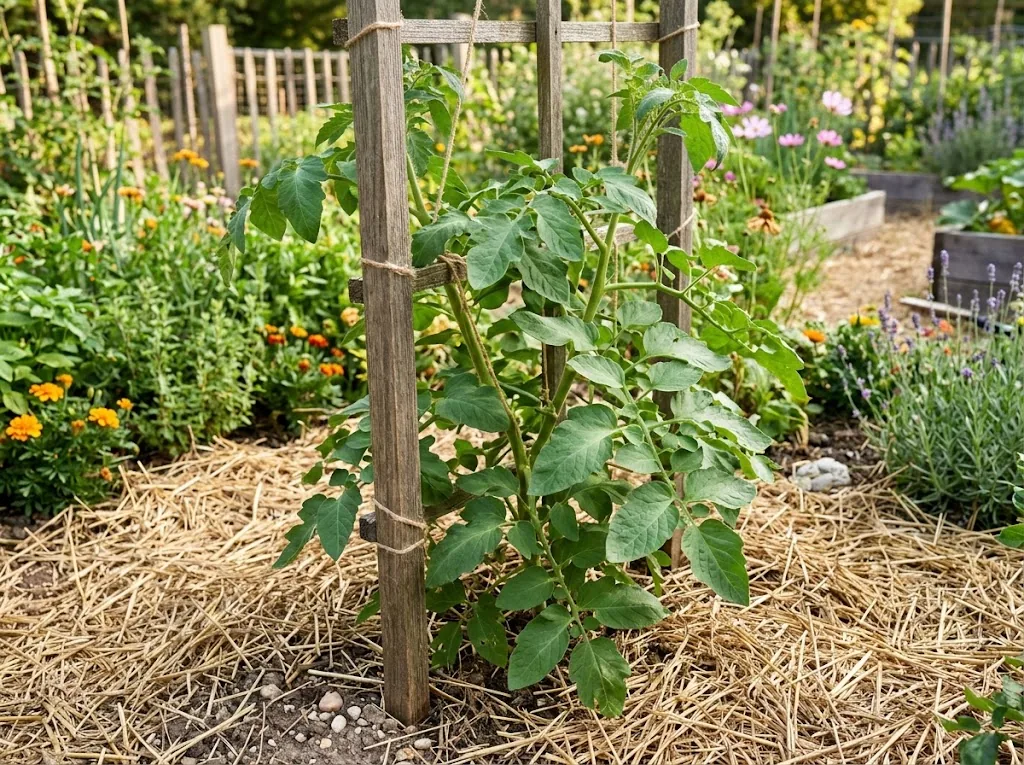
Sow seeds indoors about five to six weeks before your local planting date, or buy a compact, sturdy seedling. Wait until frost danger has passed and the soil has warmed. Harden indoor-grown plants gradually before planting outside. Tomatoes need full sun, and a soil test can guide fertilizer choices. Avoid excess nitrogen, which can encourage leafy growth at the expense of fruit.
Keep soil moisture reasonably even through flowering and fruit development. A layer of organic mulch can slow moisture swings. Irregular wet and dry periods can contribute to blossom-end rot, a dry, dark patch at the blossom end of the fruit; adding calcium without a soil-test reason does not solve the underlying watering problem. Check the soil and adjust irrigation when rain or heat changes conditions.
Brandywine plants may grow rangy, and their large fruit can split after a sudden change in water availability. Arkansas Extension also notes uneven ripening and occasional green shoulders. Let the fruit ripen on the vine when weather allows, then pick it promptly. Remove damaged leaves or fruit, and rotate tomatoes to a new garden spot in following seasons. See North Carolina State Extension’s tomato-growing guide for support, watering, and blossom-end rot advice.
When to harvest Pink Brandywine tomatoes
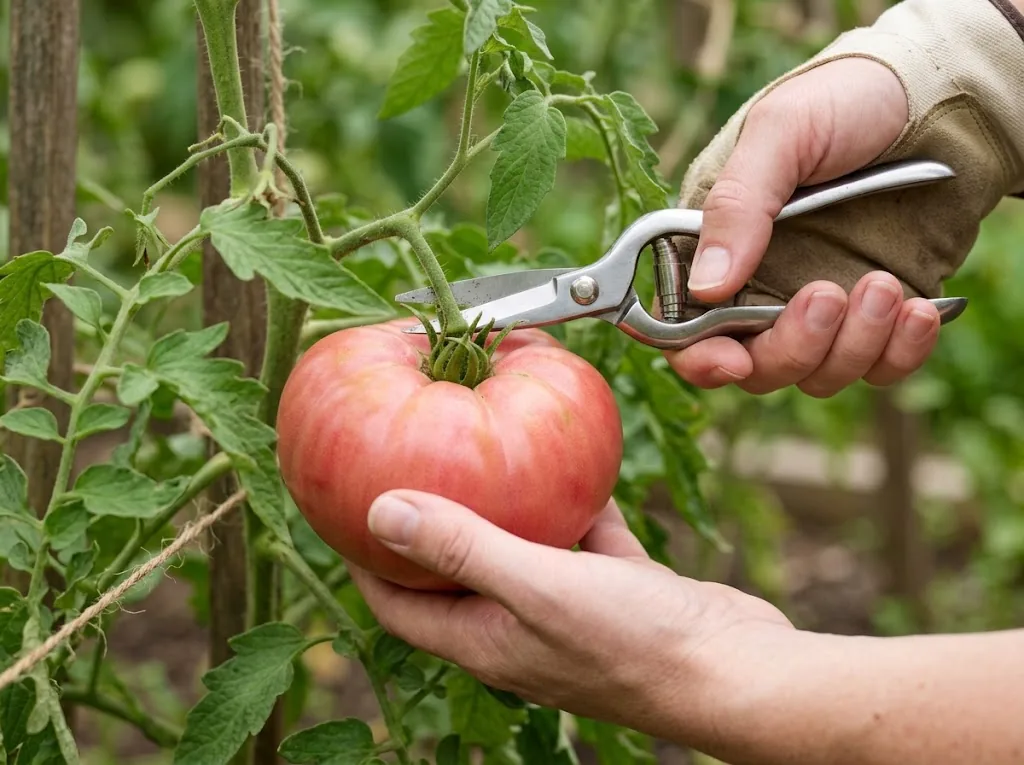
Watch for the fruit to develop its mature pink color and yield slightly to gentle pressure. Color may be uneven, and the soft flesh bruises easily, so support the fruit with one hand as you cut it from the vine.
If frost threatens, bring in full-sized fruit that has started to change from green toward pink. Set it in a warm room and check it often as the color changes. The University of Minnesota’s tomato guide explains how to judge mature green fruit that can finish ripening inside.
Storage and preserving
Use ripe fruit soon after picking for the best texture. Keep sound tomatoes at room temperature, stem end up, and out of direct sun. University of Delaware Cooperative Extension advises storing ripe tomatoes between 55 and 65 degrees Fahrenheit and not refrigerating them. If your kitchen is much warmer, check the fruit daily and use it before it softens.
For longer storage, freeze tomato sauce or follow a tested preservation recipe. Do not assume that a family recipe or an untested jar method is safe for pantry storage. Home-canned tomatoes need the acid and processing method specified by a current tested recipe, because acidity varies by variety and ripeness. See Minnesota Extension’s canning guidance before putting jars on a pantry shelf.
How to use Pink Brandywine tomatoes
This is a fresh-eating and slicing tomato. Cut a thick slice for a sandwich or burger, layer it with basil in a summer salad, or serve it with a little salt and olive oil. Its juicy flesh also works in cooked dishes. For large harvests meant for canning, Minnesota Extension points to bush-type tomatoes such as Roma.
Choose this variety when flavor and oversized slices matter more than a tidy, uniform crop. If your season is short, your garden has little vertical space, or you want many tomatoes at once for preserving, a compact or earlier variety may fit your plans better. For another slicing tomato to compare, see our Red Deuce tomato profile.
