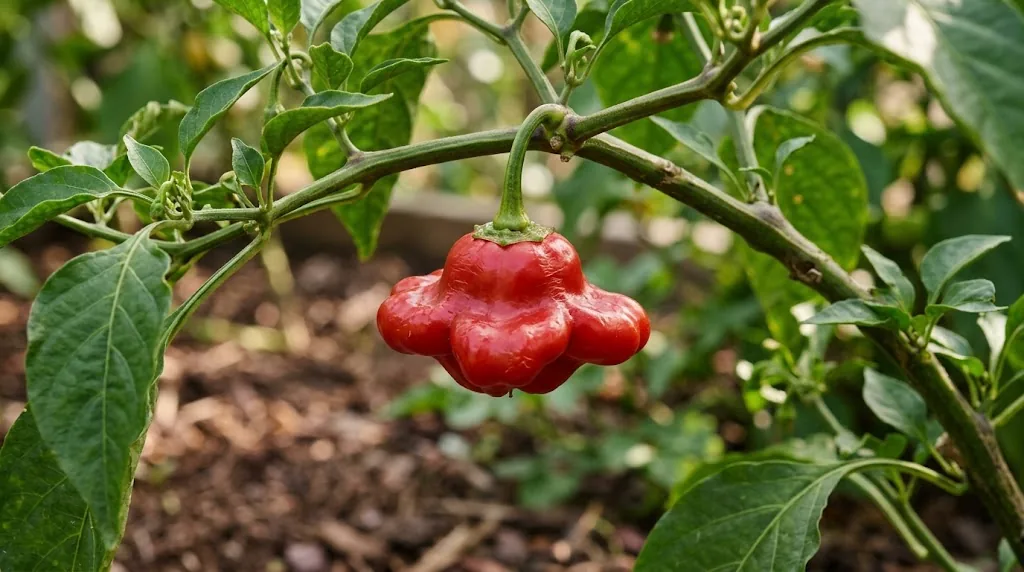
The Mad Hatter pepper (Capsicum baccatum) bears crisp, three-winged pods with a floral, citrusy flavor. This 2017 award-winning F1 hybrid is usually sweet, though some pods develop gentle warmth near the seeds.
Origin and History: The Story Behind This Award-Winning Chili
PanAmerican bred this F1 hybrid, which won a 2017 All-America Selections national vegetable award. Judges valued its vigor, early harvest and eating quality.
Capsicum baccatum is a South American species used in Bolivian and Peruvian cooking. The Mad Hatter F1 hybrid shares the three-winged shape associated with bishop’s crown peppers, but the published All-America Selections profile does not document a specific parent line.
For broader botanical context, see our guide to types of chili peppers.
Botanical Profile and Pod Characteristics
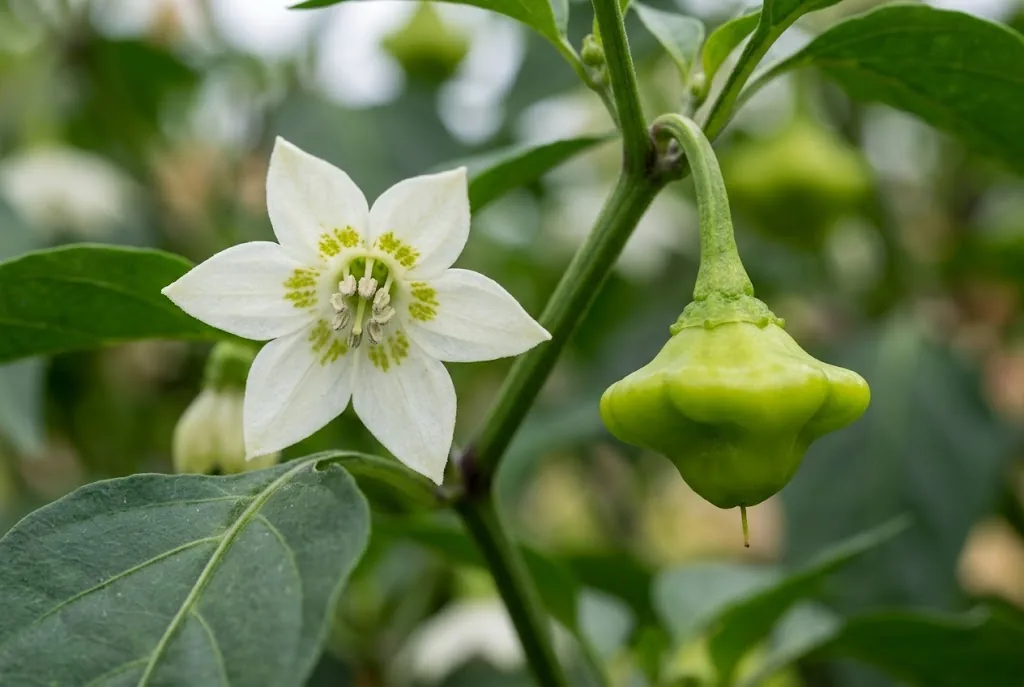
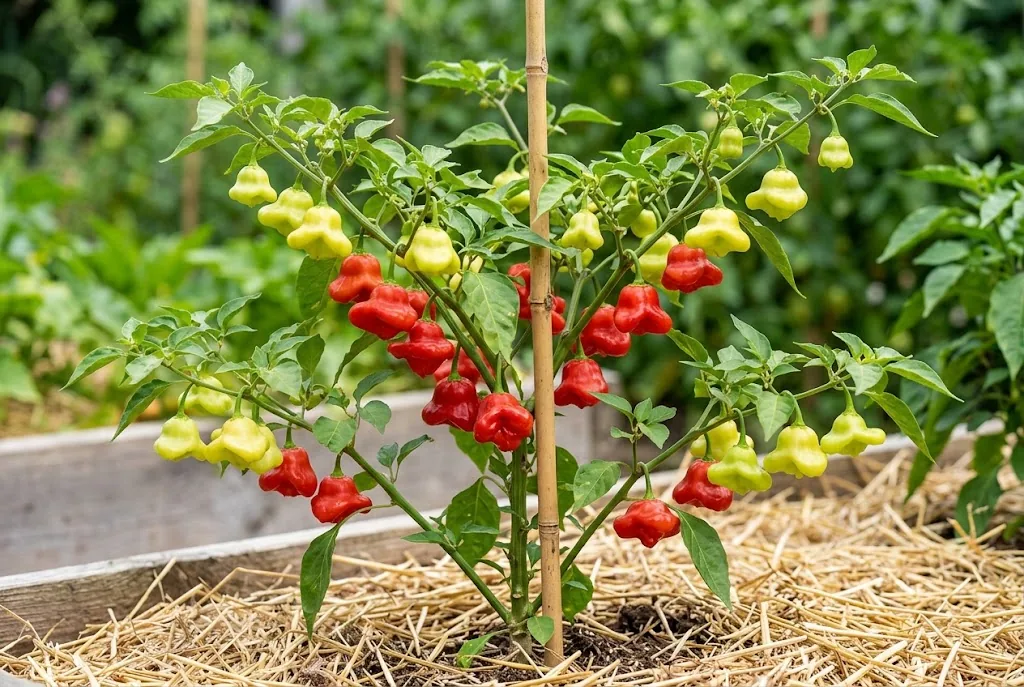
Its white flowers have greenish-yellow spots near the base, a characteristic of Capsicum baccatum. The upright, branching plant grows roughly three to four feet tall.
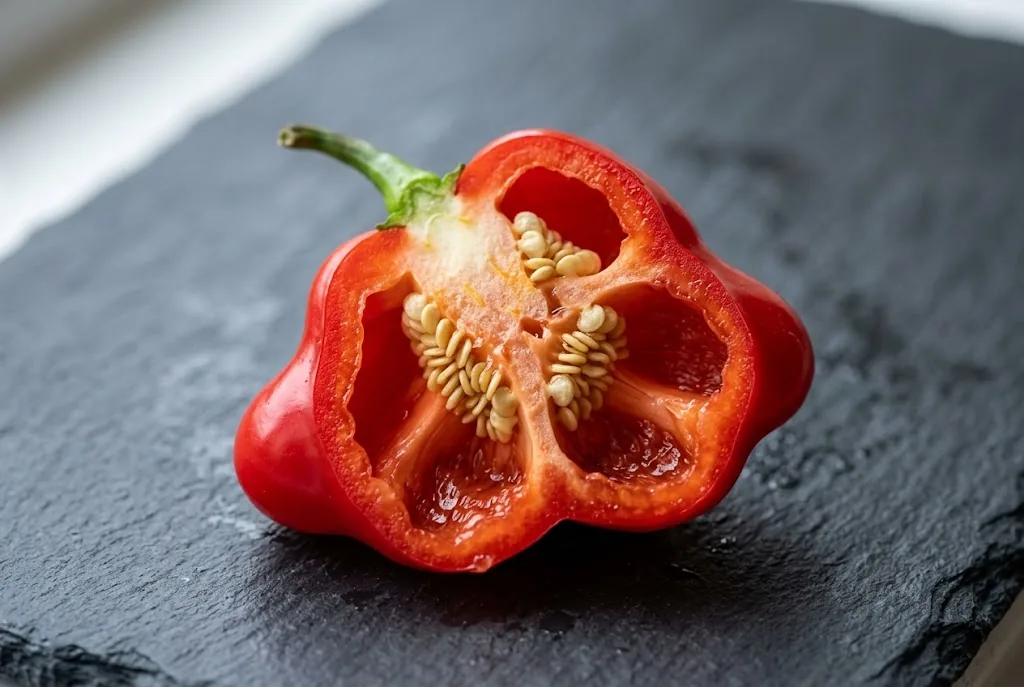
The pods are flattened discs measuring about two to three inches wide with three prominent lobes flaring outwards like a tricorn hat. As the crop develops, immature pods emerge pale yellow-green before turning bright crimson at full maturity. The exterior walls are firm and snappy, with the flared lobes being slightly thinner and exceptionally crisp. Inside, a compact central placenta holds the seeds, leaving the wide wings hollow and easy to slice or fill with seasonings.
Heat Level and Flavor: What Does This Pepper Taste Like?
Mad Hatter pods are usually sweet, with occasional mild heat near the seeds, according to All-America Selections. Its profile does not provide a variety-specific Scoville range, so try a small piece before adding a large amount to a dish.
The wings are generally sweet and crisp. The breeder says a small number of pods grown in hot, dry conditions develop heat near the seed cavity, while the wings remain sweet. Heat can vary by pod.
For a much hotter contrast, compare Naga Morich peppers.
How to Grow Mad Hatter Peppers in Your Garden
Give this vigorous plant warmth, sun, room to branch and steady moisture.
Starting from Seeds
All-America Selections advises starting seeds indoors at least five to six weeks before transplanting, with germination temperatures above 65°F (18°C). Sow one-quarter inch deep, keep the mix moist, and provide bright light after emergence. Starting earlier may help in a short-season garden, but germination time varies.
Transplanting and Bed Preparation
Once seedlings form several pairs of true leaves, pot them up into larger containers to support root development. Harden off the young plants gradually over 7 to 10 days after all threat of cold weather has passed and night temperatures consistently stay above 55°F (13°C). Select a garden location that receives full sun, meaning at least six to eight hours of direct daily light.
Transplant into fertile, well-drained soil in full sun, spacing plants 24 to 36 inches apart as PanAmerican Seed advises. In a container, use a large pot with drainage holes and check moisture often. Support is optional, but it can help a heavily loaded plant in a windy spot.
Watering and Ongoing Nutrition
Keep the root zone evenly moist without leaving it waterlogged. Mulch can slow drying in a garden bed. Feed according to a vegetable fertilizer label, and avoid excess nitrogen if plants produce foliage but few flowers.
Harvesting and Handling Your Crop
The breeder lists 65 to 70 days from transplant for green fruit and 85 to 90 days for ripe red fruit. Weather and growing conditions can shift the harvest.
Both harvest stages offer distinct culinary virtues:
- Green stage: Crisp pods suit raw snacks and stir-fries.
- Red stage: Riper pods taste sweeter and works well in salads or stuffed dishes.
When picking, use clean hand pruners to snip the pedicel half an inch above the pod rather than pulling by hand, which can tear the brittle stems. Although the outer flesh is sweet, handling cut placenta tissue can leave capsaicin oils on your fingers, so wash hands thoroughly with warm water and soap after prep.
Storing, Freezing, and Preserving Your Harvest
A productive plant may supply more pods than you can use fresh. Preserve the extra harvest with a method suited to peppers:
- Fresh storage: Refrigerate unwashed whole pods and use them while the skin remains firm.
- Freezing: Because pods feature hollow wings, prepping them to freeze is simple. Halve the pods, discard the inner cores, cut the lobes into strips, and arrange them in a single layer on a parchment-lined sheet. Freeze until solid, then pack the frozen strips into airtight freezer bags for winter stews, skillet bakes, or pizza toppings.
- Pickling: Follow a tested refrigerator pickle recipe, keep the jars refrigerated, and do not treat them as shelf-stable.
- Dehydrating: Slice the lobes and dry them until brittle, following the dehydrator’s directions. Store the dried pieces in a moisture-resistant container.
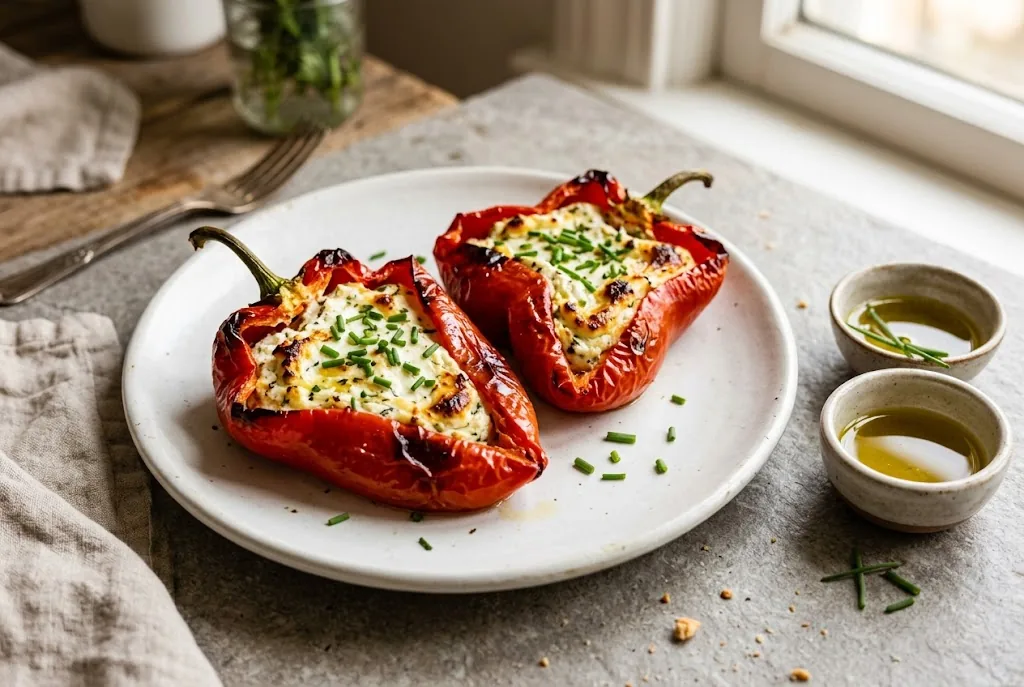
Culinary Uses: From Fresh Salads to Stuffed Appetizers
Use the crisp wings raw or cook the whole pod for a softer texture.
For fresh applications, cut the crunchy wings into a leafy garden salad, dice them into fresh tomato salsas, or arrange them on a crudite platter with hummus and creamy dips. The sweet, juicy flesh adds bright color and crunch to summer slaw recipes.
The natural cup-like structure of the pod also makes it an ideal candidate for stuffed appetizers. Slice the top stem off, gently core the central cavity, and stuff the interior with seasoned cream cheese, goat cheese, or spiced black beans. Bake at 375°F (190°C) until the cheese is bubbling and golden.
Blister whole or halved pods in a skillet, or simmer them into pasta sauce. For another aromatic, low-heat pepper, see Aji Cachucha peppers.
Frequently Asked Questions About Mad Hatter Peppers
Are these peppers hot?
They are generally sweet, and some pods develop gentle warmth near the seeds. The AAS variety profile does not assign a fixed Scoville range or guarantee that the outer wings are heat-free.
Can you eat the pods while they are green?
Yes, the pods are crisp and delicious at the green stage, offering a tangy, refreshing bite. Allowing them to ripen fully to red enhances their natural sweetness and aromatic floral notes.
Can you save seeds to plant next year?
Because Mad Hatter F1 is an F1 hybrid, seeds harvested from mature pods will not breed true in subsequent seasons. Plants grown from that harvest can display unpredictable pod shapes, varying heat levels, and reduced vigor. For consistent results in your garden, purchase fresh F1 packets each spring.
Sources and Botanical References
- All-America Selections: Pepper Mad Hatter F1 National Edible Winner Trial Records.
- PanAmerican Seed: Mad Hatter F1 Technical Production and Culture Data.
- Eshbaugh, W. H. (1993). History and exploitation of a primitive crop species: Capsicum baccatum. In J. Janick & J. E. Simon (Eds.), New Crops (pp. 132-139). Wiley.
