
A Mortgage Lifter tomato can fill a sandwich with one broad slice, but its size also asks more from the plant: steady moisture, room to sprawl and sturdy support. This open-pollinated heirloom is an indeterminate beefsteak tomato associated with Logan, West Virginia. Its best-known story traces back to M.C. “Radiator Charlie” Byles, who developed the variety in the 1930s. Here is what to expect from this tomato and how to grow, pick and use it.
For a broader look at types and growing habits, visit the tomato varieties hub.
Mortgage Lifter tomato origin and history
West Virginia University Extension describes the well-known Mortgage Lifter as a variety developed by Marshall Cletis Byles in Logan during the 1930s. The account says Byles selected seed from plants grown around several large tomato varieties, including German Johnson. He later sold seedlings for a dollar each, and the sales helped pay his home mortgage. That story explains the name, although it belongs to this specific, widely told line. Other tomatoes with similar names and West Virginia origins exist, so a seed packet’s strain matters.
WVU Extension notes that mature tomatoes are pink to red and can weigh about 1 to 3 pounds. A one-pound tomato can make several broad sandwich slices. That fruit size is a range, not a promise for every garden: growing conditions and the strain sold under the name can change the result. The large, ribbed beefsteaks have a meaty interior and are often described as rich in flavor and sweet-tasting. WVU Extension: Mortgage Lifter Tomato

Botany and plant facts
The plant belongs to Solanum lycopersicum, the cultivated tomato. WVU Extension identifies it as indeterminate, meaning its vine continues growing and setting tomatoes through the season while weather allows. Give it a strong cage or tall stake before the plant gets heavy. Seed sellers list their own line-specific fruit weights. The named line is open-pollinated, so seed saved from a healthy, correctly pollinated plant can generally grow true to type. Check the seller’s listing because several distinct strains circulate under this name.
Seed catalogs differ on maturity estimates. For example, Sola Seed Company lists 80 days, while Territorial Seed lists 95 days. These figures are estimates from each seller. Territorial counts days from transplanting; Sola’s listing does not state its starting point. Use the seller’s description and local conditions as a planning guide rather than treating either number as a guaranteed maturity date. The difference is a good reason to check which strain your supplier sells. Neither the cultivar name nor a seller’s disease-resistance label guarantees that a plant will avoid disease. Buy from a seller that describes the specific strain and its resistance codes, if any.

How to grow this indeterminate tomato
Choose a full sun site with fertile, well-drained soil. In a vegetable garden with heavy or wet soil, a raised bed can improve drainage. Utah State University Extension recommends germinating tomato seeds at about 80°F until the seed root emerges, then growing seedlings in bright light. This gives each seedling a strong start before transplanting outdoors. The extension also advises transplanting after frost danger has passed and soil has warmed above 60°F; local conditions vary, so follow local frost dates. Because this vine is indeterminate and the tomatoes are large, set a sturdy support in place at planting. WVU Extension recommends spacing plants 30 to 48 inches apart, with rows 3 to 4 feet apart. Follow the seed packet if it gives a spacing suited to the strain and support system you are using. Choose a stocky, dark-green seedling with several true leaves rather than one already carrying flowers or tomatoes. See the Utah State University Extension tomato growing guide for its general advice on sun, soil, germination and transplant care.
Keep the root zone evenly moist, especially as tomatoes enlarge. Tomatoes can crack when soil moisture swings sharply, and large-fruited types are especially prone to splitting. Mulch helps limit rapid drying; water the soil deeply when it begins to dry instead of alternating drought with a sudden soak. Utah State University Extension links irregular watering with cracking and blossom-end rot. If blossom-end rot appears, correct moisture fluctuations first; add calcium only when a soil test confirms a shortage. Utah State University Extension: Water recommendations for vegetables
If a plant this size is more support than you want to build, Sweet 100 tomatoes are a cherry-sized alternative to compare.

When to harvest the ripe beefsteaks
Pick each tomato when it has reached full pink-red color and still feels firm, following Utah State University Extension guidance to pick fully colored tomatoes while they are firm. Cut the stem with clean pruners or support it in your hand as you twist it free; avoid pulling hard on a loaded vine. Check plants often once color develops. Prompt picking gives cracked or overripe tomatoes less time to spoil on the plant. For another indeterminate beefsteak, see Goliath tomatoes.
If frost threatens while a tomato is mature but still green or just beginning to color, pick it and let it finish ripening indoors. Utah State University Extension recommends choosing mature green or slightly pink tomatoes for this purpose. Truly immature green ones may not ripen well.
Storage and preserving
Use ripe tomatoes soon for the best texture. For a few days of storage, keep uniformly pink or red tomatoes in a cool kitchen spot near 55°F. University of Minnesota Extension estimates a shelf life of about five days in those conditions and warns that tomatoes lose color and firmness below 40°F. Store uncut tomatoes in a single layer and check daily for soft spots or splits. Freeze surplus tomatoes whole or chopped in freezer-safe containers for cooked dishes; thawed tomatoes soften, so reserve them for sauce, soup or stews rather than fresh slices. University of Minnesota Extension tomato storage guidance.
For shelf-stable canning, follow a current tested recipe from the National Center for Home Food Preservation. Its guidance says to acidify whole, crushed or juiced tomatoes with bottled lemon juice or citric acid, because tomato acidity varies. Do not use an improvised canning time, and do not assume a tomato is safe to can without added acid because it tastes mild. National Center for Home Food Preservation: Canning tomatoes
How to use the tomatoes
Broad, meaty slices suit sandwiches, burgers and tomato toast. Dice ripe tomatoes for a chunky salsa or salad, or cook them down for a fresh sauce with basil, oregano or thyme. The large tomatoes can be awkward to fit into a small jar whole, but their flesh works well in crushed tomatoes and sauces when prepared with a tested preservation recipe. If you have more tomatoes than you can use fresh, freeze them for winter soups and simmered dishes.
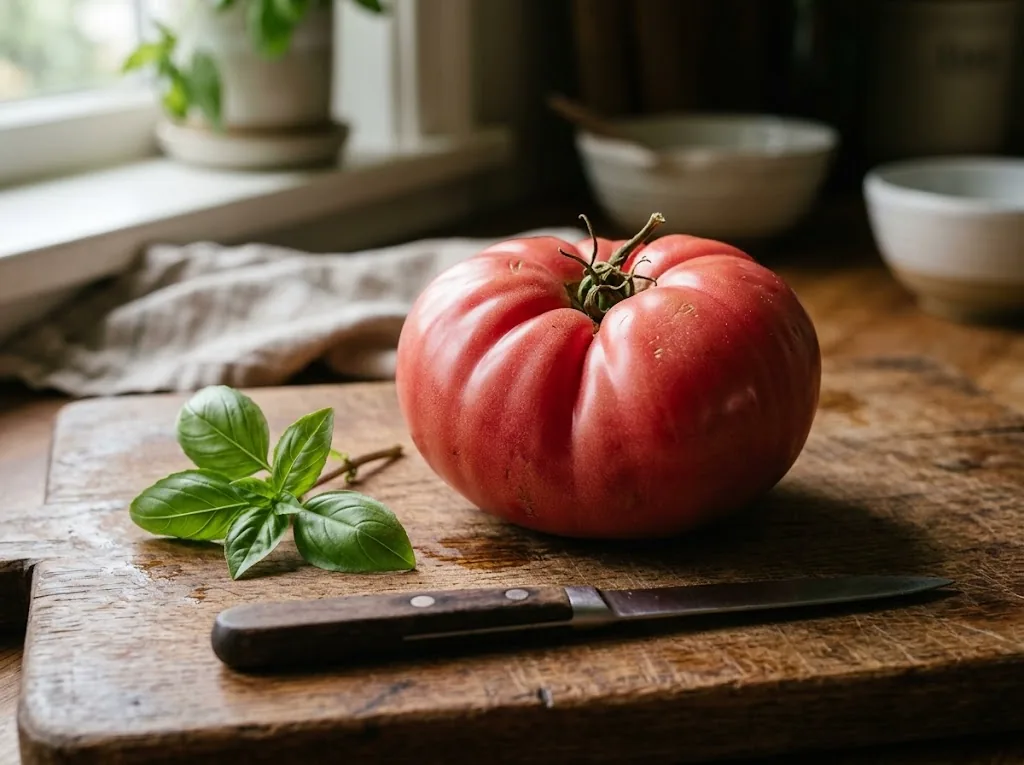
This variety earns a place in the garden when you have room for an indeterminate vine and a plan for heavy tomatoes. Give it support early, water consistently, and pick the tomatoes as they color. Those steps make it easier to enjoy the variety’s generous beefsteak slices without asking one plant to deliver a particular size or yield.
