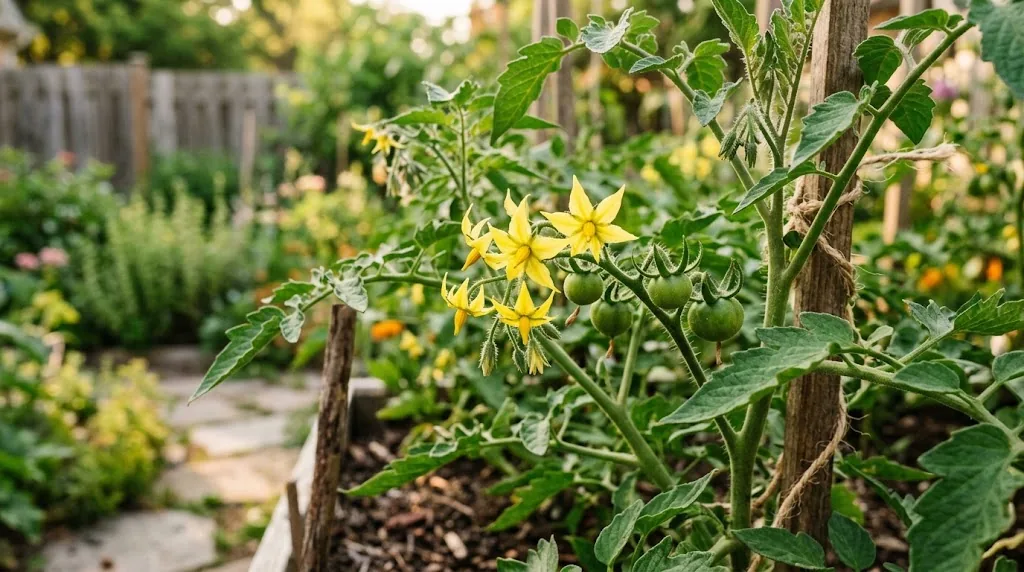
A plant can bloom heavily and still leave you waiting for fruit, especially on a still windowsill or in a sheltered growing space. The good news is that most varieties can pollinate themselves. Their flowers just need a little movement.
Outdoors, a breeze and visiting bees usually provide that movement. Indoors or in sheltered spots, gently shake the flower cluster or touch its stem with a vibrating electric toothbrush. You do not need a second plant, a paintbrush, or a daily ritual for every blossom.
For the wider growing picture, visit the tomato plants growing guide.
How tomato flowers pollinate themselves
Each blossom carries anthers, which produce pollen, and a stigma, which receives it. The anthers form a cone around the flower’s central parts. When the blossom quivers, grains shake loose and reach the stigma in that same flower. This is self-pollination; they do not have to move between plants.

The garden tomato, Solanum lycopersicum, can set fruit without insect pollinators. Air movement may be enough outside, while bumblebees can vibrate blossoms as they collect food. Their buzz pollination is effective, but you do not need to bring bees indoors for a few patio plants. UMN Extension explains how wind and bumblebee buzz pollination help the crop, and UF/IFAS describes self-pollination and vibration in protected growing.
These are also “perfect” flowers, meaning each has male and female reproductive parts. If you are sorting out what a tomato is botanically, see the botanical answer on tomato fruit.
When hand pollination can help
Try helping when plants flower indoors or in a covered space with little air movement. A light touch is a practical first step. If fruit is already setting across the plant, there is no need to keep repeating the process.
Fruit set has other influences too. Very hot or cold weather, high humidity, and other stresses can interfere with pollen or cause flowers to abort. If blossoms keep dropping, consider temperature and overall plant conditions before assuming a lack of bees is the problem. UConn Extension’s guidance for protected growing discusses how temperature and humidity affect pollen movement.
Three simple ways to pollinate tomato plants
- Let the breeze do it. Outdoor plants usually get natural movement from wind and routine activity in the garden. Avoid enclosing blooming plants so tightly that air cannot circulate.
- Shake a flower cluster gently. During a dry part of the day, tap the branch behind an open cluster so the blossoms quiver. You can also give a sturdy plant support one light shake. Do not bend or snap the branches.
- Use a vibrating toothbrush. Touch the small branch behind the flower briefly with the toothbrush switched on. The movement, rather than brushing pollen by hand, is what helps loosen it. UConn Extension recommends this for smaller protected operations.
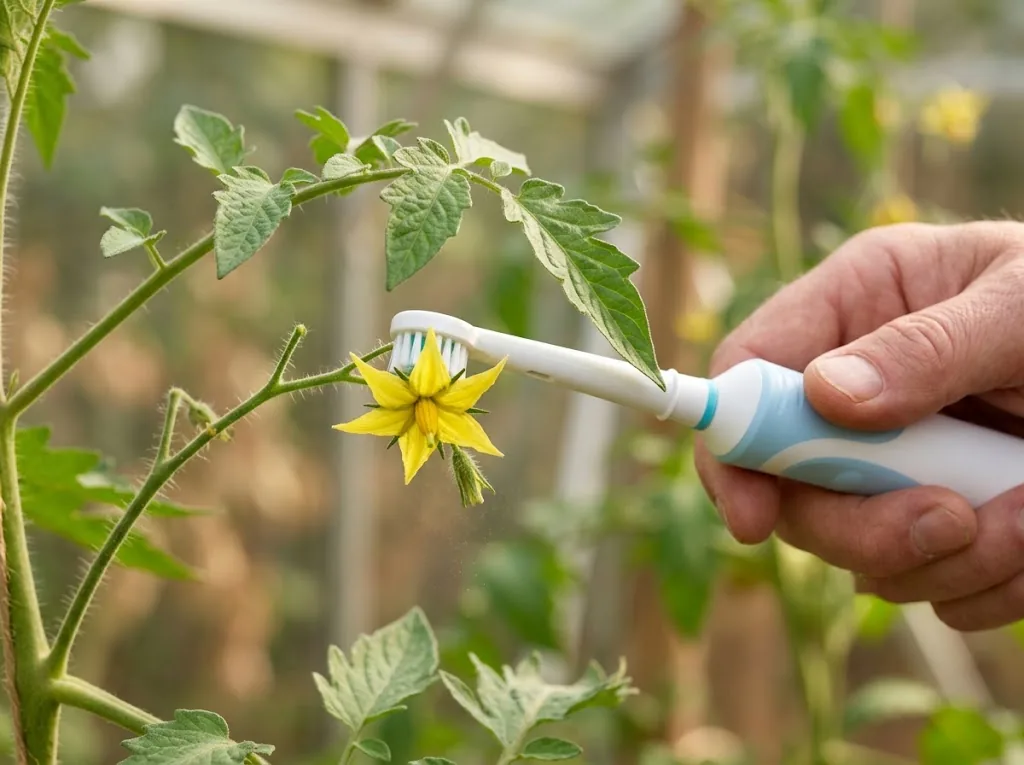
Repeat while flowers are opening if the setting remains still. Gentle movement every few days is plenty for a home gardener. You are helping the blossom release its own pollen, not painting grains from one to another.
Pollinating tomatoes indoors or in a greenhouse
Indoor plants and covered crops face the same basic issue: still air. Start with the least effort. If a fan already moves leaves gently, or you brush past the plant during normal care, the flowers may get enough movement. Do not aim a strong fan directly at delicate blossoms or let potting mix dry out while trying to solve a fruit-set problem.
If you grow tomatoes indoors and see flowers but few tiny fruits forming, gently move an open cluster with a fingertip or toothbrush. Commercial growers may use dedicated tools or bumblebees. For a few home plants, a little manual help is simpler. An anther releases the pollen, and the flower’s parts sit close together, so a paintbrush is usually unnecessary.

Growing habit can affect how long a plant keeps producing new flower clusters. For a related guide, see when determinate tomatoes are a good fit.
How to tell whether pollination worked
Watch the flower base over the next several days. A successfully fertilized flower often keeps its small green ovary, which gradually swells into fruit while the petals dry and fall away. An unpollinated or aborted blossom may dry up and drop without a fruit forming. Give the plant time; a newly set fruit starts small.
If many flowers fail at once, check more than pollination. Review daytime and nighttime temperatures, watering consistency, light, and whether the plant is healthy. Extra shaking cannot correct heat stress or a plant that is otherwise struggling. For repeated flower drop, compare conditions with your local cooperative extension guidance.
Common questions about pollinating
Do you need two tomato plants to pollinate each other?
No. A single tomato plant can produce fruit because each flower can pollinate itself. Movement helps transfer pollen within the blossom.
Do indoor tomatoes need bees?
No. A pollinator is not required for a home plant to set fruit. A bee, especially a bumblebee, can help by buzzing the blossom, but indoor plants can also set fruit when gentle movement releases their pollen.
Does Epsom salt help with pollination?
No. Epsom salt is magnesium sulfate, so it supplies magnesium and sulfur; it does not move pollen. Add it only when a soil or plant test shows a magnesium need. Washington State University Extension advises against adding Epsom salt unless magnesium is deficient.
For most home growers, pollinating tomato plants is simple: let outdoor air move the flowers, and gently shake open clusters when still air leaves them untouched. Then look for a swelling green fruit before changing your routine.
