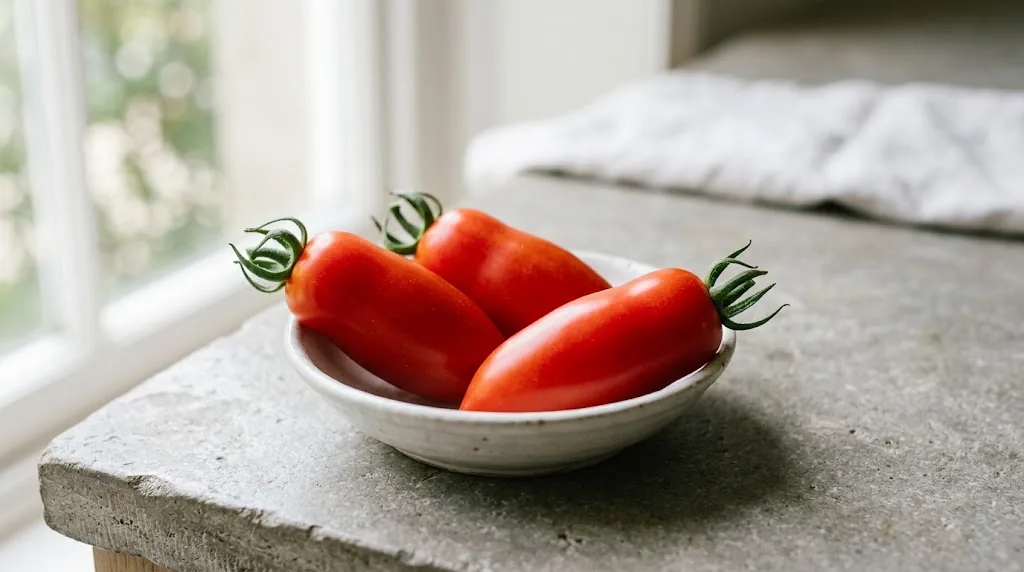
San Marzano tomatoes are known for long, meaty fruit that cooks into a thick, smooth sauce. The name also has two meanings: it may describe garden seed, or a protected canned tomato from a defined area in Campania. Knowing the difference helps you choose seeds, judge labels, and grow the vine you want.
Origin and history
The tomato takes its name from San Marzano sul Sarno, a town in Campania, Italy. The protected production area includes parts of the provinces of Salerno, Naples, and Avellino. The PDO applies to tomatoes grown and processed under its rules in that area, not to every seed packet or tomato described by the name. Look for the PDO mark and consortium label when buying the protected product. (PDO Consortium; official production area)
The PDO consortium was established by local producers in 1999 to protect the product’s authenticity and reputation. Its history page connects the tomato with the Campania region, especially the Sarnese-Nocerino area. (PDO Consortium history)
Botany and plant facts
A San Marzano tomato is a plum tomato in the species Solanum lycopersicum. Its long, narrow fruit usually measures about 2.4 to 3.1 inches, with bright red skin, firm fleshy walls, and relatively few seeds. The PDO consortium describes the protected crop as elongated, often with two or three chambers, and says the thin skin peels easily. Those traits suit peeled tomatoes and a thick sauce. (PDO characteristics)
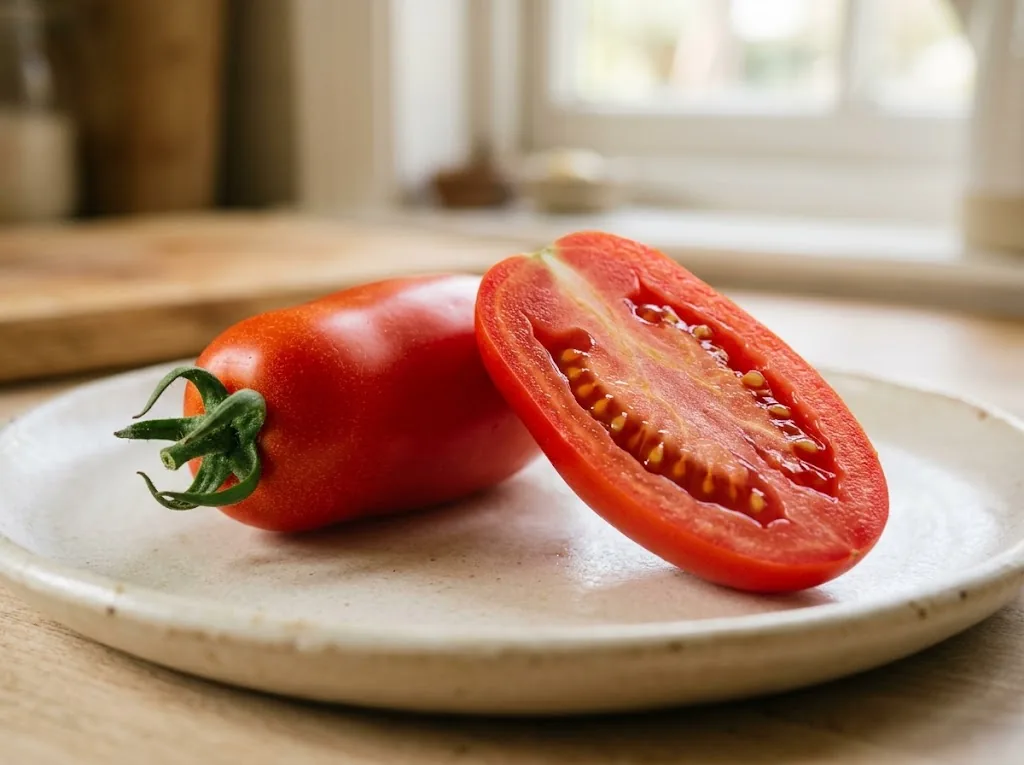
Plant habit and seed status depend on the strain. University of Delaware Cooperative Extension lists the cultivar as indeterminate and gives 78 days as a typical maturity estimate. Johnny’s Selected Seeds lists its San Marzano II as an indeterminate, heirloom strain with 4 to 6 oz tomatoes and a 78-day estimate; the same chart describes its Wisconsin 55 San Marzano as open-pollinated. Check your seed packet for the strain you bought. The name alone does not promise a particular size, harvest date, or disease resistance. (University of Delaware Cooperative Extension; Johnny’s paste tomato chart)
Growing this paste tomato
Give this cultivar a sunny site, fertile, well-drained ground, and a long frost-free season. Start with healthy transplants after frost danger has passed and the garden has warmed. Space seedlings according to the seed supplier’s directions, since strain and training method affect how much room they need. For general timing and care, see our guide to choosing tomato types.
Many strains grow as indeterminate vines, so provide a sturdy cage, stake, or trellis before the stems get heavy. Tie them loosely and check the supports as tomatoes develop. Keep moisture steady, especially while the crop is growing, and water at the base when possible. Mulch may slow evaporation and reduce splashing onto lower leaves. Full sun and even moisture support healthy growth; they do not guarantee a particular yield. (University of Minnesota Extension)

Long paste tomatoes may develop blossom-end rot or cracking when growing conditions fluctuate. First aim for even watering and avoid sudden swings between dry and saturated ground. Do not add calcium or fertilizer unless a soil test or product label supports it. Inspect vines for leaf spots, wilting, and pests; identify a problem before choosing a treatment. Disease-resistance codes are strain-specific, so check the packet rather than assuming the name provides resistance.
Harvest and ripeness cues
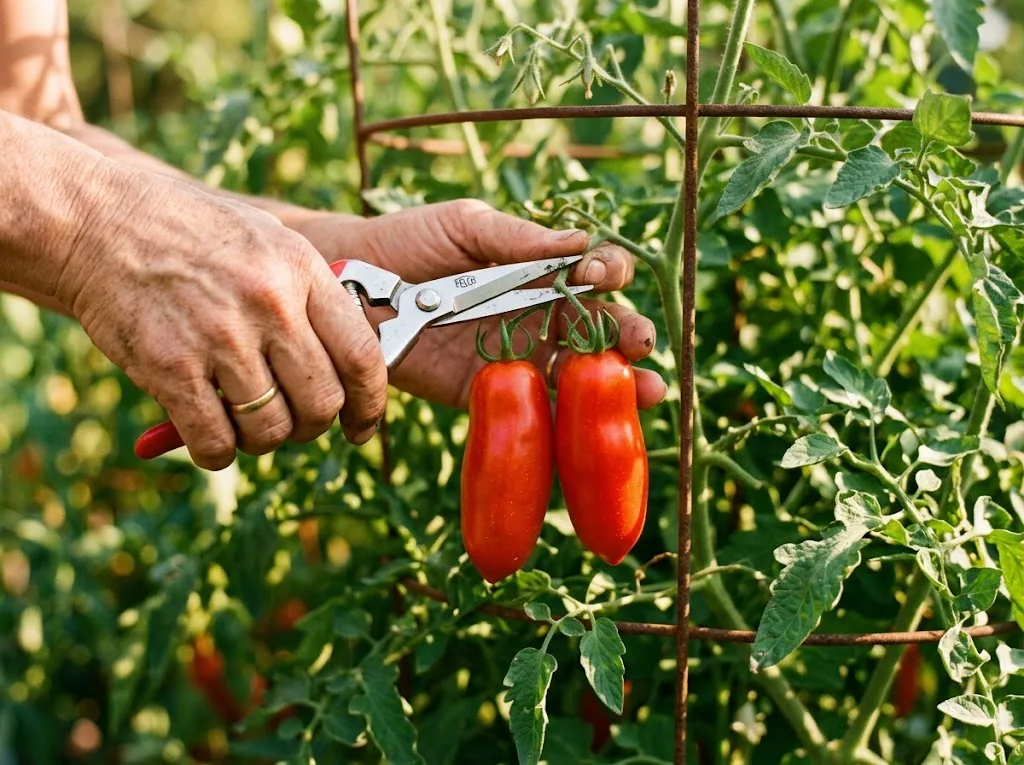
Pick tomatoes when they have reached mature color and give slightly to gentle pressure. PDO fruit is bright red when ripe; some may show a yellow-green shoulder before ripening. Use clean snips if pulling might damage the vine. Indeterminate plants ripen in stages, so check them often through the season. Ripeness cues depend on the variety, and a golden slicer such as Golden Jubilee tomatoes ripens to orange-yellow instead of red.
For sauce, choose fully colored, sound fruit. Set aside cracked or bruised tomatoes for prompt cooking, and discard fruit with mold or decay. If frost threatens while fruit is still firm and mature green, pick it and let it ripen indoors; flavor and texture may differ from vine-ripened fruit.
Storage and preserving
Keep ripe tomatoes in a single layer at room temperature away from direct sunlight if you plan to use them within a few days. Refrigeration may slow softening but can reduce flavor, so chill only when you need to delay spoilage. (Oregon State University Extension)
The firm flesh works well in cooked sauces, roasted dishes, and dried preparations. For home canning, use a current tested recipe and follow its ingredients, jar size, acidification, and processing time exactly. Tomatoes vary in acidity, so the National Center for Home Food Preservation directs canners to add bottled lemon juice or citric acid to jars when canning whole, crushed, or juiced tomatoes. Its baseline guidance is 2 tablespoons of bottled lemon juice or 1/2 teaspoon of citric acid per quart. Follow the tested recipe for the product you are making. Do not rely on flavor or a taste test to decide whether a jar is safe. (National Center for Home Food Preservation: canning tomatoes)
Uses for San Marzano tomatoes
Cooked paste tomatoes suit soups and braises because their firm pulp breaks down into a thick texture. Peel them for a smooth result or crush them for a rustic finish. Their sweet-tart taste also works in roasted dishes and pizza toppings. For a fresh meal, use ripe tomatoes in salads or sandwiches, though juicy slicers may be a better choice if you want a moist bite.
When you compare canned tomatoes, check the label rather than relying on packaging or a product name alone. A PDO mark identifies tomatoes grown and processed under the protected-area rules. Seeds sold under this name may grow useful paste tomatoes elsewhere, but they are not equivalent to a can carrying the protected designation.
For a large slicing tomato at the opposite end of the kitchen spectrum, see our profile of Cherokee Purple tomatoes.
