
When a recipe calls for a tomato that cooks down thick instead of watery, Roma tomatoes are an easy choice. Their oval, meaty fruit suits sauce and preserving, while their compact plants fit many home gardens. The name covers more than one seed strain, though, so check the packet before relying on a particular harvest date or disease-resistance claim.
Where Roma tomatoes came from
The original Roma tomato was developed in 1955 at the U.S. Department of Agriculture’s research station in Beltsville, Maryland. USDA Agricultural Research Service credits scientist William Porte with crossing San Marzano and Red Top tomatoes to breed a plum tomato with wilt and pest resistance and broad climate adaptability. That source says “developed in 1955”; a seed company dates its release to 1956, which may refer to its introduction rather than the earlier research. (USDA Agricultural Research Service; Victory Seed Company)
Today, seed catalogs use “Roma” for a familiar plum-tomato shape as well as for named strains such as Roma VF. That distinction matters: the classic history belongs to the original cultivar, while germination, fruit size, maturity, and resistance details should be checked against the specific seed listing. For a wider look at this group, explore the tomato varieties hub.
Roma tomato varieties and plant facts
Roma tomatoes are cultivated forms of Solanum lycopersicum, the tomato species recognized by the USDA National Plant Germplasm System. The standard Roma is generally described as a determinate plant with a bush-like growth habit: shoots finish at flower clusters, and the plant grows to a set height before most of its fruit ripens in a concentrated period. That can make harvesting a batch for sauce easier than picking from a plant that keeps growing and fruiting through the season. (USDA GRIN Taxonomy; Illinois Extension)

The fruits are plum-shaped: longer than they are wide, with smooth skin that turns bright red when ripe and dense flesh. Roma VF is one specific seed strain. Park Seed lists that selection with red, egg-shaped fruits averaging about 3 inches long and 2 ounces, and an advertised maturity of 80 days from transplant. Its listing describes meaty flesh with few seeds. Those details describe that listing, not every tomato sold under the Roma name. Its “VF” label refers to resistance to Verticillium and Fusarium wilts; look for resistance codes on the packet rather than assuming all Roma plants share them. (Park Seed, Roma VF)

“Regular tomato” is not a formal variety group. If you mean a round slicer, Roma fruit is usually more elongated, firmer, and less juicy, which makes it useful for making thicker sauces. Both types are cultivated tomatoes; the best choice depends on whether you want a meaty paste tomato or a juicy slice. Cherry tomatoes are smaller and suited to a different kind of use. (Cornell Cooperative Extension; Illinois Extension)
Cornell Cooperative Extension describes its Roma listing as an open-pollinated paste tomato. If a different packet says “F1 hybrid,” treat that named selection as a hybrid variety instead. Seed saved from an open-pollinated plant may retain its traits when it has not crossed with a different variety; seed saved from a hybrid may not reproduce the same traits. “Heirloom” is another label used for some Roma listings, so check the specific packet rather than assuming every Roma tomato plant has the same seed history. (Cornell Cooperative Extension; Illinois Extension, seed labels)
Growing Roma tomatoes
Give a Roma tomato plant a sunny spot with fertile, well-drained soil and room for air to move between plants. Follow the seed packet for spacing because plant size and recommended distance vary by strain. Illinois Extension gives a general spacing range of 24 to 36 inches for tomatoes, depending on type. (Illinois Extension)
Start seeds indoors according to your local frost schedule, or set out a healthy transplant once frost risk has passed and the soil has warmed. Water the root zone when the soil begins to dry; aim for steady moisture rather than repeated soaking and drying. Mulch can slow evaporation and limit soil splash onto lower leaves. A sturdy cage or short stake helps keep branches and fruit off the ground, even with a bush-type plant.
Roma tomato plants can grow in containers when the selected strain fits the available space. Choose a large pot with drainage, set it in full sun, and check soil moisture often. University of Minnesota Extension notes that bush-type tomatoes suit small gardens and containers and usually do not need pruning, staking, or trellising. Check the seed packet for the plant’s mature size before choosing a pot or support. (University of Minnesota Extension)
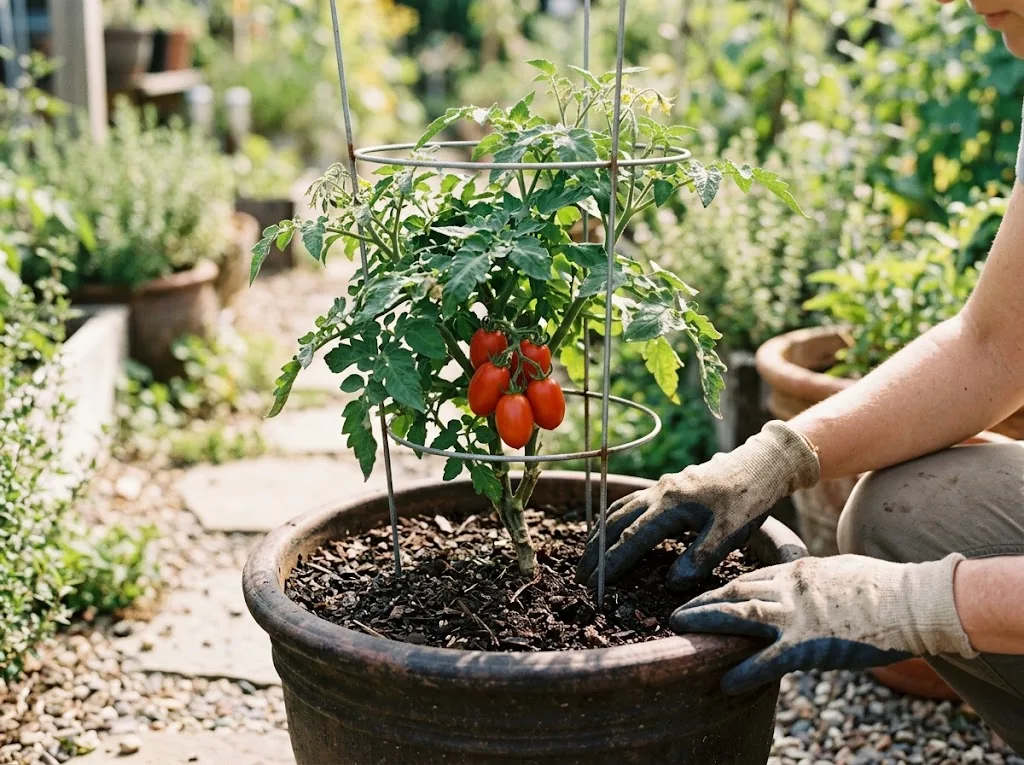
Roma plants usually need less pruning than tall indeterminate vines. If the seed label names a disease resistance, treat it as protection against the listed disease only, not a promise of immunity to every tomato problem. Resistance codes and variety characteristics are specific to the strain. The San Marzano tomato is another plum type to compare if you are choosing a tomato for sauce.
When to harvest Roma tomatoes
Pick ripe Roma fruit from the vine when it has turned its mature color evenly and feels firm with a slight give. For red Roma strains, look for red color from the blossom end up rather than using size alone. Illinois Extension recommends full color as the best ripeness cue for Roma tomatoes. (Illinois Extension)

Determinate Roma plants often ripen a large share of their fruit over a shorter window. Check plants every day or two as fruit colors, and use ripe tomatoes promptly for sauce, roasting, or freezing. If birds, cracking, or hot weather threaten the crop, tomatoes that have begun to change color can finish ripening indoors in a shaded room.
Why people say not to refrigerate Roma tomatoes
Keep whole ripe tomatoes at room temperature, away from direct sun, when you plan to eat them soon. Chilling can dull tomato flavor and texture, so refrigerate only fruit that is very ripe and needs to be held briefly. Once cut, cover it and refrigerate below 40°F within two hours. (Illinois Extension; UC Davis Health)
Roma’s relatively dense flesh is handy for cooking into sauce, but the variety does not make home canning automatically safe. Tomato acidity varies. For home-canned tomatoes or tomato products, use a current tested recipe and add the specified bottled lemon juice or citric acid; follow its processing method and time exactly. The National Center for Home Food Preservation explains that some tomatoes can exceed pH 4.6 and need acidification for safe boiling-water canning. (National Center for Home Food Preservation; University of Minnesota Extension)
Best uses for Roma tomatoes in sauce, paste, and more
Roma tomatoes are a classic paste tomato for marinara, pizza sauce, salsa, soup, and roasted tomato dishes. Their dense flesh and low moisture content hold a firmer shape when diced and cook into a thicker sauce than a juicier slicing tomato. Some cooks use Roma for salsa and other Mexican-inspired dishes for that texture, though recipes vary and no cuisine requires one tomato variety. Romas also work fresh in salads and sandwiches, but may feel less juicy than a beefsteak tomato or cherry tomatoes. (Cornell Cooperative Extension)
For a quick sauce, halve ripe fruit, remove any tough stem scars, and simmer the tomatoes until soft before seasoning. Cook them longer to reduce excess liquid, or roast halved fruit to concentrate its flavor. The cooked pulp can reduce into tomato paste. Use extra ripe fruit in a tested canning recipe, freeze it for cooked dishes, or dehydrate it with a method designed for tomatoes. A single plant may ripen its crop during a shorter part of the growing season, but the window varies with weather and seed strain. If you are comparing varieties for a warm garden, Heatmaster tomatoes are another named tomato to look into. Keep Roma’s reputation simple: it is a versatile plum tomato, not a guarantee that every strain tastes or grows exactly alike.
