
A Sungold tomato is a cherry tomato with a bright orange finish and a sweet, fruity flavor. Its vigorous plants keep setting fruit clusters through the season, so a little planning for support and frequent picking pays off. Here is how this hybrid differs from other cherry tomatoes, what to expect in the garden, and how to use the ripe fruit.
Origin and history
Sungold, also sold as Sun Gold, is a named F1 hybrid rather than a stable, open-pollinated heirloom. Tokita Seed, a Japanese seed company, developed it; it later became popular with home gardeners and cooks in the United States. Plantura’s Sungold variety profile identifies Tokita as its developer. The exact release year is omitted because the available sources do not establish it consistently.
The F1 label means commercial seed is produced by crossing selected parent lines. Seed saved from a Sungold fruit may grow, but the next generation is not guaranteed to resemble the original hybrid. Buy fresh seed when you want predictable Sungold fruit.
For context on how this cultivar fits among other shapes and colors, see the guide to tomato varieties.
Botany and plant facts
Sungold is a cherry tomato cultivar of Solanum lycopersicum. Its small, round fruits mature to a golden or tangerine orange, not the familiar red of many cherry types. Seed suppliers such as Johnny’s Selected Seeds describe the flavor as notably sweet and fruity. Taste depends on ripeness and growing conditions, so expect a sweet profile rather than a guaranteed sugar level.

Sungold is a vigorous plant with indeterminate growth. It keeps extending and flowering while conditions allow, instead of producing one concentrated crop. Cornell’s vegetable variety database lists maturity at about 57 to 60 days from transplant and oval fruit roughly 1 3/8 by 7/8 inch; other sellers list different maturity dates and fruit sizes. Treat catalog figures as estimates, not a promise for every garden.
Cornell’s listing also records resistance to Fusarium wilt race 1 and tobacco mosaic virus. Resistance reduces risk from those specific problems; it does not make a plant immune to every disease or growing problem.
Growing Sungold tomatoes
Start with healthy transplants after frost danger has passed and the soil has warmed. Choose a sunny spot with fertile, well-drained soil. Leave enough room for airflow and install a tall, sturdy stake, trellis, or large cage at planting time, as UMN Extension recommends for tomatoes that keep growing. Sungold can outgrow a small tomato cage, especially in a long season.

Water at the soil line when the top layer begins to dry, aiming for steady moisture rather than cycles of drought and soaking. Mulch can slow moisture loss. Tie the main stem loosely to its support as it grows. You can prune lower leaves that touch the soil, but do not strip the plant: its foliage shades fruit and supports growth.
Like other cherry tomatoes, Sungold may split after a sudden change in water uptake, often following heavy rain or uneven watering. Pick ripe fruit promptly and keep soil moisture as even as practical. No variety is completely protected from cracking.
For another named garden cultivar to compare, read our Brandywine tomato profile.
Harvest
Check the fruit clusters often as they begin to color. Pick Sungold tomatoes when they have developed an even golden-orange hue and release with a gentle lift. A green shoulder or firm feel can mean the fruit needs more time. Ripe Sungolds turn orange, so do not wait for them to turn red.
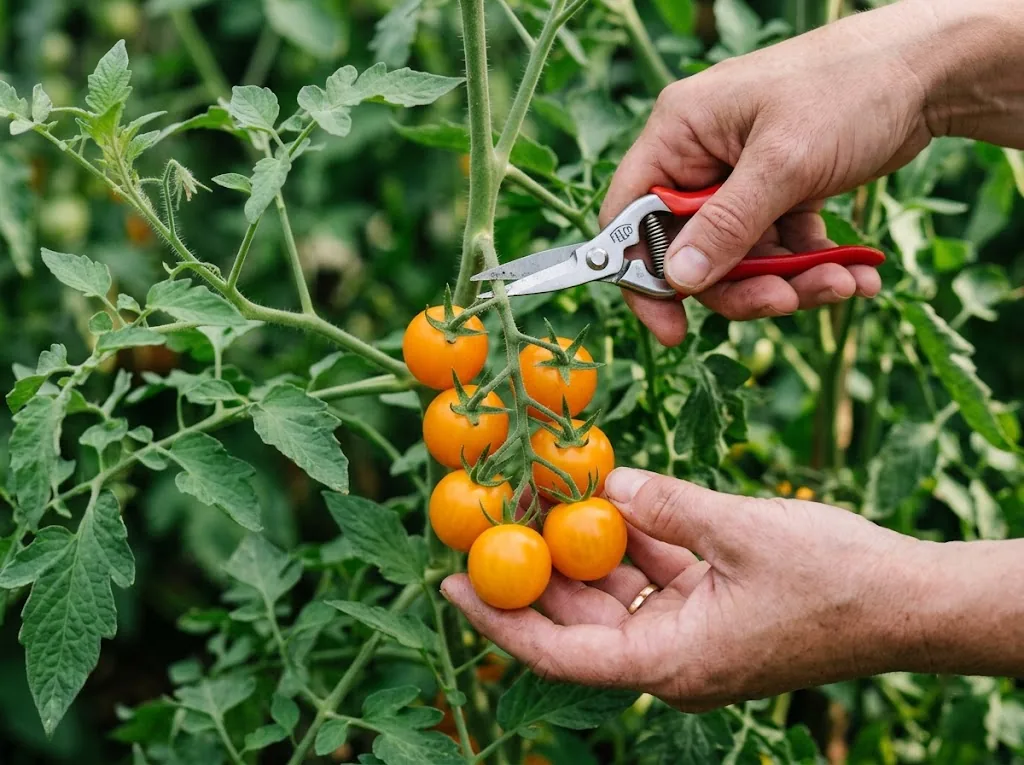
A cluster does not always ripen all at once. Snip a whole truss when most fruit is ready, or pick individual tomatoes every few days. Handle them gently because ripe cherry tomatoes can split or bruise. Harvest before a killing frost; unripe fruit may color indoors, but flavor and texture can differ from vine-ripened fruit.
Storage and preserving
Keep freshly picked Sungolds at cool room temperature and out of direct sun if you plan to eat them soon. Refrigeration can dull tomato aroma and texture, so chill them only when they are very ripe or you need extra time. Bring chilled fruit back toward room temperature before serving.
For a larger harvest, freeze whole clean tomatoes on a tray, then transfer them to a freezer-safe container. Their texture softens after thawing, which suits sauces and soups better than fresh salads. For shelf-stable canning, use a tested recipe from the National Center for Home Food Preservation and follow its acidity and processing directions exactly; do not improvise a canning method.
Uses for Sungold tomatoes
The sweet, tangy flavor makes Sungolds easy to eat by the handful, toss into salads, or add to a lunchbox. Halve them for pasta, grain bowls, or quick sautés. Their orange color also brings contrast to a dish built around red tomatoes.

To concentrate their flavor, roast halved Sungolds with a little oil until their skins wrinkle and juices turn syrupy. Stir them into warm pasta, spoon them over toast, or fold them into a simple sauce. Cooked fruit softens quickly, so add it near the end when you want the halves to hold their shape.
Sungold ripens to orange, while Sweet 100 is generally sold as a red cherry hybrid. Seed catalogs describe both as productive, though comparisons vary by source and growing conditions. Choose Sungold for the orange color and fruity taste, then grow both if you want a direct garden comparison. If you want a large slicer as a contrast to Sungold’s small fruit, see our Big Rainbow tomato profile.
