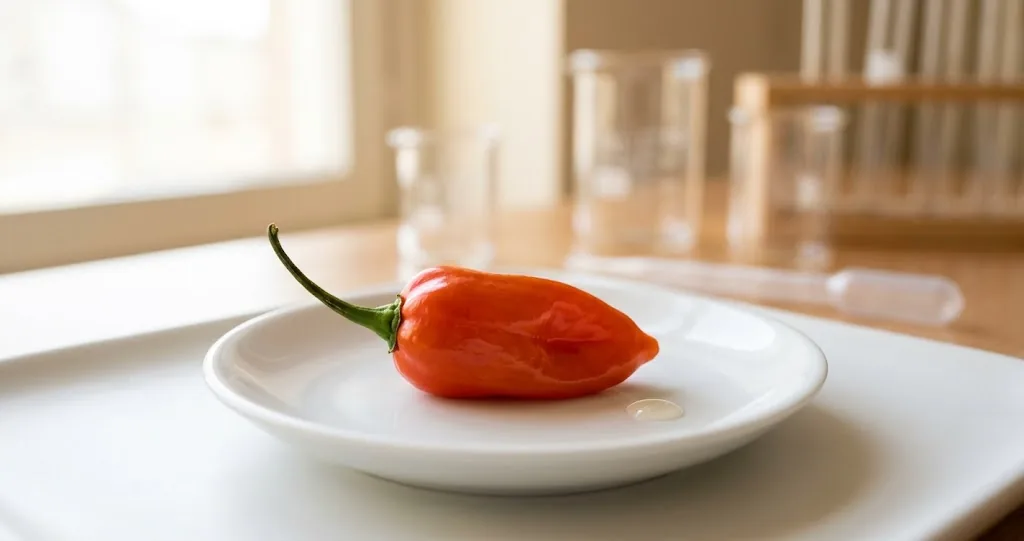
A habanero pulled fresh off the plant tastes brighter and sharper than a dried one in a paper bag. A single jalapeño on the vine can sit as a quiet, grassy crunch, while the next pod over lights up the front of the mouth. Scoville Heat Units are the system that turns those experiences into a number on a chart, so eaters, growers, and sauce makers can compare pods and recipes against one shared yardstick.
This guide explains what the rating means, where the scale came from, how heat is measured in a lab today, and why any number you read online is best read as a band rather than a precise figure. It also points to two related pages: one on what causes the burn and how it works, and one on the heat-level chart that ranks common varieties from mild to scorching.
What the Scoville scale measures
The Scoville scale rates pepper heat in Scoville Heat Units. One unit is the smallest amount of capsaicin a trained panel can detect when a pod extract is diluted in sugar water. If a sample has to be diluted five thousand times before tasters stop feeling the burn, that sample rates 5,000 on the scale.
Capsaicin is the compound that gives hot pods their bite, and it is the main thing the count is measuring. Pods contain a small family of related compounds called capsaicinoids, and a few of them, including dihydrocapsaicin, also register on the scale. The total capsaicinoid load of a single fruit, weighed against the heat threshold of detection, is what produces the published number for that variety.
All hot peppers belong to the genus Capsicum, part of the wider nightshade family, and that botanical root explains why a bell pepper, a sweet pepper, paprika, and a Carolina Reaper are measured on the same yardstick. Scoville Heat Units are useful for one reason: they let people talk about spicy heat in plain language. A jalapeño around 5,000, a serrano around 15,000, and a habanero around 200,000 are not equally hot in real life. The figures reflect a real physiological difference, and that difference matters when a cook decides how much of a pod to drop into a pot.
Where the scale came from
The scale was created by Wilbur Scoville, an American pharmacist working at Parke-Davis in Detroit. Scoville’s method, known as the Scoville Organoleptic Test, used a panel of trained tasters. Ground pod was dissolved in alcohol to draw out the capsaicinoids, then the panel diluted the mixture step by step in sugar water until it could no longer detect the burn. The total dilution at that point became the rating.
Scoville published the method in 1912 in the pharmaceutical literature of the day. The original paper included a short table of values for several common varieties and preparations, with a note that pure capsaicin rates about 16 million on the same scale.
Useful as the organoleptic test was for its era, it had real limits. The rating depended on the tasters: how old they were, what they had eaten that morning, how much they liked fiery food, and how steady each one was from session to session. Two labs testing the same batch could easily return different figures, and the same lab on two days could return different figures for the same extract. The original test was the best available method for its time, but it was always a human-panel estimate, never an instrument reading.
How pepper heat is measured today

Modern labs do not use tasters. They use instruments. Two systems dominate the trade, and each answers a slightly different question.
The first is high-performance liquid chromatography, usually shortened to HPLC. A precisely measured pod extract moves through a chromatography column, which separates its capsaicinoids. The detector lets the laboratory identify and quantify those compounds against standards; the measured concentration can then be expressed as a Scoville heat figure. NIST explains the method in plain language.
The spice trade commonly uses ASTA Method 21.3, an HPLC method for determining the pungency of Capsicum products and oleoresins. AOAC Official Method 995.03 is another HPLC-based approach. These tests replace the old tasting panel with a repeatable chemical measurement, while the familiar Scoville figure remains a useful way to communicate the result.

The second is AOAC Official Method 995.03, used in food and supplement work, which also separates and quantifies capsaicinoids. Different methods give slightly different numbers, which is part of why any hot pepper figure is best read as a range rather than a precise point. Readers who want a closer look at how a published value is built up from a sample, including the choice of internal standard and the way chromatogram peaks are integrated, can find a fuller comparison on the dedicated page about how heat is measured in a modern lab.
When comparing labels or supplier data, check both the reported heat value and the test method. A measurement from a defined laboratory method is more useful than a single number with no sample, method, or date behind it.
Where common peppers fall on the scale

Published numbers vary between sources, and the lists below show the working bands rather than single points. Bell peppers and sweet peppers stay near zero. Anaheim, poblano, and most mild fruits cluster between about 500 and 2,500. Jalapeño and serrano peppers sit in the 2,500 to 15,000 band. Cayenne and most bird’s eye chilis move into the 15,000 to 50,000 range. Tabasco, Thai, and small Asian varieties often land around 50,000 to 100,000. Habanero and Scotch bonnet cluster around 100,000 to 350,000. Ghost pepper and super-hot cultivars such as Carolina Reaper and Pepper X have been measured into the million-plus range, with considerable variability between sources and testing methods.
Two concrete examples illustrate the working bands. A grocery-store jalapeño usually lands between 2,500 and 8,000 on the chart, and a serrano on the same shopping trip can read three to four times hotter at 10,000 to 23,000. A habanero at the farmer’s market in late summer can land anywhere in the 100,000 to 350,000 band, depending on variety and growing conditions. A full heat-level chart maps specific varieties onto the bands above, with rough substitutes and a note of when a recipe can absorb a swap.
Why published numbers are ranges
A single pepper is rarely the same as the next, even on the same plant. A jalapeño grown in a cool summer reads different in the mouth from one grown in a hot, dry season. Stress during the growing season, water availability, and the stage at which the pod was picked all change the capsaicinoid load. The plant itself is not a factory line, and the figures reflect that.
Lab methods also differ. A pod tested with HPLC using one solvent system can come back with a slightly higher number than the same fruit tested with a different solvent system or a different calibration standard. Two respected labs can return numbers five or ten thousand units apart for the same harvest, and both can be correct inside their own method.
For cooks and home gardeners, the practical implication is this: Scoville Heat Units work best as a band, not a precise figure. A recipe that asks for two habaneros for a pot of chili will sit roughly in the same range whenever the cook uses habaneros, and the cookbook is testing an approximate, not a calibrated dose. If a single batch surprises the cook, the surprise is usually the plant rather than the printed number. Treating published values as one input among several, alongside the grower’s experience of that specific pod, the recipe’s amount of fat or sugar, and the heat preferences of the people eating, generally produces more reliable results than chasing a single figure.
The hot end of the chart
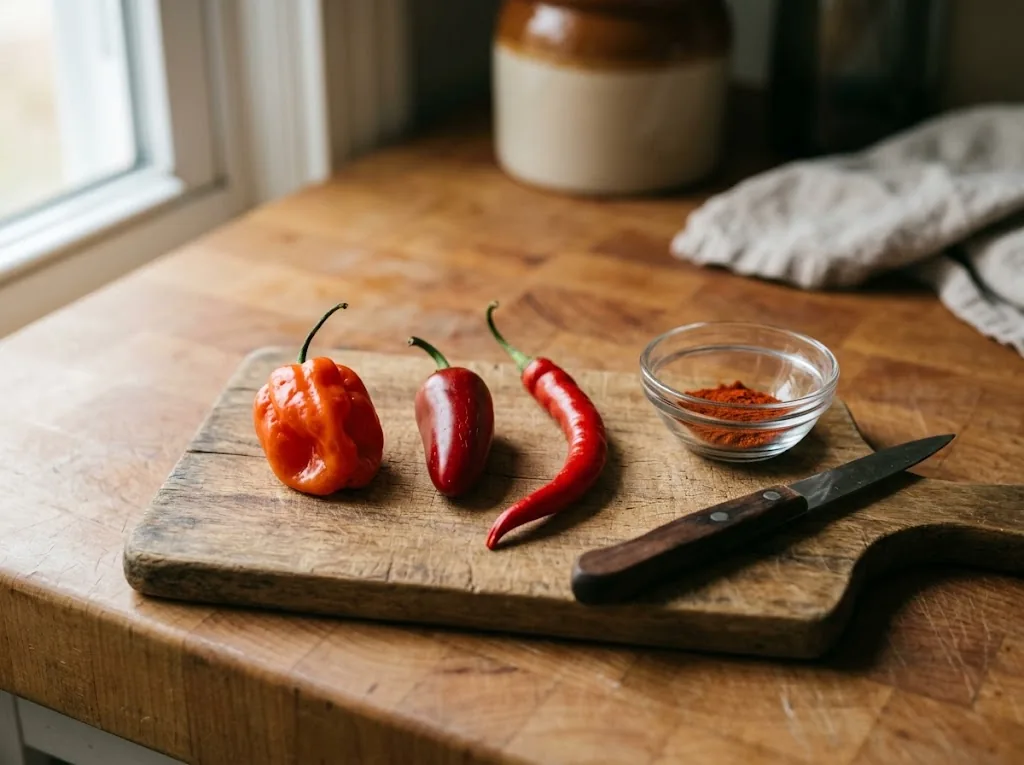
The record for the world’s hottest pepper has shifted more than once in recent years, and the dates matter. Guinness World Records recognized Pepper X as the current record holder in 2023, with a reported average of 2,693,000 SHU. Carolina Reaper, also bred by Ed Currie, held the record from 2013 to 2023 and is reported at about 1.64 million SHU. Ghost pepper sits in a lower band but can approach 1 million on the same scale, depending on the variety, growing conditions, and laboratory method.
For readers who want a fuller look at the compound behind the burn, including where the burn-causing compound sits in the pod, how it registers on nerve receptors, and what the safety evidence actually shows, the dedicated capsaicin explainer covers those questions in detail.
Safety note
Hot pepper heat can be intensely irritating, especially at high doses. Poison Control notes that excess capsaicin can cause nausea, vomiting, abdominal pain, diarrhea, and a burning sensation. Small sips of milk may help with mouth burn. For chest discomfort or trouble breathing, seek emergency care; for non-emergency exposure advice, contact a poison control center.
