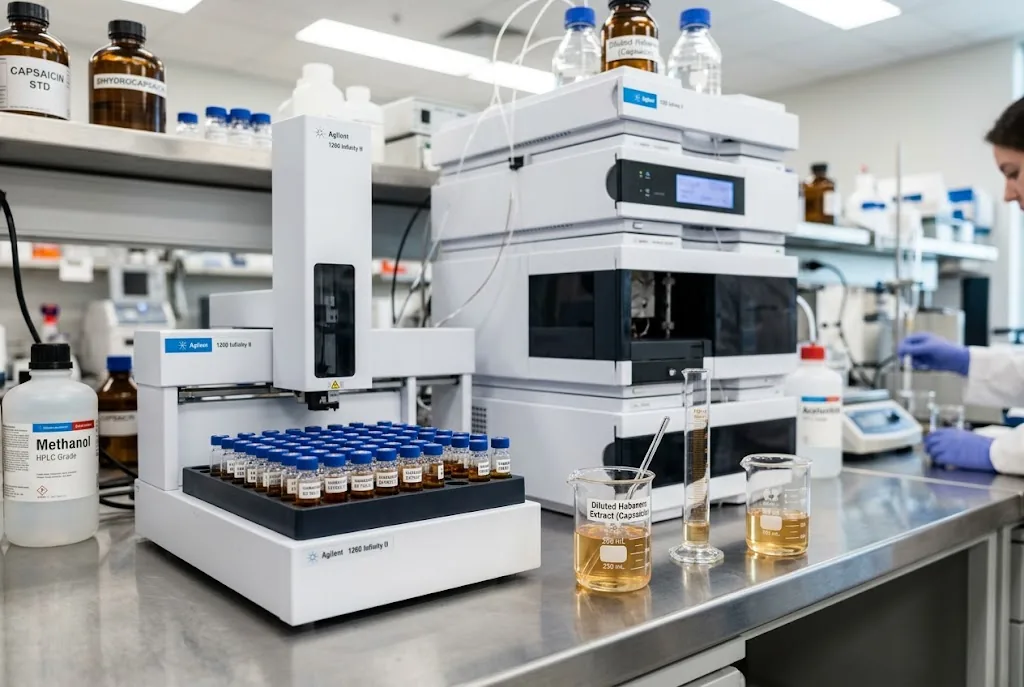
Every hot sauce bottle, seed catalog, and restaurant menu lists a number in Scoville heat units (SHU). We use those numbers to choose whether a hot pepper will bring gentle warmth or fierce spiciness to a dish. Yet few people realize how laboratories actually determine the heat level of a chili pepper. Measuring the amount of capsaicin inside fresh or dried pods is not guesswork. It is a precise analytical science that began with human taste panels sipping sugar water and evolved into automated liquid chromatography instruments used to measure the heat of a pepper.
Understanding how technicians measure heat helps gardeners, cooks, and hot pepper enthusiasts make sense of the scoville scale. The scoville scale is a measurement system that quantifies heat-producing capsaicin molecules across every type of pepper. It also explains why individual pods from the same bush can turn out hotter or milder. This guide covers how the scoville scale works, how the original sensory method functioned, how modern analytical testing identifies and quantifies capsaicinoids, and why lab results vary.
How the original Scoville organoleptic test worked
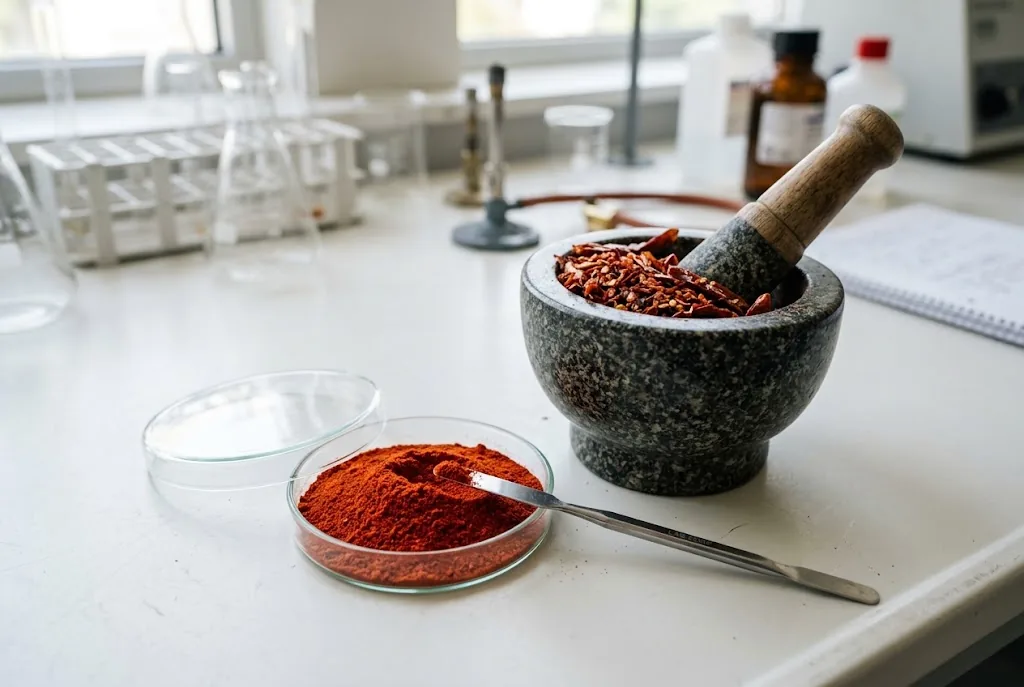
Before chemical sensors existed, researchers evaluated pepper heat using human taste testers. In 1912, an American pharmacist named Wilbur Scoville developed a standardized sensory assessment at the Parke-Davis pharmaceutical company. His goal was measuring the heat of pepper extracts used for topical pain-relief formulations, defining the very first Scoville heat unit.
The original procedure, known as the Scoville organoleptic test, followed a systematic dilution process:
- Extraction: Ground dried pepper was dissolved in alcohol to extract natural heat compounds called capsaicinoids.
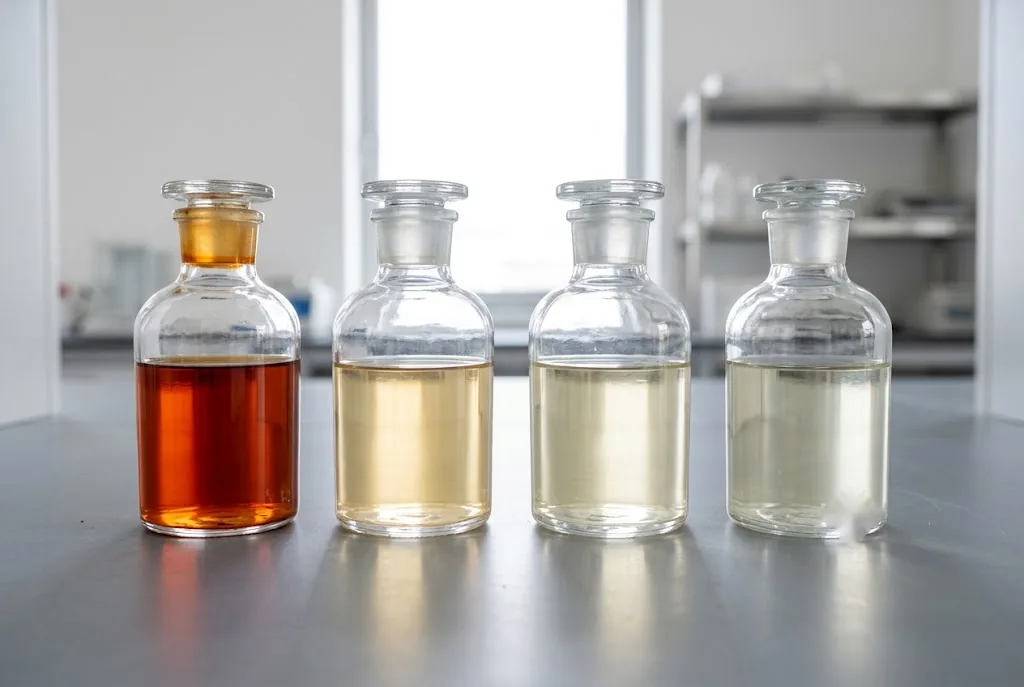
- Sweetened mixture: The alcohol extract was blended into a solution of sugar water in measured increments.
- Human panel: Five trained tasters sampled the diluted mixture.
- Threshold point: Technicians continued to dilute the extract until three of the five panel members could no longer detect any burning heat on the tongue.
The degree to which the extract needs to be diluted determined its official scoville rating. If one part of pepper extract required 5,000 parts of sweetened liquid before the heat vanished, that sample was expressed in Scoville heat units as 5,000 Scoville units. A zero-heat bell pepper required no dilution, scoring 0 SHU. By comparison, pure capsaicin crystals required sixteen million parts liquid, establishing the peak of the system at 16 million Scoville heat units.
For a detailed breakdown of where individual varieties sit on this historic chart, explore our guide to the scoville scale.
Why the Human Taste Panel Reached Its Limits
That taste-panel method was an ingenious breakthrough, but human perception is not a calibrated instrument. Over decades of commercial spice trading, several scientific weaknesses became obvious.
Sensory fatigue presented the biggest challenge. After sampling two or three pungent solutions, the heat receptor on a taster’s tongue becomes numb. This desensitization made subsequent evaluations unreliable. In addition, human sensitivity varies widely. Natural genetic differences in pain receptors mean one person detects heat in a faint solution while another panelist notices nothing.
The breeding of modern superhot cultivars also created practical safety issues. While human panels could safely taste a mild jalapeño or poblano pepper, evaluating cultivars such as the ghost pepper and Carolina Reaper became impractical. Guinness World Records reported Pepper X at an average of 2,693,000 SHU when it took the record in 2023. Commercial spice processors and pepper spray manufacturers needed an objective chemical test that eliminated human subjectivity.
How HPLC measures pepper heat today
Today, laboratories measure pepper spiciness using high-performance liquid chromatography (HPLC). This analytical chemistry technique separates, identifies, and quantifies individual chemical compounds in a liquid sample with high precision.
The burning sensation in every chili pepper comes from natural compounds called capsaicinoids. While capsaicin is the most famous chemical, related molecules also influence the overall fire. To understand how these molecules interact with human nerve endings, read our guide on what is capsaicin.
During an HPLC analysis, technicians dry the pods, mill them to a fine powder, and extract the hot compounds using chemical solvents. The liquid sample is injected under high pressure through a column filled with microscopic adsorbent beads. Because each chemical interacts differently with the column material, individual compounds travel at different speeds:
- Capsaicin: The most abundant heat-producing compound in many hot peppers.
- Dihydrocapsaicin: Another major compound measured alongside capsaicin.
- Minor capsaicinoids: Compounds such as nordihydrocapsaicin that also contribute to measured heat.
As each separated compound exits the column, an optical detector measures its concentration in parts per million. As explained by the National Institute of Standards and Technology, high-performance liquid chromatography provides repeatable, objective capsaicin content data without relying on human palates.

ASTA Pungency Units and Scoville Conversion
Chromatography instruments report chemical concentration in parts per million or in ASTA pungency units, established by the American Spice Trade Association. One ASTA unit represents one part of active heat compound per million parts of dry pepper weight.
Because chefs, gardeners, and Guinness World Records use traditional Scoville numbers, laboratories calculate Scoville heat units by multiplying the parts per million of capsaicin and dihydrocapsaicin by approximately 16.1, while minor compounds use lower multipliers based on their perceived intensity.
In general, one ASTA unit equals approximately 15 to 16 Scoville heat units. For example, if an instrumental analysis finds 1,000 ppm of total heat compounds in a dried pepper sample, multiplying that concentration by 16 yields an official value of 16,000 Scoville units, as an approximate Scoville rating for that sample.

Why Heat Numbers Vary Between Labs and Individual Pods
When researching any hot pepper variety, you will almost always find a range rather than a fixed number. A habanero pepper, for example, typically spans from 100,000 to 350,000 SHU. This wide range is not a testing error. It reflects real biological variation across living crops.
Heat production is a natural defense response driven by plant genetics and environmental conditions. Two plants grown from seed from the exact same fruit can yield pods with different heat levels depending on sunlight, soil nutrients, ambient temperature, and moisture stress. For a comprehensive look at how environmental factors change pod heat, see our article on what makes chili peppers hot.
Sample preparation also creates slight differences between laboratory results:
- Moisture variations: Laboratory testing measures dried pepper powder. Differences in initial fruit moisture alter dry-weight calculations.
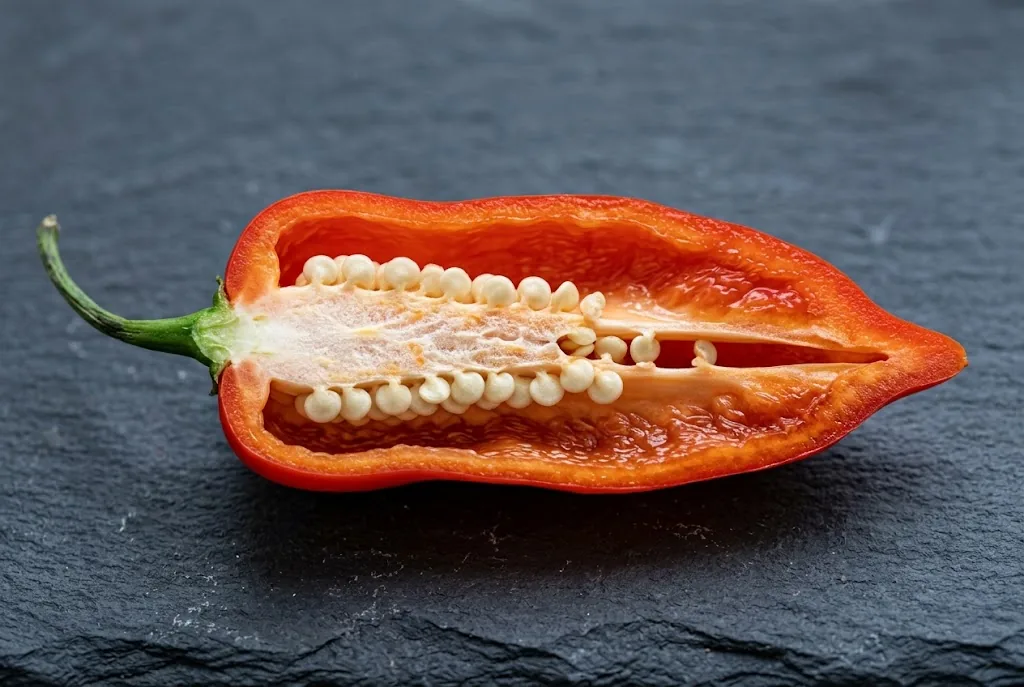
- Placental tissue: Capsaicinoids are mostly concentrated in the white inner lining of a pod. A sample with more of this tissue may test higher than one made mostly from the outer wall.
- Position on the branch: Pods ripening on lower, early nodes often contain different chemical concentrations than late-season pods at the top of the plant canopy.
Using Scoville ratings in cooking and gardening
Modern analytical testing has turned heat measurement from a subjective tasting panel into an exact scientific discipline. Whether you are growing mild sweet bell pepper varieties, cooking with a spicy jalapeño, or harvesting the hottest peppers in the world like the Carolina Reaper and Pepper X, Scoville ratings provide a reliable baseline.
When cooking spicy food, treat Scoville numbers as a helpful reference rather than an absolute guarantee. Because local growing conditions make each pod slightly hotter or milder, always sample a tiny piece of pepper before seasoning a pot.
