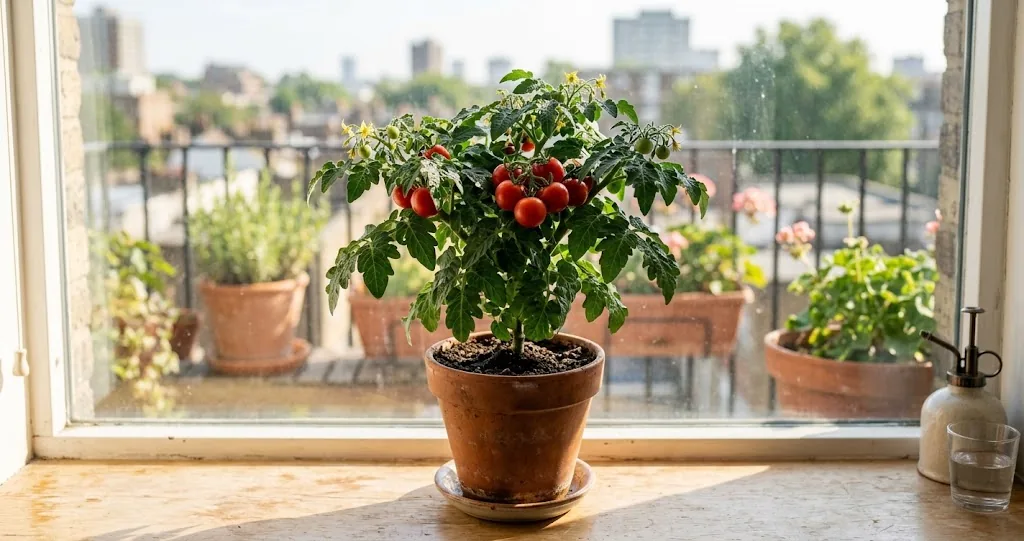
A tomato plant can fit on a sunny balcony and still give you a bowl of sweet, red tomatoes. Tiny Tim is a compact, determinate cherry type bred for a small space, with round tomatoes about an inch across. It suits a patio container, window box, or a narrow bed where a full-size vine would crowd its neighbors.
For a broader look at how this cultivar compares with other types, browse our guide to tomato varieties. Its small size changes what you need to support, not the basic care a tomato needs.
Origin and history
Seed Savers Exchange records Tiny Tim as a University of New Hampshire plant-breeding class project introduced in 1945. The same record describes plants about 8 inches tall with large cherry-type tomatoes. It also traces how the variety reached market through J. R. Hepler’s eleven-year-old son Billy, who sold a pound of seed to a New York seed company. The accession record is a useful historical reference; modern listings vary in the height and maturity figures they give.
Botany and plant facts
The Tiny Tim tomato is a red, round cherry type in the species Solanum lycopersicum. Current catalog entries describe it as open-pollinated and determinate. Determinate plants stop extending after reaching their mature size, then set much of their crop over a shorter period than vining, indeterminate varieties. That habit makes this cultivar easier to fit into a small growing area, although it is still a sun-loving tomato rather than a low-light houseplant.
Expect a dwarf plant, not a guaranteed exact height. West Coast Seeds lists a usual range of 8 to 16 inches and tomatoes about 1 inch across; TomatoFest describes plants around 12 inches with tomatoes close to three-quarters of an inch. Their maturity figures differ: 60 days at West Coast Seeds and 50 days at TomatoFest. West Coast Seeds counts from transplant; treat each seller’s number as specific to its listing, then follow the packet for the strain you buy and your own season. West Coast Seeds’ Tiny Tim listing gives its plant dimensions and maturity basis.
Growing Tiny Tim
Sow indoors about six to eight weeks before you expect to move plants outside. Give seedlings strong light so their stems stay sturdy. Harden them off gradually, then transplant after frost danger has passed and growing conditions are warm enough. Its short, bushy habit suits a patio pot, but the vessel still needs drainage and room for roots. For tomatoes grown in pots generally, UNH Extension recommends artificial potting mix and one plant per four- or five-gallon pot, with regular attention to water and fertilizer because pots hold less growing mix to buffer dry spells.
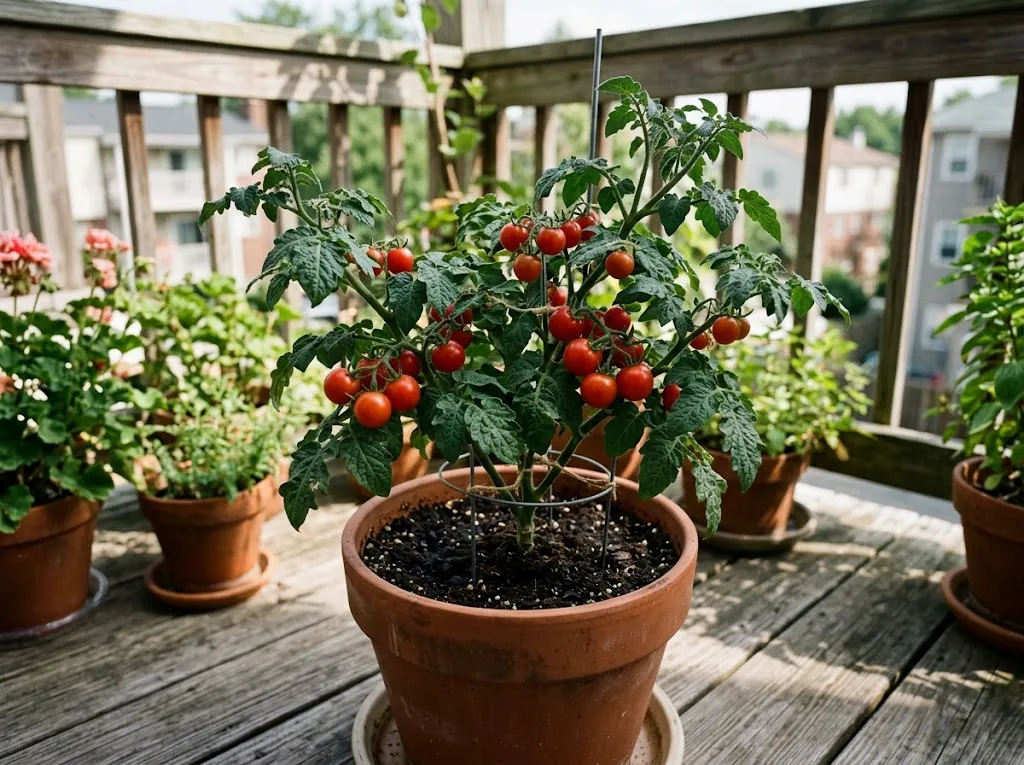
Choose the sunniest spot you have. Check the pot as the weather warms and water when the mix is drying, aiming for steady moisture rather than alternating bone-dry soil and a heavy soak. UNH Extension notes that even moisture helps reduce blossom-end rot and tomatoes splitting. A small cage or stake installed at planting can keep stems carrying tomatoes upright without turning a dwarf plant into a pruning project. Determinate tomatoes need a different approach from long, vining types. Connecticut Agricultural Experiment Station guidance warns that pruning above the first flower cluster removes potential tomatoes, so leave most growth in place.
If you would rather grow a dark-fruited type, see our profile of Black Beauty tomatoes.
When and how to harvest
Pick tomatoes when they have reached full red color and come away with a gentle lift or twist. Check the plant every few days once the first tomatoes color. If the season ends with mature-green tomatoes left, bring them indoors. UMN Extension says mature-green fruit often ripens satisfactorily at room temperature; fruit that is still fully green may not develop good flavor.
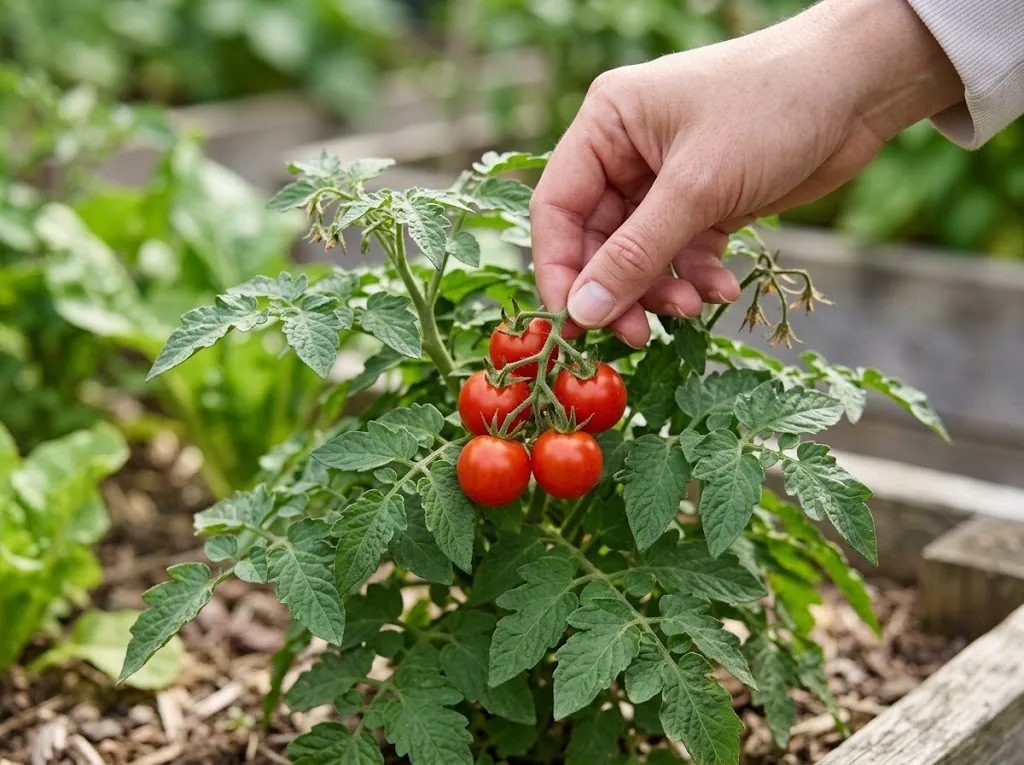
Determinate means the main crop tends to arrive over a shorter window, not that every tomato ripens on the same day. Harvest ripe fruit as you find it and leave firm, green ones attached until they color, unless the season is ending.
Storage and preserving
Use fully ripe tomatoes while they are fresh and firm. Spread mature-green tomatoes picked at the end of the season in a single layer at room temperature, and check often as they ripen. Avoid piling them in a deep bowl, where unseen tomatoes can soften unnoticed.
To save a larger harvest, freezing is a straightforward option for later sauces and soups. If you want shelf-stable canned tomatoes, use a current tested recipe and follow its processing directions. The National Center for Home Food Preservation recommends acidifying whole, crushed, or juiced tomatoes for safe home canning because tomato acidity varies. A small fruit size does not remove that requirement.
How to use Tiny Tim tomatoes
The bite-size tomatoes are handy for salads, lunch boxes, toast, and quick meals where you want a whole tomato rather than a large slice. The taste is sweet-tart, with a mild acidity that suits fresh dishes. Halve a handful for pasta, fold them into a grain salad, or roast them until their skins wrinkle and the juices collect in the pan. Their sweet-tart flavor works well with basil, oregano, and a little olive oil.
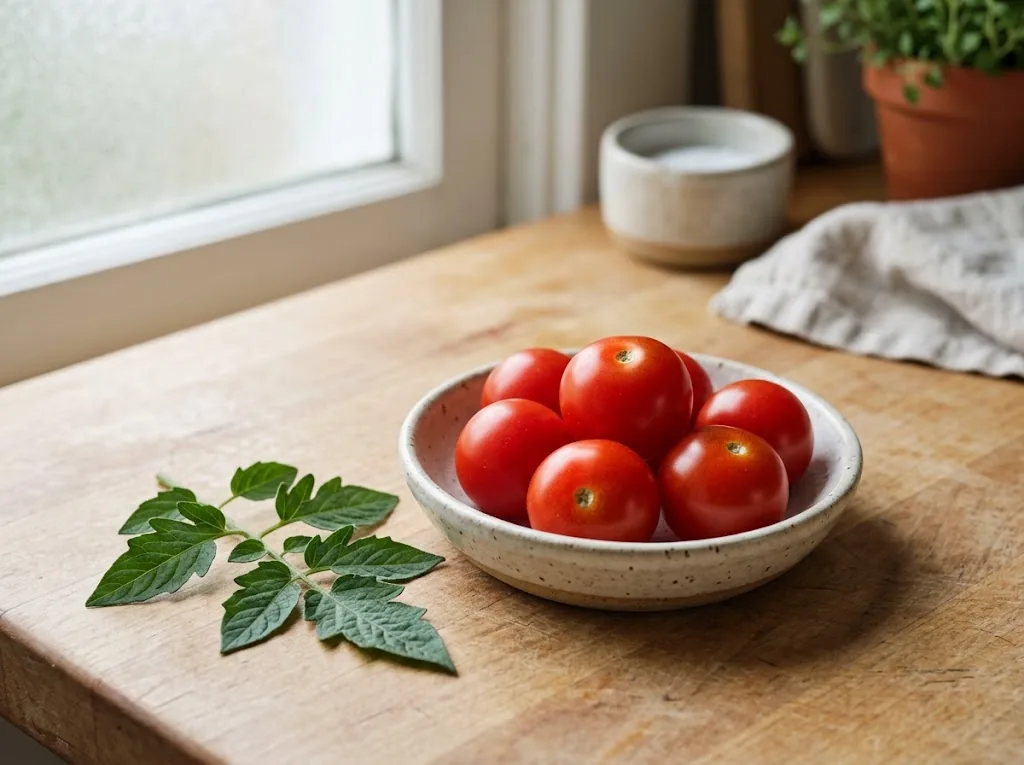
If you want a larger tomato for sandwiches or thick slices, compare this compact cherry type with Boxcar Willie tomatoes, which produce much larger tomatoes. The appeal here is scale: a modest plant, small red tomatoes, and a harvest that can be used fresh without slicing.
