
Reach for the wrong dried chili and the dish still works, but the flavor flattens. A salsa that should taste like raisins and smoke turns grassy. A mole meant to be deep and round goes thin. The dried pod you pick sets the floor and the ceiling of the dish, and most home cooks only ever meet a handful of them.
This guide covers the dried chile peppers you are most likely to find in a Mexican market, a Latin grocery, or a well-stocked spice aisle in the United States. Each entry gives shape, color, flavor, heat, and the dishes it suits best. It starts with the Mexican trinity behind most adobo, mole, and traditional Mexican dishes, then moves through smoky and earthy pods like mulato and cascabel, hot finishers, smoked chipotle styles, and mild New Mexican and California chiles. It ends with practical notes on substitution, shopping, and storage.
Why dried chilies taste different from fresh peppers
Drying a fresh chili does three things at once. It concentrates the sugars, so a fruity fresh pod becomes raisiny and almost prune-like. It drops the water content, which lets the flesh break down into a paste or sauce without dilution. And it changes how the same variety cooks, because a Capsicum annuum pod that snaps bright and grassy when fresh turns earthy and a little smoky when dried.
Drying is also a way to preserve peppers across seasons, which is why traditional Mexican cooks built such a deep bench of dried chile varieties, and it is a large part of what defines Mexican cuisine. It is also why one chili pepper can carry two names. Pasilla is the dried version of chilaca. Chipotle is a smoke-dried jalapeno, and morita and meco are two different ways to make it. A fresh chile and its dried form are not interchangeable in a recipe, and the names reflect that.
How to read a dried chili
Before you commit to a recipe, look at the pod in your hand. Color tells you a lot, and skin texture separates close cousins. Cascabel has a tight, smooth surface that earns its rattle name when you shake it, while pasilla is long, dark, and deeply wrinkled. Aroma is the second clue. A good dried chile smells like the dish it wants to be in. If the pod smells dusty, it has been sitting on the shelf too long.
Toasting brings that aroma forward. Heat a dry skillet or comal over moderate heat, lay the pods in one layer, and press each one flat with tongs for 10 to 15 seconds per side until it puffs slightly and smells toasted, not burnt. Then soak in hot water for 15 to 20 minutes until soft. From there they blend into sauces, soups, and salsas with very little work.
Heat and flavor quick reference
Heat level is the first thing most cooks ask about, so start here. Scoville heat units (SHU) measure the capsaicin in a chili. The rating of a pod does not change when it dries, but a pound of dried pods packs more heat than a pound of fresh ones, because the water is gone. The ranges below are ranges on purpose, since one harvest can run mild while the next runs hot. They line up with the pod-by-pod figures in KnowThePepper’s guide to the trinity and Spices Inc’s dried chile heat chart, and the Chile Pepper Institute at New Mexico State University explains how heat is measured.
- Mild, roughly 500 to 3,000 SHU: ancho, pasilla, mulato, cascabel, New Mexican, and California. Earthy flavor, raisin, sweet.
- Medium heat, roughly 2,500 to 10,000 SHU: the dried mirasol and both chipotle styles. Berry, tannic, smoky.
- Hot, roughly 15,000 to 60,000 SHU: árbol, japones, and pequin, used by the piece, not by the handful. Spicy flavor with bright citrus notes.
The Mexican chiles that anchor most sauces
These three pods anchor more Mexican cooking than any others. They are the base of a traditional red mole, the body of birria, the depth in a pot of posole, and the heart of most slow-cooked stews. Buy them in small bags until you know which brands you trust, then buy by the pound.
Ancho chile: the dried poblano
Ancho is a fully ripe poblano pepper that has been dried, so it is a deep brick-red to almost black pod, 10 to 15 cm long, with a broad shoulder and a flat triangular shape. The skin is a little wrinkled, and the aroma is raisiny, with a note of dark chocolate and a little tobacco. Heat sits in the mild range, around 1,000 to 2,000 Scoville heat units, so the flavor does the work, not the burn.

Use it as the backbone of red mole, of the sauce for chile rellenos when you want a darker color, of birria, and of any bean or meat stew that needs depth without heat. Toast two or three pods for most weeknight recipes, soak in hot water for 15 minutes, then blend with garlic, onion, broth, and a little of the soaking liquid. It is also a common base for chile powder blends, so a small bag of pods in your pantry gives you better flavor than a jar of pre-ground powder.
If you want the wider picture of how these pods fit into everyday cooking, start with our overview of cooking with chili.
Guajillo chile: the dried mirasol
This dried mirasol is a deep red, slightly shiny pod, 10 to 15 cm long, with thin flesh and a smooth surface. The fresh form, mirasol, gets its name from how the pods point up toward the sun on the plant. Heat runs around 2,500 to 5,000 Scoville heat units, so it sits on the edge of medium, with a clear berry-like flavor and a tannic edge that reads a little like black tea.
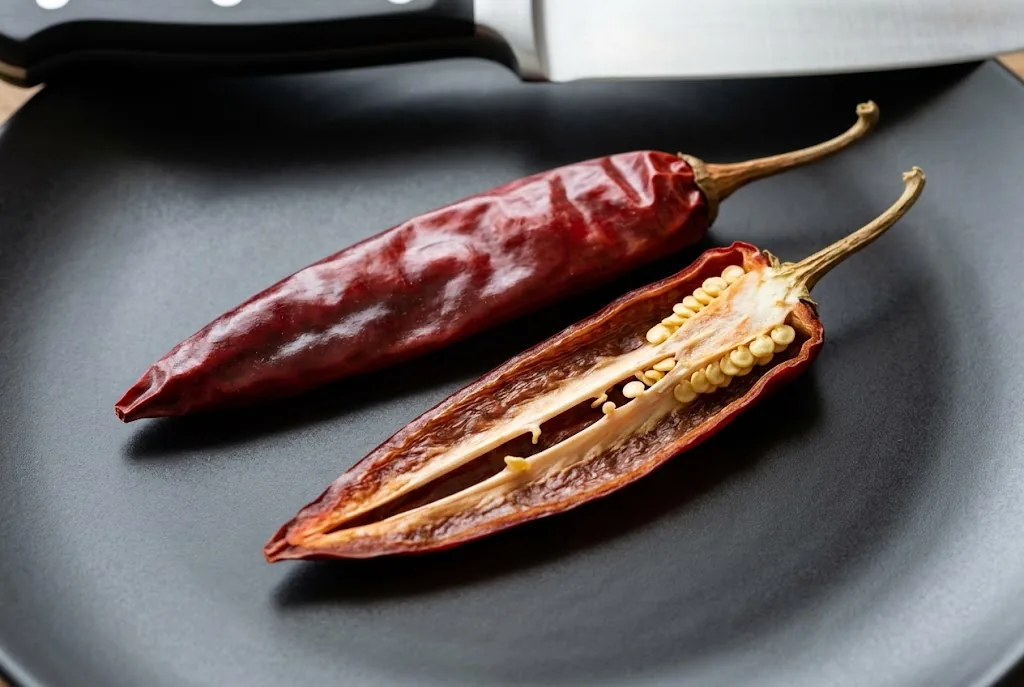
This is the workhorse of red enchilada sauce, tamale sauce, salsa for carnitas, and the bright note in pozole. It blends smoothly and does not need to be deseeded, although removing the seeds keeps the heat low if you want a milder sauce. Toast one or two pods per cup of sauce, soak for 15 minutes, then blend with garlic, tomato, broth, and a splash of vinegar.
For a full guide to this single chile, see our Guajillo pepper profile, which covers the fresh mirasol form, growing notes, and cooking uses.
Pasilla chile: the dried chilaca
Pasilla is the longest of the trinity, 15 to 25 cm, with a dark, almost black wrinkled skin and a flavor of prune, raisin, cocoa, and a little smoke. The name means little raisin. Heat sits around 1,000 to 2,500 Scoville heat units. Fresh pasilla is sold as chilaca, a long dark green pod that looks nothing like the dried version. Do not confuse it with pasilla de Oaxaca, a separate smoked chile that runs roughly 15,000 to 25,000 SHU.
Use the dried pasilla when you want a sauce with depth rather than brightness. It is a key chile in mole and the right choice for a dark, smoky enchilada sauce. Because the flavor is strong and a little bitter if you use too much, blend one pasilla with two of these mirasol pods as a starting ratio. A well-built pasilla sauce should taste like cocoa and dried fruit, with a clean finish.
Smoky and earthy: mulato, cascabel, and their cousins
These are the chiles that bring the second register of Mexican cooking. Smoke without chipotle, dark color, and flavors that read as leather, tobacco, and dried fruit. They overlap with the trinity in some dishes, especially mole, but each one has a personality that does not substitute cleanly.
Mulato: the darker dried pod
Mulato looks a lot like ancho at first glance, but it is wider, a little flatter, and dark brown rather than brick red. It is also dried from a poblano-type pepper, but a different cultivar, so the two are cousins, not the same pod at different ripeness. Heat sits around 1,000 to 3,000 Scoville heat units, depending on the source, and the flavor is a step smokier and more chocolate-leaning, with less sweetness.
Use mulato in mole, where its smoky depth rounds out the brighter notes of the trinity, and in any sauce where you want a darker color without more heat. Many cooks blend mulato and ancho in equal parts for the body of a mole.
Cascabel: the rattling dried ball
Cascabel is small, round, 3 to 4 cm across, with a smooth mahogany-red skin and seeds that rattle when you shake it, which is exactly where the name comes from. Heat is mild, around 1,000 to 2,500 Scoville heat units, with a flavor that is tannic, nutty, and a little earthy. It holds its shape when toasted, which makes it good crumbled on top of soups or ground into a dry rub.
Use cascabel in salsa cascabel, in bean dishes where you want a toasty note, and as a finisher on roasted vegetables. The round shape also makes it a good visual on the plate, so use it whole when you want the dish to look like itself.
Hot finishers: chile de árbol and pequin
These small, thin chiles are not used by the handful. They are the pods you reach for when a sauce needs a clean burn at the end, a dry crunch on a taco, or the bright red oil that floats on a bowl of ramen or a plate of aguachile. Their heat is real, but the flavor is not just heat. Árbol is grassy and a little nutty, japones is similar with a sharper edge, and pequin is smoky and fruity with a citrus note.
Árbol is a slender curved pod, 5 to 8 cm long, bright red when ripe and usually sold dried with the stem still attached. Heat runs 15,000 to 30,000 Scoville heat units, which is several times hotter than a jalapeno, but the flavor has real character. Toast two or three pods in oil for a salsa, blend with tomatillos for a bright red table salsa, or steep in vinegar for a hot sauce that holds its color. The trap with this hot chile is using too many. One or two pods in a salsa for four people is plenty. If you want more heat, add fresh chiles rather than more dried pods.
Japones is a slightly larger dried red pod with the same 15,000 to 30,000 SHU range as árbol and a grassy flavor. Pequin, also called piquin or chiltepin in its wild form, is a tiny round pod, about 1 cm, with a smoky, citrusy flavor and a sharper heat of roughly 30,000 to 60,000 SHU. Both are used by the piece, never by the handful, and they are the chiles you see crumbled over botanas or floating in a bottle of hot sauce on a Mexican table. They keep their red color in oil and vinegar, which is why they are the base of many red salsas served at room temperature.
Smoked chiles: chipotle morita and chipotle meco
A chipotle is a ripe red jalapeno that has been smoke-dried, and there are two main styles in the United States. Both are smoked, but they are not the same chile. The pods are smoked low and slow over hardwood, which gives them their characteristic smoky flavor and dense texture. The smoke layer changes how they cook, since it adds a savory backbone that sits well next to slow-braised meats and bean stews.
Morita is the smaller, darker chipotle, smoked for a shorter time and sold with a little give in the pod. The smoke flavor is bright and a little sharp, the heat sits around 2,500 to 10,000 Scoville heat units, and the pod keeps a hint of the underlying berry flavor of the jalapeno. This is the chipotle most often packed in adobo sauce in the small cans you find in the Latin aisle. Use it when you want smoke in the background, as in a quick taco salsa, a pot of pinto beans, or a marinade for grilled chicken. The canned version in adobo is a fine shortcut, although the dried pods give a deeper flavor when you have time to soak and blend them yourself.
Meco is the larger, tan-brown chipotle, smoked longer until the flesh is dry and the flavor goes deeper and earthier, more leather than smoke. Heat is similar to morita, but the smoke sits in the dish rather than floating on top of it. Meco is the chipotle you want in a long-cooked stew, a pot of barbacoa, or any dish that needs hours on the stove.
Mild chiles with regional identity: New Mexican and California
These two chiles look almost identical on the shelf: smooth, red, long, mild. They come from different parts of the Southwest and have different stories, but they cook in similar ways. Both are widely used in Tex-Mex and Southwestern food, where they deliver fruity flavor and a mild kick of heat. The dried Anaheim is the closest relative of the California pod, a deep brick-red with a soft earthy flavor that pairs well with beans and stews.
New Mexican chiles are the dried pods of the chile developed at New Mexico State University, mostly the NuMex varieties grown in the Hatch Valley and along the Rio Grande. They run 5 to 8 inches long, with a deep red color and a smooth, slightly glossy skin. Heat is mild, around 500 to 2,000 Scoville heat units depending on the crop year, with a fruity, slightly earthy flavor. This is the chile that defines New Mexican red and green chile sauce, the base of every plate of enchiladas served in Santa Fe and Albuquerque. Grind it into red chile powder, simmer it into sauce, or rehydrate it for stuffed peppers.
California chile is the milder cousin, often from the Anaheim family, with thinner flesh and a slightly brighter, almost grassy flavor. Heat runs 500 to 2,500 Scoville heat units. It goes into many commercial chili powder blends, because it carries color and flavor without much burn, so the blend stays family-friendly. Use it when you want a smooth red color and a soft flavor, as in a pot of beans, a Tex-Mex chili, or a homemade chili powder blend where you control the heat from other sources.
How to use dried chilies in a dish
Most dried pods go through the same three-step path: toast, soak, blend. The order matters. Toasting brings out the aroma and adds a small amount of char. Soaking softens the flesh so the blender can catch it. Blending is where the dish becomes itself.
- Toast. Heat a dry skillet or comal over moderate heat. Lay the pods in a single layer and press each one flat with tongs for 10 to 15 seconds per side, until the skin puffs and you smell the chile. Do not let them blacken, since burnt skin turns the sauce bitter.
- Soak. Transfer the toasted pods to a bowl and cover with hot water for 15 to 20 minutes. They should be soft and pliable when you pinch them. Reserve the soaking liquid, since it carries flavor and color.
- Blend. Drain the pods and discard the stems. Blend with garlic, onion, a splash of the soaking liquid, broth or tomato, and salt to taste. Strain through a fine mesh for a smooth sauce, or leave the texture as is for a rustic salsa.
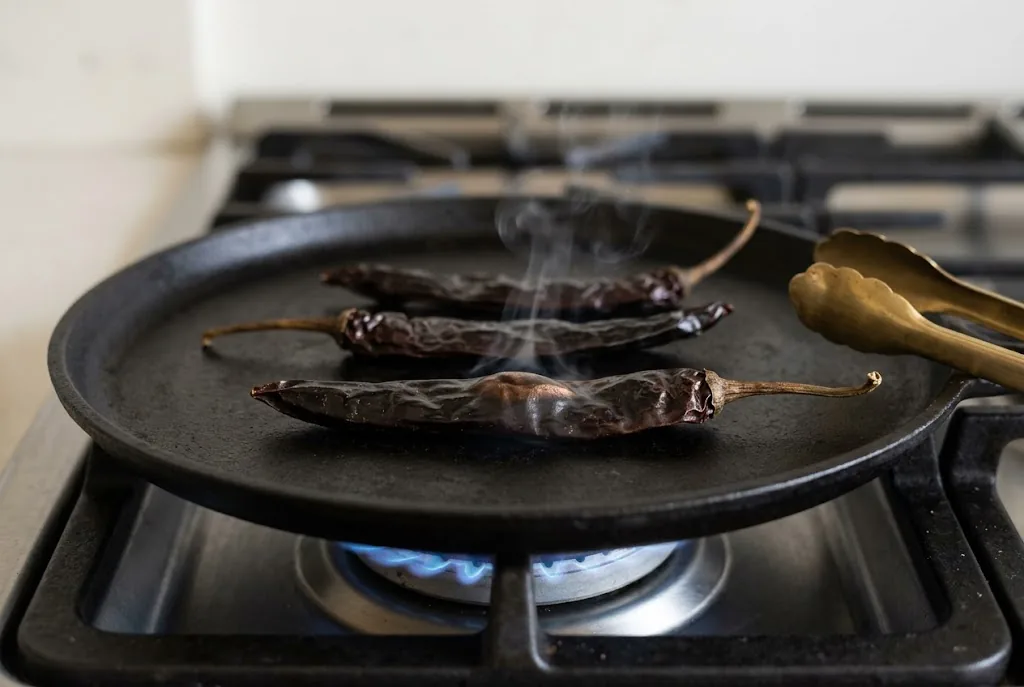
For a deeper walk through rehydrating and toasting, see our step-by-step guide to how to rehydrate dried chilies.

Substitutions when you only have a few
Real kitchens do not run with full shelves. The point of knowing the substitutions is not to fool anyone, but to get a good result with what is on hand. A few that work without much compromise: ancho and mulato can stand in for each other in mole, with mulato giving a darker, smokier note and ancho a sweeter one. Guajillo and pasilla can swap one for one in a red sauce, with the mirasol pod bringing berry and pasilla bringing cocoa. Cascabel and chipotle meco can substitute in bean dishes, with chipotle adding more smoke. New Mexican and California can fill in for each other in chili powder blends, with New Mexican running a bit hotter. Árbol can replace pequin or japones in hot salsas when you need a clean burn, although the flavor is grassier and less smoky.
Two swaps that do not work well. Do not use mirasol pods or pasilla in place of chipotle in adobo, since you will lose the smoke. And do not use árbol where a recipe calls for a mild dried pepper, since the heat will walk all over the dish.
Shopping and storage
Buy dried chiles from a market that turns over stock quickly. Latin markets and Mexican grocery stores in the United States usually have the freshest supply, since the dried pods move through the kitchen faster. A supermarket spice aisle is fine for staples like chipotle in adobo, but rarer chiles like mulato, pasilla, and cascabel are usually better at a Latin market.
Look for pods that are flexible, not brittle. A brittle pod has lost moisture unevenly and will often taste dusty. The color should be deep and even, with no white or gray patches. Mold on the surface is a sign the pod has been stored wet, and it belongs in the trash, not the pot.
Storage is straightforward. Keep dried chiles in an airtight container, in a cool, dark place, away from the stove. Whole pods keep their flavor for 1 to 2 years if stored well. Ground dried chiles lose aroma faster, so grind them in small batches. A small bag of pre-ground chile powder in your pantry for weeknight cooking is fine, but the deeper flavor always comes from pods you toast and grind yourself.
One practical rule: if a dried chile has lost its smell, it has lost its flavor. There is no amount of soaking that will bring it back. Compost it and buy a fresh bag.

The short list for a starter pantry
If you are building a Mexican dried chile pantry from scratch, a reasonable first set of bags covers the dishes most home cooks actually make. The trinity for the base of red sauces, mole, and chili. Cascabel for salsa and bean dishes. Chipotle in adobo for weeknight tacos and beans. Árbol for hot table salsa. Mulato if you make mole often.
From there, add as your cooking grows. New Mexican if you make red chile sauce at home. California if you grind your own chili powder. Pequin and japones if you keep a hot sauce on the table. Most cooks end up with four or five bags on the shelf, and that is plenty.
