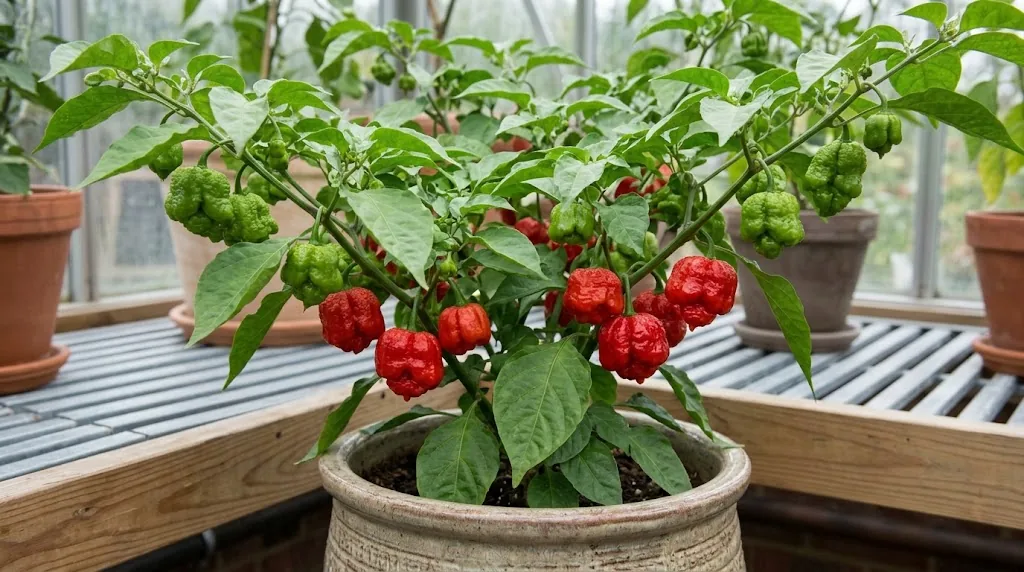
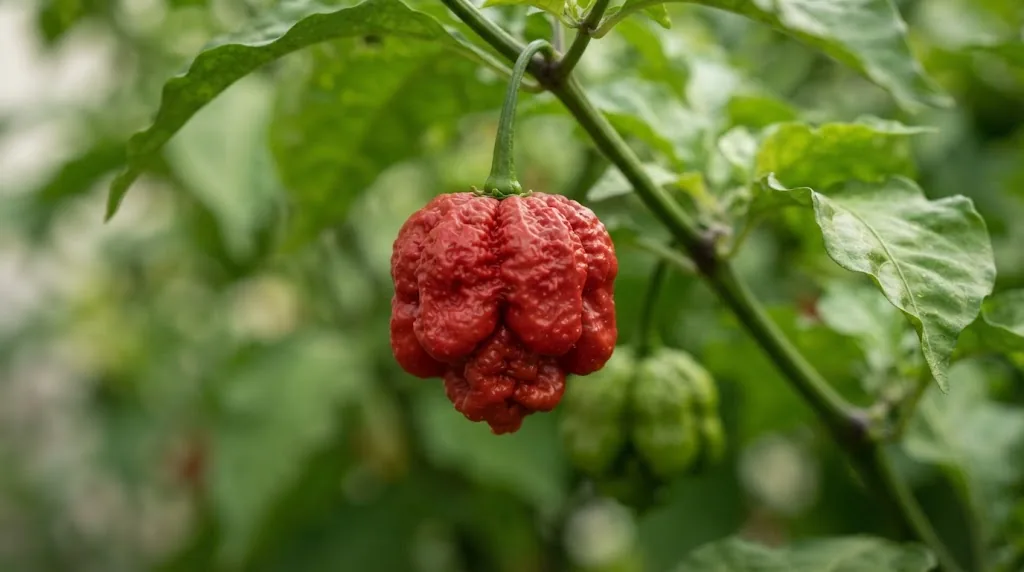
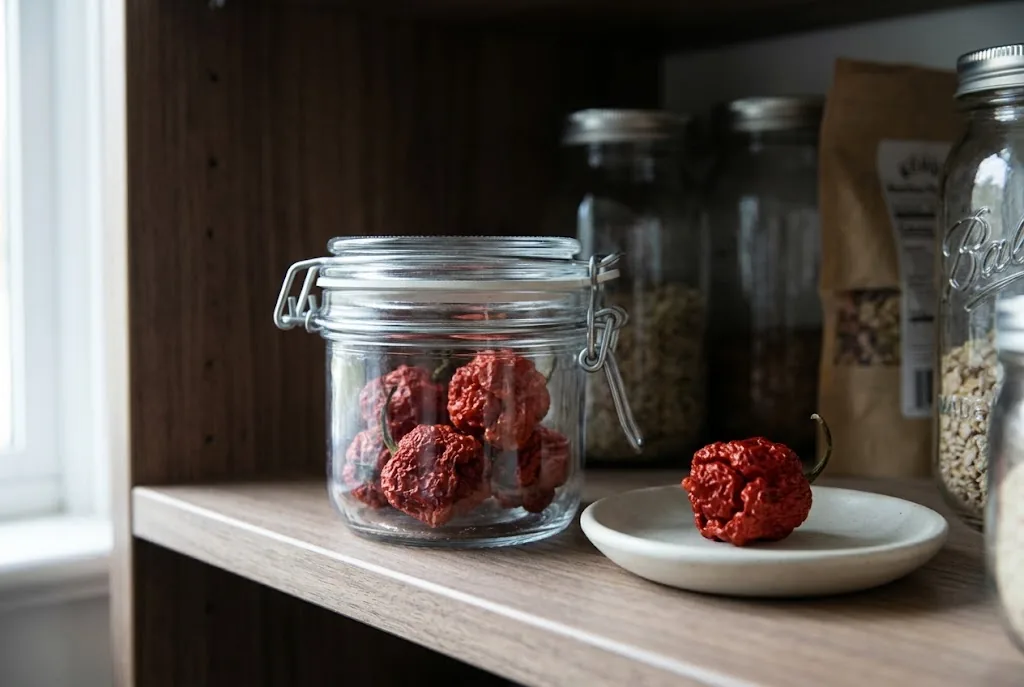
A ripe 7 Pot Brain Strain is hard to mistake: the red, deeply puckered fruit looks almost folded, and its heat is intense enough that a small piece can season a whole pot. This 7 Pot pepper is a super hot member of the Trinidadian group. Treat seller heat figures as estimates, handle the fruit carefully, and grow it as a long-season tropical pepper.
What is this pepper?
7 Pot Brain Strain is a red-fruited selection in the Trinidadian 7 Pot group, identified as Capsicum chinense by pepper suppliers. The “brain strain” part describes the fruit’s knobby, brain-like folds, and Reimer Seeds says the “7 Pot” part refers to its reputed ability to heat seven pots of stew. A brain strain pepper is sometimes sold as Red Scotch Brain Strain or 7 Pot Strain, so check the packet description when buying. In broader references, the related cultivars are often grouped as Trinidad 7 Pot peppers.
Pepper Joe’s account credits a North Carolina grower, David Capiello, with selecting the named type from seed obtained in Trinidad and Tobago around 2010. The company describes selective breeding rather than a deliberate hybrid cross. Another seller spells the surname Cappiello, which is one reason to treat this as a trade-history account, not a formal cultivar release record. Pepper Joe’s description provides its version of the story.
How hot is it on the Scoville scale?
Pepper suppliers report roughly 1,000,000 to 1,350,000 Scoville heat units (SHU). Pepper Joe’s lists that range, while Reimer Seeds gives a single estimate of 1,250,000 Scoville units. Those are seller figures, not a guarantee for every fruit or a documented official record. The heat level may vary among plants and even among fruit from one plant. Growing conditions, plant line, and fruit maturity can all affect the heat a grower experiences.
For context, Reimer Seeds says the strain resembles Trinidad Moruga Scorpion peppers, and sellers often list it near the Carolina Reaper, but these are not head-to-head tests. No official heat record is claimed for this variety, and these estimates do not establish it as the hottest pepper.
Gardeners who want another Caribbean superhot can compare it with Dorset Naga peppers; that page covers a different C. chinense type and its own history.
What does the fruit look like and taste like?
The fruit is usually squat and rounded, with pronounced wrinkles, bumps, and folds. A single pod may look deeply folded, but pod shape varies among plants and suppliers. Pepper Joe’s lists the fruit at about 2 inches long, and Reimer Seeds describes it as roughly 2 inches long by 2 inches wide. Reimer compares the fruit with a very hot habanero in shape, while its folds and bumps set it apart from a smooth pepper. Immature fruits are green and ripen red; individual plants can differ in shape and size.
Growers and sellers describe a fruity, sometimes smoky flavor beneath the heat. This flavor profile is easier to notice in a large dish than when the pepper is tasted alone. A tiny amount mixed through a stew or spicy recipe gives more control than biting into a raw fruit.
How to grow the plant
Plan for a long, warm season. Seed suppliers list 100 or more days to maturity, though the starting point differs by seller and a cool summer can delay ripe fruit. In short-season areas, start indoors early enough to raise sturdy transplants before nights become reliably warm. The University of Minnesota Extension’s pepper guide recommends warm germination conditions and advises checking the selected packet’s days-to-harvest estimate.
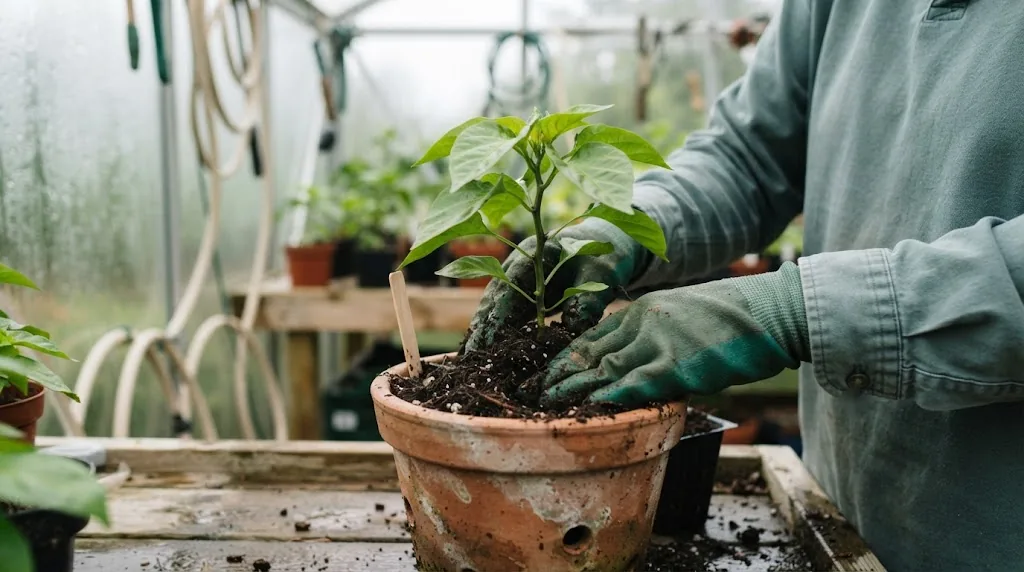
Sow pepper seeds in a clean, fine-textured germination mix and keep it evenly moist, not waterlogged. A heat mat can help maintain warm media while they germinate. Once seedlings emerge, give them bright light and enough space for airflow. Harden them off gradually before planting outdoors.
Choose a sunny place with fertile, well-drained soil. Set plants outside only after frost danger has passed and the soil has warmed. In a cooler climate, a large container in a warm, sheltered position or a greenhouse can extend the season. Use a pot with drainage holes and a quality potting mix; container soil dries faster than a garden bed, so check it by touch and water when the upper layer begins to dry. Do not follow a fixed calendar if the weather or pot size changes how quickly it dries.
Keep the pepper plant evenly supplied with water while it flowers and carries fruit. Avoid leaving roots in saturated soil. Stake a heavily laden plant if branches begin to bend, and inspect leaves for pests before choosing any treatment. Utah State University Extension notes that peppers need sun and well-drained soil, and that fruit may take several weeks after flowering to reach full color. To compare it with milder types before you commit garden space, see our guide to the range of chili varieties.
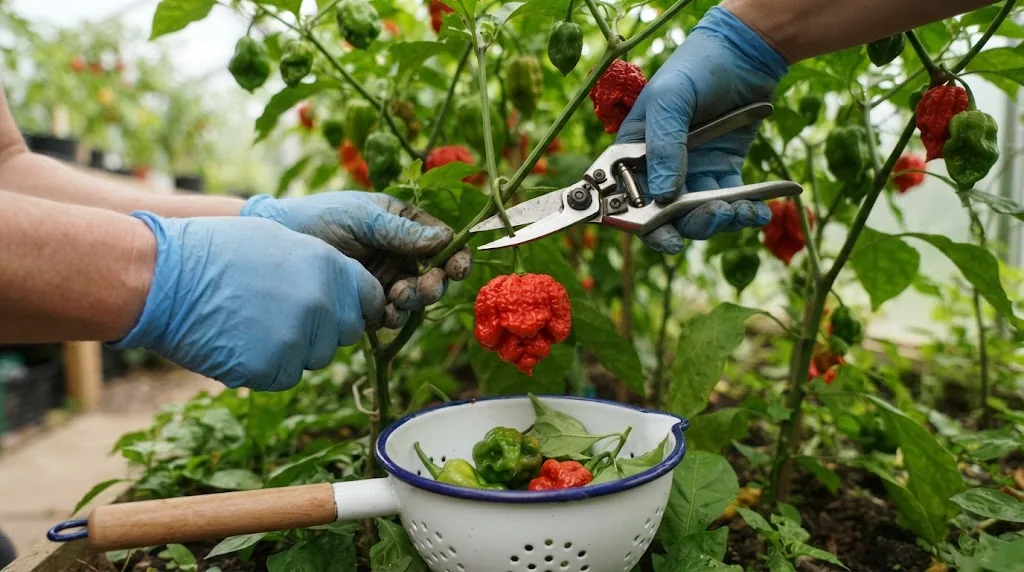
Harvest when the fruit has turned red and feels firm. Use clean snips rather than pulling, which can damage branches. Wear disposable or washable gloves while harvesting or cutting the fruits, keep hands away from your face, and wash tools and work surfaces after use. The National Capital Poison Center advises rinsing an affected eye with plenty of warm water; contact Poison Control or seek medical help if irritation is severe or does not ease.
How to handle, store, and preserve the fruits
Use gloves when cutting, seeding, or grinding the fruit, and avoid rubbing your eyes. If you handle fruits bare-handed by mistake, wash with soap and water before touching your face. When cooking, add a small measured amount, ventilate the room, and taste the finished dish only after it has been stirred thoroughly. Keep fresh fruits in a labeled container away from children and anyone who may mistake them for a mild pepper.
Store whole fresh peppers in the refrigerator and use them while they remain firm and sound. For longer keeping, freeze them whole or chopped in a sealed freezer container. Drying is another option when fruits are fully mature and sound: use a food dehydrator or a tested drying method, then store completely dry peppers in an airtight container away from heat and light. Do not store homemade condiments, oils, or pickles at room temperature unless you are following a tested preservation recipe.
Ways to use the peppers
Use the pepper sparingly in chili, stew, beans, marinades, or hot sauce. A cook can add a small slice to a simmering pot and remove it before serving, or mince a little into a batch of condiment. Avoid blending a large quantity indoors without ventilation; fine particles and cooking vapors can irritate eyes and airways. Label any preserved product clearly, since a very small spoonful may be enough to heat a serving.
If you want the fruity flavor with less fire, use a much smaller piece of this hot pepper and remove it before serving, or choose one of the many milder pepper varieties.
Those who want a gentler option can explore Hungarian Hot Wax peppers, a much milder pepper.
At a glance
- Species: Capsicum chinense, as identified by pepper suppliers.
- Ripe color: Red; immature fruit is green.
- Fruit: Rounded, bumpy, and deeply wrinkled, often about 2 inches.
- Reported heat: Seller estimates differ; individual fruit varies.
- Growing season: Long and warm; check the days-to-harvest estimate for the plant line you buy.
- Best use: Small amounts in condiments, stews, and other dishes where you can control the heat.
