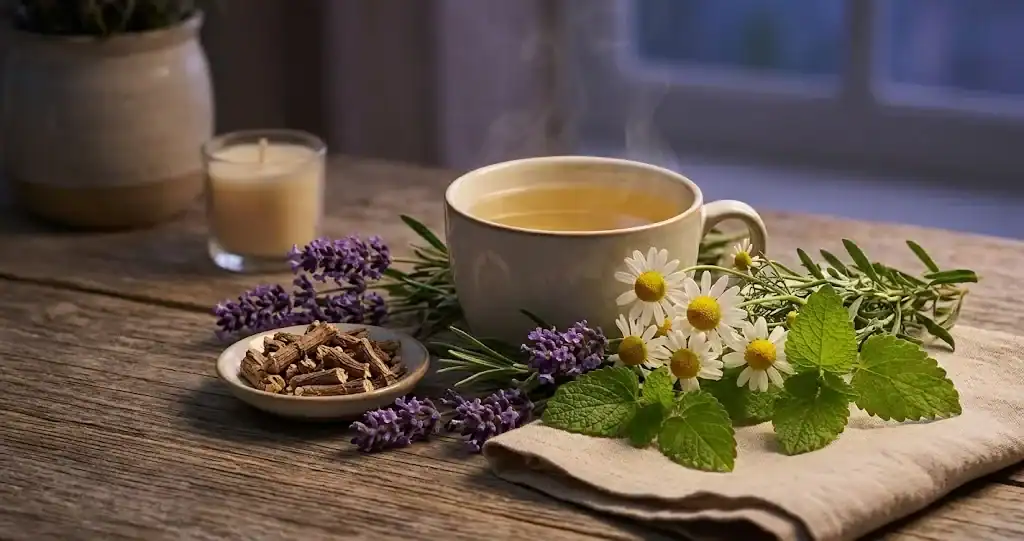
Many herbs are sold as sleep aids, but a traditional use or a calming scent is not the same as proven treatment for insomnia. The evidence is mixed, and the product, dose, and person using it all matter. This guide keeps the original seven herbs, explains what is known, and puts safety first.

What to know before trying an herb for sleep
Herbs are not a substitute for an assessment of ongoing sleep problems. Chronic insomnia has an established clinical treatment, cognitive behavioral therapy for insomnia, or CBT-I. The American Academy of Sleep Medicine gives CBT-I its strongest recommendation for adults with chronic insomnia. Read the AASM guideline.
If sleep trouble is persistent, worsening, or affects your daytime safety, ask a clinician for help rather than self-treating for months. Talk with a pharmacist or clinician before using a concentrated herb product if you take medication, have a chronic condition, are preparing for surgery, or are pregnant or breastfeeding. The safety of many herbal products in pregnancy and breastfeeding is not well established.
Valerian root

Valerian is widely marketed for sleep, but studies have produced inconsistent results. The American Academy of Sleep Medicine recommends against valerian for chronic insomnia in adults. NCCIH’s valerian review also notes that long-term safety is unknown.
Do not combine valerian with alcohol, benzodiazepines, sleep medicines, opioids, antihistamines, or other sedatives without medical advice. Reported concerns include drowsiness and withdrawal-type symptoms after abrupt discontinuation following chronic use. Rare liver injury reports have also involved valerian, often alongside other herbs.
Chamomile

Chamomile tea is a familiar evening drink, but there is very little evidence that chamomile improves insomnia. Tea in food-like amounts is generally considered low risk for many adults, but concentrated supplements are different products. NCCIH’s chamomile information notes possible interactions with warfarin, medicines processed by the liver, and sedatives.
Chamomile belongs to the Asteraceae family. Avoid it or seek medical advice first if you have reacted to ragweed, daisies, chrysanthemums, or marigolds. Pregnancy and breastfeeding safety data are limited.
Passionflower

Small studies suggest oral passionflower may improve total sleep time in adults with insomnia, but results for falling asleep and staying asleep are mixed. NCCIH’s passionflower review says more evidence is needed.
Passionflower can cause drowsiness, dizziness, or confusion. Do not use it during pregnancy, and ask a clinician before using it while breastfeeding. It may slow the nervous system too much with anesthesia-related medicines, so tell your surgical team about it and do not use it before surgery unless they advise otherwise.
Lavender

Lavender’s scent is popular in baths, sachets, and aromatherapy. It is still unclear whether lavender aromatherapy improves sleep quality or insomnia. NCCIH’s lavender review advises that aromatherapy may cause headache or coughing and that topical products can cause allergic skin reactions.
Do not swallow essential oil unless a qualified clinician has advised a specific product. Oral lavender products and concentrated preparations may interact with sedative drugs or herbs. Pregnancy and breastfeeding safety data are limited.
Hops

Hops are best known for brewing, and they also appear in some sleep products. A review of valerian and hops studies found signals of benefit in some sleep measures, but major differences between studies meant the authors could not recommend these products confidently for primary insomnia. Read the review.
That uncertainty is a good reason not to treat hops as a replacement for insomnia care or to add it to alcohol. If you are considering a hops-containing supplement, check the full ingredient list with a pharmacist, especially when you use any medicine that causes drowsiness.
Lemon balm

Lemon balm is a mint-family herb often used in teas and blends. Human studies offer early signals for sleep quality, but a recent review concluded that more robust trials are needed. Read the review of lemon balm and sleep quality. That is not enough to promise that tea, capsules, or blends will treat insomnia.
Choose food or tea forms over concentrated products when that fits your routine, and discuss supplements with a clinician if you take medicines, have a health condition, or are pregnant or breastfeeding.
Magnolia bark

Magnolia bark is sold as an extract in some wellness products. This review does not recommend it for sleep because a reliable human evidence source for that use could not be verified for this update. Do not assume that a traditional use makes a concentrated extract safe alongside medicines or in pregnancy or breastfeeding.
Natural sleep aids are not interchangeable
Natural herbs for sleep are often grouped together, but each product has a different evidence base and safety profile. A cup of chamomile tea, a valerian root capsule, a lavender essential oil, and a multi-herb sleep aid are not equivalent. A blend can also make it harder to tell which ingredient caused benefit or a side effect.
Melatonin is also not an herb. It is a hormone sold as a supplement, and it should not be treated as part of the same remedy category. NCCIH notes that evidence and safety questions differ across sleep products, including herbs, melatonin, and aromatherapy. Read NCCIH’s overview of sleep disorders and complementary approaches.
Tea, extracts, and essential oils are different products
A tea is a food-like preparation, while an extract or capsule may deliver a more concentrated dose. An essential oil is another category again. A product labeled natural sleep aid can contain several herbs, added melatonin, or other ingredients, so read the complete label before you use it.
Do not assume that a product will help you fall asleep faster simply because it contains a familiar herb. For passionflower, the evidence on the time it takes to fall asleep and on staying asleep is mixed. For valerian and chamomile, evidence for insomnia remains inconclusive. A cautious choice is better than increasing the dose or combining several products when the first one does not work.
How to choose an herbal sleep remedy more safely
- Choose one product at a time so you can notice how it affects sleep quality and next-day alertness.
- Check whether the label includes a sedative herb, alcohol, melatonin, or other ingredients that may add to drowsiness.
- Ask a pharmacist about possible interactions before you use a supplement with prescription or over-the-counter medicine.
- Stop and seek medical advice if you develop an allergic reaction, confusion, marked drowsiness, or other unusual symptoms.
These steps can help reduce avoidable risk, but they do not turn a supplement into a treatment for sleep disorders. When poor sleep lasts for months, an assessment can identify problems such as chronic insomnia, medication effects, mood symptoms, or another health concern.
Common questions about herbs to help you sleep
What are the best herbs for sleep?
There is no single best herb for sleep. Valerian, chamomile, passionflower, lavender, hops, and lemon balm are all commonly discussed, but their evidence varies and is often limited. The best next step for persistent sleeplessness is not to keep switching products. It is to discuss the sleep pattern and possible causes with a clinician.
Can herbal sleep remedies improve sleep quality?
Some small studies suggest that certain preparations may improve sleep quality for some people, but results do not prove that every tea, capsule, or blend will help. Product formulation, dose, and the type of sleep issue all matter. Use claims such as may help improve sleep quality with caution, not as a promise of restful sleep.
Can herbs replace treatment for insomnia?
No. Chronic insomnia deserves assessment and evidence-based care. CBT-I addresses sleep patterns, thoughts, and behaviors that can keep insomnia going. An herb may be part of a personal evening routine, but it should not delay care when sleep issues persist or interfere with daytime life.
Use a safer next step
Start with the sleep problem, not a supplement shelf. A regular wind-down routine may feel helpful, but it does not replace assessment for chronic insomnia. If you want to try an herbal tea, use one product at a time, avoid mixing it with alcohol or sedating medicines, and stop if you notice an allergic reaction, unusual symptoms, or next-day impairment.
Bring the product label to a pharmacist or clinician if you have questions about ingredients or interactions. That conversation is especially important for supplements and extracts because products vary more than a simple cup of tea.