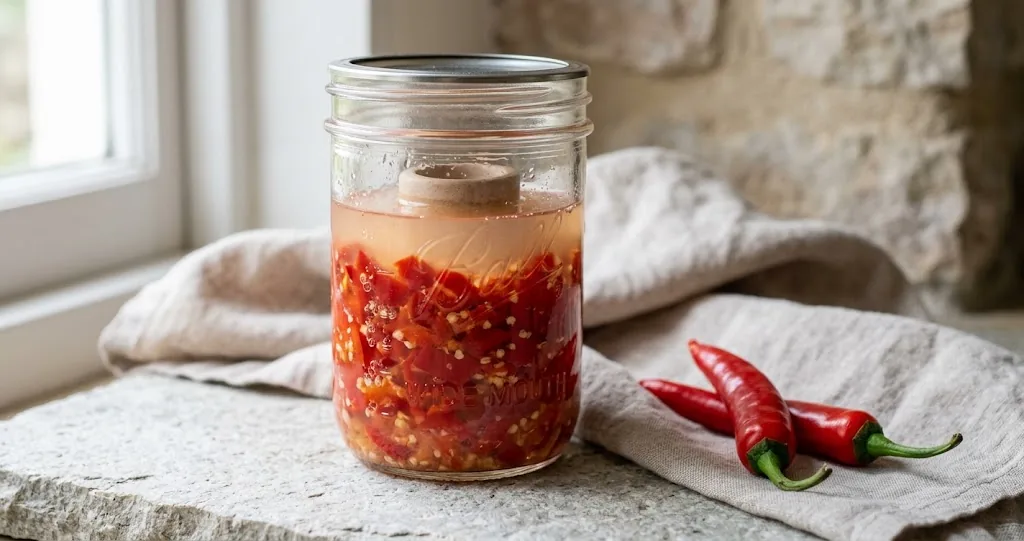
Fresh peppers, salt, water and time can become a tangy fermented hot sauce. Salt favors the microbes that turn some of the peppers’ sugars into acid. The result has a rounder flavor than a quick vinegar sauce, with its own gentle sourness. A safe home batch also needs clean equipment, a measured salt ratio, peppers kept under brine and an acidity check before bottling. University of Minnesota Extension’s fermentation guidance explains those controls.
You can make fermented hot sauce at home in a small, refrigerated batch from red chilies and garlic. A scale and pH meter matter more than a fancy bottle. If you want sauce today, try homemade hot sauce from fresh chilies instead.
What fermented hot sauce is, and why it tastes different
Lactic acid bacteria convert sugars in the peppers into lactic acid and release carbon dioxide. The sauce develops a sour, savory edge as the ferment progresses. A fresh sauce gets most of its sharpness from vinegar added at blending; fermented peppers develop acidity in the jar before blending. This fermentation process also changes aroma and texture. Neither style is automatically better. Use the quick version for a bright, immediate kick and this one when you want a softer tang.
Fermentation time alone cannot tell you when the peppers are ready: temperature, salt and the ingredients all affect the pace. Measure the pH as well as watching for bubbles. A bubbling jar may still be insufficiently acidic, and an already finished batch may have few visible bubbles.
Which peppers work best?
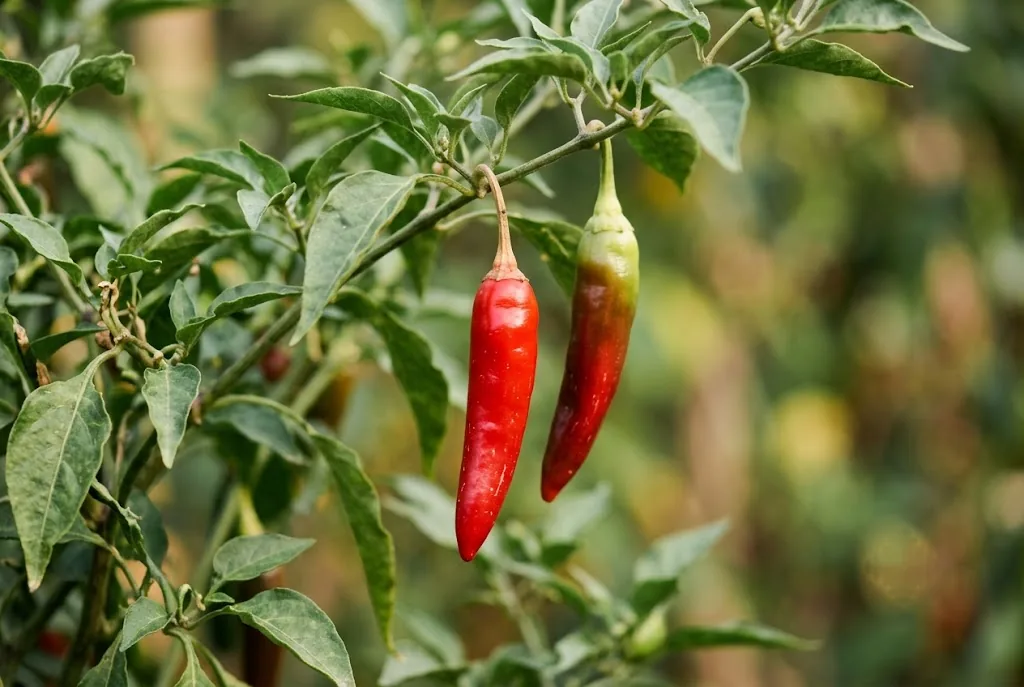
Choose ripe, sound peppers with the heat you enjoy. Red Fresno peppers make a medium-hot sauce with a fruity edge. Red jalapeños have a greener, earthier note even when ripe. Habaneros bring stronger heat and a tropical aroma, so combine a few with milder peppers if you want their flavor without a punishing bottle. A red bell pepper can soften the heat in a blend. Measure the total prepared weight after you choose your mix; the salt calculation uses that weight.
Very soft, bruised or moldy pods do not belong in the jar. Wash the peppers under cool running water and remove stems. You can leave the seeds for a rustic sauce or remove some for a smoother finish. The inner ribs carry much of a pepper’s heat, so trimming them also changes the result. Wear gloves for either job.
Fermented hot sauce recipe: ingredients and equipment
This recipe makes about 2 cups of sauce, depending on the peppers and how much brine you blend in. You will need:
- 500 g (about 1.1 lb) firm, ripe red chili peppers, washed and stemmed. Fresno peppers give moderate heat; a mix with red jalapeños also works.
- 2 peeled garlic cloves, about 10 g.
- Enough filtered or dechlorinated water to cover the peppers, usually about 200 g. Weigh the amount actually used.
- Canning or pickling salt equal to 2.5% of the combined weight of the prepared peppers, garlic and added water.
- Optional for flavor after fermentation: 1 to 2 tablespoons of commercially bottled vinegar labeled 5% acidity.
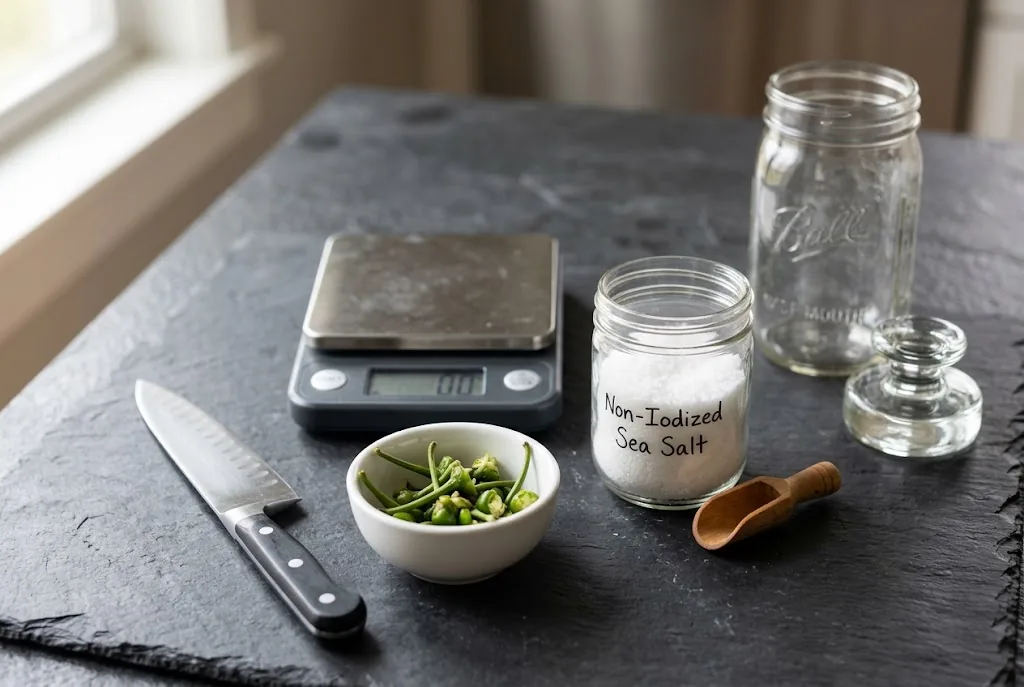
Use a clean wide-mouth mason jar large enough for the peppers, brine, a weight and headspace, plus a fermentation lid with an airlock, a kitchen scale, a glass or ceramic fermentation weight, clean bottles, and a food-grade pH meter suited to acidic foods. Wear gloves while cutting hot peppers and keep your hands away from your eyes. Use only sound produce; cut away stems and discard peppers with spoilage.
Do not put fruit, sweet potato or other low-acid additions into this first batch. They change the mixture and may change its fermentation. Once you understand the basic method, use a research-based recipe for a different mix rather than guessing at its salt or acid needs.
Why the salt calculation matters
Salt helps favor desirable bacteria while slowing unwanted organisms. Too much may slow the ferment so the pH does not fall; too little may allow spoilage. That is why this method weighs ingredients and added water instead of measuring salt by the spoon or salting only the pepper weight. Minnesota Extension also advises following measured proportions and monitoring pH.
How to make fermented hot sauce
Step 1: Calculate the salt and pack the jar
Weigh the prepared peppers and garlic in a bowl. Chop the peppers into even pieces. Put them in the clean jar, add enough water to cover, then weigh that water. Multiply the combined weight of peppers, garlic and water by 0.025 to find the salt in grams. For example, 500 g peppers + 10 g garlic + 200 g water = 710 g; 710 × 0.025 = 17.75 g, so weigh about 18 g salt. If your jar needs more water, recalculate before adding the salt. Never top up with plain water later, because that changes the salt concentration.
Dissolve the weighed salt in the measured water, then pour it back over the peppers. Hold all pepper pieces below the brine with the fermentation weight. Leave room above the liquid for bubbling; do not fill the jar to the rim. This measured ratio is a starting formulation for this small batch, not a guarantee that fermentation has succeeded. The pH check remains essential for this fermented food. For broader ways to use chilies, see our cooking with chili overview.
Step 2: Ferment with the peppers submerged
Fit the fermentation lid according to its instructions and set the jar on a tray in a dark place at about 68 to 72 F (20 to 22 C). Keep all pepper pieces below the brine throughout fermentation. An airlock lets carbon dioxide escape while limiting oxygen exposure. If using a different lidded vessel, release built-up gas briefly as its maker directs. Minnesota Extension favors this temperature range, warns that temperatures above 78 F (26 C) can encourage spoilage, and advises monitoring acidity.
Check the jar daily without leaving it open. Some bubbling and cloudiness are normal. The pace varies; do not assume a batch is safe after a set number of days. Minnesota Extension advises allowing roughly three to four weeks at its recommended temperature, then checking that bubbling has stopped and pH is 4.6 or lower. Cooler rooms may take longer. If bubbling has stopped but pH remains above 4.6, continue fermenting and recheck every one to two days. Do not blend or bottle a batch whose acidity you cannot verify.
Step 3: Check for spoilage and measure acidity
Use a clean sample of brine to measure pH with a calibrated food-grade meter, following the meter’s instructions. The target is pH 4.6 or lower. Sour smell and taste can help describe flavor, but neither proves safe acidity. If you see confirmed mold anywhere on the ferment, discard the entire batch. Do not skim mold and keep the peppers. UC Davis food safety guidance identifies mold as a failed fermentation.
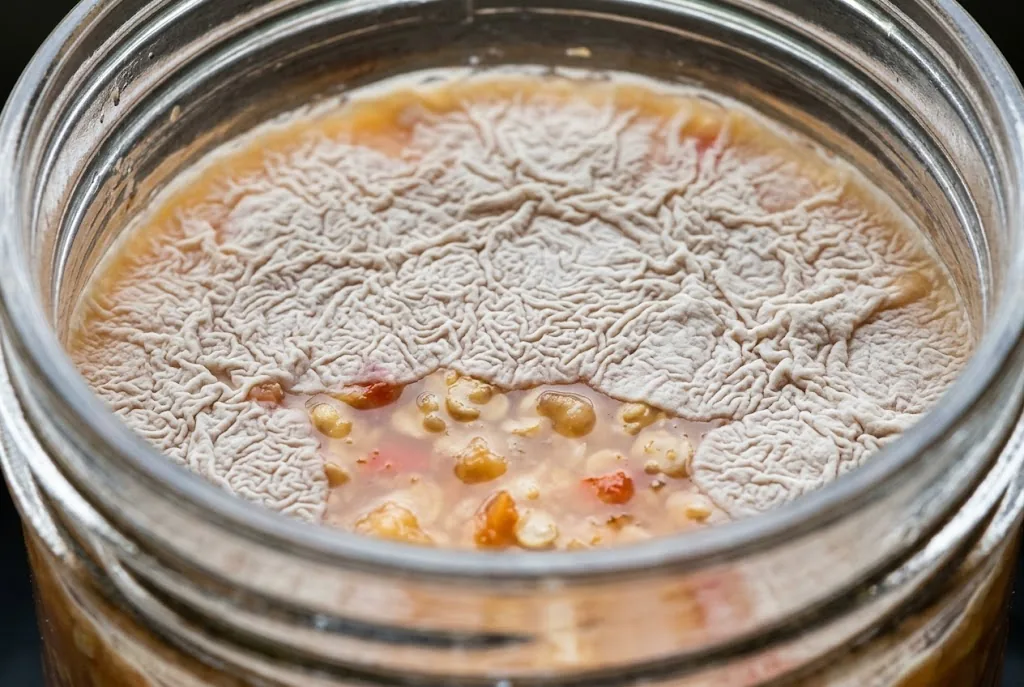
A thin, flat white film can be surface yeast, often called kahm yeast. It can spoil flavor and reduce acidity, so do not treat every white patch as harmless. If you cannot confidently distinguish it from mold, discard the batch. If you have identified surface yeast, remove it with a clean utensil, restore the peppers below the brine and check the pH. Do not add an unmeasured spoonful of salt or dilute the brine as a repair.
If bubbles never appear, check the room temperature, the lid and your original salt calculation. Do not try to restart an uncertain batch by adding plain water. A putrid smell, slimy texture or visible mold is a reason to discard it. UC Davis describes these warning signs.
A little cloudy brine is common while microbes are active. Color may fade as the peppers soften. Neither change confirms safe acidity. Keep using the meter, and clean the sampling utensil each time so you do not introduce debris into the jar.
Step 4: Blend and check the finished sauce
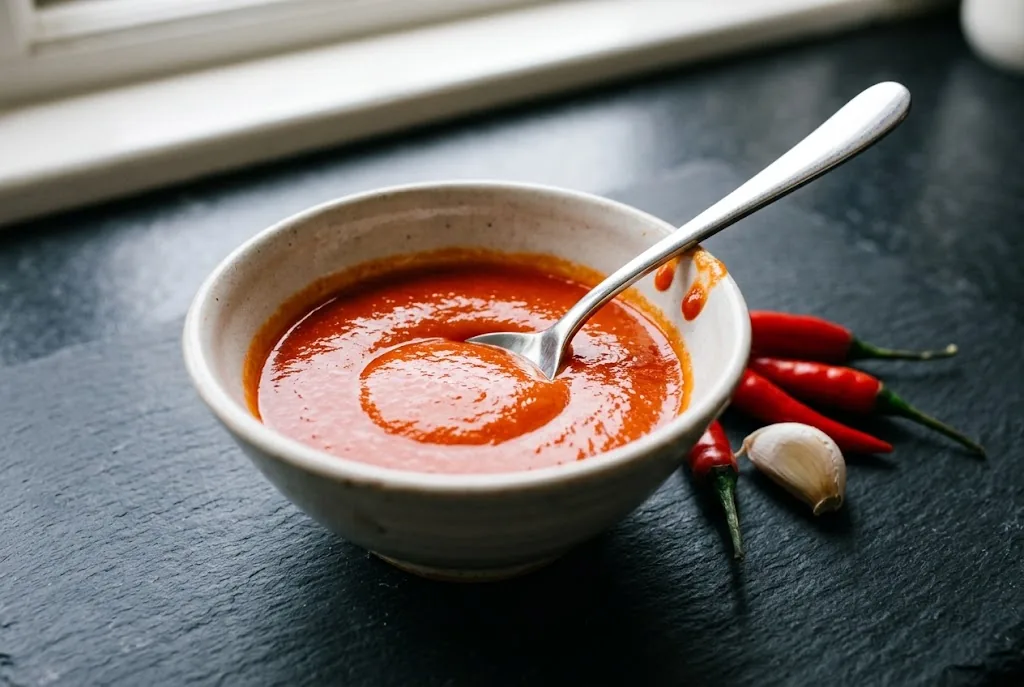
Once bubbling has stopped and the brine measures pH 4.6 or lower, transfer the peppers and garlic to a clean blender. Add enough of their leftover brine to make a pourable sauce, then blend until smooth. You can strain out skins and seeds for a thinner sauce. For a brighter flavor, add 1 tablespoon of bottled 5% vinegar, blend and taste; add the second tablespoon only if you want more tang. Vinegar here is a flavor choice, not a substitute for the fermentation check.
Measure the pH of the well-mixed finished sauce before bottling. The blended solids and any additions may change the reading. If it is above 4.6 or you cannot measure it reliably, do not bottle this as a stored sauce. Do not assume that an unmeasured splash of vinegar makes it safe. For a deeper explanation of salt, brine and fermenting whole peppers, see how to ferment chili peppers.
Step 5: Bottle and refrigerate
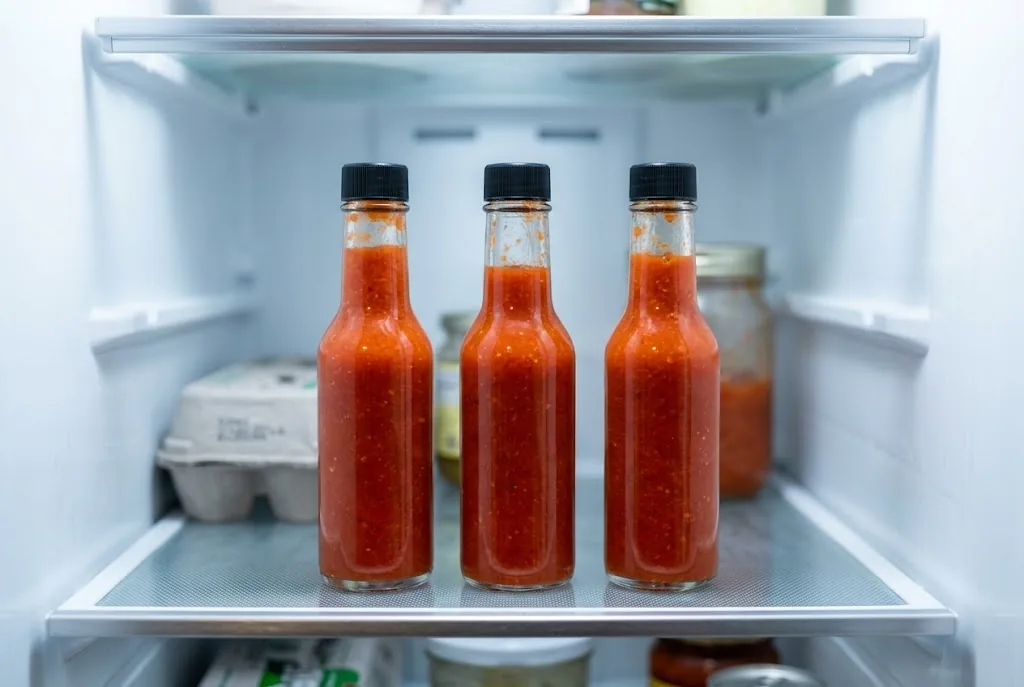
Pour the finished hot sauce into clean hot sauce bottles, leave a little headspace, cap and refrigerate promptly. Each sauce bottle belongs in the refrigerator. This is not a pantry preserve or a canning recipe. Keep it cold and use it within six months. Oregon State University Extension’s published recipe also calls for refrigeration and use within six months. Discard sauce with visible mold, a putrid smell or other signs of spoilage. Never taste suspect sauce to decide whether it is safe.
Do you need vinegar?
No. A successful pepper ferment makes its own acid. Vinegar can sharpen the flavor, but it cannot rescue a moldy or failed ferment, and a spoonful does not turn an untested home sauce into a shelf-stable preserve. Measure the final blended sauce even if you add vinegar. If you want a pantry-stable bottle, use a separately tested canning recipe and its processing directions rather than this refrigerated one.
How to use it and vary the flavor
Try a spoonful over eggs, stir it into mayonnaise, or add a little to a pot of beans or stew. The lactic tang suits rich foods and grilled vegetables. Whisk a teaspoon into a vinaigrette or dab it onto a sandwich just before serving. Add it gradually: the same spoonful can taste much hotter on a plain egg than in a creamy dressing. Heat depends on the peppers you choose; using some milder ripe peppers in place of hotter ones changes flavor without changing the measured salt calculation.
For fruit or sweet vegetables, follow a recipe developed for those ingredients and check its acidity. For this batch, keep the formula simple. Record the pepper mix, water and salt weights, room temperature, time and final pH. Those notes make your next batch easier to repeat.
Common questions
Why is the brine cloudy?
Cloudiness can develop as the peppers ferment. It is not an acidity test. Check the smell, look for mold or slime, and measure the pH before using the batch. If you are unsure what you see, discard it.
Are any bottled hot sauces fermented?
Yes. For example, TABASCO Original Red Sauce is made from pepper mash aged in oak barrels before vinegar is added. Its controlled commercial process does not make an unprocessed home sauce pantry stable. This recipe still needs refrigeration.
