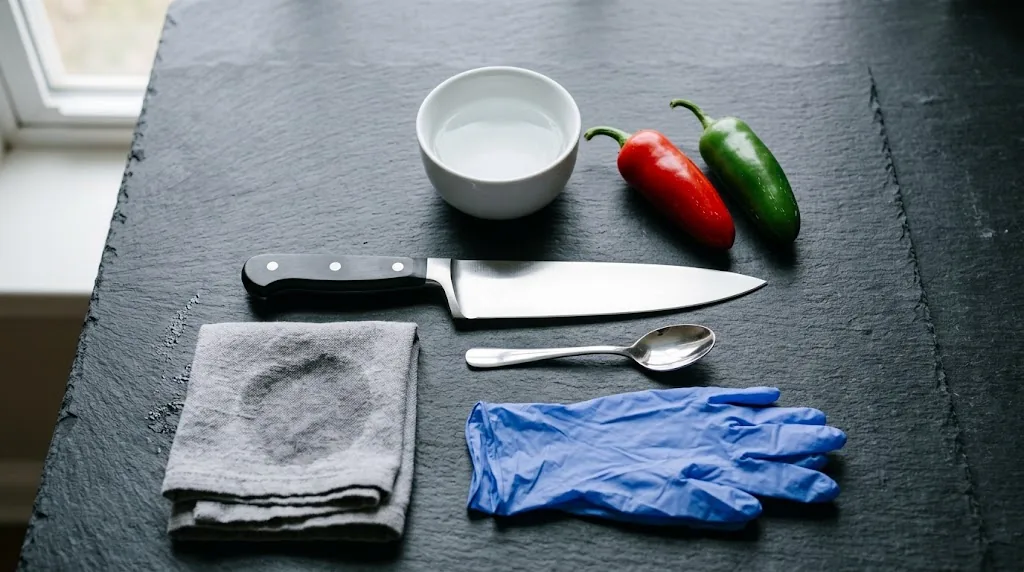
Cutting a pepper is easier when the pod and cutting board stay steady. Dry the skin, curl your fingertips away from the blade, and choose the cut your dish needs: rings for a topping, strips for a stir-fry, or a fine mince for a sauce.
This guide walks through the moves that handle almost any fresh pod in the kitchen: how to wash and dry it, where to open it, whether to scrape out the pith, the three basic shapes (slices, strips, and mince), and how to clean up without a long evening of fingertip burn. For a broader look at working with peppers across cuisines and heat levels, see our guide to using chilies in everyday cooking.
What you need before you start
Use a sharp chef’s knife or small paring knife, a spoon for scraping, and a stable cutting board. Wear food-safe gloves when preparing pungent pods, especially large quantities. Keep a discard bowl beside the board for stems, seeds, and pith.
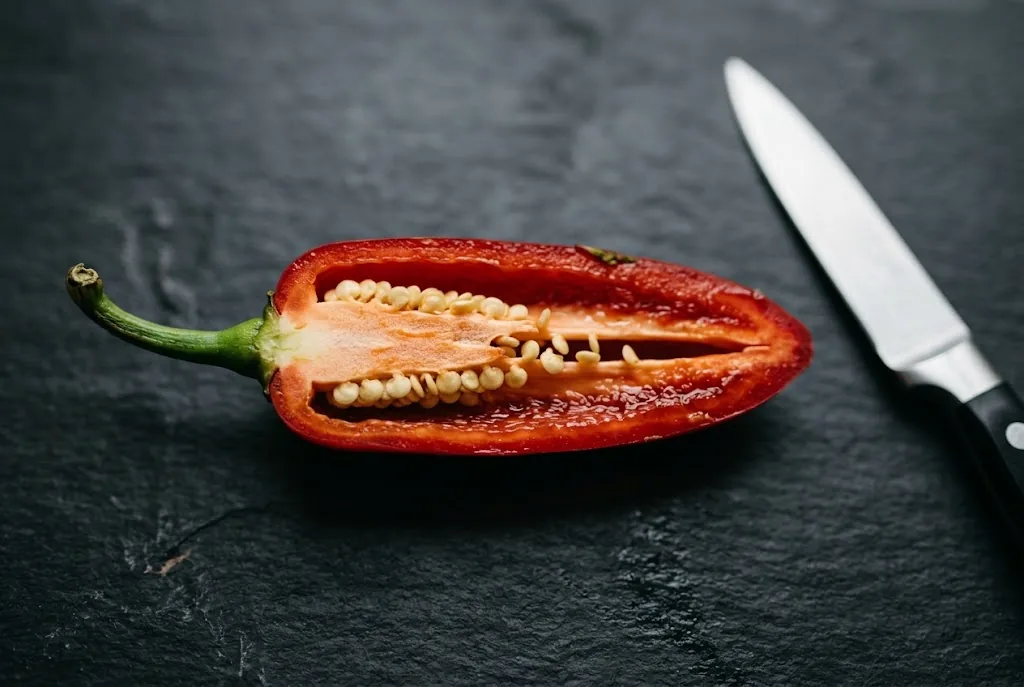
Capsaicin can irritate skin and eyes. Research identifies the pale placental tissue inside the pod as its primary production site, although other fruit tissues can carry it too; seeds are not the main production site. Keep contaminated hands away from your face. Our guide to handling hot peppers safely covers kitchen precautions, and Poison Control explains exposure and first aid.
Wash and dry the pods first
Rinse each pod under running water and pat it dry. A dry surface is easier to grip than a wet one. Check the board before starting so it cannot slide across the counter.
Place a damp cloth under the cutting board to help keep it steady. Cut on the board itself, with the pod lying on its side. Do not put a cloth or loose parchment in the cutting path.
Cut the pod open and remove the stem
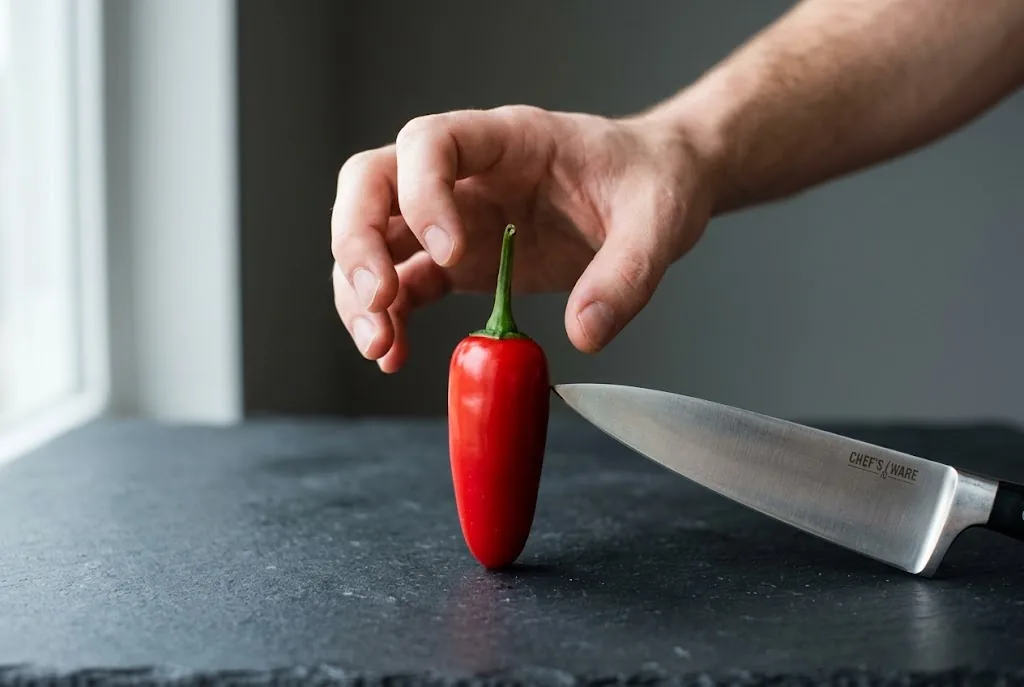
Lay the pod on its side and hold it with curled fingertips, keeping the blade clear of your fingers. Slice off the stem end. Leave the pod resting horizontally for the next cut rather than balancing it upright.
Cut lengthwise to open the pod. Place each half cut-side down when slicing it into strips, or open it skin-side down to scrape the interior with a spoon. With a broad or irregular pod, work one stable piece at a time instead of trying to hold it upright.
Should you remove the seeds?
Removing the pale pith and attached seeds can reduce pungency, but it does not make a pungent pod mild or eliminate all capsaicin. Scrape with a spoon without digging through the wall. Keep the pith when you want more bite; adjust the amount of pepper in the recipe as well.
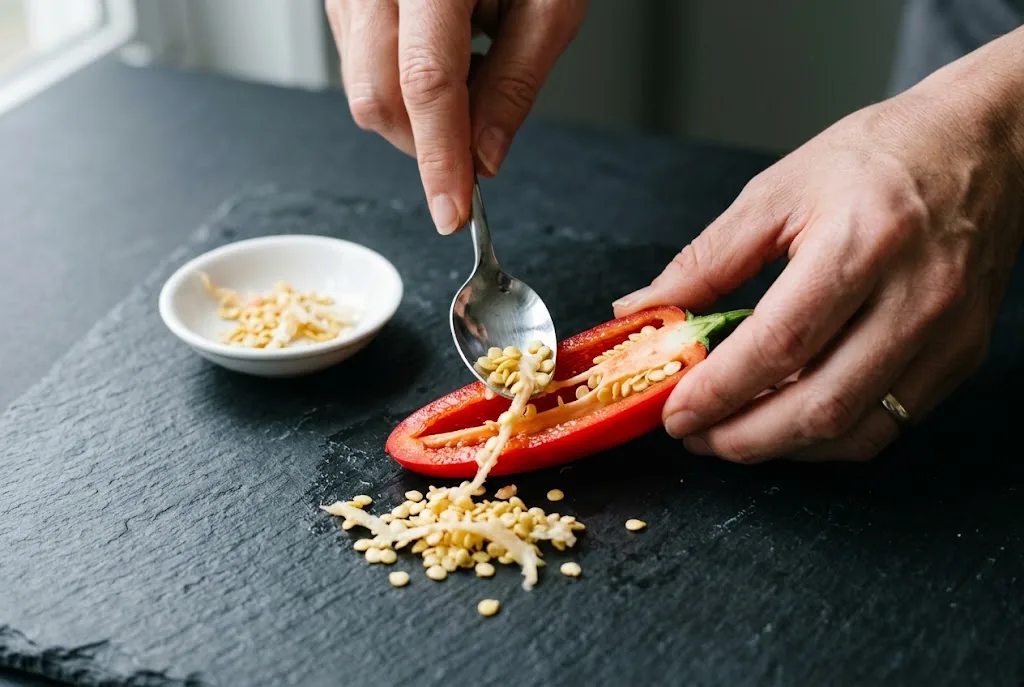
For everyday meals, scraping is a small step that pays off in control. A quick pass with the back of a teaspoon is enough; do not dig at the flesh. Run the spoon along the inside of each piece, let the seeds drop into your discard bowl, and tap the spoon on the rim before moving on. Wash your fingers and the spoon with soap and warm water before you move on.
Three basic shapes you will use most often
Once the pod is opened and the pith is dealt with, you have three cuts that cover nearly every recipe.
Thin strips. Lay a flattened piece skin-side down. Run the blade lengthwise into strips about an eighth of an inch wide. Strips work well for stir-fries, fajita fillings, and quick pickles.
Rings. Keep the pod whole and slice crosswise into rings. If you first halve it lengthwise, crosswise slices make half-moons instead. Choose either shape for toppings or pickles, keeping your fingertips curled away from the blade.
Small pieces and mince. Stack a few strips on top of each other, then run the blade across them at quarter-inch intervals for small cubes, or rock the knife through several times for a fine mince. A fine mince disappears into a sauce or a marinade; small cubes add visible flecks and a clear bite in a salsa.
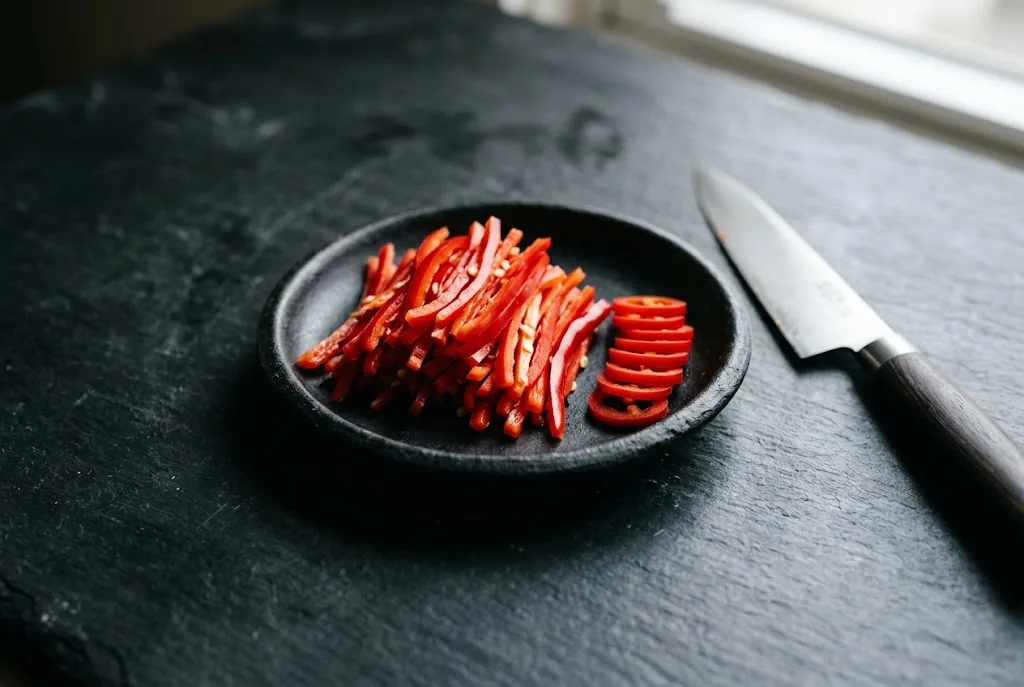
For a small pungent pod, cut it into manageable pieces and mince on the board. A finer cut distributes the pieces more evenly, but the quantity you use still determines the dish’s intensity. Super-hot peppers vary in size and shape; use gloves and start with a small quantity.
Cleanup without the burn
The work is not done when the last cut is on the board. Capsaicin lingers on the blade, the spoon, the cloth, and your fingers. Wash all of it with warm water and dish soap before you move on to the next task, especially if the next task is anything that touches your face. Dish soap cuts the oily capsaicin far better than water alone.
If your skin burns, wash with soap and warm water and avoid your face. Poison Control notes that vegetable oil may help with skin discomfort. If residue reaches an eye, irrigate with plenty of water for at least 15 minutes. Get medical advice for persistent symptoms and emergency help for breathing difficulty or chest discomfort.
And if the warmth of the finished dish surprises you, our guide to toning down a too-spicy dish covers dairy, acid, starch, and dilution as ways to rescue a meal without losing the prep work you have already done.
A quick reference for common chili types
Choose the cut by the shape of the actual pod. Narrow pods suit crosswise slices; wider walls are easier to flatten into strips and dice. Irregular habaneros, Scotch bonnets, and ghost peppers should be opened horizontally on a stable board. Do not assume a variety name guarantees a particular shape or heat level.
Mix chopped pieces thoroughly into the dish rather than leaving them in a few clumps. Taste a small serving before adding more, especially when using an unfamiliar variety.
Frequently asked questions
Do you need to peel chili peppers?
Fresh pods usually need no peeling. Peel away blackened skin after roasting if your recipe calls for a smoother texture; raw skin can stay on for ordinary slicing and chopping.
Should you wear gloves when cutting chili peppers?
Wear gloves when cutting chilies, particularly when preparing several at once. Avoid testing a raw bite as a safety threshold. Take gloves off carefully and wash your hands before touching your face.
How do you stop the burn after cutting chilies?
Wash your hands and tools with soap and warm water. For eye exposure, flush with plenty of water for at least 15 minutes and seek advice if symptoms persist. Poison Control has specific first-aid guidance; call emergency services for breathing difficulty or chest discomfort.
Next steps
Choose your cut before you start, keep the board steady, and clean the tools as soon as you finish. A small amount of evenly chopped pepper is easier to adjust than large pieces scattered through a dish.
