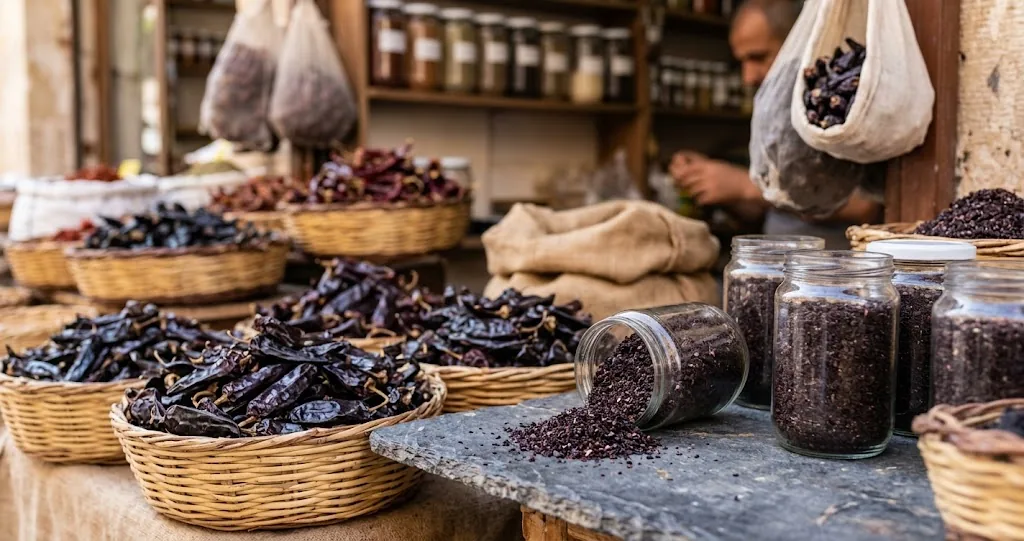
The first thing that surprises most cooks about urfa biber is how little heat it has on the tongue, and then a slow, warm build arrives a minute later. That lingering smokiness is what made this Turkish cured pepper a chef favorite long before most grocery shoppers had heard its name. If you want one spice that quietly deepens roasted vegetables, braised lamb, or even brownies, this is it.
What it is and where it comes from
Urfa biber (also called isot pepper, Urfa pepper, or Urfa isot biberi) is a Turkish pepper flake made from dried chiles grown around the town of Urfa in southeastern Turkey, near the Syrian border. The Turkish word biber means pepper, and isot is the regional name for this particular pepper. According to Wikipedia’s entry on urfa biber, the name Urfa isot biberi carries a protected geographical indication in Turkey, so genuine flakes come from that region.
Outside Turkey the spice was a specialty-shop item for decades. It moved into wider use in the 2010s, when exports of the closely related Aleppo pepper from Syria dropped during the civil war and cooks went looking for a substitute. Urfa biber offered similar raisin-sweet depth with a darker, more earthy edge. Today this Turkish spice sits in the spice cabinet next to smoked paprika, and it is worth knowing how to use it.
How drying and sweating give urfa biber its flavor
The signature flavor comes from a two-stage cure, done mostly by hand between August and October. Farmers harvest the ripe pods in late summer. In the first stage, the fresh red peppers are sun-dried in single layers in direct sunlight for about a week. Once the skins have lost their bright red moisture, the partly dried peppers are packed into tightly sealed bags to sweat, and the bags are turned once a day and covered with cloth at night to hold in warmth.
Sweating is what darkens the pods. The trapped moisture softens the flesh and turns it from red to a deep purplish black. The peppers then go back into the sun for a final drying, and finally they are ground coarsely with salt, and often a little olive oil, so the flakes stay loose.
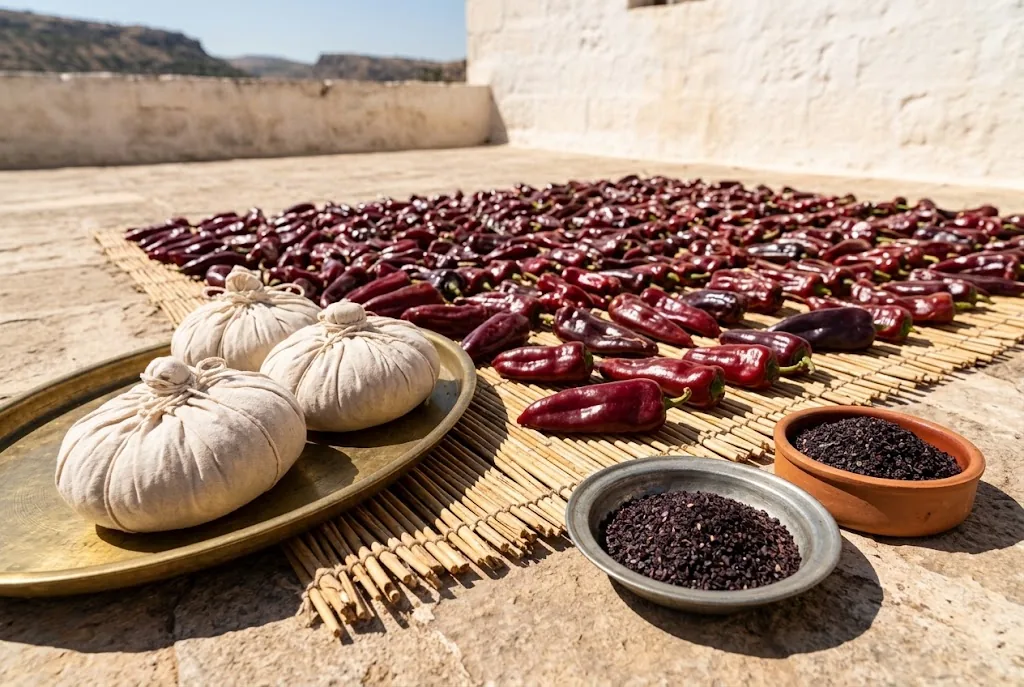
Industrial shortcuts exist, but the traditional drying process is what gives the finished spice its dark color, its soft oil-slick feel, and the tannic, raisin-like taste that separates it from a generic crushed-pepper product. The high oil content makes the flakes feel slightly moist between your fingers instead of dry and dusty.
Botany and pod characteristics
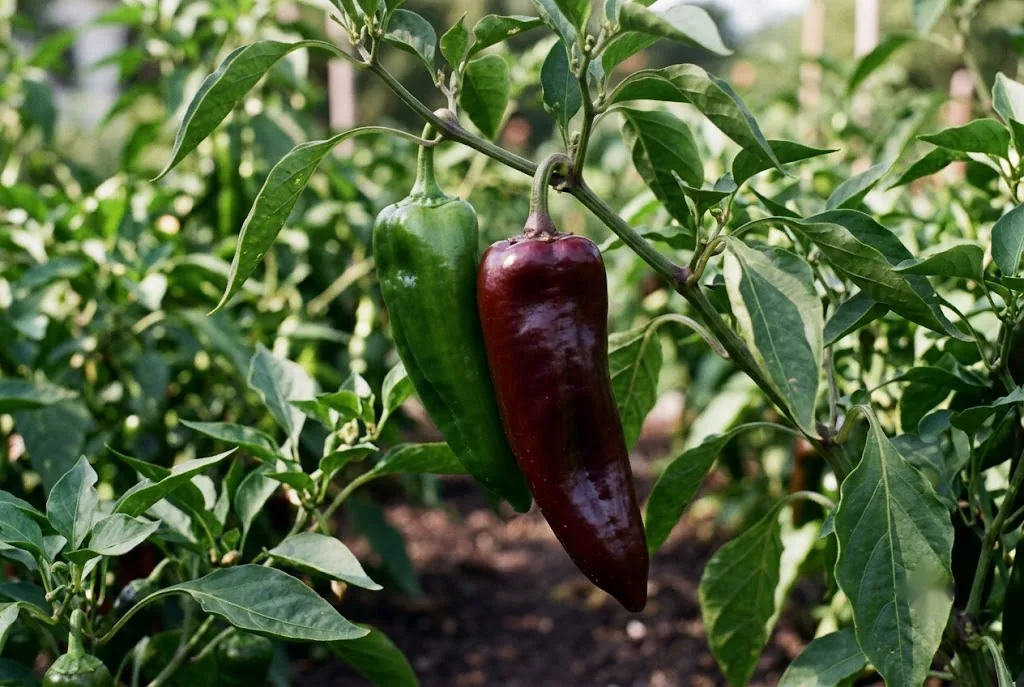
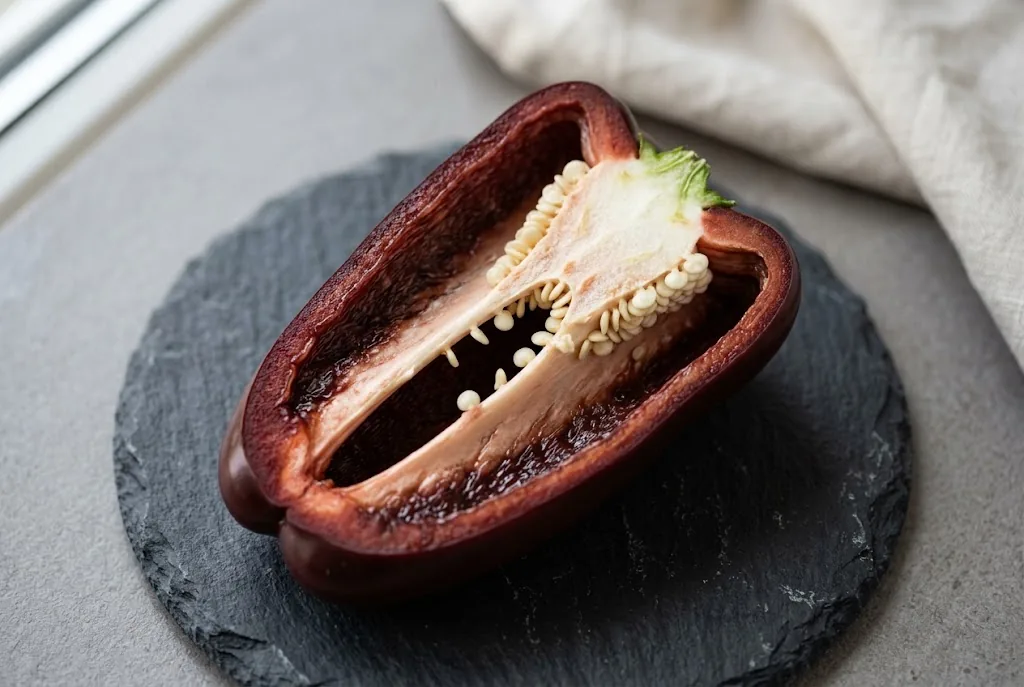
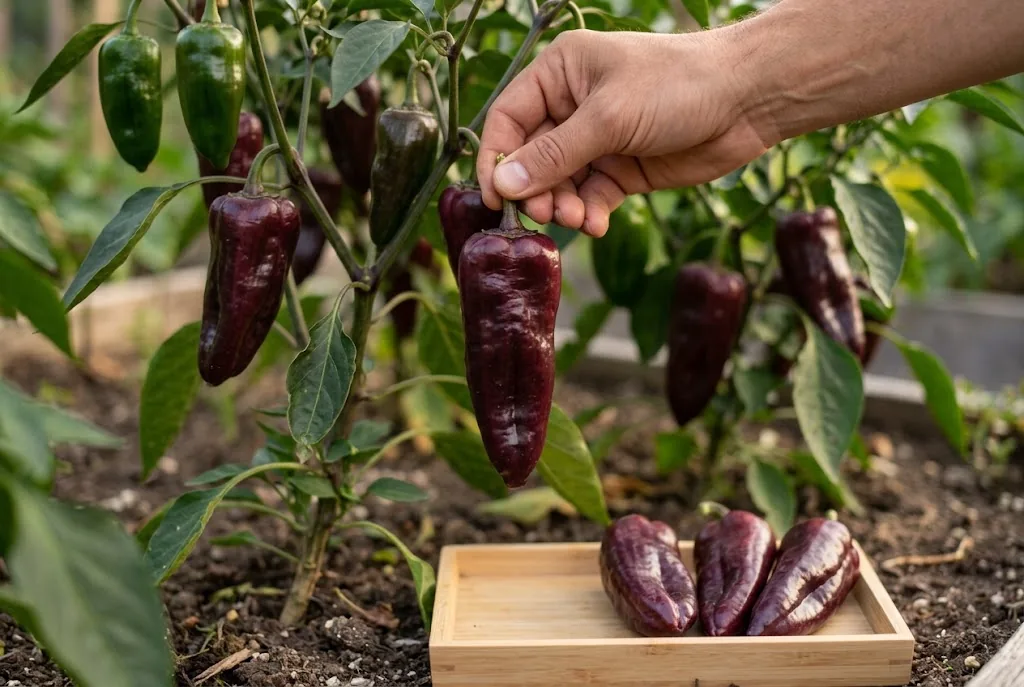
Urfa biber is a landrace of Capsicum annuum, the same species as bell peppers, jalapeños, and many other capsicum varieties. The fresh pods are blocky and slightly elongated, much closer to a small bell pepper or poblano than to a slim cayenne. Seed sellers describe pods up to about 6 inches long on plants around 3 feet tall.
Ripe pods turn from green to a maroon color. Once cured, they shrivel into wrinkled purple-black shapes, and the ground spice looks like irregular coarse flakes the color of bittersweet chocolate.
Heat and flavor profile
Most sources put the heat level of urfa biber between about 5,000 and 10,000 Scoville heat units. Know The Pepper gives that range, while Wikipedia lists 7,500. Published figures do vary, and the range overlaps with jalapeño, so on paper it is mild heat. In practice it is less spicy than many other chili peppers of similar rating, because the oil carries the capsaicin slowly. The warmth arrives late and builds across a meal instead of hitting the front of the tongue.
The dominant notes are smoky and raisin-sweet, with an earthy, slightly tannic backbone, notes of chocolate and dried tobacco, and a faint saltiness from the salt added at grinding. It is a complex flavor that reads as sweet first and mildly hot second, with a slight sweetness that lingers. That smoky flavor adds real depth of flavor to simple food. Aleppo, by comparison, leads with fruity tang.
How to grow it at home
Seed suppliers sell urfa biber seed in small quantities, and it behaves like most Capsicum annuum varieties at every stage. HRSeeds lists maturity at 75 to 100 days or more and germination at 7 to 14 days, so plan for a long, warm season. Start seeds indoors 6 to 8 weeks before your outdoor planting date, on a heat mat at 27 to 29 degrees Celsius (80 to 85 degrees Fahrenheit). Pot the seedlings up once they have two sets of true leaves, and transplant outdoors only when night temperatures stay above 12 degrees Celsius (55 degrees Fahrenheit).
Plants like full sun, even moisture, good drainage, and a soil pH between 6.2 and 6.8. They reach about 3 feet tall and benefit from a stake or small tomato cage once fruit sets. Give them the whole warm season, because the pods need time to develop full sugar and dark pigment.
Harvesting and drying at home
Pick pods when they are fully ripe and slightly soft, before the skin starts to wrinkle on the plant. Cut with a short stem so the cap stays attached. To mimic the traditional method, dry the pods on a screen in direct sun for about a week, then pack them in a sealed bag for about a week, turning it daily, before a last drying on the screen. Dry weather matters, since damp days invite mold.
Wear gloves when handling large batches of fresh pods. The capsaicin is mild next to super-hot varieties, but it still irritates skin and eyes. Once the pods are dry, our guide on how to make homemade chili powder walks through grinding, and you can add salt and a drop of oil to match the traditional flake.
Storing so it stays potent
Store urfa biber in an airtight jar in a cool, dark cupboard away from the stove. Because the flakes contain oil, they lose color and aroma faster than drier spices, so aim to use a jar within about a year of opening. Flakes that clump when warm will loosen with a shake or a quick stir with a fork.
If you buy in bulk, keep the extra in the refrigerator, sealed tightly so it does not pick up moisture or odors, and decant small amounts as you go.
How to cook with it
Use urfa biber at the end of cooking rather than the start, because its aroma is delicate and a long braise flattens it. A pinch will add flavor in seconds. Finish roasted root vegetables with a light dusting and a drizzle of olive oil, stir it into yogurt for a quick dip, or dust it over scrambled eggs and avocado toast. Beans, lentils, and pan-fried potatoes all take a teaspoon well, gaining depth without too much heat.
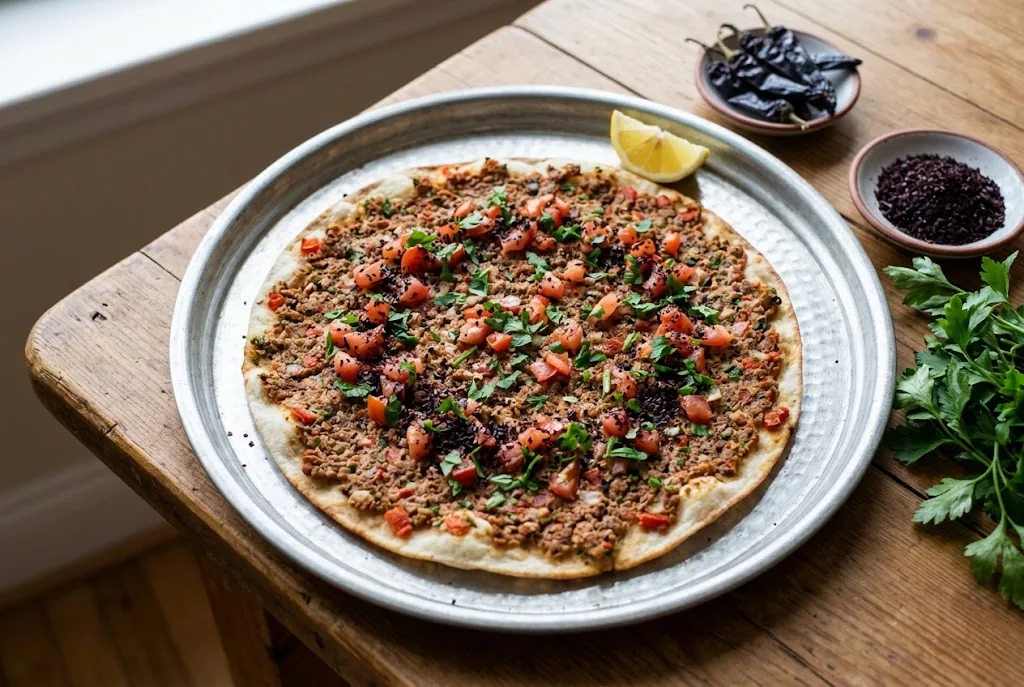
It suits a wide range of dishes, sweet and savory. Mediterranean cooking leans on it for lamb kabobs and grilled eggplant, and it also earns a place in savory dishes like bulgur pilaf, braised short ribs, and a long-simmered bean stew. Try it on flatbreads, in salad dressings, or in chocolate desserts like brownies and poached pears. Compared with sharper cayenne pepper, urfa biber tastes round and lightly smoky, which is why it works with chocolate and plain yogurt. Fold it into compound butter, sprinkle it over grilled corn, or treat it like a fresh grind of black pepper on seared fish.
Substitutes and pairing notes
If you run out, the closest match is Aleppo pepper plus a pinch of smoked paprika. The Aleppo brings the raisin-fruit character and the paprika restores the smoke. Two parts Aleppo to one part paprika makes a workable stand-in. Chipotle powder is darker and hotter, so use about half as much. Crushed red pepper flakes lack the raisin-sweet note and are a last resort. Marash, another Turkish chile pepper from the Kahramanmaras area, is a milder cousin.
Buy a small jar from a reputable spice merchant, taste it on its own first, and then use it as a finishing spice on anything that needs a smoky, sweet lift.
