
Homemade chili powder takes minutes when you start with fully dried chilies, and you can shape the heat and flavor to suit the dish. Grind the dried chilies alone for a pure ground chili, or mix it with pantry spices for the American-style chili seasoning often called chili powder. This guide covers both, plus chili flakes, safe grinding, and storage.
If you are planning a larger harvest, the guide to storing chili after harvest compares several ways to preserve fresh pods.
The quick method: from dried pods to flakes or powder
Use completely dry chilies. Remove stems, break the pods into pieces, then pulse them in a clean spice grinder or high-powered blender. Stop when the texture suits your cooking: coarse pieces make flakes, while longer grinding makes a fine grind. For an American-style chili powder blend, combine the ground chili with several pantry spices.
Do not grind peppers that are leathery or soft. Moisture can make ground chilies clump and spoil. If your peppers are not fully dry, finish drying them first using a controlled method such as a food dehydrator or oven. See how to dry chili peppers safely and evenly for that separate step.
Choose chilies for the flavor you want
The variety sets the mix’s heat, color, and aroma. Mild, fruity dried ancho or guajillo peppers make a rounded base. Add a little cayenne pepper or chile de árbol for more heat, or choose a dried pepper with a smoky note. A combination of two or three types often tastes more layered than a single-variety seasoning.
Wear food-safe gloves when handling hot pods, especially when removing seeds or membranes. Avoid touching your face, and wash hands and tools with soap and water when finished. If you are sensitive to airborne particles, work in a ventilated space and keep your face away from the grinder while the ground chili settles.
How to make chili flakes or pure chile powder
- Check that the dried pods are crisp and brittle, with no soft or damp spots. Let them cool fully if they were recently dried.
- Remove stems. Shake out some seeds if you want a milder result, though the pod’s flesh also carries heat.
- Break the pods into small pieces and fill the grinder only partway. Work in small batches so the blades can move the pieces evenly.
- Pulse briefly for flakes. Continue in short bursts for a fine texture, pausing between pulses so the motor does not overheat.
- Wait for the dust to settle before opening the lid. For even powder, sift the ground chili through a fine sieve and regrind any coarse pieces. Tip the flakes or ground chili into a clean, completely dry jar.
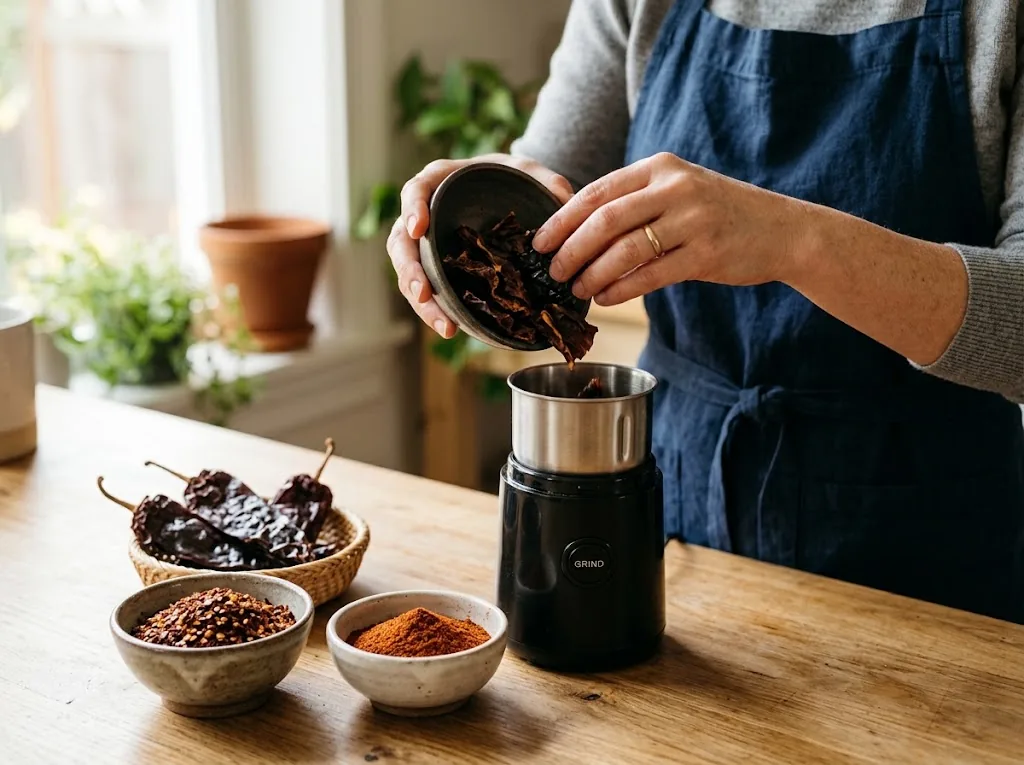
To toast dried chiles, warm them briefly in a dry skillet before grinding, then cool them completely. Keep the pan moving and stop if they begin to smoke. This optional step can deepen aroma, but the peppers do not need to be toasted to make good seasoning.
A mortar and pestle works for a small amount, though the result will be coarser and take more effort. A dedicated spice grinder gives a finer, more even grind. If you share one grinder between coffee and chilies, expect some pepper aroma to linger in your next brew. After grinding, unplug the grinder and wipe out the bowl so the next spice does not taste of chili.
Easy homemade chili powder recipe
Here, chile powder means pure ground dried chile, while chili powder means the American-style seasoning blend. Start with this flexible ratio, then adjust after tasting it in food:
- 2 tablespoons ground mild chili
- 1 teaspoon ground cumin
- 1 teaspoon sweet paprika
- 1/2 teaspoon granulated garlic
- 1/2 teaspoon onion powder
- 1/2 teaspoon dried oregano, crumbled
- Optional: a pinch of hot ground chili for more heat
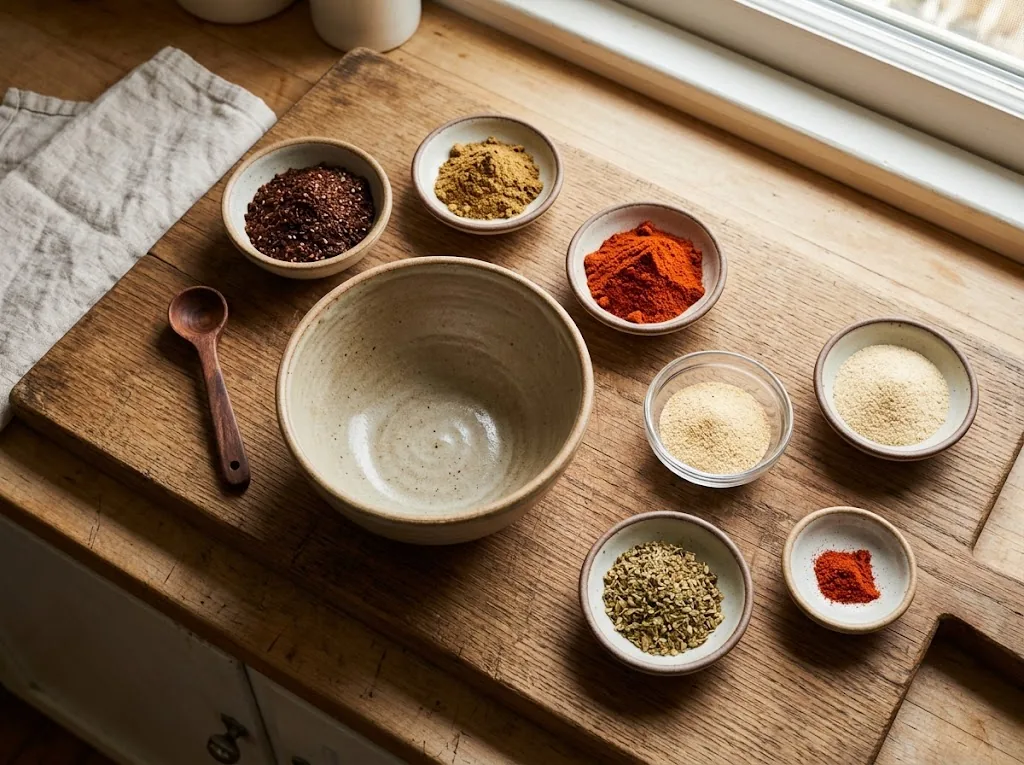
Whisk the ingredients in a small bowl, breaking up any lumps, or shake them together in a jar. This seasoning recipe is a starting point, not a fixed formula. Increase the cumin for an earthier flavor, use chipotle, a smoke-dried jalapeño, for a deeper flavor, or leave out salt so you can season each dish to taste. For a single-pepper seasoning, skip the extra spices and grind the dried pod by itself.
How to store your spice mix
Cool the ground spice completely, then keep it in an airtight container, such as a clean, dry glass jar away from heat, light, and steam. Label the jar with the chili variety and date. Use a dry spoon each time, and keep the lid closed between uses. A pantry cupboard away from the stove is better than a shelf above a kettle.
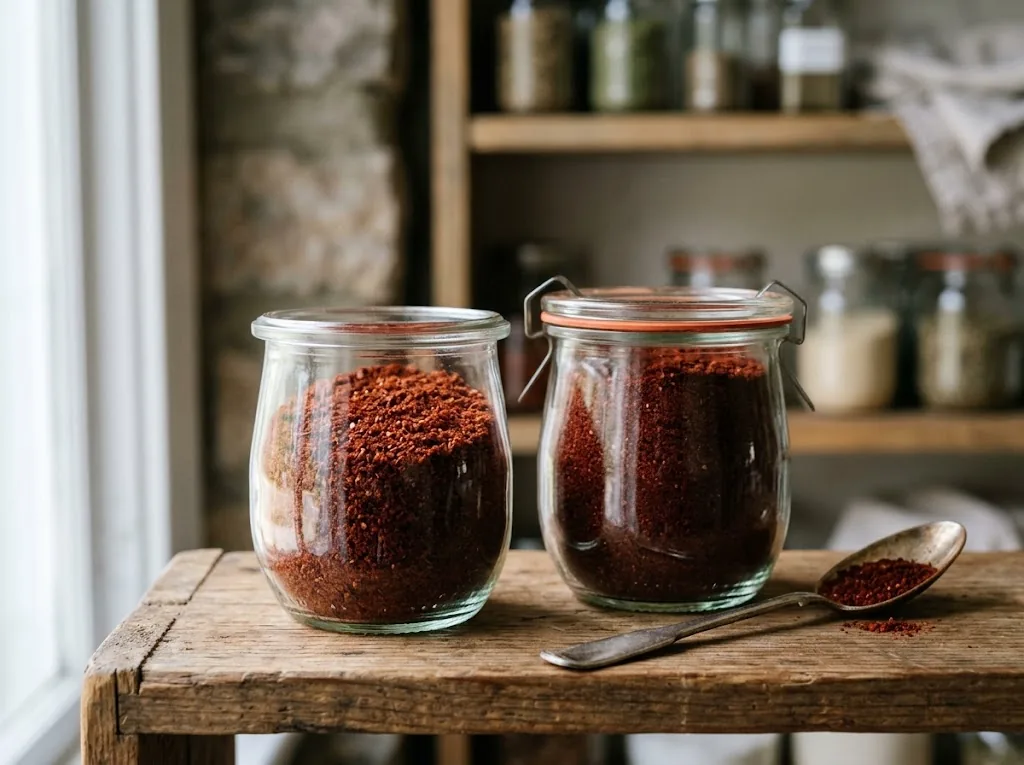
Dried chilies can pick up moisture in storage, even if they felt crisp when you packed them. The National Center for Home Food Preservation recommends storing dried foods in clean, dry, tightly sealed containers in a cool, dry, dark place, and checking them during storage. If you find condensation or clumping but no mold, use the spice soon or re-dry it thoroughly before repackaging. If you see any mold, discard it. For the best aroma, make small batches and replace them when the fragrance fades rather than relying on a long shelf-life promise.
How to use your homemade seasoning
Stir chili powder into soups, beans, roast vegetables, marinades, taco fillings, or a pot of chili. Add a little at first, then taste after it has cooked for a few minutes. Pure ground chili may taste hotter and more direct than store-bought chili seasoning, which often contains several spices and sometimes salt.
For Korean dishes, use a purpose-made Korean chili flake such as gochugaru when its fruity flavor and coarse texture suit the recipe. It is not always a one-to-one substitute for a fine, cumin-forward American seasoning.
Frequently asked questions
Is chili powder just ground chili flakes?
It can be. Pure ground chili is simply dried peppers ground finely, while chili flakes are the same ingredient left coarse. Fine powder spreads more evenly through sauces and rubs than flakes do. In many American recipes, however, chili powder means a mix of ground chili and other seasonings such as cumin, paprika, garlic, onion, and oregano.
Can I make chili powder from fresh chilies?
Dry the peppers completely before grinding. Fresh peppers contain too much moisture to turn directly into a shelf-stable spice. Drying is a separate preservation step and needs suitable airflow and controlled conditions.
How much should I use?
Start with the amount your recipe calls for, but add it gradually if your homemade version contains hotter peppers or is pure ground chili. Taste the dish as it cooks and adjust.
What can I use instead of chili powder?
For a quick substitute, mix sweet paprika with cumin and garlic powder, then add a small pinch of cayenne if you want more heat. This approximates an American-style spice blend. It will not replace pure ground chili when a recipe depends on the flavor of a particular dried chile.
Food preservation sources
- National Center for Home Food Preservation: Packaging and Storing Dried Foods
- Utah State University Extension: Jalapeño preparation and storage
