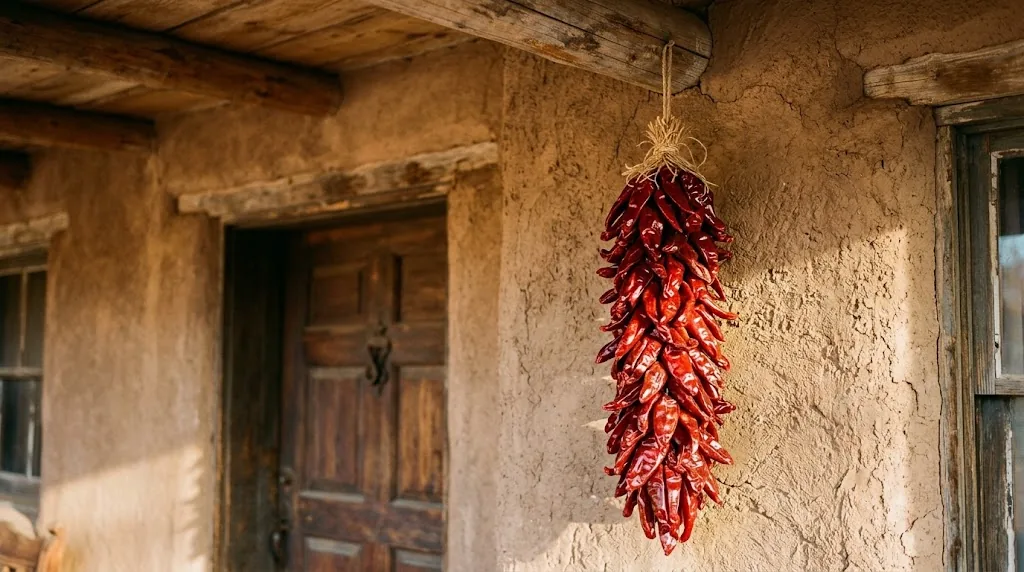
A pepper braid turns a harvest into a bright hanging bundle, but the right peppers matter more than the tying method. Choose mature pods with pliable stems and relatively thin walls, then hang the finished braid where warm air can move around the pods. In humid or rainy weather, use a dehydrator for food you plan to eat. For a wider preservation plan, see our guide to storing chili after harvest.
What is a chili ristra?
A ristra is an arrangement of chile pods tied into a hanging strand; the word also refers to the strand itself. This traditional New Mexican practice turns a harvest into a useful decoration and a way to keep chiles for winter cooking. Thick-walled fresh-market types may shrivel or spoil before enough moisture escapes. NMSU recommends New Mexico 6-4 and Sandia for their drying qualities. Choose mature red chile pods. Botanically, each chile pepper is a fruit.
For the classic regional approach, use fully mature crimson pods, not green ones. NMSU reports that green chile generally matures to red from mid-September until frost in New Mexico. Treat that as local timing, not a schedule for every climate or cultivar. Green chiles picked too early can shrivel to a dull orange as they dehydrate. Choose fresh, unblemished peppers with a straight, flexible stem that will hold a fastener without splitting.
Ristra traditions, styles, and season
In New Mexico, chile braids are part of the fall harvest. New Mexico State University says green chile typically matures to red from mid-September until frost; the National Park Service notes that ristras appear at farmers markets and roadside stands in fall. That calendar is regional, so use locally ripe pods rather than applying those dates everywhere. The National Park Service notes that such braids are displayed for decoration and are said to bring good health and good luck; people also hang them to dry chile for later cooking.
Styles range from larger chile strings to miniature bundles made with small de Arbol pods. NMSU’s example uses about 130 pods for a two-foot full-size ristra, while its one-foot mini version can use about 800 small pods. Corn husk toppers, dried flowers, or garlic can add a decorative finish. Some display pieces are coated for long-term ornament. Keep treated decorations out of the kitchen and use only untreated, sound peppers for food.
Supplies for a two-foot string
- About 130 mature red chile pods, such as New Mexico 6-4 or Sandia
- About 10 feet of durable, heavy twine
- Scissors and a stable hook or rafter
- Optional: gloves, especially when handling hot varieties
The pod count is a guide for the full two-foot version in the university method. Smaller pods need more; larger ones need fewer. Keep the bundle loose enough for air to pass between peppers.
How to make a chile ristra
- Make a hanging strand. Use two five-foot strands of durable twine. Hang them together from a secure support. Measure about three feet down from the support and join both strands securely, leaving about two feet hanging below the join. Use one loose end to fasten the pods.
- Start at the bottom. Lay three pepper stems across the two strands just above the knot. Take the loose two-foot end and tie a half-hitch or overhand knot around the stems and doubled strand. Add a second knot to hold the bundle firmly.
- Add small groups. Place another three or four stems above the first bundle. Secure each group with two knots, packing the pods closely but not crushing them. Continue upward. If the loose tying end becomes too short, join on another length of twine and keep going.
- Finish the top. Fasten the twine at the top and make a loop two or three inches long for hanging. You can add a decorative corn-husk topper if you like.
- Check the bundle. Lift the bundle by its loop and check that no pods slide when gently tugged. Retie any loose bundles before hanging it to air out.

For a miniature braid made with small de Arbol-type pods, NMSU describes a different method: tie pods into bundles of 15 to 20 first, then attach the bundles to a doubled strand.
An alternate method with short chile strings
If you prefer to prepare sections before building the braid, New Mexico Magazine quotes John Sichler of Sichler Farms on using chiles that are still fleshy, with pliable stems. Cut three or four pieces of cotton string, each about 2.5 feet long. Place three chiles inside a slipknot with their stem hooks facing outward, then tighten the slipknot. Wrap the cord around the stems three times and finish the bunch with a half hitch knot. To make one, wrap the working end around the standing cord, pull the end through the loop, and tighten. Repeat the process every two or three inches until each string is full. Attach the sections around a loop of twine, starting with the bottom bunch as an anchor and working toward the top of the ristra. This lets you prepare several short lengths before assembling the hanging braid.
Some ristras are ornamented with dried flowers or garlic, or coated for long-term display. Treat treated braids as ornaments, not food. Keep untreated peppers separate if you plan to cook with them.
Where to hang peppers for airflow
Choose a warm, sheltered, well-ventilated place out of rain and away from damp walls. A covered porch or an airy room can work. Keep the string away from cooking steam, sinks, and other moisture. In a reliably sunny, low-humidity climate, warm sun can help; air drying still depends on airflow, so there is no dependable calendar deadline. Check the peppers often rather than assuming the outside has dehydrated fully.
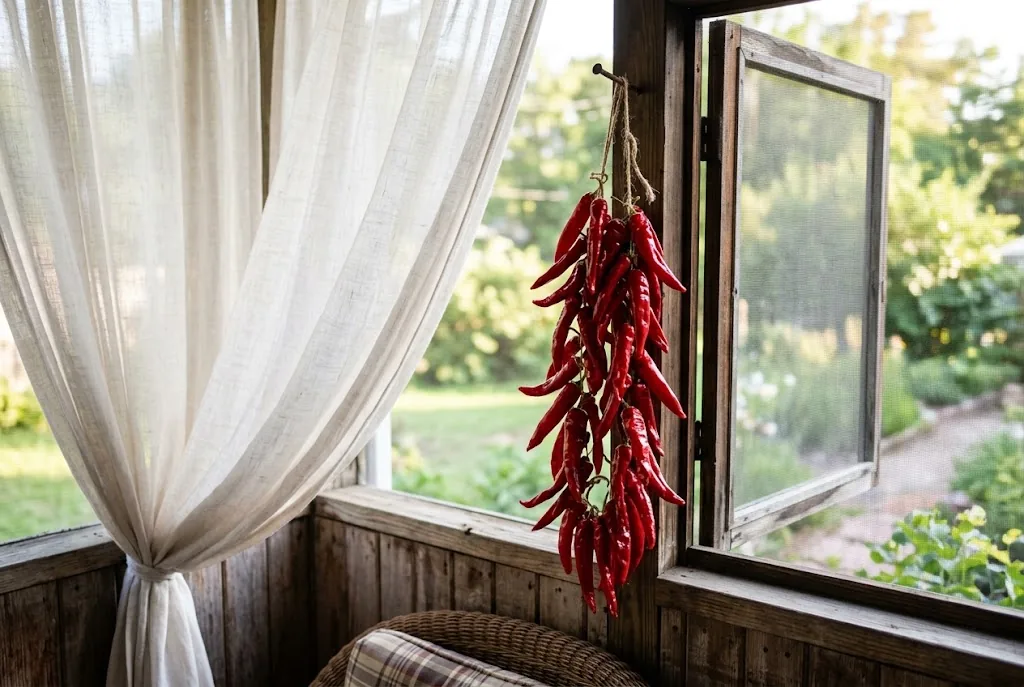
A hanging pepper braid is not a reliable food-preservation method in every climate. Extension guidance says hot peppers can be strung and air-dried in a warm place with air circulation, and the pods should become shriveled and crisp. If your air is humid, the pods stay soft, or you see fuzzy growth or a musty smell, do not eat them. For a more controlled result, dry peppers with a fan-equipped dehydrator, following its instructions until crisp. You can still make a braid for display from peppers that are not intended for food.
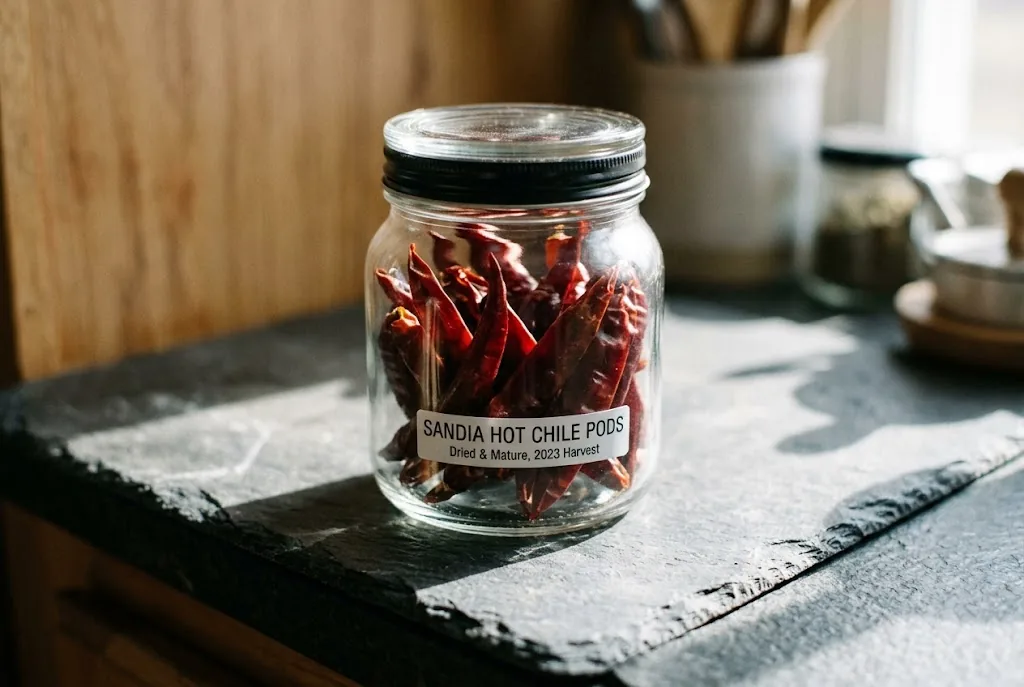
Once fully crisp, remove it by its stem when you are ready to use it. Oregon State University Extension notes dried hot peppers can be ground as seasoning. Store the rest in moisture-resistant packaging in a cool, dark place, where limited light helps protect their color.
For other drying methods, read our practical guide to drying chili peppers with air, an oven, or a dehydrator.
How to use dried chile and care for the braid
When the pods are fully crisp, snip them from the stems. Crumble or grind clean dried chile into seasoning, or add whole pods to stews and sauces according to your recipe. Oregon State University Extension notes that dried hot peppers can be ground for seasoning, and Utah State University lists dried chile for stews.
For display, keep the braid away from direct sun to slow color fading and away from steam or damp walls. Dust it gently without spraying it with water. For cooking, check the pods for softness, visible mold, insect damage, or an off smell. Store removed edible pods in an airtight moisture-resistant container in a cool, dark place.
Can you hang a ristra indoors?
Yes. An airy indoor spot with moving air is suitable for drying, and the finished string can be displayed indoors. Avoid placing it above a stove or near a kettle, where steam slows drying. If you are hanging it only for display, label it as an ornament and keep it away from food prep surfaces. A bundle that has been handled, gathered dust, or exposed to damp conditions is not automatically ready to eat.
How long will the peppers keep?
Drying time and display life vary with fruit wall thickness, room humidity, and airflow, so a fixed number of days or months would be misleading. A finished bundle may keep its shape for display, but color fades with time and sunlight. For cooking, judge each fruit: it should be crisp, with no soft spots, visible mold, or off odor. Store edible dried pods in a sealed, moisture-resistant container rather than relying on an open display braid.
Ristras are one way to connect a harvest with the food and traditions around it. The state also celebrates chile through seasonal events and gatherings; see our guide to chili festivals around the world.
Sources
- New Mexico State University, Using Chile to Make Ristras and Chile Sauce
- NMSU, chile production guide H-257
- New Mexico Magazine, ristra-making instructions
- National Park Service, Chile
- Sandia Seed Company, Hatch Red Hot (Sandia Hot)
- Oregon State University Extension, Preserving Peppers
- University of Illinois Extension, Drying
- Utah State University Extension, Home Drying Foods
- Utah State University Extension, How to Preserve Chiles
- Utah State University Extension, Home Drying Foods and storage
