
A spoonful of pungent condiment can wake up a whole meal. The aji chombo is a hot, aromatic Capsicum chinense type used in Panama for seasoning and condiments. This profile covers what is documented about the fruit, what may vary between seed selections, and how to grow and handle it at home.
What is the aji chombo pepper?
This is a local pepper type associated with Panama, rather than one universally standardized cultivar. A University of Panama agriculture text describes yellow and red forms, identifies the commercial type, and classifies the crop as Capsicum chinense. It describes that commercial fruit as irregular and bell-shaped, about 4 to 6 centimeters long, with a medium-thick wall and a strong aroma. The text also notes its use in sauces and as a seasoning. This local source gives the clearest description available.
Descriptions differ among modern seed listings. SeedWise describes the line it sells as elongated and habanero-type, while the local text describes a bell-shaped commercial fruit. Read the named seller’s description before buying, and treat that stock as its own selection rather than assuming every selection will match one photo.
Origin and name
The documented history is brief: the name is used for a hot C. chinense type cultivated in the country. The university text records yellow and scarlet forms, but it does not establish a breeder, a date of introduction, or a definitive story behind the name. No reliable source documents a single origin legend, so those details are best left open.
Ají chombo appears in regional cooking as a seasoning, not only as bottled hot sauce. The Ministry of Culture records a Bocas del Toro fish escabeche made with onion, carrot, vinegar, mustard, and this chili. The vegetables and chili are briefly sautéed before an acidic liquid is added. That example shows how a small amount can season fish without overwhelming the dish. The Ministry’s escabeche description gives the regional context. Some cooks also use “aji chombo” as the name of a prepared hot sauce, though each recipe has its own ingredients; PepperScale describes that naming usage.

The Association of Spanish Language Academies defines “ají” as a pepper fruit commonly used as a condiment. For a different aji type and species, compare Aji Fantasy peppers, which belong to Capsicum baccatum.
How hot is it, and what does it taste like?
Reference profiles commonly estimate 150,000 to 350,000 SHU on the Scoville scale. That estimate overlaps with habanero-like heat levels and some Scotch bonnet listings, but it is not a lab result for every crop or pod. The Panamanian university text, by contrast, describes the fruit’s capsaicin content as medium. Figures can shift with the selection and growing conditions, so start with a small piece when cooking. PepperScale’s profile lists that range and describes the flavor, as does Specialty Produce. For a wider comparison across varieties, see our guide to chili types and their heat ranges.
PepperScale describes a fruity flavor with a sweet note, and the university text calls the fruit strongly aromatic. The profile also compares it with Caribbean varieties, but each selection can differ. The fruit’s aroma is part of its character, so cooks add a little to a condiment or cooked dish rather than using it only for its pungency. To balance that profile, add a little lime juice or another acidic ingredient.
What do the fruit and crop look like?
The crop is a warm-season member of the nightshade family. The local commercial form described above has irregular, bell-shaped fruit; documented forms ripen yellow or scarlet. Other seller selections may be longer, so use the source’s description when you choose planting stock. A similar pod shape does not prove that two peppers are the same cultivar.

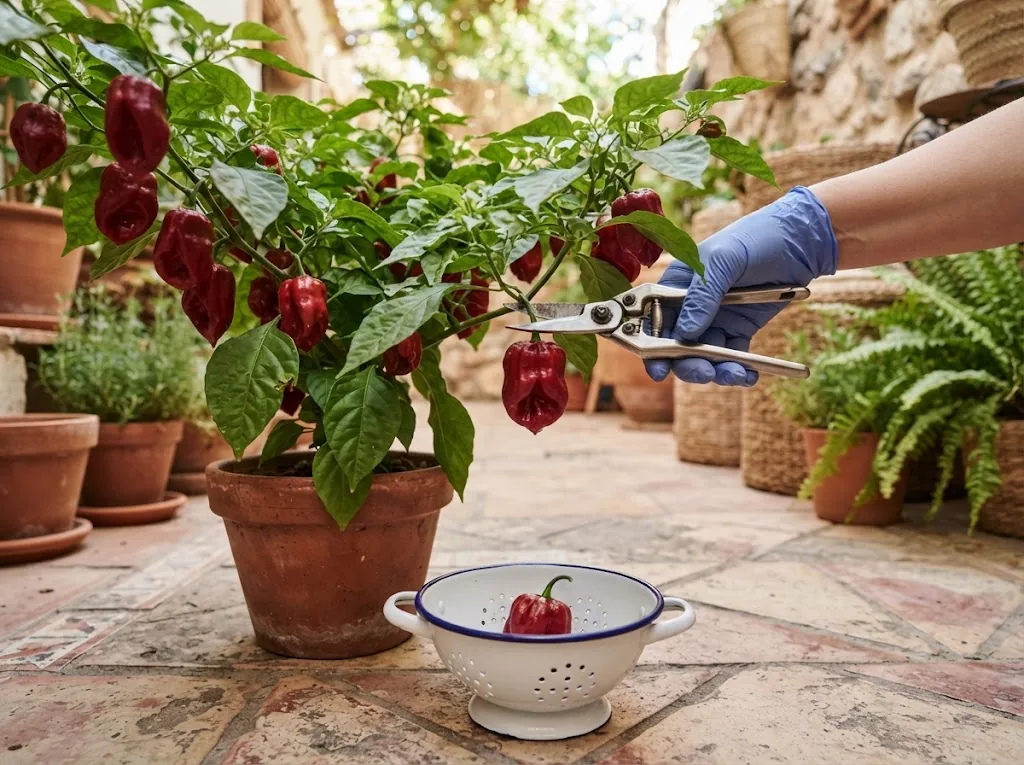
Let the fruit reach its mature color on the branch, then pick it while it is still firm. A clean pair of snips avoids pulling on a branch. If you save seeds, select a healthy, fully ripe pod and keep it separate from other varieties if you want to maintain that line.
How to grow it
This tropical crop needs warmth, sun, and a long season. In a short-summer climate, start plants indoors about eight weeks before the usual outdoor planting date. The plant needs a long, warm season. Minnesota Extension recommends 80 to 90°F for pepper germination and bright light after emergence. Utah State University advises hardening off transplants and waiting until soil and frost conditions are suitable. One SeedWise seller lists its line at 75 to 90 days to maturity and a mature height of four feet; both figures describe that seller’s stock, not every location or selection. Minnesota Extension’s pepper guide, Utah State’s transplant guide, and the SeedWise listing give the details behind those recommendations.
- Start warm. Sow in clean propagation mix, keep it evenly moist, and use a heat mat if needed to hold the recommended germination temperature.
- Give seedlings strong light. Move them under bright overhead lighting after they emerge. Harden them gradually outdoors for about a week before transplanting.
- Choose sun and drainage. Choose a sunny bed with fertile, well-drained soil, or use a container with drainage holes and quality potting mix. Water when the surface begins to dry, then soak the root zone.
- Keep conditions steady. Avoid cold nights and large swings between dry and wet soil. Bring a container to a warm, bright shelter when the season ends.

For another C. chinense profile with a very different fruit, see Chocolate Reaper peppers.
Harvesting and handling
Wear nitrile or other kitchen gloves while cutting very hot chilies, and keep your hands away from your eyes and face. Capsaicin can cause a painful burn on skin and in eyes. Poison Control recommends gloves to prevent exposure and copious warm-water irrigation if juice gets into an eye. Wash tools and hands after preparation, and keep scraps away from children and pets. For breathing trouble or chest discomfort after exposure, call emergency services. Poison Control’s capsaicin guidance explains prevention and first aid.
Storing, drying, and preserving
Refrigerate firm, dry fruit and check it for soft spots before use. Freeze whole fruit in a labeled bag for later cooking, or dry it in a dehydrator according to the machine’s instructions. Use ventilation while drying hot chilies and avoid breathing the fumes. Store fully dry pieces in an airtight container away from moisture. Keep homemade sauces and blends refrigerated unless you follow a tested canning process exactly.
Aji Chombo in Panamanian hot sauce and cooking
This chili’s clearest role is as an aromatic seasoning. Mince a small amount into a bright condiment, stir it into salsa, or simmer it with garlic before adding it to beans, seafood, or stew. For a simple refrigerated recipe, combine one finely minced pod, one small garlic clove (minced), a spoonful of citrus juice, and a pinch of salt. Start with a small amount and keep the mixture cold.
Where to find seeds
Fresh fruit may be difficult to find outside the country, while online seed listings are easier to locate. Compare the botanical name, pod shape, mature color, and days-to-maturity estimate before ordering. A listing that says Capsicum chinense and shows the seller’s own fruit is more useful than a generic “hot chili” label.
Quick answers
Can habanero replace this pepper?
Sometimes. Both are Capsicum chinense peppers with a fruity, aromatic profile, but they are different types, so expect a different shape and aroma. PepperScale names habanero as a practical substitute when the local pepper is unavailable.
Can it grow in a pot?
Yes. Use a pot with drainage holes, give it strong sun, and protect it from cold nights. A movable container helps extend a short season.
Does every form ripen red?
No. The university text records both yellow and scarlet forms and identifies the commercial form it describes.
