
The apollo pepper represents one of the most intense creations in the world of extreme chili breeding. Classified botanically under Capsicum chinense, this superhot hybrid was developed by breeder Ed Currie of PuckerButt Pepper Company in Fort Mill, South Carolina. Bred as an ambitious cross between two legendary superhots, the Carolina Reaper and Pepper X, the cultivar was engineered to push heat production to extraordinary thresholds. Understanding the diverse types of chili peppers reveals how breeders continually select for extreme pungency, transforming standard garden nightshades into botanical marvels that capture worldwide attention.
Origin and Breeding of the Apollo Pepper
The history of the apollo pepper centers on chili breeder Smokin’ Ed Currie, founder of PuckerButt Pepper Company. Currie, who previously earned international recognition for the Carolina Reaper, continued crossing elite selections in his South Carolina greenhouses. To create Apollo, Currie hybridized the Reaper with Pepper X, aiming to combine the searing immediate strike of the former with the lingering, deep burn of the latter. While the Reaper conquered hot sauce culture throughout the 2010s, this hybrid emerged among enthusiasts as a candidate for the title of world’s hottest pepper.
Unlike traditional heirloom landraces, the cultivar was introduced directly through commercial collaboration rather than general seed catalogs. The variety debuted in the spotlight through First We Feast’s popular YouTube show Hot Ones, featured as the core ingredient in their flagship blend, The Last Dab Apollo. Because Currie closely guards his intellectual property, authentic pure-line seeds remain unreleased to the retail market, making the strain one of the most exclusive chili varieties in cultivation.

Heat Profile and Scoville Rating
In discussions of extreme chili pungency, the apollo pepper occupies elite territory. Industry estimates place its heat level at approximately 2,500,000 to 3 million Scoville heat units (SHU). At this level, it ranks noticeably hotter than a standard ghost pepper, which averages roughly 1,000,000 SHU, and surpasses the certified baseline of the Carolina Reaper, which averaged 1,569,300 SHU in its initial 2013 testing. While superhot enthusiasts prioritize peak pungency ratings, culinary growers often appreciate milder heat profiles found in traditional varieties like Espelette peppers, which provide subtle warmth rather than blistering heat.
It is important to note that while online discussions frequently describe Apollo as a new hottest pepper, the cultivar has not received a standalone Guinness World Records certificate for individual pod heat. On October 16, 2023, Pepper X was officially announced as the record holder at an average of 2,693,000 heat units. Nevertheless, the pure capsaicin density in Apollo tissue produces an overwhelming physiological reaction. The sensation builds progressively, starting with a deceptively fruity initial note before locking into a persistent throat burn that can endure for more than twenty minutes.

Botanical Characteristics of Capsicum chinense Hybrids
As a specialized member of Capsicum chinense, the plant exhibits classic superhot growth habits. The bushes develop into sturdy, multi-branched structures reaching 36 to 48 inches (90 to 120 cm) in height with broad, deep-green, slightly rugose leaves. Small, creamy-white flowers with greenish filaments emerge at the leaf axils, typically bearing two to three blossoms per node in healthy environmental conditions.
The fruit morphology reflects its intense genetic lineage. Pods measure roughly 1.5 to 2.5 inches (3.8 to 6.4 cm) in length and 1 to 1.5 inches in diameter. The outer skin is distinctly wrinkled, puckered, and bumpy, often terminating in a blunt tail or small stinger reminiscent of its maternal parentage. The fruit ripens from a pale lime green to a unique warm peach or dusty terracotta-orange rather than standard deep crimson. Internally, the placenta occupies a substantial proportion of the inner cavity, coated with visible drops of resin along the pale placental ribs.
Growing Requirements and Cultivation from Seed
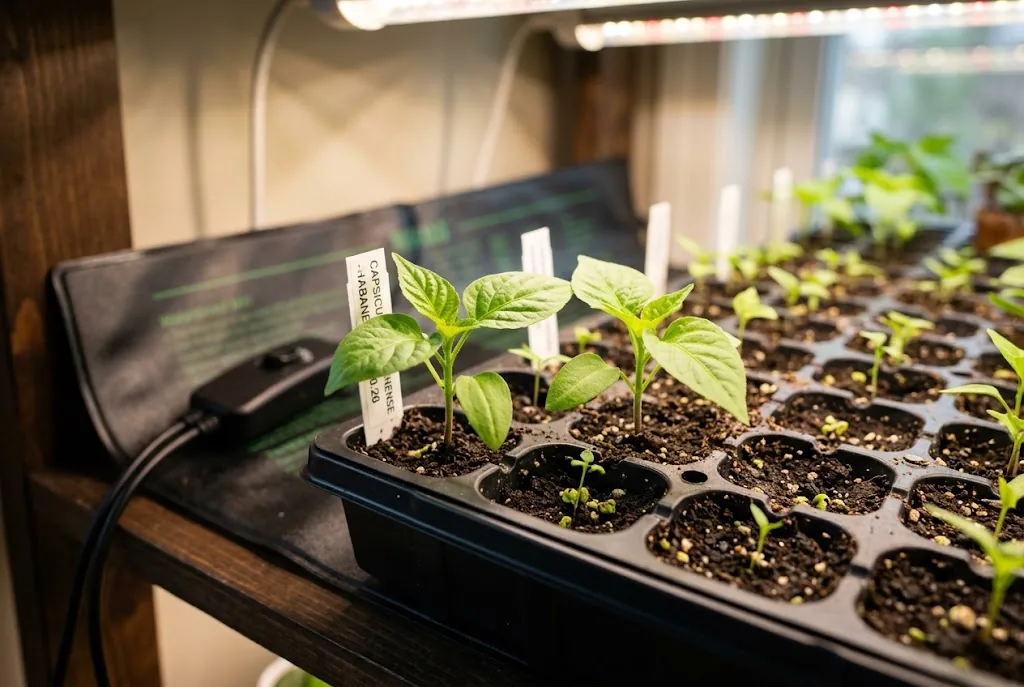
Cultivating superhot chinense varieties requires patience and precise climate control. Gardeners managing Apollo crosses or related extreme chilies must prepare for an extended season. Sowing begins indoors 8 to 10 weeks before the last projected spring frost date. Seeds require consistent soil temperatures between 80 and 85 degrees Fahrenheit (27 to 29 degrees Celsius) to germinate successfully. Providing steady bottom heat with a waterproof propagation mat is essential, as germination can take anywhere from 14 to 28 days, and occasionally up to five weeks for complex hybrids.
Once seedlings emerge, provide 14 to 16 hours of daily light from high-output fluorescent or LED fixtures placed a few inches above the foliage. Transplant seedlings into individual 3-inch containers when the first true leaves appear, using a loose, well-draining potting medium. Harden plants off gradually over 10 to 14 days before planting outdoors into warm garden beds or large containers (minimum 5 gallons) after nighttime temperatures consistently exceed 55 degrees Fahrenheit (13 degrees Celsius). Space plants 24 to 36 inches apart in full sunlight. Maintain even soil moisture, as drought stress followed by heavy watering disrupts calcium mobility and leads to blossom-end rot.
Harvesting and Kitchen Safety Handling
Harvesting superhot chili pepper pods demands strict safety protocols. Pods mature approximately 100 to 120 days after transplanting outdoors. Use clean pruning shears to sever the stem cleanly from the branch, leaving a short stem stub attached to the fruit to prolong freshness. Never twist or yank pods by hand, which can snap fragile branches.
Because the concentration of chemical heat in placental tissue is extraordinary, always wear heavy nitrile gloves when harvesting, cutting, or processing pods. Double gloving provides dependable protection against oil permeation. Wear safety glasses or a face shield when slicing pods to shield eyes from microscopic droplets. Work in a well-ventilated area or outdoors under a range hood. If skin contact occurs, immediately wash the area with grease-cutting dish soap and cold water. For mouth burns from spicy dishes, drinking whole milk or consuming yogurt provides relief, as the dairy protein casein dissolves nonpolar irritants effectively.

Culinary Uses and Preserving the Last Dab
In culinary applications, the apollo pepper is best known as the centerpiece of the Hot Ones hot sauce lineup. In The Last Dab Apollo sauce, the chili is utilized in three distinct iterations: fresh pepper mash, dried chili powder, and an intensely concentrated pure pepper distillate. This combination delivers massive heat alongside subtle earthy, fruity undertones before the fiery burn dominates the palate.
For home cooks working with superhot pods, moderation is essential. A single sliver the size of a matchstick tip can season an entire large batch of stew or barbecue glaze. Dehydrating pods should be conducted outdoors or in a garage using an electric dehydrator set between 125 and 135 degrees Fahrenheit (52 to 57 degrees Celsius) until the flesh is thoroughly brittle. Grind dried pods in a dedicated electric spice grinder while wearing a particulate dust mask. Store the resulting flakes or powder in airtight glass jars away from direct sunlight. Balancing ultra-hot hybrids with nuanced specialty varieties such as Sugar Rush Stripey peppers creates a vibrant, well-rounded harvest in any home garden.
