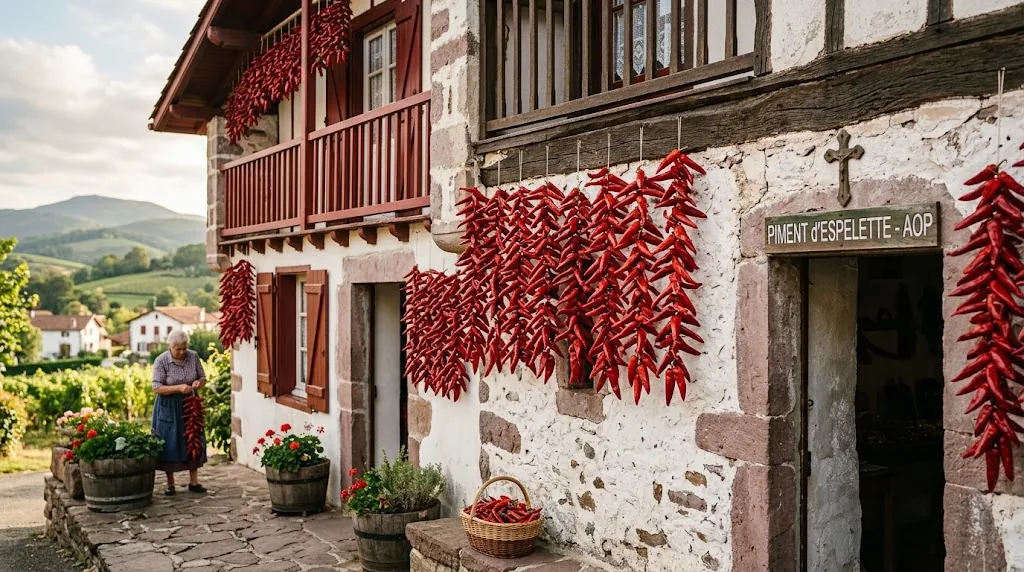
An Espelette pepper brings a gentle warmth and a rounded, fruit-forward flavor to the Basque dishes that made it famous. The name can refer to a local pepper type, but the protected name Piment d’Espelette belongs to a finished product from a defined part of southwest France. That distinction helps you choose an authentic spice, grow a related pepper at home, and use either one well.
What is the protected Basque spice?
This red, conical chili comes from the Basque Country in southwestern France. Within the protected designation, growers raise a local variety registered as Gorria, then sell the harvest fresh, in strings, or as a dried and ground spice. The powder has a warm red to orange-brown color and aromas described in the product specification as fruity, grilled, or hay-like. Its heat is noticeable but not usually scorching.
The protected designation of origin, or PDO (AOP in French), applies to pepper grown, processed, and packed within its official area. Buying seeds labeled Gorria does not make peppers grown elsewhere the protected Piment d’Espelette product. Look for that name and the European AOP mark when you want the certified spice. The official producer association identity and production guide describes the variety and boundaries.
Origin and Basque history
Chili peppers came to Europe from the Americas after the Columbian exchange. The producer association says the first local traces in the village date to about 1650. It describes how families selected seed from season to season and how growers traditionally strung ripe peppers along farm walls to dry. Those practices helped shape a regional spice rather than a single commercial brand.
Today the protected area covers all or part of ten municipalities in the western French Basque region, including Espelette, Ainhoa, Itxassou, and Cambo-les-Bains. The nearby Atlantic and Pyrenean landscape brings mild summers and regular rainfall, conditions that suit the crop. In late summer, red pepper garlands on the village’s white facades have become a familiar sight. The local tourism office documents both the growing area and this village tradition.
Producers received the French AOC designation in 2000 and the European PDO in 2002. The protected name covers three forms: fresh peppers intended for processing, strings of whole peppers, and powder. In French, PDO means appellation d’origine protegee. This is why a jar from another region may use a similar pepper but cannot carry the label.
Botany, shape, and color
The local Gorria type is a cultivated chili in the species named in the title. Its fruit is a smooth, tapered cone, typically 7 to 14 centimeters long under the PDO specification. Peppers are harvested ripe and red for the protected product. Before full color, pods are green; home growers may also pick them at other stages, though that will change their flavor and will not produce the certified spice.
The local product takes its name from its home village, while Gorria is the registered variety name often found on seed packets. The Basque word means “red.” The protected product is not a broad category for any red pepper powder, and it is distinct from other dried chili blends.
For a wider comparison of this variety with other shapes and heat levels, see our guide to types of chili peppers.
How hot are Espelette peppers?
Expect mild to moderate heat, with variation between fruits and products. Some references assign this chili a Scoville figure near 4,000 SHU, but the official product standard describes perceived pungency rather than setting one universal number. The powder’s warmth can feel stronger after it blooms in hot oil or when you use a generous spoonful. If you are sensitive to spice, start with a pinch and taste before adding more.
The flavor is often more useful than a single heat number: ripe fruitiness, a roasted or lightly smoky impression, and a lingering warmth. Drying and grinding concentrate the aroma. Fresh peppers taste greener and juicier, so do not expect a fresh pod to taste exactly like the finished seasoning.
Growing Espelette peppers at home
You can grow Gorria-type peppers in a sunny bed or a large container, but a home harvest outside the designated region is not PDO Piment d’Espelette. Local producers sow in March and report about 15 days to the two-cotyledon seedling stage at 20 to 22 C (68 to 72 F). Treat those figures as a regional production reference, not a guarantee: seed age, moisture, and temperature all affect germination.

Start seeds indoors in a warm, bright place and keep the mix evenly moist, not waterlogged. Pot up seedlings once they have true leaves. Harden them off gradually, then plant outdoors after frost danger has passed and nights are reliably warm. Choose full sun and loose, well-drained soil. The local production guide spaces field plants about 40 centimeters apart; a single plant can also grow in a roomy pot with drainage holes.
Water when the upper soil begins to dry, then let excess drain. A consistent moisture level supports steady growth, while soggy roots invite trouble. Add a stake if a branch becomes heavy with fruit. Remove weeds around young plants and check leaves for aphids or mites. Identify a pest before choosing a control, and follow any product label.
Local producers transplant under cover before field planting and harvest ripe red pods from late August until frost. In a home garden, timing depends on your climate and when you started seed. A Canadian seed seller lists its Gorria fruit at 7 to 9 centimeters and around 80 to 85 days from transplant to red maturity; another region, seed lot, or growing season may differ. For more detail on the general process, our profile of Big Jim peppers also covers how a long-season pepper moves from seedling to harvest.
Harvesting and handling
For the classic red flavor, wait until most of the pod has turned red and snip it with clean scissors. The PDO rules call for careful handling because ripe fruit can bruise. Fresh peppers are usually mild compared with superhot varieties, but capsaicin can still irritate skin and eyes. Wash your hands after cutting them, avoid touching your face, and use gloves if you know chili handling irritates you.
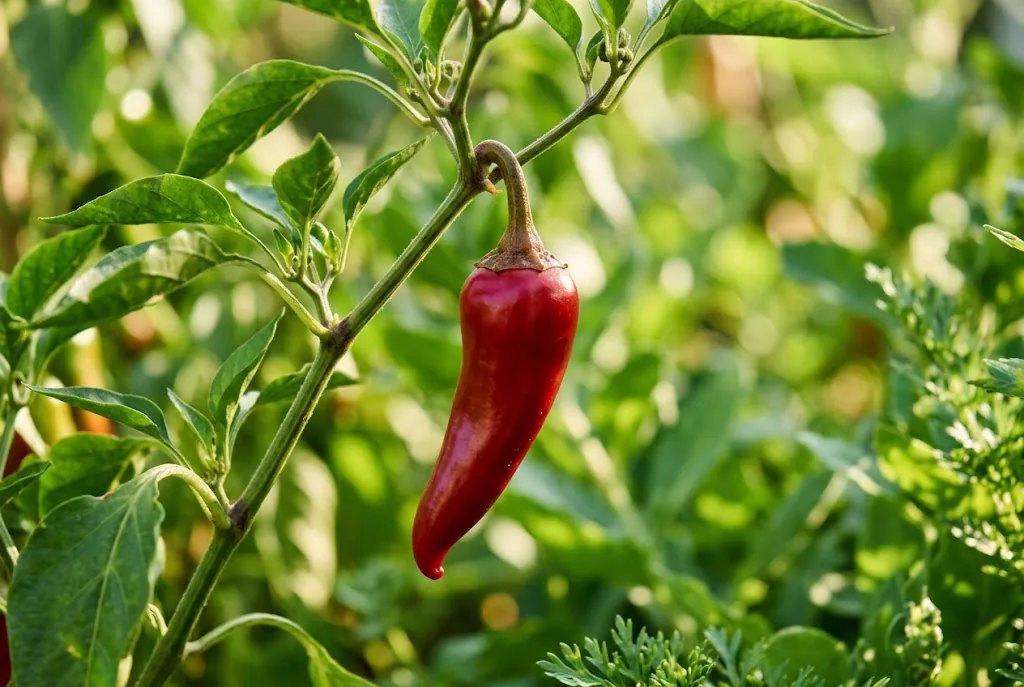
Pick regularly as fruits ripen. Leave some green fruit on the plant if you want it to continue growing, or harvest it for a greener, less sweet flavor. Do not count on green peppers ripening well after harvest; color and flavor develop best while the fruit remains attached to a healthy plant.
Drying, storing, and preserving
PDO peppers destined for powder are sorted and matured in a warm, ventilated place before their final drying and grinding. The specification sets at least 15 days of maturation for most of the harvest, followed by oven finishing. That regulated sequence gives the protected spice its characteristic aroma and is not a universal home drying recipe.
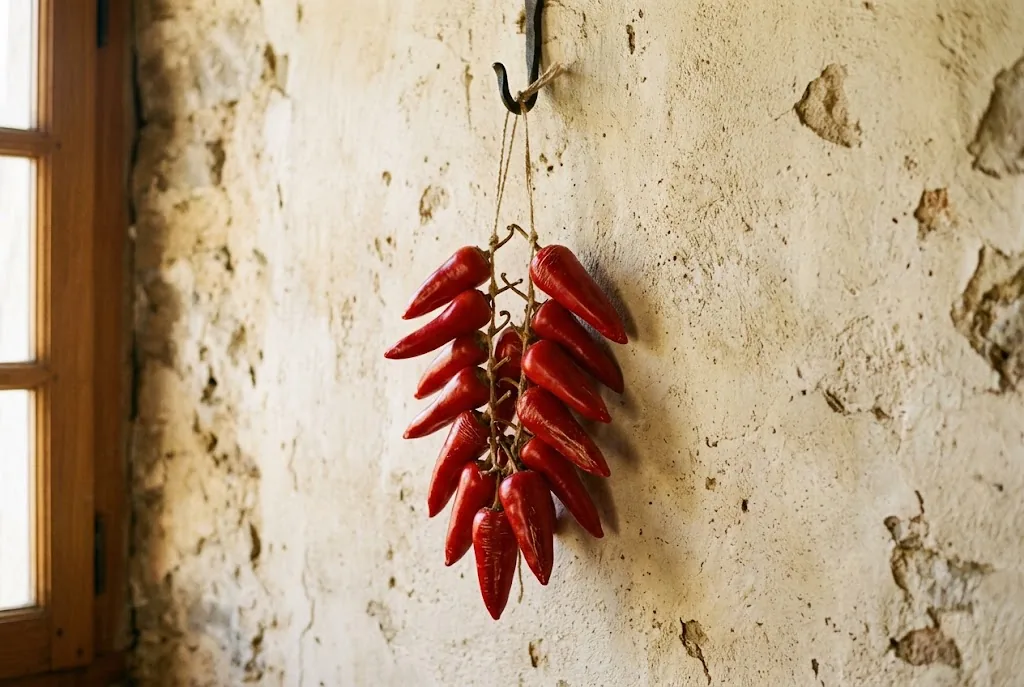
At home, dry clean peppers with a food dehydrator or another method designed for produce, following the appliance instructions. A pepper should be fully dry before you store it; any remaining moisture can lead to spoilage. Keep dried whole pods or flakes in an airtight container away from heat, light, and humidity. Grind small amounts as needed so the aroma stays lively. Refrigerate or freeze fresh extras if you cannot use them promptly.
How to use Espelette pepper in cooking
Use the powder where you want a fruity, rounded warmth without the blunt burn of a much hotter chili. In Basque cuisine, stir a pinch into piperade, bean stew, lentils, soups, or a pan sauce. It also works on roasted vegetables, eggs, fish, chicken, and potatoes. Add it near the end of cooking when you want its aroma to remain distinct, or bloom it briefly in warm oil for a deeper roasted note. For a different fruity chili profile, explore white habanero peppers.
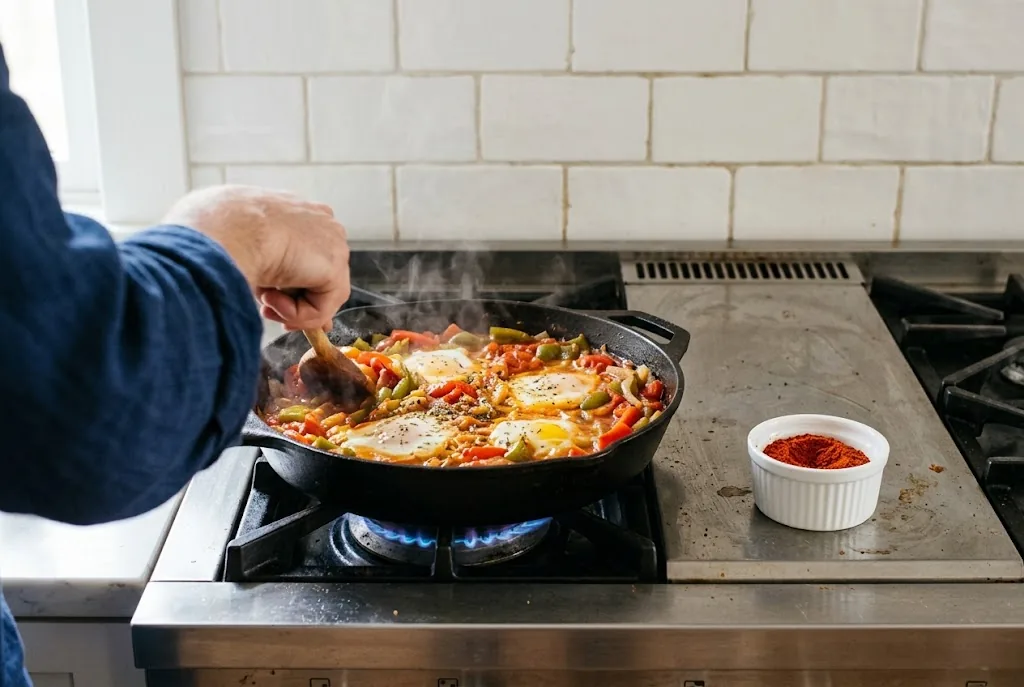
Try it with chocolate, fruit, or caramel when you want a subtle savory edge. For a first taste, sprinkle a little over fried eggs or roasted potatoes, then adjust the next serving. A modest amount is often enough to season a dish without covering its other flavors.
How does it compare with other ground spices?
No, it is not the same as paprika. This ground spice comes from a particular local variety and has its own protected geography and production rules. A sweet or smoky ground pepper can stand in for color and warmth, but the flavor is not identical.
What is a good substitute for Espelette pepper?
For a similar gentle warmth, mix a mild, sweet ground chili with a small pinch of cayenne. A smoky variety can echo the roasted note but may dominate the dish. Start with less than the recipe calls for, taste, and increase gradually. Aleppo pepper is another mild, fruity option where its different flavor suits the dish.
Why can the protected spice cost more?
The product can cost more because production is limited to a defined area and includes careful selection, hand harvest, sorting, maturation, drying, and packing. The name also carries a traceable regional origin. Compare the quantity and form you need: powder is convenient for everyday use, while a string of whole pods may suit cooks who want to decorate or dry peppers themselves.
Where can you buy authentic Piment d’Espelette?
Look for Piment d’Espelette or Ezpeletako Biperra with the AOP/PDO mark on the label. The protected product may be sold as powder, in a string, or fresh for processing. If a seed packet says Gorria, it names a pepper you can grow, not a guarantee that a harvest from outside the designated area can use the protected name. For the official details, check the 2024 INAO product specification.
Sources and product specification
- Syndicat du Piment d’Espelette AOP: identity, history, production, and growing cycle
- INAO: 2024 product specification for Piment d’Espelette PDO
- Espelette town: local PDO and production
- Tourism 64: Espelette village and pepper tradition
- La Societe des Plantes: Gorria seed and fruit description
