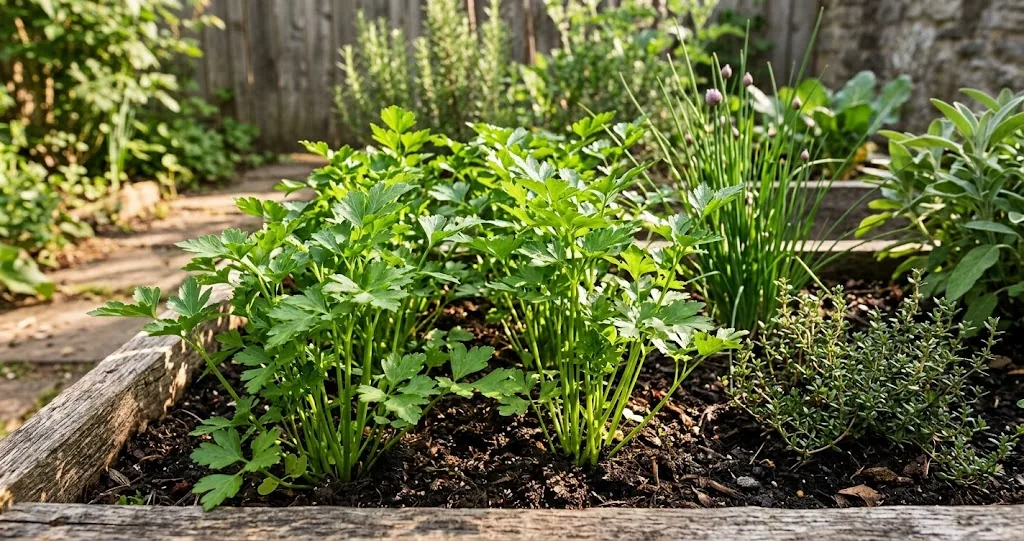
Parsley earns its place in a small garden because it gives back more than it asks for. A single plant keeps producing cut-and-come-again leaves from spring through fall. In a bright, cool window or under supplemental lights, a few pots can provide fresh sprigs in winter. It is forgiving of beginner mistakes, friendly to most soil types, and, once you crack the slow-sprouting habit of its seeds, surprisingly simple to grow from scratch.
If you have ever bought a floppy plastic clamshell of this herb at the grocery store, used three sprigs, and let the rest turn yellow in the fridge, this guide is for you. A modest patch is one of the cheapest, lowest-effort upgrades a home cook can make. What follows is the full sequence: picking the variety that suits your cooking, getting the timing right, starting from seed, day-to-day care, and the best way to harvest without ending the season early.
Why parsley earns a place in the garden
The plant (Petroselinum crispum) is a biennial native to the Mediterranean, which means it puts most of its energy into leaves in its first year and then flowers, sets seed, and dies back in its second. Treated as an annual in most home gardens, it stays in leaf-producing mode for months and never bolts until a mild winter or late-summer stress nudges it that way. That long production window is why a small clump covers more meals than a similar-sized patch of chives or basil.
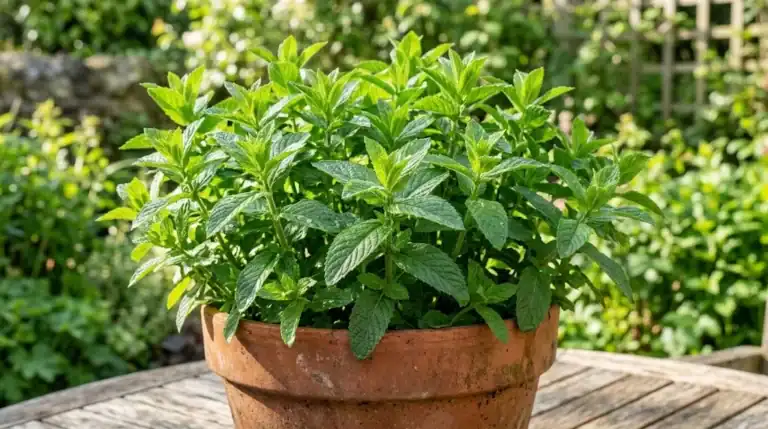
Beyond the kitchen, parsley draws hoverflies and small parasitic wasps when it does flower. Those beneficial insects can help with aphids around the garden. Parsley grows well beside tomatoes, peppers, asparagus, and most brassicas. Keep mint in its own container or away from a small parsley bed because it can spread quickly and crowd the shallow root zone.
Picking the right type for your kitchen
Two main types of parsley show up in seed catalogs and on starter-plant benches. Both grow with the same care, but they taste different and handle cooking differently.
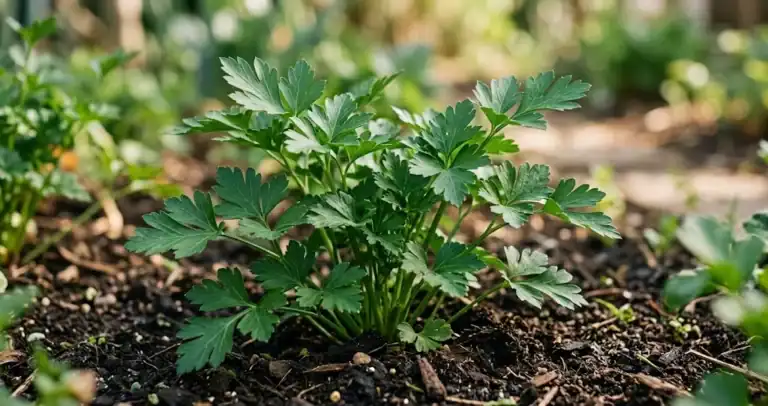
Curly parsley (Petroselinum crispum var. crispum) is the familiar garnish with tightly ruffled leaves. It holds its shape beautifully on a plate and carries a mild, slightly peppery flavor. It is the easier of the two to grow, because the dense crown shrugs off hot weather and recovers quickly after cutting.
Flat-leaf parsley (Petroselinum crispum var. neapolitanum), often labeled Italian parsley, has broader, smoother leaves and a stronger, more savory flavor. Cooks reach for it when making tabbouleh, gremolata, parsley pesto, or any sauce that needs parsley flavor to come through rather than decorate. Flat-leaf types sprout at a similar rate to curly but seem to bolt a little faster in mid-summer heat.
A third option, Hamburg parsley or parsley root, is grown for its thickened taproot rather than its leaves and is a winter vegetable in European gardens. If you are planting for everyday kitchen use, choose curly or flat-leaf based on the flavor you want, and plant one of each if you have the space.
When to plant parsley in your growing season
The plant tolerates cool weather and grows best between about 50 and 75 degrees F. The simplest rule is to put seeds in the ground once the danger of a hard freeze has passed in spring and the soil has warmed to at least 50 degrees. In most of the continental United States that falls between mid-March and mid-May. Gardeners in mild climates (USDA zones 8 and warmer) can also plant a fall crop in late summer that produces through winter and into the following spring.
For an earlier harvest, start seeds indoors 6 to 8 weeks before your last expected freeze. Parsley seedlings move well as long as you handle the roots gently and keep the soil damp during the move. Beginning indoors also dodges the worst of the slow sprouting period, which matters in regions with short springs.
Avoid planting in the deep heat of midsummer. Seeds started in soil that warms above 80 degrees F often refuse to sprout, and seedlings that do emerge tend to stall. If summer is your only window, use a shaded nursery bed or start seeds in cell trays indoors under lights where temperatures stay below 75.
Soil, sun, and water parsley actually likes
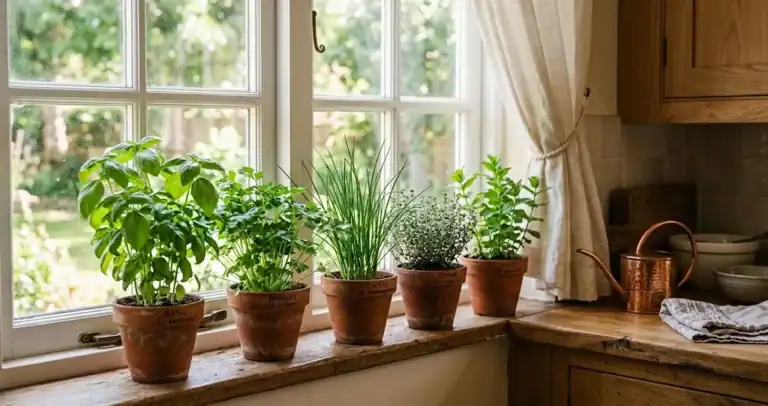
The plant grows well in full sun but tolerates light shade, especially in hot summer afternoons. Aim for at least 6 hours of direct light. In containers, a south-facing or west-facing windowsill gives steady production through spring and fall.
The single biggest requirement is steady moisture. Parsley has a long taproot and prefers soil that stays evenly damp, never soggy and never bone dry. The fastest way to lose a plant is to let it wilt between waterings; the leaves yellow, the plant bolts, and the flavor turns bitter.
Soil-wise, parsley prefers a loose, fertile bed with good drainage and a pH between 6.0 and 7.0. Work an inch or two of finished compost into the top 6 inches of soil before planting. In containers, use a standard potting mix and check that the pot drains freely. Raised beds and fabric grow bags both work well because they warm up early in spring and drain more reliably than heavy clay.

Sowing parsley seeds without losing your patience
The seeds are slow and erratic sprouters. Direct-sown seed can take 14 to 28 days to come up, and a portion often refuses entirely. Soaking seeds overnight before planting speeds sprouting noticeably. Place them in a small jar of room-temperature water for 8 to 12 hours, drain, and put them in the ground immediately.
Another reason sprouting drags on is that the seeds are planted shallow, about a quarter-inch deep at most. Press the soil down gently over them, water with a fine mist, and keep the surface damp. Covering the seedbed with a sheet of newspaper or a thin layer of straw between waterings slows evaporation without blocking light. Remove the cover the moment green shoots appear.
Plant seeds about 1 inch apart in rows 12 to 18 inches apart, or scatter them across a wide bed at the same layout. Once the seedlings have two sets of true leaves, thin them to 8 or 10 inches so each plant has room to develop a full crown. The thinnings move easily into other parts of the garden or into containers for the kitchen windowsill.

Raising seedlings and moving them out
Started indoors, seeds go into cell packs or 3-inch pots at the same shallow depth. Bottom-watering the tray keeps the surface from crusting, which is the second common reason parsley fails to sprout. After 5 to 6 weeks the seedlings are sturdy enough to move outside.
Harden transplants off for a week before setting them into the garden. Start with an hour in a sheltered spot on day one, two hours on day two, a full day by day three, and a full day and night outdoors by day seven. Move on a cloudy day or in the late afternoon to reduce shock. Water each plant in thoroughly and keep the soil damp for the first ten days while roots spread into the surrounding bed.
Whether you started indoors or direct-sowed, the mature layout is 8 to 10 inches in any direction. Closer planting works for a tight container but reduces airflow and increases the risk of leaf-spot diseases in humid weather.
Day-to-day care for healthy parsley plants

Once established, parsley needs an inch of water a week from rain or irrigation, more in hot or windy weather. A 1- to 2-inch ground cover of straw, shredded leaves, or aged organic matter keeps the soil moisture even and cools the roots in summer. Pull it back slightly from the crown in late winter to prevent rot.
The plant is a light feeder. A single spring application of a balanced organic fertilizer is enough in most garden soils. Container-grown plants need a dilute liquid feed every 3 to 4 weeks through summer because frequent watering leaches nutrients from the potting mix.
Pinch off any flower stalks the moment they appear unless you are saving seed. As soon as a plant shifts into reproductive mode, leaf flavor turns bitter and growth slows. Regular harvesting also keeps the plant producing fresh leaves from the crown.
Pests and problems to watch for
Parsley is mostly trouble-free, but a few issues come up regularly in home gardens:
- Aphids cluster on tender shoots and on the undersides of leaves. A strong spray of water knocks them off; ladybugs and lacewings usually finish the job within a week.
- Parsley worms, the green caterpillars with black and orange bands, are the larvae of the black swallowtail butterfly. Hand-pick them if the population is small, or plant extra to share. They rarely strip a healthy plant.
- Leaf spot shows as small brown lesions with yellow halos in damp weather. Improve airflow by thinning, water at the soil line rather than overhead, and remove affected leaves. Crop rotation cuts future outbreaks.
- Yellowing lower leaves usually mean the soil is drying out between waterings. A deep soak and a thicker ground-cover layer bring the plant back within a week.
- Bolting in mid-summer is more often a response to heat and moisture stress than a fixed timeline. Steady water and afternoon shade delay it by several weeks.

Harvesting parsley without killing the plant
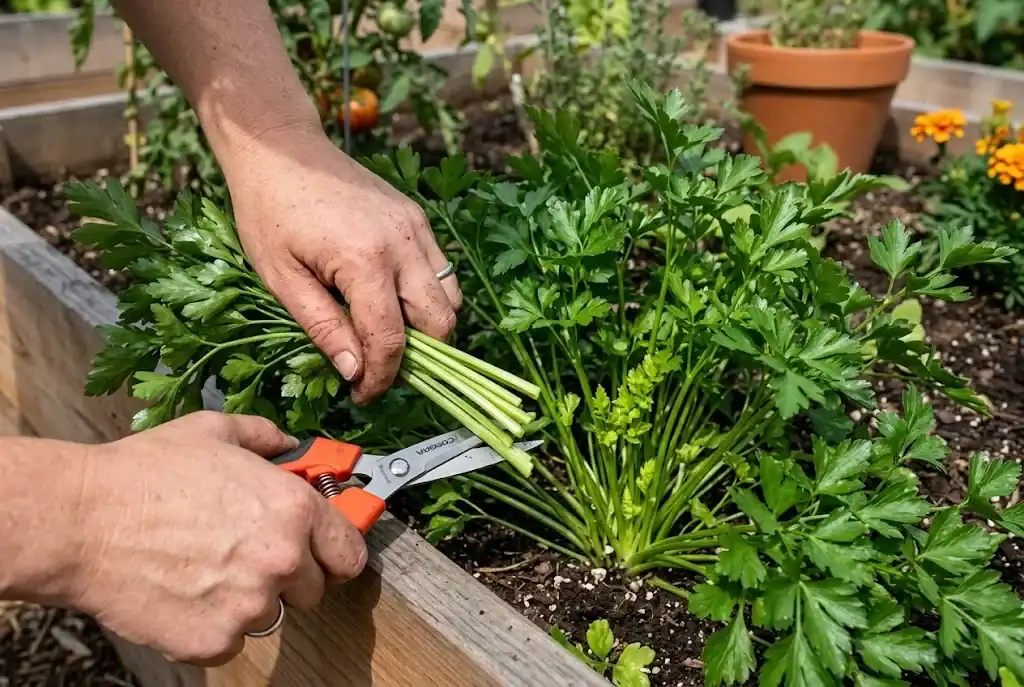
The classic mistake is cutting from the top. Always take outer stalks first, snipping each one at the base where it joins the crown. Fresh shoots push up from the center, and the cut stalks do not regrow. Taking no more than one-third of the leaves at any one pass lets the plant keep producing through the season.
Begin harvesting once a plant has at least 8 to 10 full stems, around 70 to 90 days after planting. Cut in the morning after the dew has dried and the leaves are cool, but before the heat of the afternoon drives off the aromatic oils. Use the same day for the brightest flavor, or store them in the fridge for up to a week with their stems in a jar of water and a loose plastic bag over the top.
See how to harvest parsley without stunting it for the smaller details of cutting, regrowth after multiple harvests, and signs that a plant is slowing down. It picks up after you have established a healthy plant and explains how to keep the plant productive.
Quick answers about growing parsley
Is parsley a perennial? It is technically a biennial. Most home gardeners treat it as an annual because flavor drops sharply once a plant sends up a flower stalk in its second year.
Can I grow parsley in pots? Yes. A 10- to 12-inch pot is a good starting size for one plant. The bigger issue than pot size is drainage. Parsley does not sit in waterlogged soil.
Why did my parsley seeds not come up? The three usual causes are too-deep sowing, soil that dried out during the 3-week sprouting window, or seed that is past its viability date. Parsley seed loses the ability to sprout quickly after the first year.
Does parsley keep after a hard freeze? Light frost may damage the top leaves. Before a sustained hard freeze, harvest what you need and protect container plants or move them to shelter. Whether an in-ground crown survives depends on local minimum temperatures and winter protection. Any plant that overwinters will flower and set seed in its second year.
What should I plant next to parsley? Tomatoes, peppers, asparagus, and brassicas benefit from parsley’s flowers in the second year. Avoid planting near mint. Both dislike wet feet, but mint spreads aggressively and will overtake a parsley crown.
Where to grow from here
The basics covered here, variety choice, timing, soil, water, sowing, and harvest, are the foundation of any parsley patch. If you are putting together a brand-new herb bed and want the wider picture, planning the soil, plant spacing, and other herb bed essentials gives you a useful starting point. That article pairs with this one as the planning side to the planting side.
A healthy parsley crown will keep producing through the entire growing season, and a single bed of three or four plants gives most households more leaves than they can use fresh. The only other habit worth building, beyond harvesting, is making sure the harvest goes to use rather than the compost.
Once you have a season’s worth of leaves on hand, the next practical question is how to keep that harvest usable through the colder months. Using and preserving parsley after picking covers drying, freezing, and storage methods that protect its flavor.