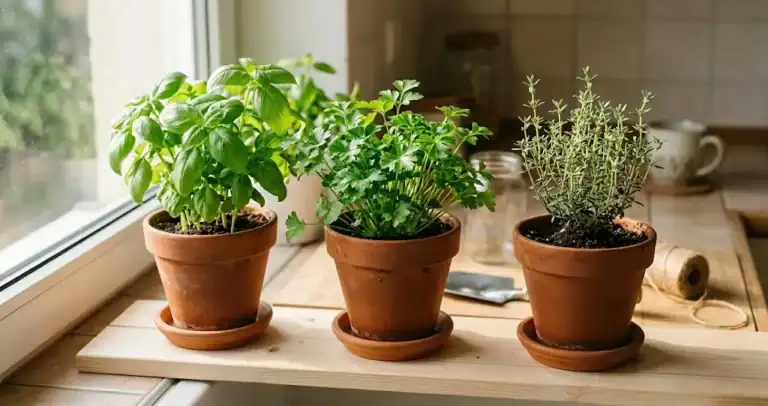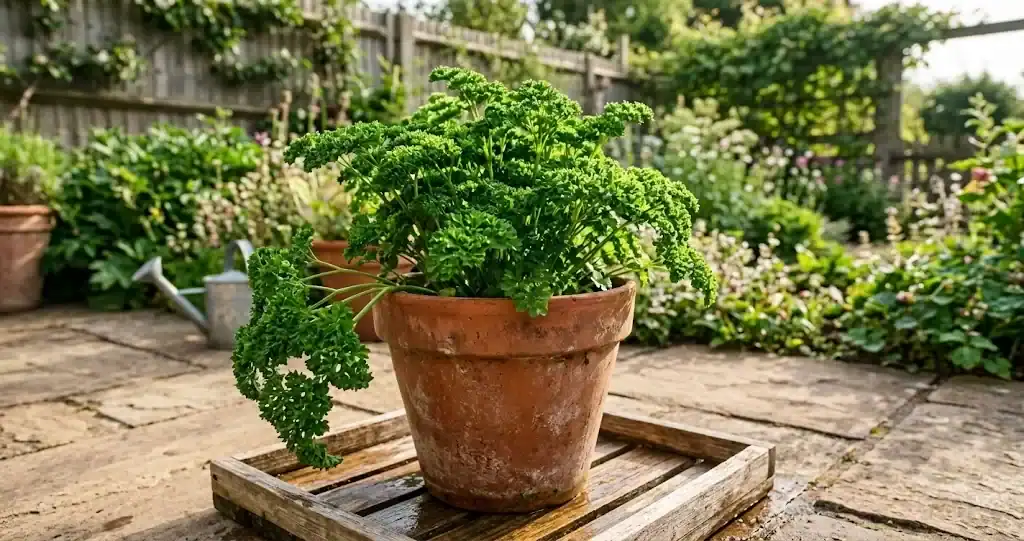
Parsley is one of the easiest herbs to grow in a container, and it rewards a small setup with months of fresh leaves for the kitchen. A single pot on a sunny patio or windowsill produces handfuls of bright, peppery parsley from spring through the first frost. The trick is choosing the right container, giving the roots room to grow, and not letting the soil dry out for long.
This guide walks through every step of growing parsley in pots, from picking the right vessel and sowing seeds to harvesting without killing the plant. It assumes a small space, a basic watering can, and a desire to keep fresh parsley close to the stove.
Why parsley does well in pots
Parsley sends down a single long taproot, which is exactly the shape a deep pot is built for. Confined in a container, the parsley plant puts its energy into leafy growth above the soil instead of spreading sideways through a garden bed. Containers also keep the soil warmer in early spring, so seeds germinate a little faster than they would outdoors in cool ground.
Container parsley has a few practical advantages:
- Move the pot with the sun as the seasons change.
- Bring parsley indoors before frost instead of losing the plant.
- Keep the soil moisture steady, which parsley likes.
- Stop the plant from going to seed too early by relocating it to a cooler spot.
For most home gardeners, pots also avoid the parsley plant’s tendency to sprawl when it has room, so the harvest stays compact and easy to snip.
Choosing the right pot for parsley
Parsley needs depth more than width. The taproot will reach eight to ten inches before the plant is mature, so a container at least eight inches deep is the practical minimum. Anything shallower dries out too fast and restricts the root.
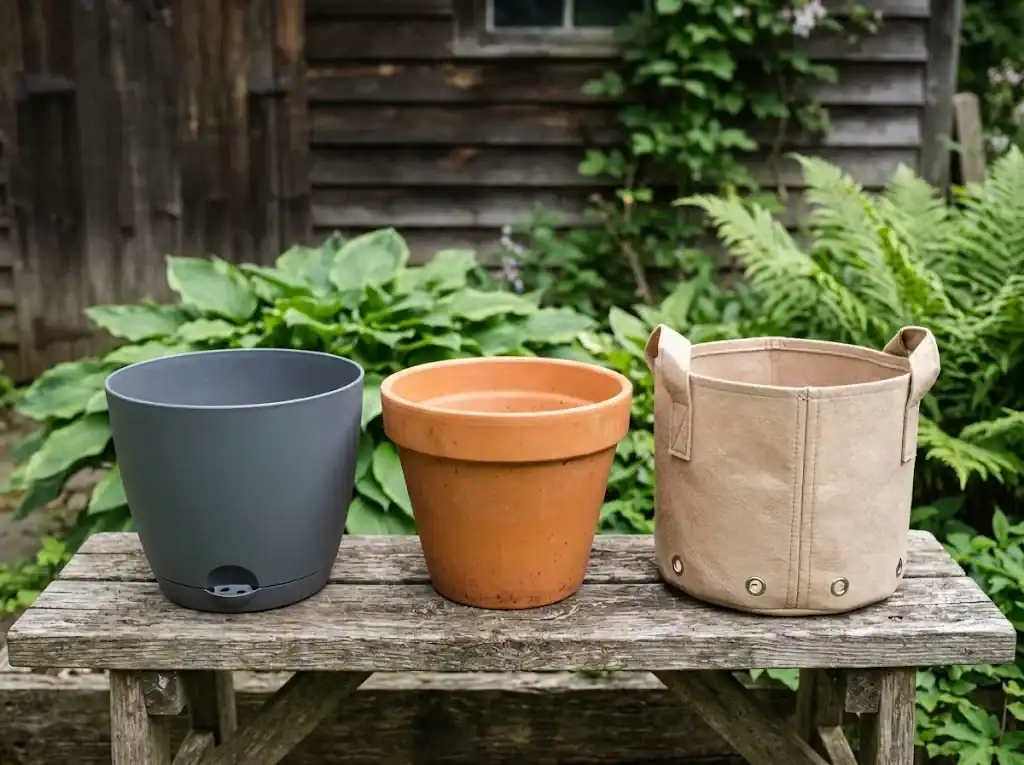
Material is a personal choice:
- Plastic pots are light and hold moisture longer. Good for balconies and indoor windowsills.
- Terracotta pots breathe and look good, but dry out faster. Best for gardeners who tend to overwater.
- Glazed ceramic holds moisture well and stays stable in summer heat.
- Fabric grow bags give the taproot room to run and drain freely. Useful on a sunny patio.
Whatever the material, drainage is the one detail that matters most. The pot must have at least one hole in the bottom, ideally several. Parsley roots rot quickly in waterlogged soil, and no amount of careful watering will save the plant if water has nowhere to go.
A pot that is at least eight inches across gives a single parsley plant room to grow. If you want to plant parsley with companions like basil or chives, jump to a twelve inch pot so each herb has its own root zone.
The best soil for parsley in pots
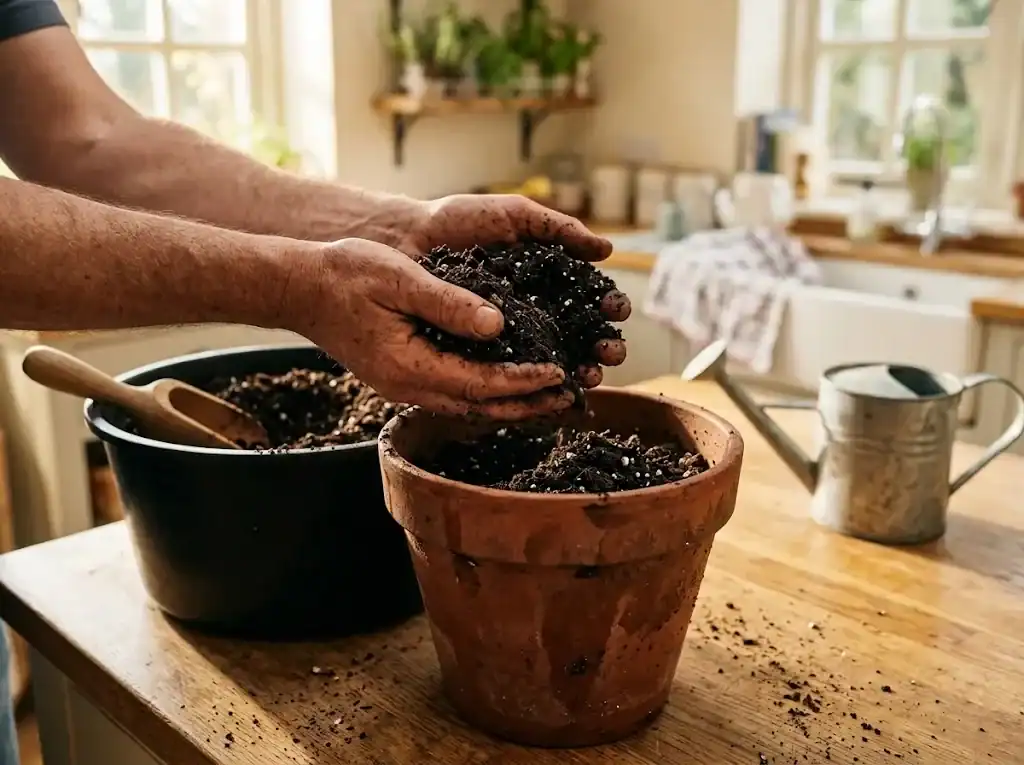
Parsley likes a rich, well drained potting mix. A standard peat free potting soil with compost blended in works well. The goal is a mix that holds moisture but does not turn soggy when watered.
A simple homemade blend:
- Two parts peat free potting mix.
- One part compost or well rotted leaf mold.
- One part perlite or coarse sand for drainage.
Avoid garden soil. It compacts in containers and rarely drains the way a pot needs. A handful of worm castings mixed through gives young seedlings a steady start.
Parsley tolerates a wide pH range but grows best in slightly acidic to neutral soil, around 6.0 to 7.0. Most bagged potting mixes already sit in this range.
Choosing the right parsley variety for pots
Two main parsley types grow well in containers, and a third comes in handy for cooking. Picking the variety that fits the kitchen and the climate is part of getting a useful harvest from a small pot.
Curly parsley is the dense, ruffled garnish most often seen on restaurant plates. It tolerates a chill and holds its shape in summer salads, which makes it the easiest choice for a beginner. Flat-leaf parsley, also called Italian parsley, has a stronger, slightly peppery flavor and is the type most home cooks reach for when a recipe calls for parsley. It also grows well in pots but bolts a little faster than curly in hot weather.
A third option, Hamburg parsley, is grown for its thick taproot rather than its leaves. The root is cooked like a parsnip in soups and stews, and the leaves can be used as a milder parsley substitute. In a deep pot it grows well, but the kitchen payoff is smaller than the two leaf types.
For a single pot on a patio or windowsill, curly parsley or Italian parsley are both reliable. Curly holds longer in heat and looks good in a small space. Italian has more flavor per leaf and dries well for winter storage.
When to plant parsley in pots
Parsley is a cool season herb and grows most actively in spring and autumn. The best time to plant parsley in pots is two to three weeks before the last expected frost in spring, once daytime temperatures stay above about 50 F. In mild climates, parsley can be planted from late winter through early autumn.
Indoor pots can be started any time of year on a sunny windowsill, though the plant still slows down in the short days of midwinter. Grow lights solve the winter slump if you want steady harvest through the colder months.
Sowing parsley seeds in pots
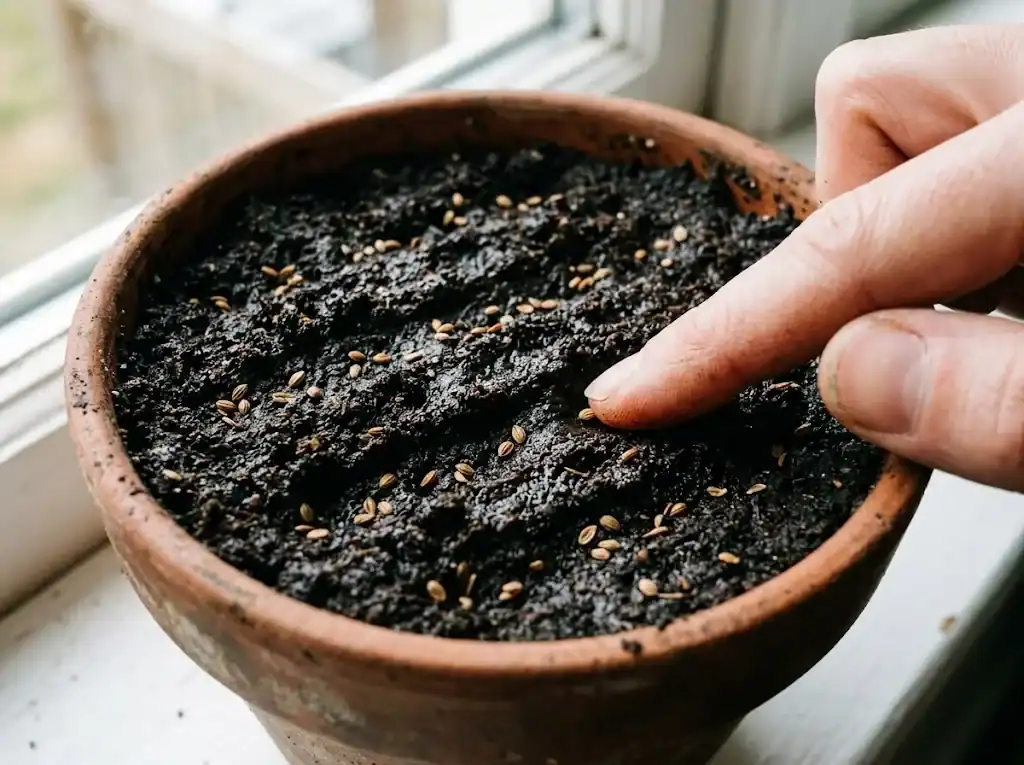
Parsley seeds are slow to germinate. Most packets show two to four weeks before seedlings appear, and some take longer. Soaking the seeds in warm water overnight before sowing speeds things up by a few days.
Steps for sowing:
- Fill the pot to within an inch of the rim with moist potting mix.
- Scatter seeds across the surface, leaving about an inch between them.
- Cover with a quarter inch of soil and press gently.
- Water with a fine spray to settle the seeds without dislodging them.
- Keep the pot in a warm spot with indirect light until seedlings emerge.
- Thin to one strong seedling per two inches once the second set of leaves appears.
For a steady supply, sow seeds into a fresh pot every four to six weeks through spring and again in early autumn. Staggered sowing keeps fresh parsley coming without a gap.
Buying small seedlings from a nursery is a faster route. Plant each seedling at the same depth it sat in its original pot and water well to settle the roots.
Light and temperature
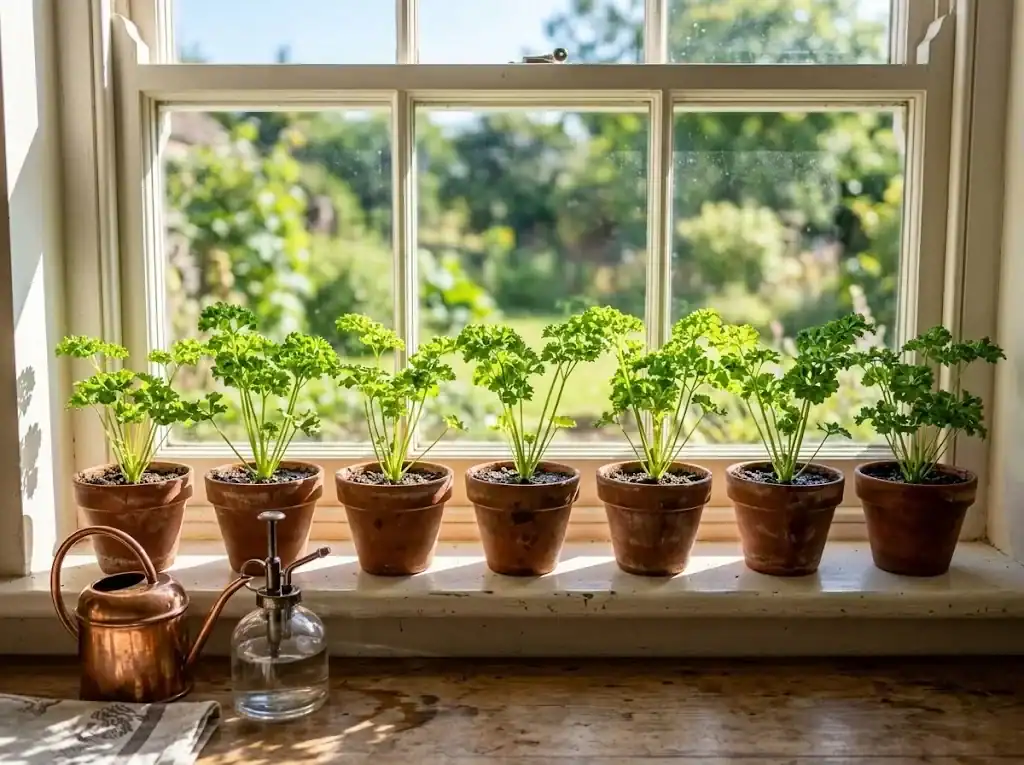
Parsley wants full sun, which means at least six hours of direct light each day. A south or west facing patio, balcony, or windowsill works well. In hot summer regions, parsley appreciates afternoon shade, where temperatures climb above 90 F for long stretches.
Indoor parsley grown on a windowsill benefits from being rotated a quarter turn each week so the plant does not lean toward the light. If natural light is short, a simple grow light on a timer for ten to twelve hours a day keeps the leaves compact and full flavored.
Parsley handles cool weather better than heat. It will keep growing in temperatures as low as 40 F and survives a light frost. Hot summer conditions above 85 F tend to push parsley toward flowering, which is the point at which leaves turn bitter.
Watering parsley in pots
Parsley likes steady moisture. The top inch of soil should feel dry to the touch before the next watering, then a deep soak so water runs from the drainage holes. Shallow daily sprinkling keeps the roots near the surface and stresses the plant during heat.
A simple rule for parsley in pots:
- Check the top inch of soil daily during summer.
- Water until the pot feels heavy or water drains from the bottom.
- Cut back watering in winter when growth slows.
If the leaves yellow and growth slows, the soil is probably staying too wet. Lift the pot to check weight and skip a watering to let the roots recover. If leaves wilt and the pot feels light, water deeply and the plant usually bounces back within hours.
Fertilizing parsley in pots
Potted herbs run out of nutrients faster than herbs in the ground, because every watering leaches a little from the soil. A monthly dose of half strength liquid fertilizer, such as a seaweed or fish based feed, keeps parsley productive through the growing season.
Stop feeding about a month before the first expected frost so the plant can slow down naturally. A late flush of tender growth in cold weather is more vulnerable to damage.
Harvesting parsley so it keeps growing
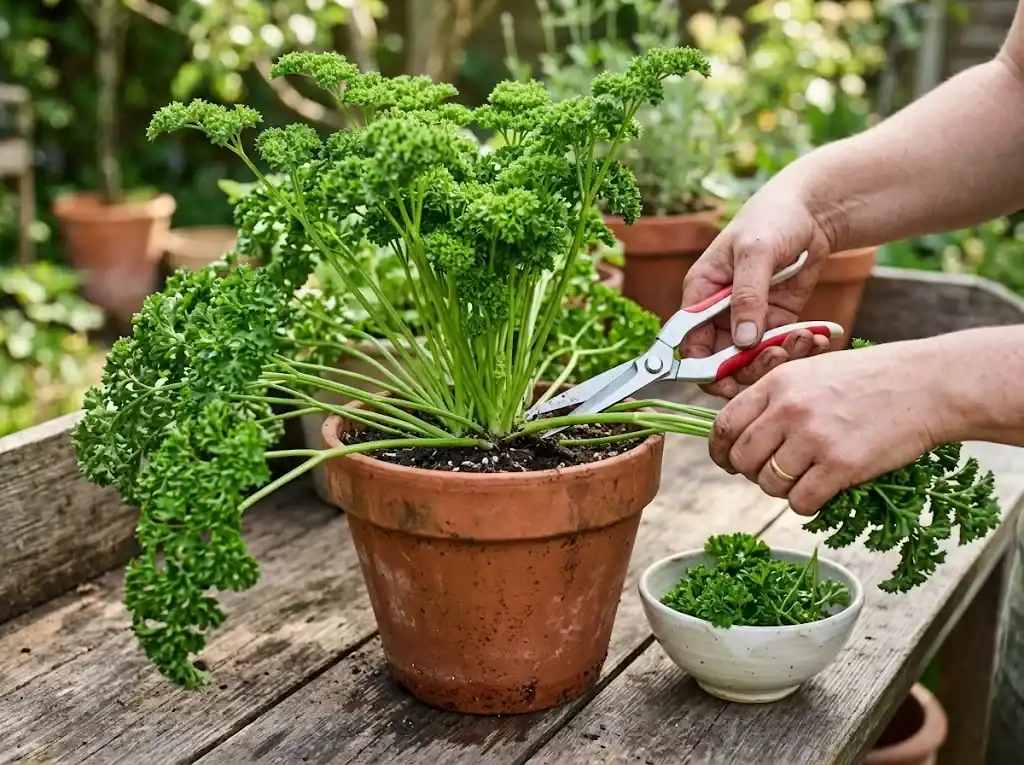
The key to a long harvest is to cut the outer stems first and leave the central crown alone. New growth always comes from the center of the plant, so taking from the outside keeps the parsley plant productive for months.
To harvest parsley, snip the outer stems close to the base once the plant has at least eight to ten full sized stems. Cut just above a leaf joint so the plant branches at that point and grows back bushier. Pinching off flower stalks as soon as they appear also extends the harvest, since flowering turns the leaves bitter.
For step by step guidance on cutting parsley the right way without shortening the plant’s life, the linked harvesting guide walks through the timing and the cut in more detail.
Drying and storing fresh parsley
Parsley keeps well in the fridge for about a week if the stems sit in a small jar of water with a loose plastic bag over the top. For longer storage, parsley dries easily in a low oven or a dehydrator and holds its color and flavor for several months in a sealed jar.
The full method for picking and storing parsley properly, including freezing chopped parsley in oil or ice cube trays, is covered in the linked preserving guide.
Common parsley problems in pots
A few issues come up regularly with parsley in containers. None of them are hard to fix once spotted.
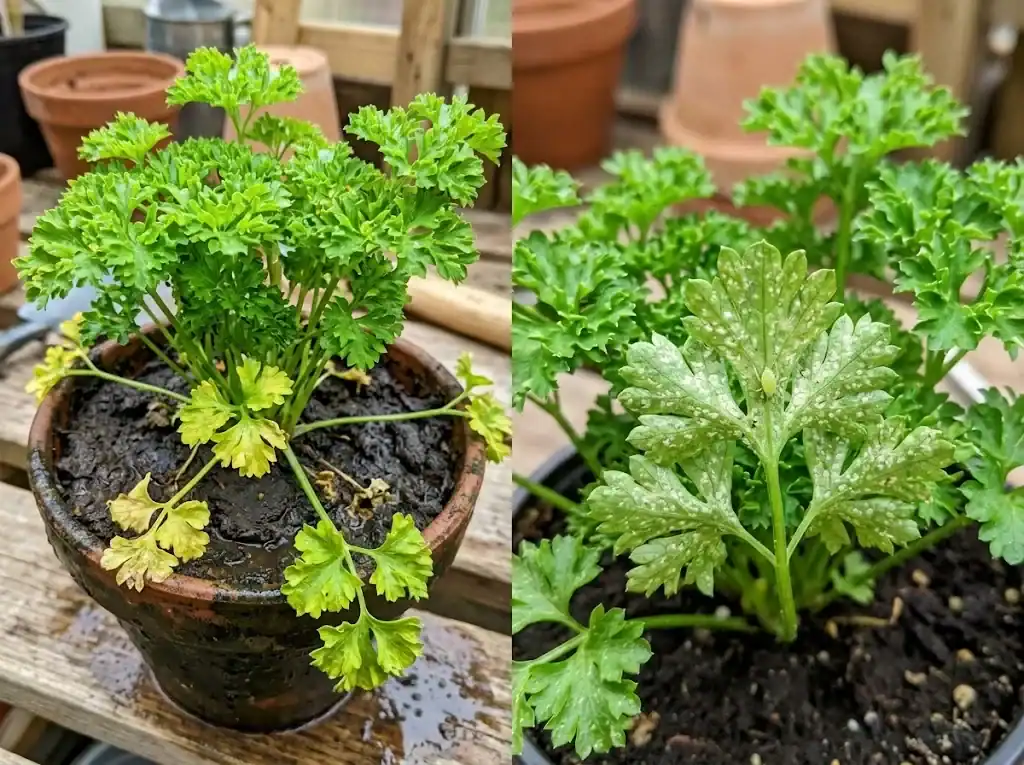
Yellow leaves often mean the soil is staying wet. Check drainage and ease off watering until the plant recovers. If yellowing happens in late spring, the plant may simply be running out of nutrients and will benefit from a half strength liquid feed.
Whiteflies and aphids sometimes show up on the undersides of leaves. A spray of insecticidal soap or a strong jet of water from a hose clears most infestations. Companion planting with aromatic herbs like basil or chives helps deter pests before they arrive.
Slow growth usually traces back to one of three causes: not enough light, soil that has dried out too far between waterings, or a pot that is too small for the taproot. Move the plant to a sunnier spot, water more consistently, or pot up into a larger container.
Bolting, or sending up a flower stalk, is parsley’s response to heat or stress. The plant goes to seed early in its second year or during a hot spell. Snip the stalk at the base as soon as it appears and move the pot to a cooler location. The plant often sends out a fresh round of leaves for a few more weeks before the season ends.
Companion planting in a parsley pot
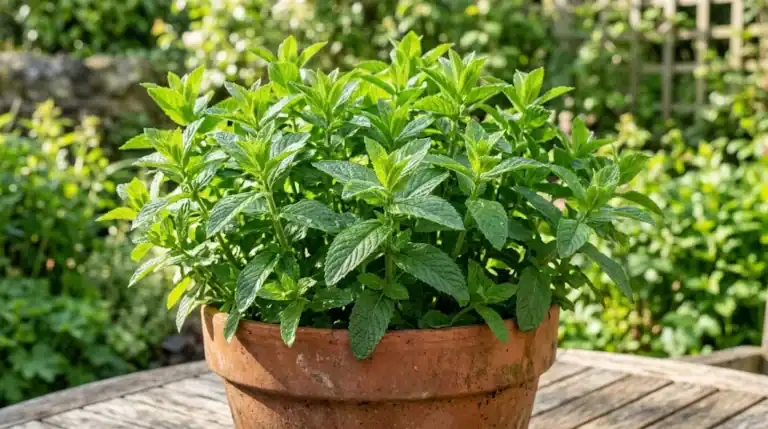
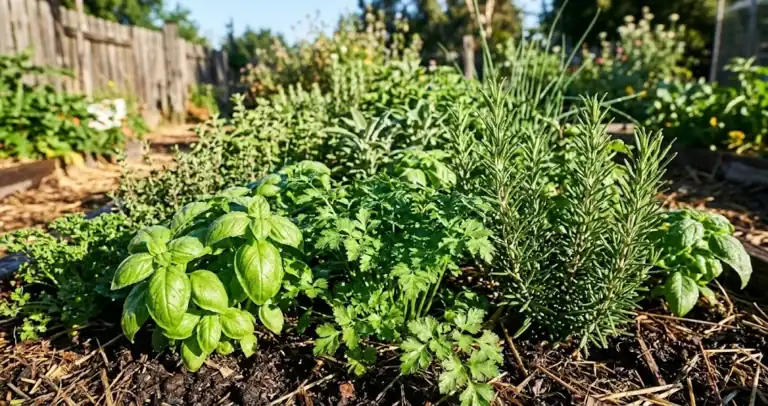
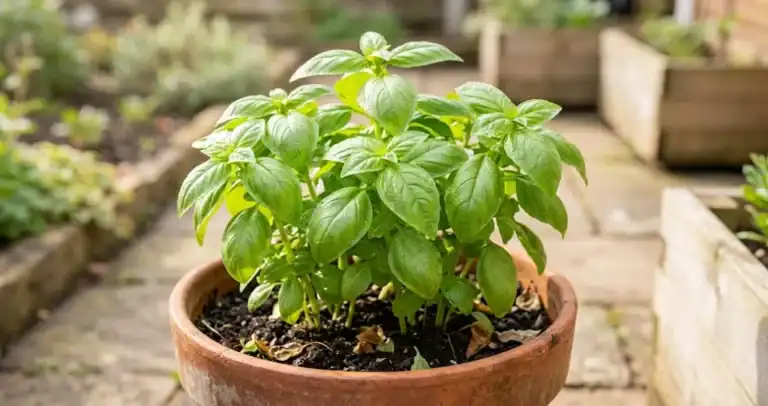
Parsley grows well next to several common herbs. Basil, chives, and thyme share similar light and water needs and pair nicely in a larger container. Parsley also attracts hoverflies and parasitic wasps, which help control aphids on nearby tomatoes or peppers on the patio.
Keep parsley away from mint in the same pot. Mint is a vigorous spreader and will quickly take over the container, crowding out the parsley roots.
Moving parsley indoors for winter
Parsley is a biennial, which means it grows leaves the first year and flowers the second. Most home gardeners treat parsley as an annual and replace the plant each spring, but a pot of parsley can be brought indoors before frost and kept producing on a sunny windowsill for several months.
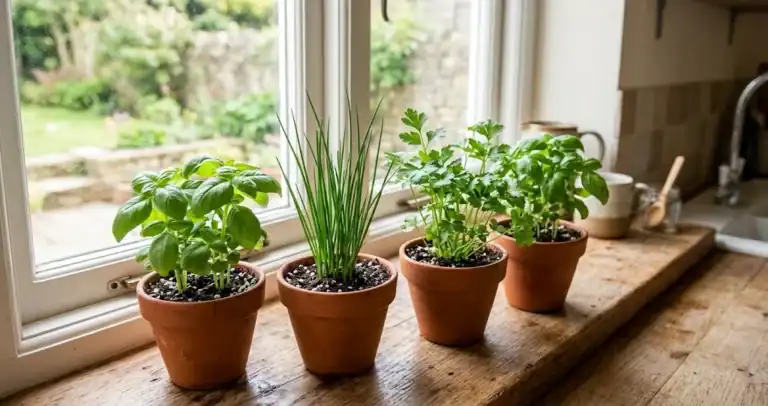
To bring parsley indoors, move the pot to a shaded spot for a week before bringing it inside. This acclimates the leaves to lower light and reduces the transplant shock. Once inside, place it in the sunniest window and water when the top inch of soil feels dry.
Quick answers about growing parsley in pots
How big a pot does parsley need?
Parsley needs a pot at least eight inches deep so the taproot has room. A pot eight to twelve inches across gives a single plant enough space to grow a full harvest.
How often should I water parsley in a pot?
Check the top inch of soil daily. Water deeply when the surface feels dry to the touch, until water runs from the drainage holes. In hot summer weather, that can mean watering every day.
Can parsley grow in shade?
Parsley tolerates partial shade but grows slowly and produces thinner leaves. Full sun, with light afternoon shade in hot climates, gives the best harvest.
How long does a parsley plant last in a pot?
A parsley plant stays productive for about a year, with the best harvest in the first growing season. After flowering in the second year, the leaves turn bitter and the plant is best replaced.
Does parsley come back every year?
Parsley is a biennial. It grows leaves in the first year, flowers and sets seed in the second year, then dies back. Most gardeners grow parsley as an annual and replant each spring.
Putting it together
Growing parsley in pots is one of the easiest ways to keep fresh herbs close at hand. Pick a deep container with good drainage, fill it with a rich potting mix, and keep the soil evenly moist. A sunny spot, a monthly dose of liquid fertilizer, and a habit of harvesting the outer stems will keep parsley productive for most of the year.
For a broader look at setting up a small herb garden on a patio or windowsill, the beginner’s guide to growing an herb garden walks through container choice, soil blends, and seasonal care for a wider range of kitchen herbs.