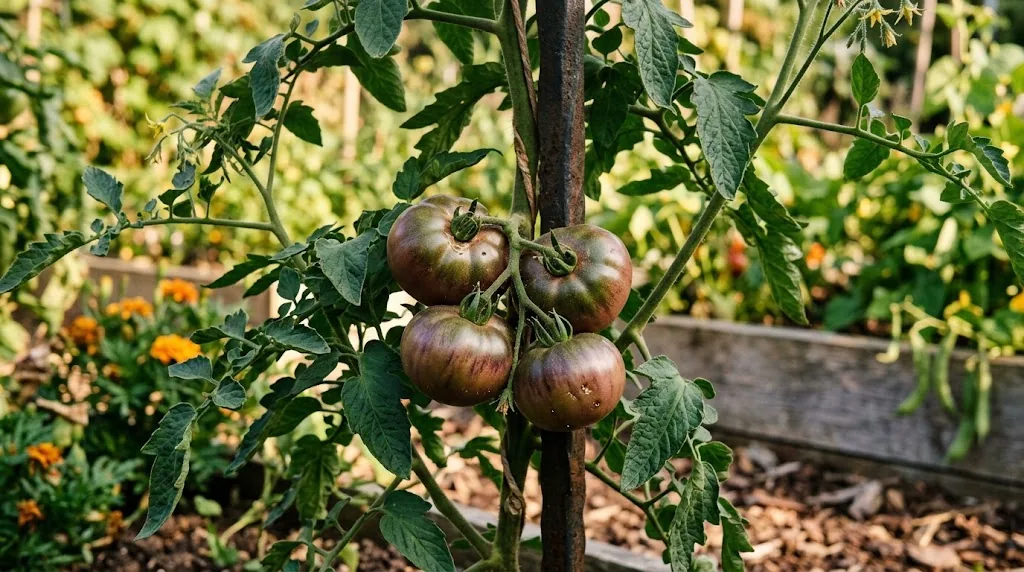
A ripe Black Krim can look almost smoky: dusky purple-brown skin, green shoulders, and a juicy red-brown interior. That unusual color is only part of its appeal. This open-pollinated heirloom also brings a rich, tangy taste to sandwiches and summer cooking, while its tall vines need steady care and firm support.
Black Krim is an heirloom tomato associated with Crimea. Expect flattened, often lightly ribbed tomatoes and a long picking season rather than one concentrated crop. Seed listings commonly give about 80 days to maturity, but weather, planting date, and the seed source affect timing. Here is how to identify the variety, grow it and harvest it at the right stage, and make the most of the produce.
Unlike cherry tomatoes, this is a large slicer. If you are comparing unusual colors and growth habits, the tomato varieties hub offers a broader route through the different kinds of tomatoes.
Origin and history
This variety is associated with the Crimean Peninsula, on the Black Sea. The name also appears as Black Crimea or Black Crimean. Seed Savers Exchange records that Lars Olov Rosenstrom of Sweden made the variety available to US gardeners through the Exchange’s 1990 yearbook. He noted that tomatoes in his heated greenhouse became darker than those grown outdoors, which he described as brownish purple. The older regional history is less detailed, so claims about a specific breeder or the exact date it first arose are best treated cautiously.
Its open-pollinated status means gardeners can save seed from a healthy, true-to-type plant and expect the next generation to resemble it, although plants and fruit can still vary. The Cornell Cooperative Extension variety database classifies it as open-pollinated and heirloom. Seed Savers Exchange’s Black Krim listing describes its Crimean origin and introduction to the US seed exchange.
Botany and plant facts
Black Krim is a cultivar of Solanum lycopersicum. It is an indeterminate, open-pollinated beefsteak tomato. These tall vines keep growing and setting tomatoes through the season when conditions allow, so plan for a tall plant and repeated picking.
The tomatoes are usually medium to large, flattened, and sometimes lobed or gently ribbed. Cornell’s variety database describes purple skin and green-black shoulders, while Seed Savers Exchange lists violet-brown and purple-red tones with green shoulders. Color can shift with growing conditions, and ripe shoulders may remain green. The interior is juicy and dark red to brownish. Seed sources commonly list around 80 days to maturity; this is a planning estimate, not a guaranteed harvest date.
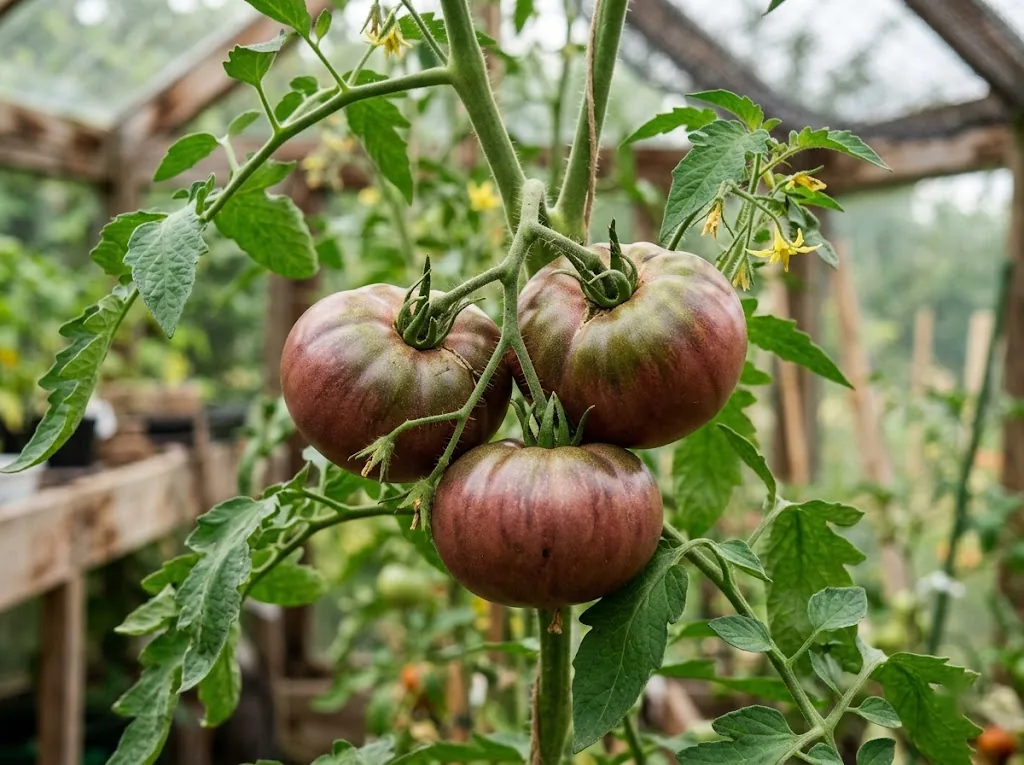
Black Krim flavor is often described as full, sweet-tart, and slightly salty. That is a taste description, not a measured salt content. Some gardeners prefer it to other purple tomatoes, while growing conditions and individual taste affect the comparison. It is more useful to treat descriptions as a guide than a promise.
Growing Black Krim tomatoes
Give Black Krim a sunny site, fertile soil that drains well, and enough room for air to move around the leaves. Harden transplants before setting them outdoors, and wait until frost danger has passed and the soil has warmed. Install a sturdy cage, stake, or trellis at planting so you do not disturb established roots later. Cornell reports that the variety suits a garden or greenhouse, and its tall vines benefit from reliable support.
If you start your own tomato seeds, sow them indoors about five to six weeks before outdoor planting. Use a sterile mix and bright light. For germination, University of Minnesota Extension recommends keeping the soil temperature between 75 and 85°F until seedlings emerge, then about 70°F. Adjust timing to your local climate, and harden seedlings outdoors gradually for a week or two before transplanting.
Keep moisture in the growing bed as even as you can. Water deeply at the base of the plant, then mulch to slow drying. A dry spell followed by heavy rain or a large watering can make ripening tomatoes split. University of Minnesota Extension lists growth cracks as common when water levels vary from drought to rain, especially in large heirlooms. Pick tomatoes at the first full color change if cracking is a recurring problem, and use intact tomatoes promptly.

Do not assume the cultivar has dependable resistance to a particular disease. Cornell’s database calls it disease resistant but specifically says more evaluation is needed for late blight resistance. Give plants good spacing, avoid wetting foliage when watering, rotate tomatoes to a different bed when practical, and remove badly diseased leaves. Check for pests such as aphids and hornworms as you inspect the plant. Check a seed packet for its own resistance codes rather than transferring a claim from another seller or strain.
It can grow in a large container if you can provide a deep volume of potting mix, frequent watering checks, and a cage or other strong support. A container dries faster than garden beds, especially in hot weather. Choose a pot large enough for the root system and follow its potting-mix label; do not let the plant swing between very dry and waterlogged conditions.
For a smaller, cluster-grown tomato to compare, Campari tomatoes are a branded cocktail variety with their own growth and use profile.
When to pick ripe tomatoes
Use color and feel rather than the calendar alone. The color shifts from green to dusky brown, purple-red, or mahogany as it matures. The shoulders can stay olive or green, so do not wait for the whole tomato to turn one solid color. A ripe tomato should yield slightly to gentle pressure and come away with a careful lift or snip.
Check the plant every few days once fruit begins to color. Cut tomatoes with a short piece of stem if pulling risks breaking a branch. If rain is forecast or cracking has begun, you can pick tomatoes after they start changing color and let them ripen indoors at room temperature. Fully green tomatoes may not develop good flavor, but mature fruit that has started to change color can often finish off the vine.
Storage and preserving
For the best fresh texture, use fully ripe tomatoes soon after harvest. Keep unripe tomatoes at room temperature in a single layer and check them often as they color. Separate cracked or bruised tomatoes so you can use them first, and discard tomatoes that are moldy or decaying.
Its juicy, meaty fruit works well in sauces, cooked dishes, and freezing. To freeze whole or cut tomatoes, wash, loosen the skins briefly in boiling water if desired, peel and core, then pack into freezer containers with headspace. Frozen tomatoes soften when thawed, so reserve them for cooking. For home canning, use a current tested recipe and add the specified acid. The National Center for Home Food Preservation advises adding bottled lemon juice or citric acid even when pressure canning tomatoes; do not improvise a shelf-stable recipe.
How to use these tomatoes
Slice a ripe Black Krim thickly for sandwiches, burgers, or a tomato plate with salt, olive oil, and basil. Its soft, juicy flesh also suits bruschetta, chopped salads, and quick pan sauces. For a simple meal, warm sliced tomatoes briefly with garlic and herbs, then spoon them over toast or pasta. Keep cooking time short when you want the tomato’s fresh, tangy character to stand out.

When the harvest is large, cook them into sauce or freeze the sauce for later meals. Its deep color and layered taste add character to mixed-tomato dishes, while its juice helps loosen a skillet sauce. Choose firm, uncracked tomatoes for longer storage or preservation, and follow tested guidance for any canning project. For a ribbed tomato that slices differently at the table, compare it with Costoluto Genovese tomatoes.
Sources used for this Black Krim profile
- Seed Savers Exchange, Black Krim listing
- Cornell Cooperative Extension, Vegetable Varieties for Gardeners
- University of Minnesota Extension, Growing tomatoes in home gardens
- University of Minnesota Extension, Cracks in tomato fruit
- National Center for Home Food Preservation, Freezing Tomatoes
- National Center for Home Food Preservation, Canning Tomatoes
