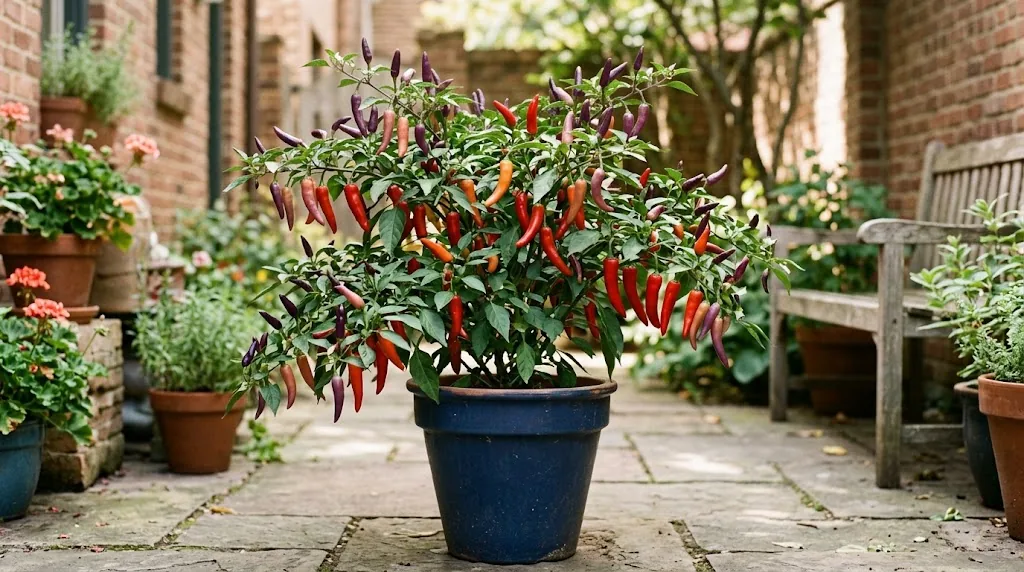
Buena Mulata pepper stands out before you taste it: its fruit can move from dark purple through salmon and orange before turning crimson. That color show comes from a real heirloom story, but this is still a working kitchen pepper, with heat and a useful range of harvest stages.
If you are comparing named chilies, the broader guide to chili pepper varieties can help you place this one among other shapes, species, and heat levels.
Here is what is known about its history, flavor, growing needs, harvest, and storage, along with where the available heat estimates disagree.
What the fruit looks like
This is a hot, long-fruited cultivar of Capsicum annuum. It has a cayenne-type profile: the fruit is long and slender, not blocky like a bell pepper. Truelove Seeds describes fruit around 4 to 5 inches in length; Baker Creek lists pods 6 to 7 inches long, a useful reminder that seed lines and growing conditions can differ. One catalog calls the gradual color changes chameleon-like. This variety combines ornamental color with food use for a home grower.
The available seed histories present it as a named cultivar with an heirloom story. They trace its surviving line through Pippin and the Weaver family, but do not document it as a landrace tied to a specific regional population. The safest description is a named C. annuum cultivar with a documented preservation story.
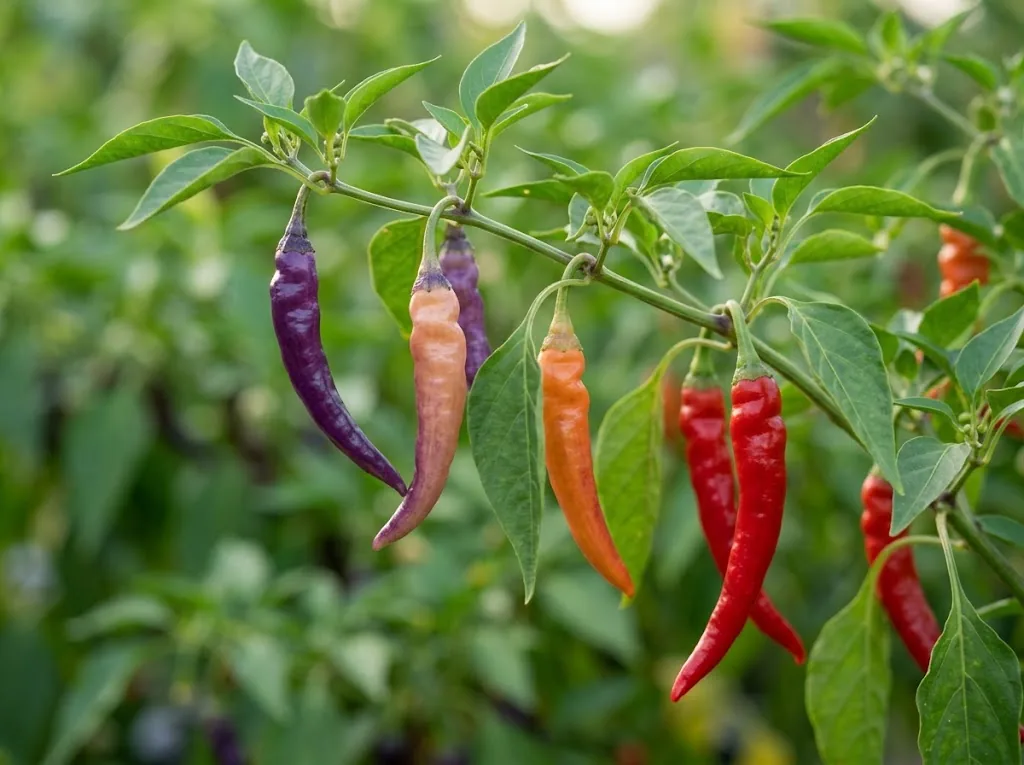
Color is the easiest clue to maturity. The young fruit starts violet, then may pass through pink or salmon and orange before reaching a deep red shade. Do not expect every stage to appear in the same order or at the same speed on every plant. The exact shades can vary, and a plant may carry more than one stage at once. As each pod ripens, its color becomes a useful harvest cue.
For a broader comparison of named cultivars in this series, the Joe E. Parker pepper profile covers a different C. annuum cultivar and its own growing traits.
The story behind the name
Buena Mulata is associated with Horace Pippin, the Pennsylvania-born African American painter. The Smithsonian American Art Museum records his life from 1888 to 1946. Truelove Seeds draws on food historian William Woys Weaver, who found a jar labeled with Pippin’s name in the freezer of H. Ralph Weaver, William Woys Weaver’s grandfather. Weaver’s account says Pippin traded seeds with friends in Black catering communities in Philadelphia and Baltimore; some exchanges connected to bee-sting therapy for an injury Pippin sustained in World War I. One retailer dates the handoff to 1944. Truelove says this cultivar was among the frozen seed collection, alongside the better-known Fish Pepper.
That account comes from the seed keeper who offers the cultivar today, rather than a surviving written record from Pippin himself. It does not document a definitive translation of the name. The careful version is that this cultivar is preserved through a seed history connected to Pippin and the Weaver family. It is a meaningful link to Black seed keeping and Philadelphia-area foodways, without turning that history into a claim about a single point of origin. Truelove Seeds includes the plant in its African Diaspora collection.
How hot is it?
Published heat estimates do not agree: the Philadelphia Horticultural Society’s 2022 guide gives 80,000 to 100,000 Scoville heat units, while Texas Hot Peppers lists 30,000 to 50,000. No published laboratory test for this named cultivar resolves the difference, so treat those figures as seller estimates, not a guaranteed reading for every harvest. If you see cayenne pepper as shorthand, read it as a general culinary comparison, not a measurement.
For cooking, start with a small amount and adjust after tasting. Heat can feel different between fruits and between harvest stages. Truelove describes the fruit as flavorful at every stage; treat that as a guide, not a promise that every plant will taste identical.
Pepper growing tips for this cultivar
Give the plant a long, warm season. Truelove Seeds recommends starting seeds indoors 8 to 10 weeks before the last frost and moving each transplant outside after frost danger has passed. University of Maryland Extension gives the same indoor-starting window for peppers and advises waiting until the soil has thoroughly warmed. Harden young plants gradually outdoors before planting so sun and wind do not shock them.
Buena Mulata seeds need a warm starting mix, kept evenly moist rather than waterlogged, and bright light once young plants emerge. Like other pepper seeds, they sprout best with steady warmth. Penn State lists 65 to 95 degrees Fahrenheit as the germination range for pepper seed, with about 85 degrees as the optimum. A Buena Mulata Hot Pepper Seeds listing reports 7 to 10 days to germinate, but timing varies with seed freshness and temperature. A heat mat can help keep the mix warm, but check moisture often because warm trays dry faster.

Choose a sunny spot with well-drained soil, or a roomy pot with drainage holes. University of Maryland Extension recommends at least a 5-gallon container for peppers. A mature plant also makes an ornamental specimen, with colorful edible fruit rather than flowers as its main display. Water when the soil begins to dry, then water deeply enough to moisten the root zone. Consistent moisture matters more than a fixed calendar. If you use fertilizer, follow a product label and avoid feeding by guesswork.
Some seed sellers describe the plant as tall, and pepper stems can become brittle under a heavy crop. University of Maryland Extension recommends a cage or short trellis for support. Add support before branches bend, and check any ties as stems thicken.
Watch the weather and soil moisture as fruit sets. University of Maryland Extension notes that pepper production can slow or stop when evening temperatures stay above 75 degrees Fahrenheit; dry conditions can also cause blossoms to drop, small fruit, or blossom-end rot. Keep watering steady, and give plants some late-afternoon relief during very hot, dry spells.
Many seed listings place maturity around 75 to 85 days from transplanting, but this is a seller estimate, not a fixed harvest deadline. Baker Creek lists 75 to 85 days, while Truelove Seeds lists 75 to 80. Cool weather, plant stress, and the color stage you want can all change when fruit is ready.
Harvesting and handling the fruit
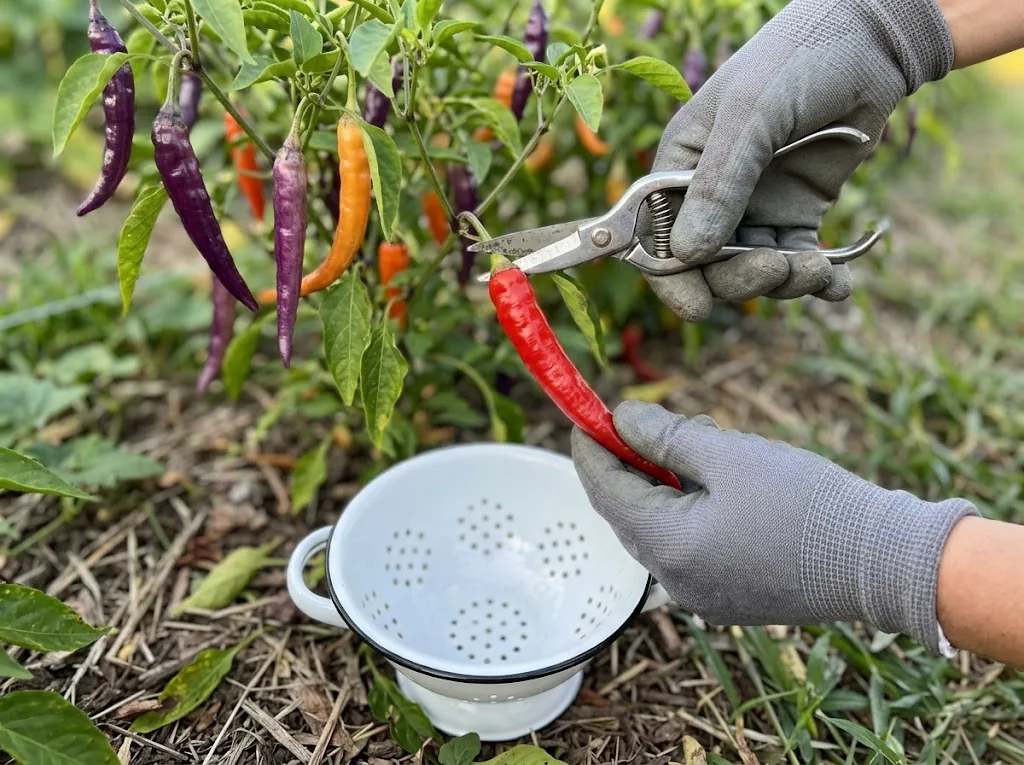
You can pick fruit at a usable color stage or leave it on the plant until it reaches its final color. If you want the fully ripe red stage, leave the fruit on the plant: University of Maryland Extension notes that peppers do not continue ripening after harvest. If you want seed from a particular plant, let selected fruit ripen fully before collecting it. Use clean snips rather than pulling, which can break a branch. Harvest regularly when the plant is producing so fruit does not sit unnoticed through weather changes. Unripe purple fruit can still be picked for cooking, while fully mature color is needed for mature seed.
Wear gloves when cutting or processing hot peppers, and keep your hands away from your face and eyes. Wash tools and hands with soap and water after handling. If pepper juice gets in an eye, Poison Control recommends rinsing with plenty of running water; contact a poison center for advice if pain or irritation continues.
If saving seed is your goal, label the fruit and keep it separate from other cultivars. Peppers can cross-pollinate with different varieties through insects, so saved seed may not grow true to type unless plants are isolated or flowers are covered. University of Maryland Extension suggests screening plants from insects or separating varieties by 500 feet for more predictable seed. Store only fully dry seed in a labeled container in a cool, dry place.
Fresh storage, drying, and preserving
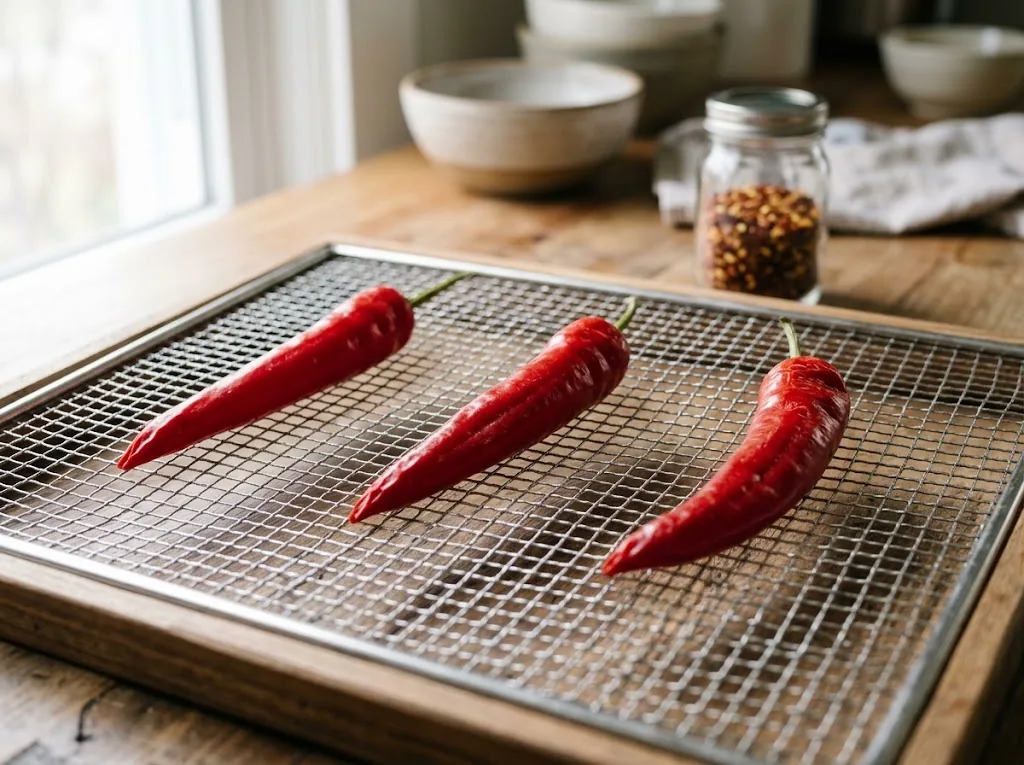
Use fresh fruit soon after harvest or refrigerate it while you decide how to cook it. For longer storage, drying is a straightforward option. Slice fruit evenly, use a food dehydrator or another suitable method, and continue until the pieces are brittle. University of Minnesota Extension explains that peppers can be air-dried in a well-ventilated indoor space; once dry, keep them in a moisture-tight container in a cool, dark place. Discard any dried fruit that develops moisture or mold.
Grind fully dried fruit into flakes or powder only after it has cooled, and avoid breathing dust while processing. For canning, follow a tested pickle recipe from the National Center for Home Food Preservation rather than changing the pepper, vinegar, water, or processing time. Keep untested mixtures refrigerated; vinegar alone does not make them shelf stable.
Ways to use the harvest
Use a small piece of fresh fruit to season beans, soups, savory dishes, or a skillet of vegetables. The purple color is eye-catching, but cooking changes its appearance, so choose the stage for flavor as well as looks. Mature fruit is often described as sweeter; earlier fruit can taste sharper. Taste a tiny amount before deciding how much to add, especially if you do not know the heat of that plant. For a quick meal, mince a little into a hot sauce or stew just before serving.
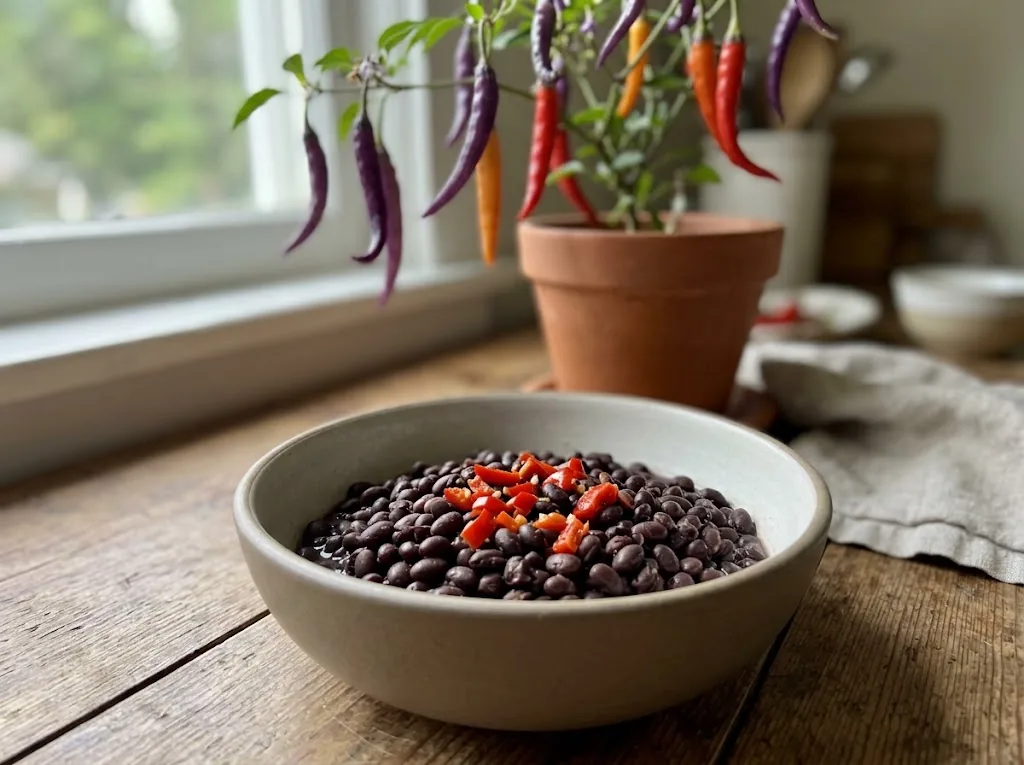
For a more specific recipe idea, a recipe in Weaver’s account makes salsa morada with purple peppers, sweet green peppers, vinegar, sugar, coriander, and a little cocoa. The combination uses the colorful harvest and balances its heat with sweet ingredients. Treat it as flavor inspiration; for longer storage, follow tested preservation directions.
Drying gives you a compact seasoning for winter meals. Crush a little into flakes, or steep it in warm oil for immediate cooking use. Do not store fresh pepper in oil at room temperature. If you want to compare a different species in the profile series, the Apollo pepper profile covers a Capsicum chinense cultivar.
Quick answers
Can it be grown inside?
Yes, in a container, if you can provide warmth and ample light. The seed seller says the plant adapts to indoor container growing. University of Maryland Extension recommends at least 6 hours of direct light per day, with 8 to 10 hours preferred; the seed listing advises 8 to 12 hours of full sun, so aim for the brightest practical location or use a grow light. Give the tall plant room and support.
What do Buena Mulata peppers taste like?
The flavor changes as the fruit ripens. Truelove says it is flavorful at every stage, with a sweet flavor when red; another seller notes a flavor change as they ripen, with deep red pods sweeter and meatier than purple ones. The sellers do not promise one fixed aroma or heat level for every plant.
What is behind the name?
The name is Spanish in form: buena means “good,” while mulata is a historically racialized term for a woman of mixed ancestry, as described in the Association of Academies of the Spanish Language dictionary. That literal reading does not prove why the cultivar was named. A seed-history article has also reported a 1920s Cuban condiment label, Buena Mulata, but the same account says a link to Pippin’s seeds “needs further and more conclusive documentation.” Treat both as context, not a settled origin for the cultivar name.
Can you pick it before full color?
Yes. The fruit is used at different color stages. Let it reach its final color if you want the fully mature flavor profile or mature seed.
How hot is this pepper?
It is sold as a hot pepper, but published heat estimates conflict. Start with a small amount and adjust to the fruit you have.
A colorful plant with a real kitchen role
This colorful plant brings an unusual harvest, a documented seed-keeping story, and useful heat to a home garden. Give it warmth, sun, steady moisture, and time to mature. Then harvest a little at a time, handle it carefully, and use its changing flavor to season food in fresh or dried form.
