
Some hot peppers announce themselves with a long, tapered shape and a bright orange finish. The Bulgarian Carrot pepper is easy to spot, but its heat can still surprise you. It is a compact, open-pollinated Capsicum annuum sold under names such as Shipka, with crunchy, fruity pods that suit fresh salsas, pickles, and sauces.
What is a Bulgarian Carrot pepper?
This variety grows pointed, carrot-shaped fruit that changes from green through yellow to a vivid ripe color. Seed sellers describe pods around 3 to 3 1/2 inches long, with glossy skin and a crisp bite. Fedco Seeds lists fruit from roughly 1.5 to 3.5 inches, while Reimer Seeds describes fruit around 3.5 inches, so expect variation between seed lines and growing conditions.
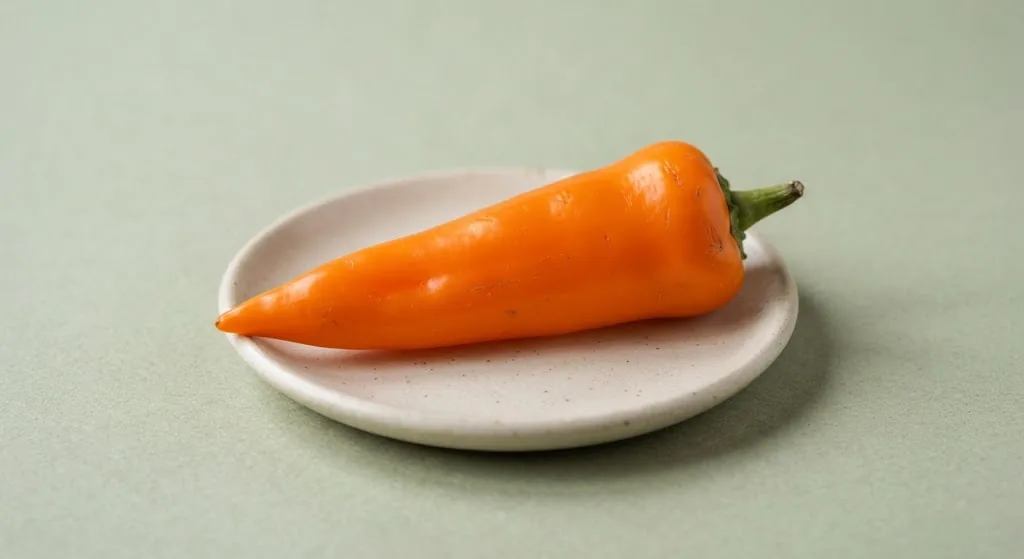
Catalogs place its origin in Bulgaria and often use Shipka or Shipkas as an alternate name. Fedco recounts an Iron Curtain smuggling story, but its listing does not identify a historical record that verifies the route. It is safer to describe the pepper as Bulgarian in origin and treat the travel story as unverified lore.
For a broader look at how this variety compares with others, see our guide to chili pepper varieties and their different shapes and heat levels.
How hot is it, and what does it taste like?
Published estimates commonly range from about 5,000 to 30,000 Scoville Heat Units (SHU). Fedco Seeds gives that full range, while other seed catalogs list figures near the upper end. Treat SHU as an estimate, not a promise: individual peppers can taste milder or hotter, and a seller’s figure may describe its seed line rather than every Bulgarian Carrot pepper.
The flavor is often described as fruity, with a crisp texture and direct heat. Pick one green for a sharper, vegetal note or wait for fully ripe fruit for the variety’s familiar flavor. The heat is useful in small amounts, so start with a thin slice before adding a whole pepper to a dish.
How to grow Bulgarian Carrot peppers
Plants are often listed around 18 to 24 inches tall and need a sunny, warm growing season. Start seeds indoors about eight weeks before outdoor planting. Minnesota Extension recommends warm conditions for pepper seed: keep the starting mix around 80 to 90 degrees F, with bright light as soon as seedlings emerge. Reimer’s catalog lists an 85-day estimate but does not say where the count starts; Fedco lists 68 days to full-color maturity from transplanting. Since seed sellers do not describe timing the same way, use the packet from the seed line you bought and judge ripeness by the fruit’s color as well as the calendar.

Harden seedlings gradually before transplanting. Set them in a sunny bed after the weather settles and nighttime lows stay above 50 degrees F. Minnesota Extension suggests spacing pepper plants about 18 inches apart, with rows 30 to 36 inches apart. Give the roots steady moisture, but do not keep the soil waterlogged. A pot can work where garden space is limited; choose a sturdy container with drainage and expect to water more often than an in-ground bed.
Keep the plant healthy by checking leaves and stems regularly, especially after warm, wet weather. Remove damaged fruit and foliage, and identify a pest before choosing a control. The plants can set clusters of fruit, so use a small cage or stake if branches begin to lean under a heavy crop.
For a comparison from another species, read about the Cili Padi, a frutescens pepper with a different growth habit.
When to harvest and how to handle the fruit
Harvest green pods for an earlier, firmer crop or let them turn yellow and then fully ripen on the plant. Clip the stem with clean shears instead of pulling, which can break a branch. Picking often keeps the plant producing and lets you use the pods while they are crisp.
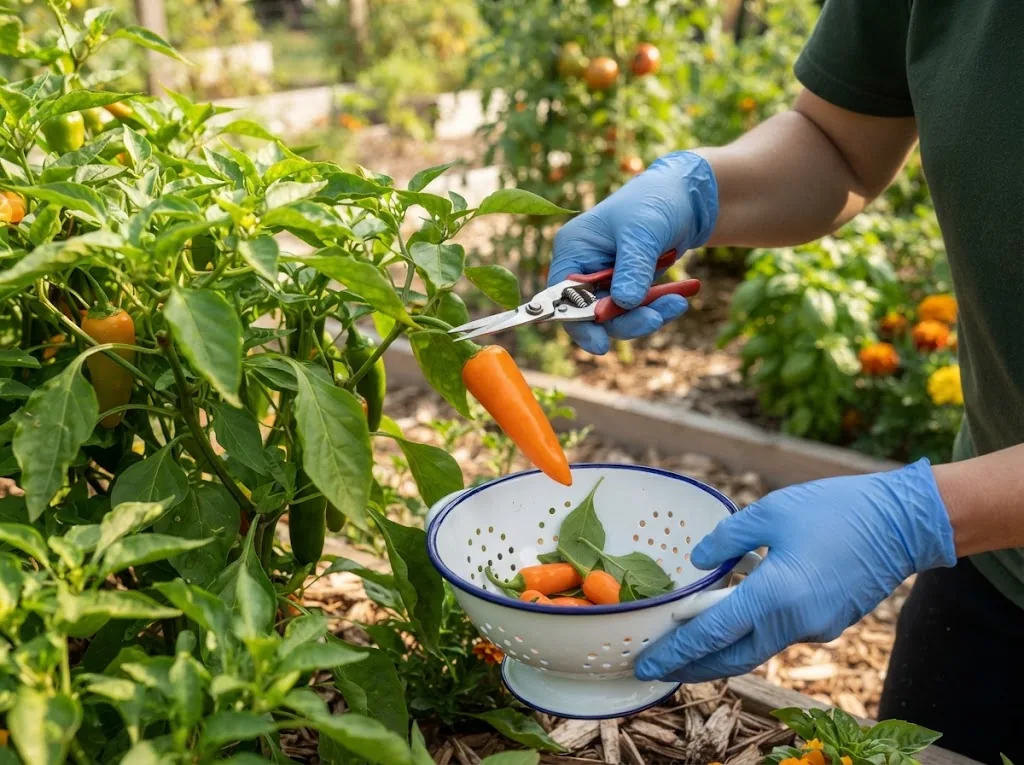
Wear disposable gloves when cutting a hot pepper and keep your hands away from your eyes and face. Poison Control explains that capsaicin can irritate skin and eyes. Wash tools and work surfaces after use, and wash your hands well after removing the gloves.
How to store and preserve them
Use fresh peppers while their skins are firm and unwrinkled. Minnesota Extension says harvested peppers keep for a week or more in the refrigerator, though long cold storage can leave the skin pitted. For longer keeping, dry the pods completely and pack them in a clean, airtight glass container. Minnesota Extension’s drying guidance says peppers need no pretreatment and that dried food keeps best when stored under 60 degrees F.

For pickles, relish, or a shelf-stable sauce, follow a tested preservation recipe without changing the pepper, vinegar, or processing proportions. The National Center for Home Food Preservation provides a tested pickled hot peppers recipe. An improvised brine belongs in the refrigerator, not the pantry.
How to use Bulgarian Carrot peppers
These crunchy pods work chopped into salsa, stirred into a marinade, or simmered into a hot sauce. Pair their bright heat with tomatoes, citrus, or a little sweetness, then add more only after tasting. For a fragrant pepper to compare in the same dishes, try the Aji Mango pepper, a baccatum variety whose botanical background differs from this annuum.
