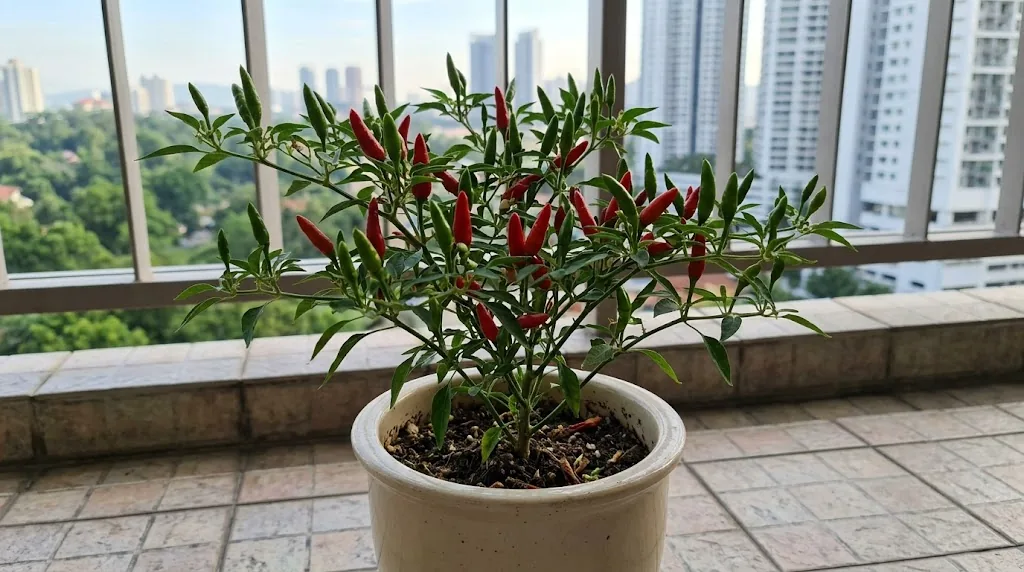
A few tiny peppers can bring more heat to a meal than a spoonful of many larger peppers. These small Southeast Asian kitchen peppers are sold green or red, chopped into sauces and sambal, or served whole beside a meal. In Malaysia, the name commonly refers to a bird’s eye pepper identified as Capsicum frutescens, though local lines vary in shape, color, and pungency. Here is how to recognize the pepper, grow a plant, and cook with the pods without assuming every type is the same.
If you are comparing pepper families, our guide to chili pepper varieties covers the broader range of species, shapes, and heat levels.
What does the local name refer to?
The Malay term combines cili (chili) with padi (rice); “rice chili” is a size comparison for the tiny pods. In English, it is commonly called bird’s eye chili, bird’s eye pepper, or bird pepper. The spelling varies in English-language recipes. The name is often used for bird’s eye peppers, but common names can cover more than one pepper, so it does not guarantee a particular species or cultivar. (Azlin Bloor explains the local name; an English-language recipe uses the spelling “chili padi”.)
Malaysia’s fresh chili standard lists cili padi and cili burung as local names for Capsicum frutescens. Malaysian botanists have also documented substantial diversity among 60 collected C. frutescens accessions, including differences in fruit shape and color. Think of it as a local pepper type with varied selections, rather than one universally uniform named cultivar. A 2024 Malaysian study likewise examined a local line of C. frutescens, not every pepper sold under the name. (Department of Standards Malaysia; Malaysian accession study; 2024 UTM study.)
The pepper belongs to the nightshade family, Solanaceae. Like other cultivated chilies, its species has roots in the Americas; peppers reached Asia after European voyages began connecting the continents in the late 15th and 16th centuries. The exact path and date by which particular local pepper lines became established in Malaysia are not settled by the sources available here. (Smithsonian account of chili peppers’ global spread.)
How to recognize the plant and pods
Plants of this type are compact to bushy, with leaves and small, tapering fruits. Pods commonly start green and ripen through orange to red. Many C. frutescens types hold their fruit upright on the branch, but do not use that trait alone to identify a pepper: similar-looking small hot peppers can belong to other species. The Malaysian accession study recorded several fruit shapes, so the precise outline and size depend on the line being grown. (Serbajadi’s horticultural description; Oregon State University Extension.)
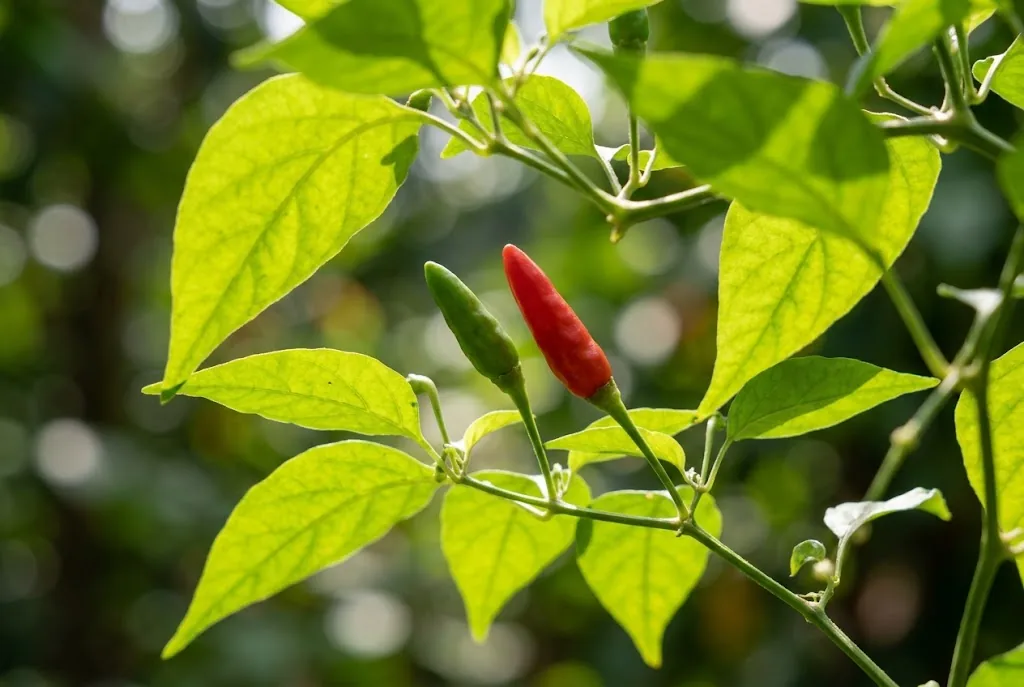
Look at the seed packet or ask the grower for a botanical name if species identity matters. For a contrast with a larger, fleshy Capsicum annuum type, see our profile of Sandia peppers.
Heat and flavor
These peppers earn their reputation from concentrated heat in a small fruit. There is no dependable single Scoville Heat Unit (SHU) figure for every pepper sold under this name. Reference figures for related peppers differ: Oregon State University Extension lists Tabasco and other C. frutescens cultivars at 30,000 to 50,000 SHU, while a University of Florida guide gives 50,000 to 100,000 SHU for Thai pepper, which that guide classifies as C. annuum. Those numbers describe different groups, not a lab-tested universal range for the local type. A Malaysian hydroponic study also found that pungency in its tested local line varied with fertilizer concentration and was moderate relative to more commonly studied peppers.
Fresh green pods taste crisp and sharp; ripe red pods bring a fuller pepper flavor along with their heat. Individual fruits can vary, so start with a small amount when cooking with them. For another small hot pepper profile from a different species, compare Puya peppers.
Growing the plant at home
A sunny balcony, patio, or warm garden bed suits a compact pepper plant. A Malaysian seed company’s growing guide recommends a warm start, full sun, and freely draining soil for its hybrid line. Its figures are useful local estimates, not a guarantee for every seed line or climate.
- Sow warm. Start seeds in a clean tray or small pot with a fine, moist seed-starting mix. Serbajadi recommends sowing about 0.5 cm deep and keeping the mix between 24 and 32°C. It reports germination in 7 to 14 days under warm Malaysian conditions. Cooler rooms can take longer.
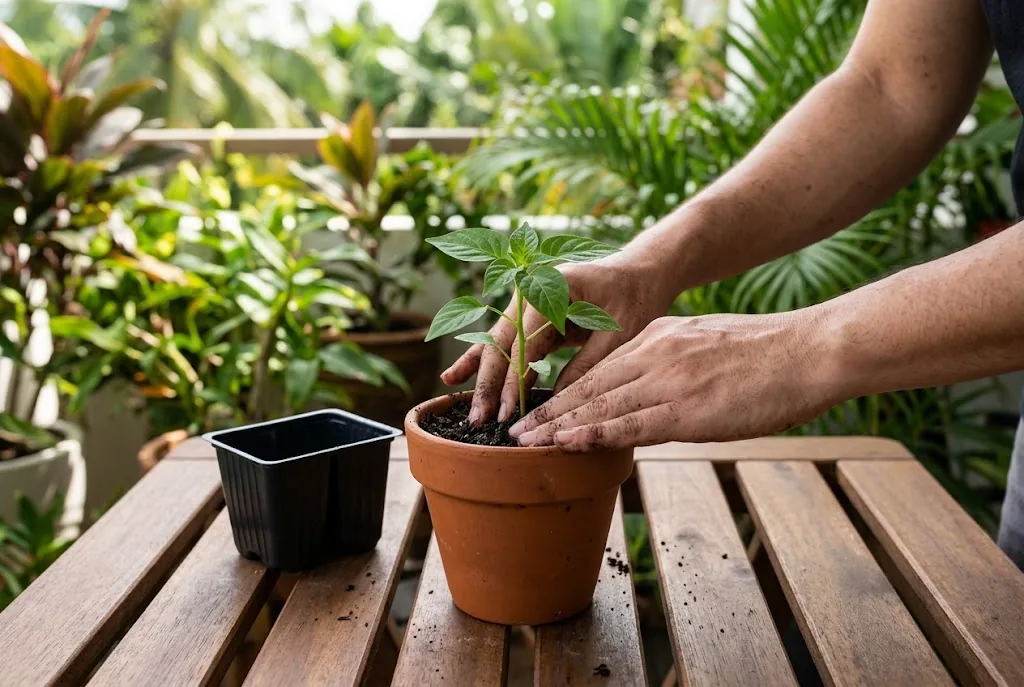
- Give seedlings strong light. Once seedlings emerge, provide bright light and keep the mix damp but not saturated. Pot them up after they have several true leaves, handling the root ball gently.
- Move plants into sun and drainage. Harden seedlings gradually if they are moving outdoors. Choose a sunny position and a pot with drainage holes, or a bed that does not stay waterlogged. The guide suggests a container at least 25 to 30 cm deep for its seed line.
- Water by soil condition. Water when the surface begins to dry, then let excess water drain away. During hot weather a container may dry quickly; during rainy spells, shelter pots if the mix stays soggy. Avoid a fixed daily schedule.
Flowering and the first ripe fruit take different lengths of time depending on the variety, temperature, and growing setup. Serbajadi reports first fruit around 75 to 90 days after planting for its Malaysian growing conditions. Use that as a rough local estimate, not a universal maturity date. The same guide notes that harvest can continue as new flowers and fruits develop.
Harvesting and handling
Pick green pods once they have reached the size expected for your plant, or leave them longer to ripen red. Use clean scissors or pruners rather than pulling hard on the branch. Frequent picking makes ripe fruit available for cooking and leaves room for later pods to develop.
Capsaicin can irritate skin and eyes. Wear kitchen gloves when cutting a large batch, keep fingers away from your face, and wash your hands and tools with soap and water afterward. Avoid touching your eyes while handling the pods. Michigan State University Extension advises gloves and handwashing when handling hot peppers.
Storing, drying, and preserving the pods
Use fresh pods soon for the brightest flavor. Refrigerate intact, dry pods in a loosely closed container and check them for soft spots or mold. The Malaysian seed company guide gives up to two weeks as a storage estimate for its fresh peppers, but actual keeping time depends on harvest condition and refrigerator temperature.
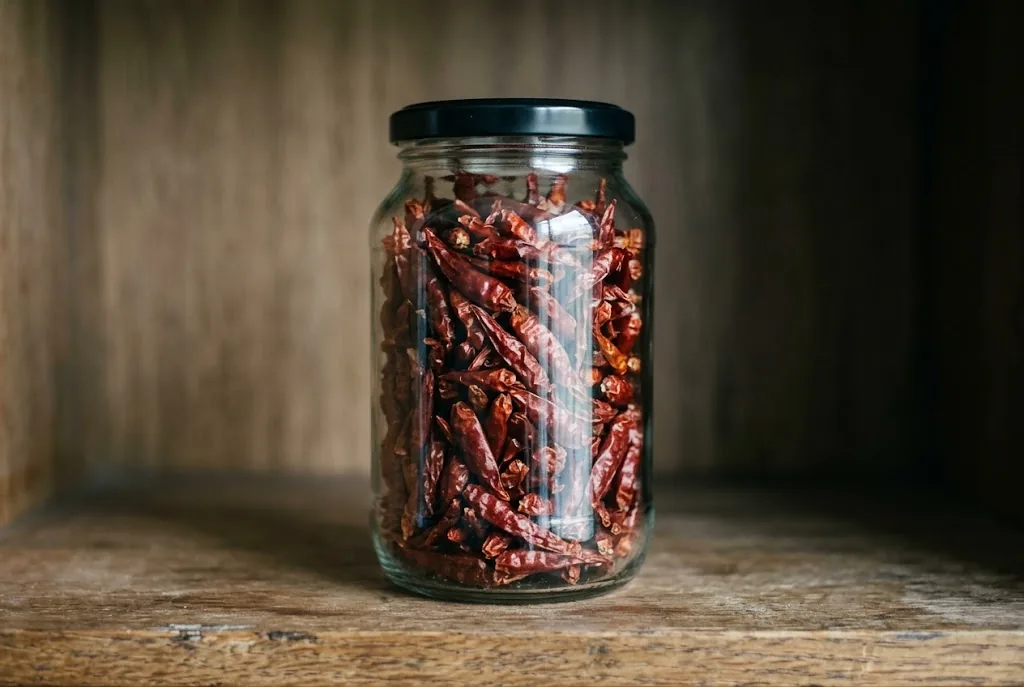
To dry a small harvest, wash and dry the pods thoroughly, then use a food dehydrator or oven according to a tested guide until moisture is gone. Michigan State University Extension gives oven and dehydrator instructions for hot peppers and recommends storing crushed flakes in spice jars. For longer-term preserving, follow tested guidance. A homemade pickle or sauce is not shelf-stable unless it follows a validated preservation process; do not assume a family recipe is safe for pantry storage. The National Center for Home Food Preservation explains why tested proportions matter for canned peppers.
Cili padi recipes and ways to cook with the pods
In Malaysian cooking, the pods add direct heat to sambal, soups, curries, stir-fries, and dipping sauces. Malaysian research on C. frutescens also describes its use in sauces, soups, stews, and curries. For a quick sambal belacan, pound a few pods with toasted shrimp paste and salt, then add lime to taste; or slice a pod into noodle soup. Add less than you think you need, taste, then add more. The Malaysian consumer study found that sambal belacan’s core ingredients are chili, shrimp paste, and salt, with cooks choosing optional additions such as lime and tomato (FAMA consumer study).
Ayam Masak Lemak Cili Api
This turmeric and coconut milk chicken stew from Negeri Sembilan shows how a small hot pepper can shape a meal. One published version serves six to eight and lets the cook adjust the heat by changing the number of peppers. Use fewer pods for a less spicy stew. This chicken recipe follows its published method; see the linked source for the full ingredient list and variations.
- You need: about 1 kg chicken pieces, 10 to 15 small fresh chilies, 400 ml coconut milk, 1 onion, 1 garlic clove, 1 stalk lemongrass, turmeric, tamarind, lime, salt, and a little oil for cooking.
- Prepare: Toss chicken with lime, salt, and turmeric. Blend the onion, garlic, chilies, and a little more turmeric into a paste. Bruise the lemongrass.
- Cook: Brown the chicken in a little oil, then stir in the paste and lemongrass. Add coconut milk and tamarind, add a splash of water if needed, bring to a gentle simmer, and cook until the chicken is tender and reaches 165°F (74°C) internally. Serve hot.

Refrigerate leftovers within two hours. The USDA Food Safety and Inspection Service advises using cooked leftovers within three to four days. (Source: Azlin Bloor’s Ayam Masak Lemak Cili Api; FoodSafety.gov leftover guidance.)
For a clean pepper flavor, mince a pod finely and mix it with soy sauce or citrus for a table condiment. Remove the seeds if you prefer a milder result, though seeds can pick up capsaicinoids from the nearby pale inner placenta, as Iowa State University Extension explains. Keep the whole pod in a dish as a garnish only when diners know it is hot.
Quick answers
What is this chili called in English?
It is commonly called a bird pepper or small hot pepper. These names are broad, so check the botanical name when species identity matters.
Is this the same as Thai chili?
Not always. Thai chili is sometimes sold under a similar common name, but some Thai types are Capsicum annuum, while Malaysian standards identify this local pepper as Capsicum frutescens.
How hot is it?
It is usually treated as a very hot small chili, but published ranges vary by type and source. Do not assume that a Scoville range for Tabasco or Thai pepper applies exactly to every selection in this group.
Sources
- Department of Standards Malaysia, Fresh Bird’s Eye Chilli specification.
- Morphological Diversity of Capsicum frutescens in Malaysia, Biodiversity and Biotechnology Symposium proceedings.
- Abdul Rahim, Shamsir, and Ibrahim, “Fertilizing the Flame,” 2024.
- Oregon State University Extension, Grow Your Own Peppers.
- University of Florida IFAS Extension, Pepper Production in Miami-Dade County.
- Serbajadi, How to Grow Chilli Padi in Malaysia; growing figures are attributed to its guide and may differ by seed line.
- Smithsonian Tropical Research Institute, “Some like it hot”.
- Michigan State University Extension, Using, Storing, and Preserving Hot Peppers.
- National Center for Home Food Preservation, Pickling Pecks of Peppers.
- Muhammad Shahrim et al., Consumers’ Perspective Towards Malaysian Traditional Food: Sambal Belacan.
- Azlin Bloor, Ayam Masak Lemak Cili Api.
- Much Butter, Chicken Chili Padi (English spelling example).
- Iowa State University Extension, Growing Peppers.
- FoodSafety.gov, Game Day Food Safety Tips.
